The sacrament of baptism is a source of new life in Christ and necessary for salvation
When Hannah and Jacob Coleman decided to have their two sons baptized, they saw it as a milestone on their path to salvation.
“Knowing that our role as parents is to help get our children to heaven, baptizing them was an important first step toward that in the Catholic Church,” Hannah Coleman said.

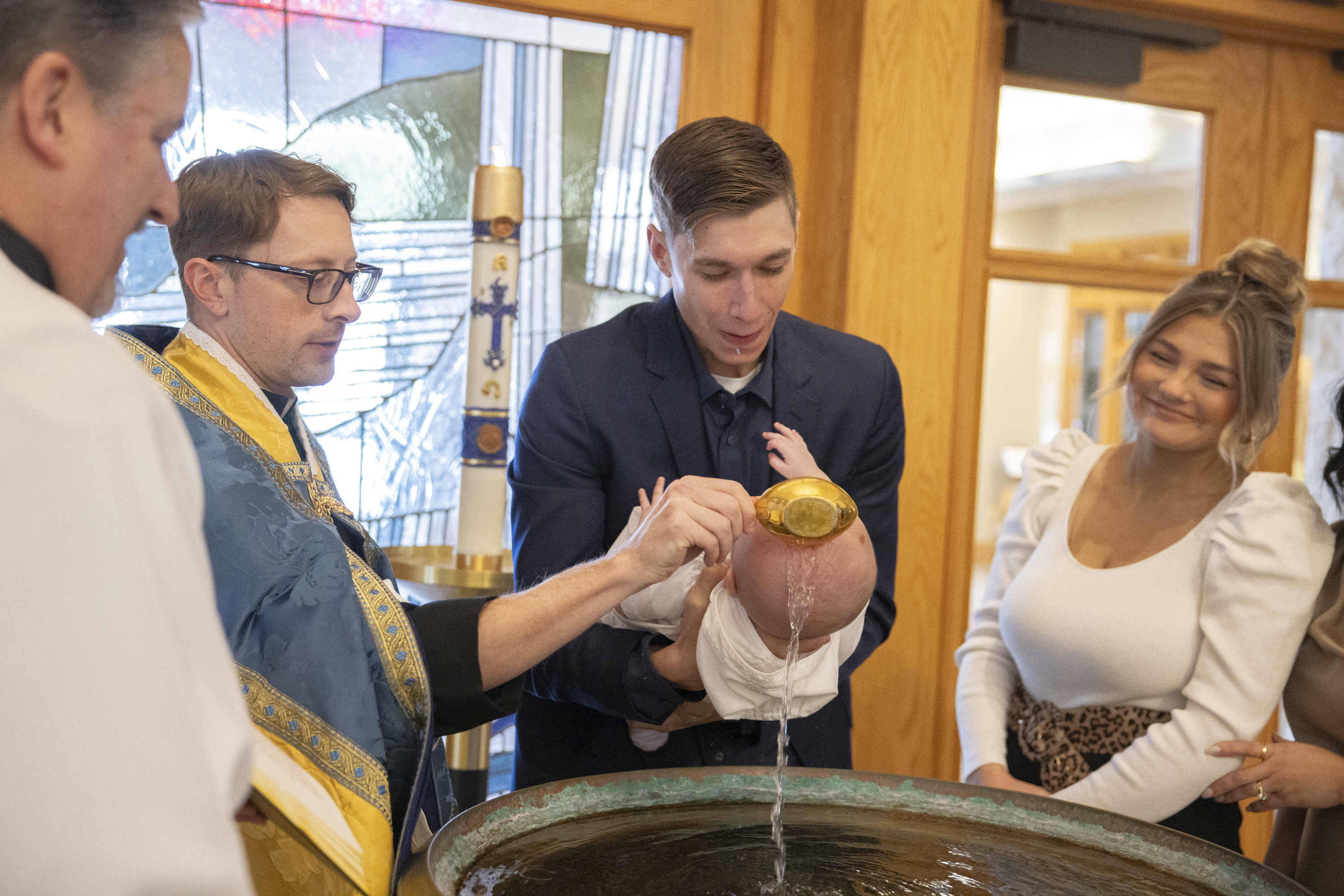
Father Robert Lawson baptized Rory Michael Coleman on Jan. 25 at St. Gabriel the Archangel Church in St. Louis. Rory’s mother, Hannah, held him, while his father, Jacob, and godparents, Allison and Deepan Rajaratnam, watched.
When their oldest son, Jack, now 2, was baptized as an infant, the Colemans met in a small group with other couples from their parish to prepare for the sacrament. There, they discussed the practical aspects of raising children within the Church. They also learned how important it was to build a community rooted in faith so they could live out the promises made at baptism to follow Christ and witness His love to others.
The Colemans renewed their own baptismal promises again when their second child, 3-and-a-half-month-old Rory, was baptized at the end of January at St. Gabriel the Archangel Parish in south St. Louis.
Baptism is the first of the three sacraments of initiation in the Church. It is often referred to as the source of new life in Christ from which the entire Christian life springs forth, according to the Catechism of the Catholic Church. The Church teaches that baptism is necessary for our salvation.
When Father Robert Lawson baptized Rory, he referred to the Gospel reading in which Jesus commands His disciples to “let the children come to me.” Father Lawson, who was ordained in 2024 and has baptized more than 200 infants so far, said the reading serves as an invitation and reminder to parents that their child has been welcomed into the family of God from the moment of their baptism.

Father Robert Lawson lit the baptismal candle from the Paschal candle during the baptism of Rory Michael Coleman on Jan. 25 at St. Gabriel the Archangel Church in St. Louis.
In the Gospel reading, Jesus said that the kingdom of God belongs to them, and the kingdom is the Church, Father Lawson said. In the opening prayer of the rite of baptism, the priest tells the parents that the Church rejoices with them and offers its support in raising their child in the faith. That’s why he tells parents not to be discouraged from bringing their children to Mass from the time that they’re infants.
“Jesus said let the children come to me — He doesn’t say the quiet children or well-behaved children,” Father Lawson said. “The Church is there to help parents. That means increasing their knowledge of the faith, but also to be a place of comfort and a village to help raise the child.”
New life in Christ
The Catechism of the Catholic Church states that baptism is “the basis of the whole Christian life, the gateway to life in the Spirit (vitae spiritualis ianua) and the door which gives access to the other sacraments. Through Baptism we are freed from sin and reborn as sons of God; we become members of Christ, are incorporated into the Church and made sharers in her mission: ‘Baptism is the sacrament of regeneration through water in the word’” (CCC, 1213).
While the sacrament of baptism is a birth into a new life in Christ and is necessary for our salvation, we are ultimately called to live out our baptismal promise to follow Jesus Christ and make Him known throughout the world.

Rory Michael Coleman looked at the baptismal candle during his baptism.
“Having become a member of the Church, the person baptized belongs no longer to himself, but to Him who died and rose for us. From now on, he is called to be subject to others, to serve them in the communion of the Church, and to ‘obey and submit’ to the Church’s leaders, holding them in respect and affection. Just as baptism is the source of responsibilities and duties, the baptized person also enjoys rights within the Church: to receive the sacraments, to be nourished with the Word of God and to be sustained by the other spiritual helps of the Church” (CCC, 1269).
At the deepest level, baptism makes us sons and daughters of God, said Father Jason Schumer, assistant professor of sacramental and liturgical theology at Kenrick-Glennon Seminary and vice-rector of Cardinal Glennon College.
“We’re born with original sin, so in that sense, we’re alienated from God, and the grace of baptism cleanses us of that original sin and brings us back into God’s family,” he said. “It ends up being the doorway to the life of grace, the doorway to the other sacraments. In a nutshell, what is the Christian life about? It’s about grace, which is divine life freely given. And so in baptism, God cleanses us and that life of grace opens up for us.”
At a group baptism on the feast of the Baptism of the Lord in January at the Sistine Chapel in Rome, Pope Leo said that baptizing one’s children is as essential as providing them with food and clothing. That’s why the Church stresses the importance of baptizing infants as soon as possible after birth.
“When we know that something is essential, we immediately seek it for those we love,” Pope Leo said in the homily. “Who among us, in fact, would leave newborns without clothes or food, waiting for them to choose how to dress, and what to eat when they grow up? If food and clothing are necessary for life, faith is more than necessary, because with God, life finds salvation.”
Baptism is the first of the Church’s sacraments of initiation, followed by the Eucharist (typically in second grade) and confirmation (typically in eighth grade in the Archdiocese of St. Louis). It’s a response to Jesus’ final command in the Gospel of Matthew to go and preach the Gospel and baptize all nations, Father Schumer said.
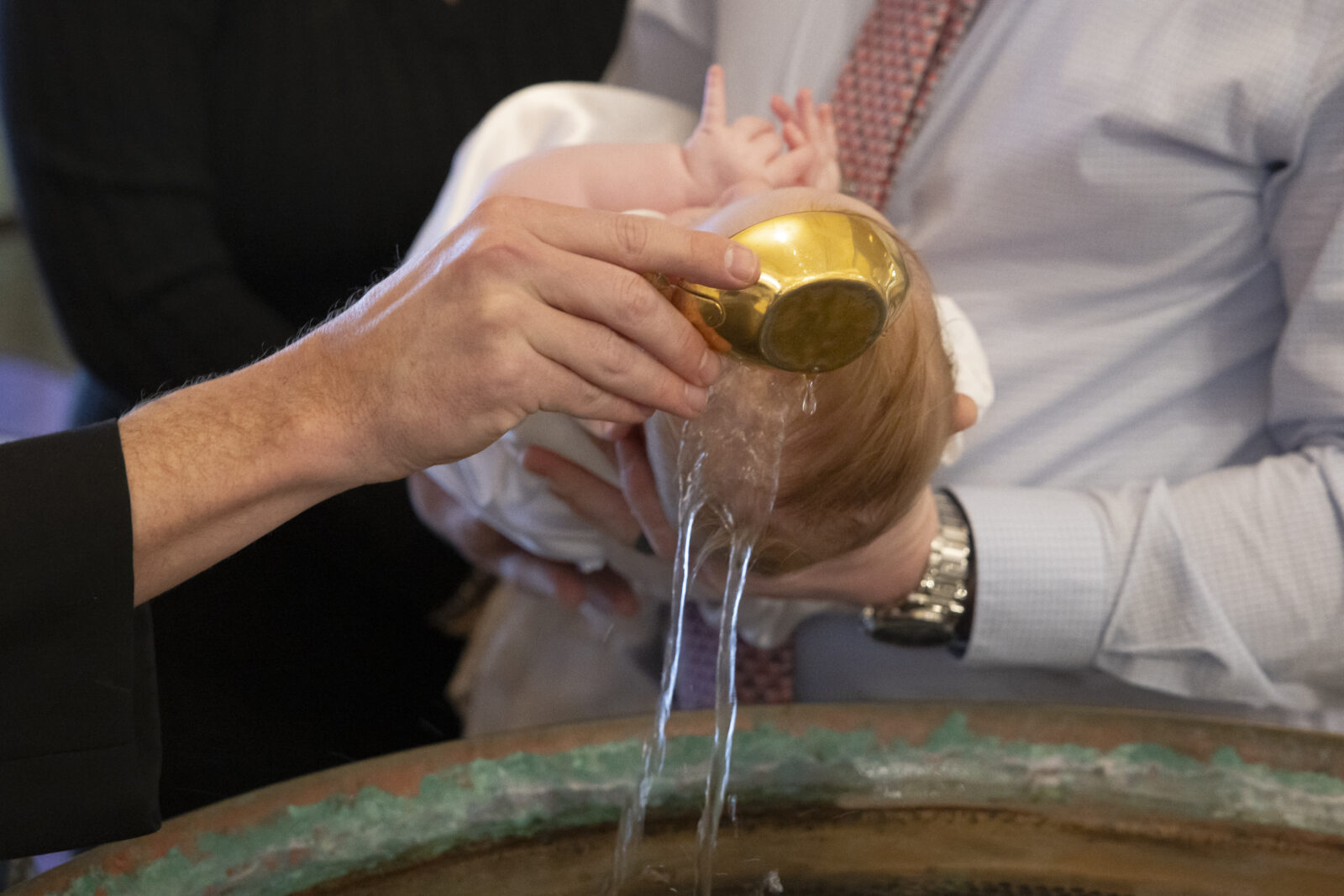
Norah Williamson was held by her father, Luke Williamson, while being baptized by Fr. Joshua Deters on Sunday, Feb. 1, 2026, at St. Joseph Church in Cottleville, Missouri.
“We see the witness of that already in the Acts of the Apostles,” he said. “Thousands are baptized and they’re brought into the faith, and so it’s recognized to be that gateway to faith.”
On a small table in his office at the seminary, Father Schumer displays a children’s book, “Beloved Son,” which includes scriptural affirmations that serve as a reminder of their primary identity as beloved sons of God.
“A primary effect of baptism is we become sons and daughters of God,” Father Schumer said. “That is our deepest identity as Christians, and that even as we grow, we’re still sons and daughters of God. That’s a beautiful thing to know, but it’s a difficult thing to grasp and live from day to day.”
“Even if we turn away from that — we all do, in personal sin — through the sacrament of reconciliation, that life of grace is brought back,” he said. “It’s really wanting to live our baptismal calling day to day to day.”
Matter and form of baptism
In baptism, the matter is the natural water poured on the head of the person. Traditionally, the water is poured three times on the head, or the person is immersed three times. This is accompanied by the form, the minister’s words: “I baptize you in the name of the Father, and of the Son, and of the Holy Spirit.” (CCC 1240)
Other symbols of baptism
Chrism oil: At baptism we are anointed into the life of Christ as “priest, prophet and king.” A cross is traced on the top of the candidate’s head as a reminder that we are inheritors of the Kingdom of God.
Light: The baptismal candle is lit from the paschal or Easter candle that stands in the church as a sign of Christ’s light in the world. At baptism, we receive the light of Christ and are called forth to share this light with the world.
White garment: The white garment that is placed upon us at baptism is a symbol of Christ’s victory over death and his glorious resurrection. Likewise, the white garment or pall that is placed over the coffin at the time of death recalls our baptismal promises and reminds us that we are destined for eternal life.