Archbishop Rozanski, Rabbi Noam Marans highlight effects of ‘Nostra Aetate’ at Feb. 5 event celebrating document’s 60th anniversary
Catholic and Jewish leaders in St. Louis recently marked the 60th anniversary of “Nostra Aetate” (“In Our Time”), a watershed document that redefined the relationship between Catholics and Jews.
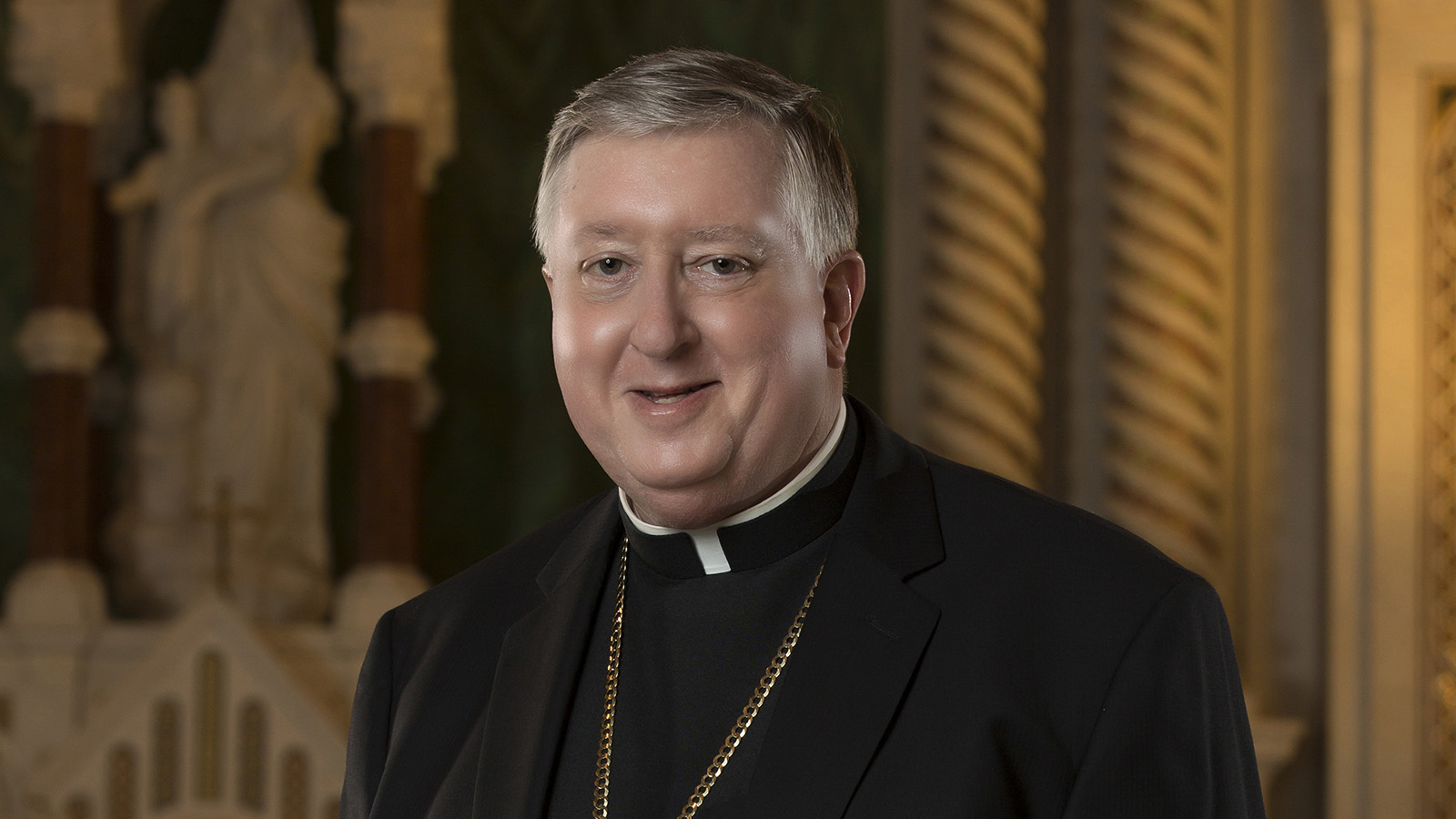
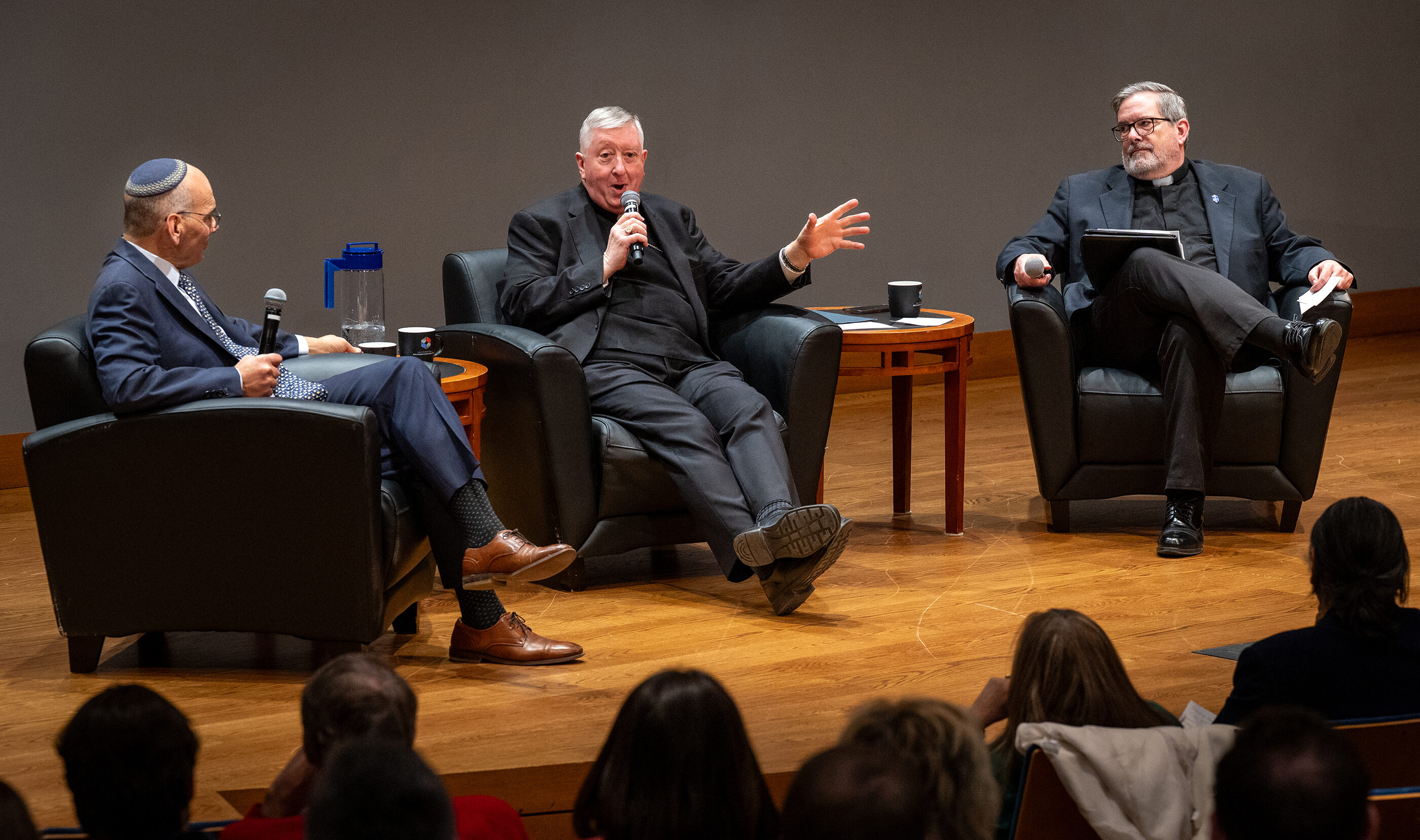
Held at Washington University’s Danforth Center on Religion and Politics, the Feb. 5 event featured a conversation with Archbishop Mitchell T. Rozanski and Rabbi Noam Marans, the American Jewish Committee’s national interreligious affairs director. Father David Suwalsky, SJ, vice president of mission and identity at Saint Louis University, moderated the discussion.
Amid antisemitism, the Israel-Hamas war and growing secularization, the two noted that “Nostra Aetate” paved the way for Catholics and Jews to develop relationships and a shared commitment to human dignity to confront hate together, deepen theological dialogue and serve as a public model of respectful discourse.
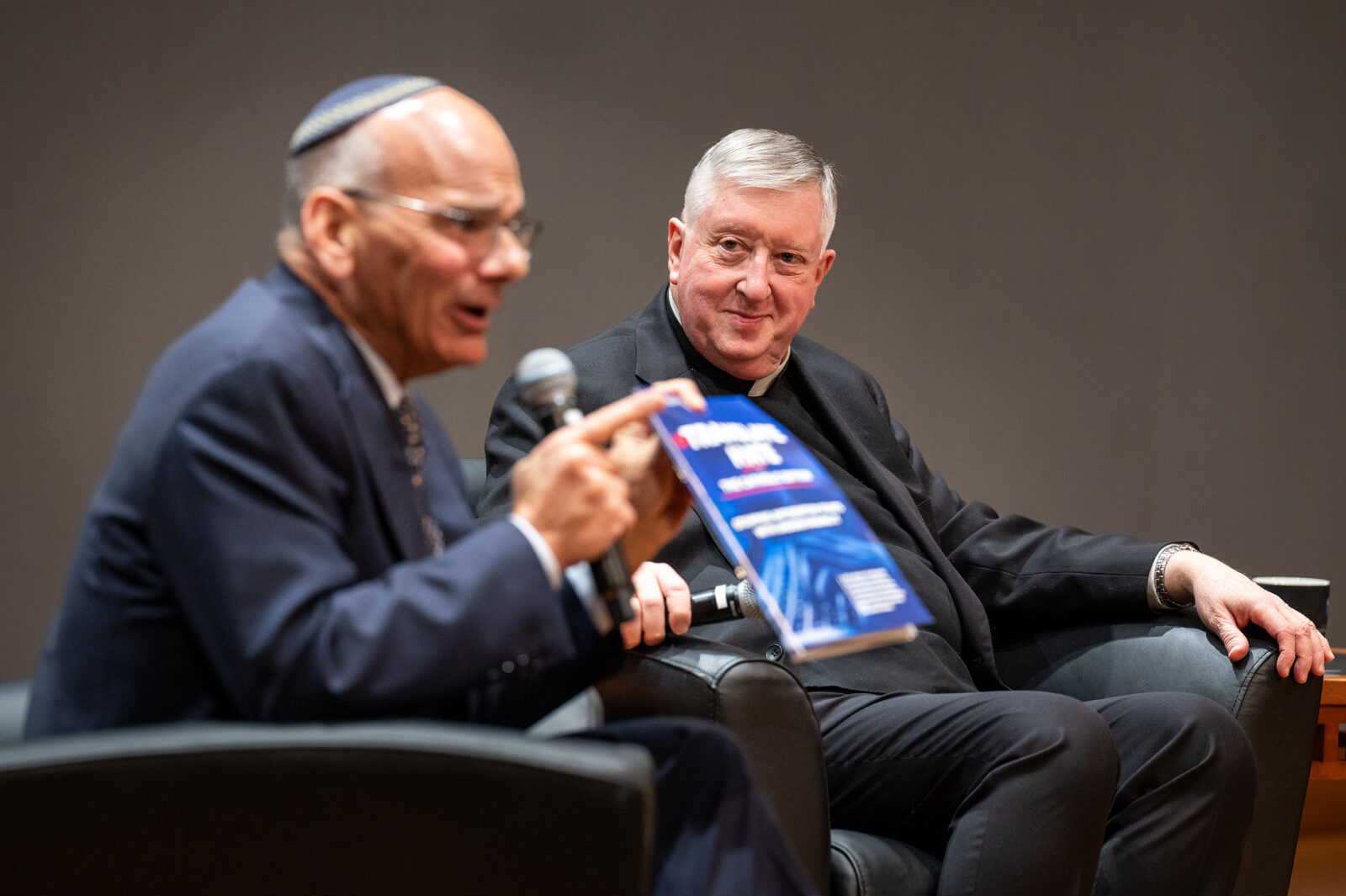
“Central to the Jewish faith and to the Catholic faith is the dignity of the human person,” Archbishop Rozanski said. “The divisiveness and the demonization that we are experiencing today has certainly brought a lot of discord, a lot of unhappiness, a sense of tension. Our working together … is a model of what we need to be as a people who can pull together even though we don’t agree on everything.”
Issued by the Second Vatican Council, “Nostra Aetate” transformed the Church’s relationship with Judaism and other faiths. The document emphasized how Christianity’s roots are deeply planted in Judaism, rejected the idea of collective Jewish guilt for the death of Jesus, condemned antisemitism and encouraged dialogue with Jews and other faiths.
Rabbi Marans noted disagreements with some Catholic responses to the Israel-Hamas war, especially as it relates to the relationship to the State of Israel and to the Jewish people.
“Sometimes even at the highest levels of the Catholic Church, is a desire to separate between those two, the relationship with the Jewish people, very different than the relationship with the State of Israel,” he said. “That’s not always working for us, and it’s going to take a lot of talking about what it means to be an identifying Jew and how Israel plays a role in that.”
That said, “Whatever one’s politics are about the conflict, I hope that all of us can join together in empathy for the loss of any innocent life,” Rabbi Marans said. “Palestinian, Israeli, Jewish, Christian, Muslim. I’m pretty confident that a 3-year-old in Israel and a 3-year-old in Gaza are innocent human beings, and we need to have empathy for all of God’s children. Otherwise, we’re not really people of faith.”
The document has led to ongoing partnerships among Jews and Catholics worldwide. In St. Louis, the Jewish-Catholic Dialogue Group has met quarterly for years to discuss Catholic-Jewish relations and other shared interests, including immigration, security issues, and secularization. The group includes members of the archdiocesan Office of Ecumenical and Interreligious Affairs, the Anti-Defamation League, the American Jewish Committee and the Jewish Community Relations Council.
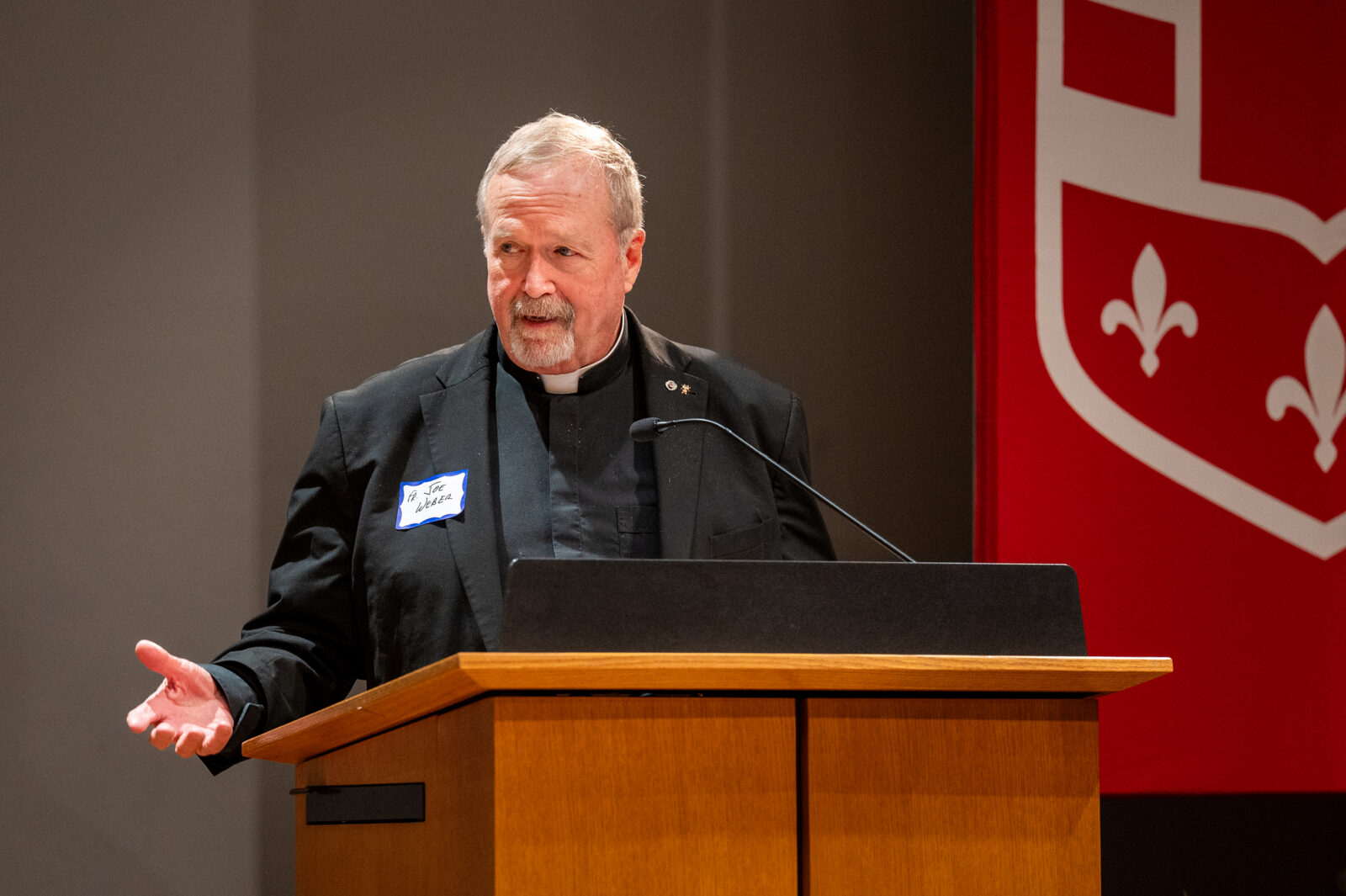
The group has supported other initiatives, including the American Jewish Committee and the U.S. bishops’ 2024 joint publication, “Translate Hate: The Catholic Edition,” which features Catholic commentary on various entries of AJC’s “Translate Hate” glossary of antisemitic terms, phrases, conspiracies, cartoons, themes and memes.
Other programs the group supports include the “Meeting Our Neighbors” program, organized by the archdiocesan Office of Ecumenical and Interreligious Affairs and invites Catholics into different faith communities, including Shabbat services at area synagogues. The Jewish Community Relations Council has a Student to Student program in which Jewish teens visit schools that lack a Jewish presence to reduce stereotypes and prejudice and put a human face to Judaism.
Nancy Lisker, regional director of AJC St. Louis, said her organization has been focusing on rising antisemitism. In the face of intolerance, hate and bigotry, the local dialogue group is a visible sign of unity in speaking out against these issues.
“We’re always present in each other’s turfs,” she said. “We learn what the other one is doing and wherever there’s a need to make a pronouncement, a statement of support, we are there for each other. We are crystal clear that what happens to one happens to everybody, and we are very capable of coming together.”
Learn More:
Nostra Aetate: stlreview.com/nostra-aetate
Transtate Hate: The Catholic Edition: stlreview.com/translate-hate