Advent is a time to practice virtues needed to wait well, live faithfully as we move to our ultimate goal

Life’s a journey. And the season of Advent gives us four weeks to reflect on where we’ve been, where we’re going and how we are living well on the way.
The Archdiocese of St. Louis has adopted the theme “On the Way” for the upcoming Advent liturgical season, which begins on Sunday, Nov. 30 this year. It’s drawn from St. Thomas Aquinas’ “Summa Theologica,” from a question on hope: “To be a Christian means primarily to be one who is on the way.”
Being “on the way” has two characteristics: You’re going somewhere — not aimlessly wandering — but you are not there yet, said Stephen Estes, director of faith formation and discipleship for the Archdiocese of St. Louis.
We can look at this as it applies to our own lives and also salvation history, he said. Advent is the season that most tangibly invites us to look both backward and forward.
“We look backward to Israel’s imminent expectation of a coming Messiah, particularly in the time of Isaiah, Jeremiah, Ezekiel, the prophets,” he said. “But by looking backward, it teaches us that we are, in fact, also still awaiting the imminent expectation of the coming Messiah. We look forward to a second coming.”
Waiting well
To reflect more deeply on the journey, it’s important to remember that God has a “sacred intentionality with time,” Estes said. Although God Himself is outside time, “He uses time to do something that He couldn’t do if He didn’t have the time to do it.”
Advent is an excellent reminder that we are part of this bigger story that has been going on and will continue on after us.
If we look at all of human history, we can see how God has used different people in different times to accomplish His work—and if those things weren’t done in their specific time, the end result wouldn’t have its full significance, Estes said.
Mary and Joseph trusted in God’s timing, interrupting the plans they had for their own lives. Jesus Himself lived for 33 years “in the meantime,” with His hour of salvation still to come, Estes noted.
The four weeks of Advent can be a training ground for us to learn how to journey and live well on the way throughout the rest of our lives. One of the most important virtues of the Christian life is learning how to be on God’s time rather than our own, Estes said, and if there’s one time of year that teaches us how to do that more than any other, it’s Advent.
It’s a time to exercise virtues of being “on the way,” including patience, endurance, hope and perseverance.
“Patience and perseverance are two of the most basic virtues of the Christian — to not be able to exercise them in one month, seems like it would be quite difficult to exercise them according to a whole lifetime,” he said. “But God gives us a month, every single year in the liturgical season of Advent, to teach us how much more fulfilling the end result is if we actually wait until the end result is supposed to be there. Christmas will always be significantly more fulfilling if we allow it to occur at the time God designed it to occur rather than jump the gun on God’s timing.”
We go through many times of waiting in our lives apart from Advent: pregnancies, engagement, applying for jobs, waiting for a medical diagnosis, waiting for various situations that we hope will be resolved.
“In the midst of whatever suffering you’re in the middle of, or what you’re waiting for to still come to light, or what desires or hopes you have, know that God also is doing something in the meantime, without which the end result wouldn’t have its full meaning,” Estes said.
Advent actions
While Advent is a time to prepare for Christmas, it’s also its own liturgical season in the Church that should be observed, Estes said.
“We spend a lot of time asking the question, What am I going to do for Christmas? How am I going to celebrate Christmas?” he said. “How beautiful would it be if we spent just as much time saying, What am I going to do for Advent? How am I going to celebrate Advent?”
Here are Advent traditions that emphasize the waiting:
1. Sing or listen to “O Come, O Come Emmanuel,” a hymn that puts us in the shoes of the Israelites awaiting the coming of the Messiah.
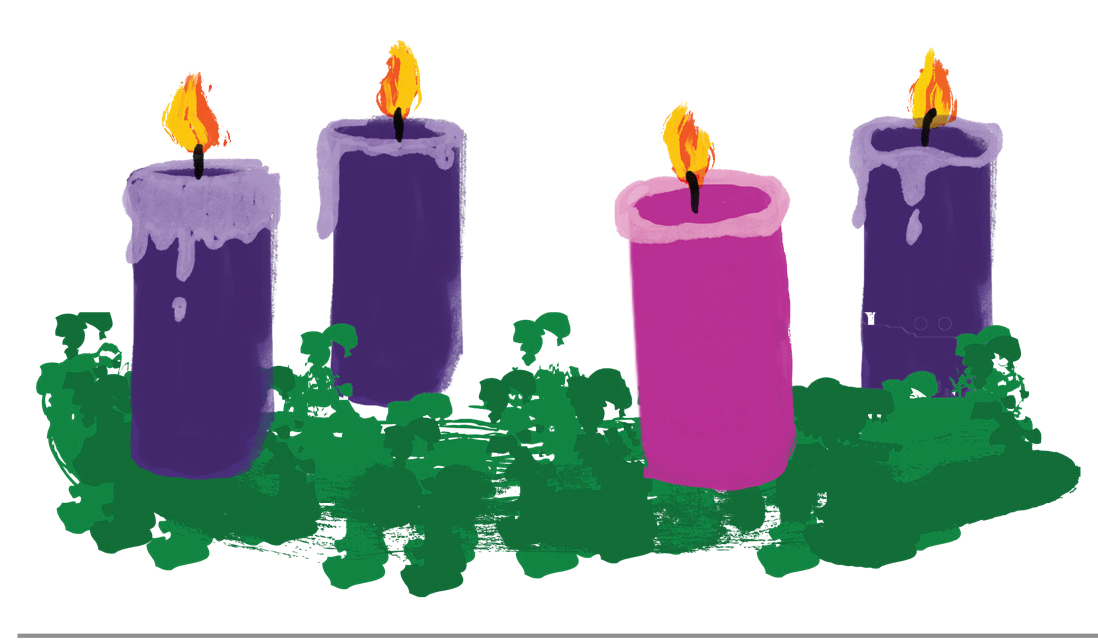
2. Light an Advent wreath in your home as a visual reminder of the Advent journey, progressing each week.
3. Decorate a space in your house for Advent, using the wreath, purple linens or other reminders of the season. Consider putting up Christmas decorations a little at a time to remember that we are still “on the way” to Christmas.
4. Set up or create your own Jesse Tree, a tradition that tells the story of Salvation History from creation to Jesus’ birth. Each day, an ornament is added representing the people, places and prophecies that played important roles in the journey.
5. Pray. If your family has never had a regular habit of praying together, Advent is a great time to start. It can be as simple as a Hail Mary together while you light the Advent wreath candle.
The Catechism of the Catholic Church also challenges us to pray about the second coming of Jesus, Estes noted. That’s the ultimate end of the journey. “In the time of the prophets, they were praying for the Messiah to come,” he said. “So if Advent is teaching us to still hope for His coming, then that’s actually something we should want: to actually pray that He would return.”
On the Way with the Archdiocese of St. Louis
Follow the Archdiocese of St. Louis on social media for video reflections throughout Advent.
Facebook: Archdiocese of St. Louis
Instagram: @arch_stl
More Advent resources
The United States Conference of Catholic Bishops’ website includes a daily Advent calendar, Advent wreath prayer, Lectio Divina reflections, the O Antiphons and more. Visit usccb.org/prayer-worship/liturgical-year/advent
Read the St. Louis Review’s stories on Advent at stlouisreview.com/topic/advent.