Cor groups invite men of all backgrounds into deeper personal relationship with Jesus and each other
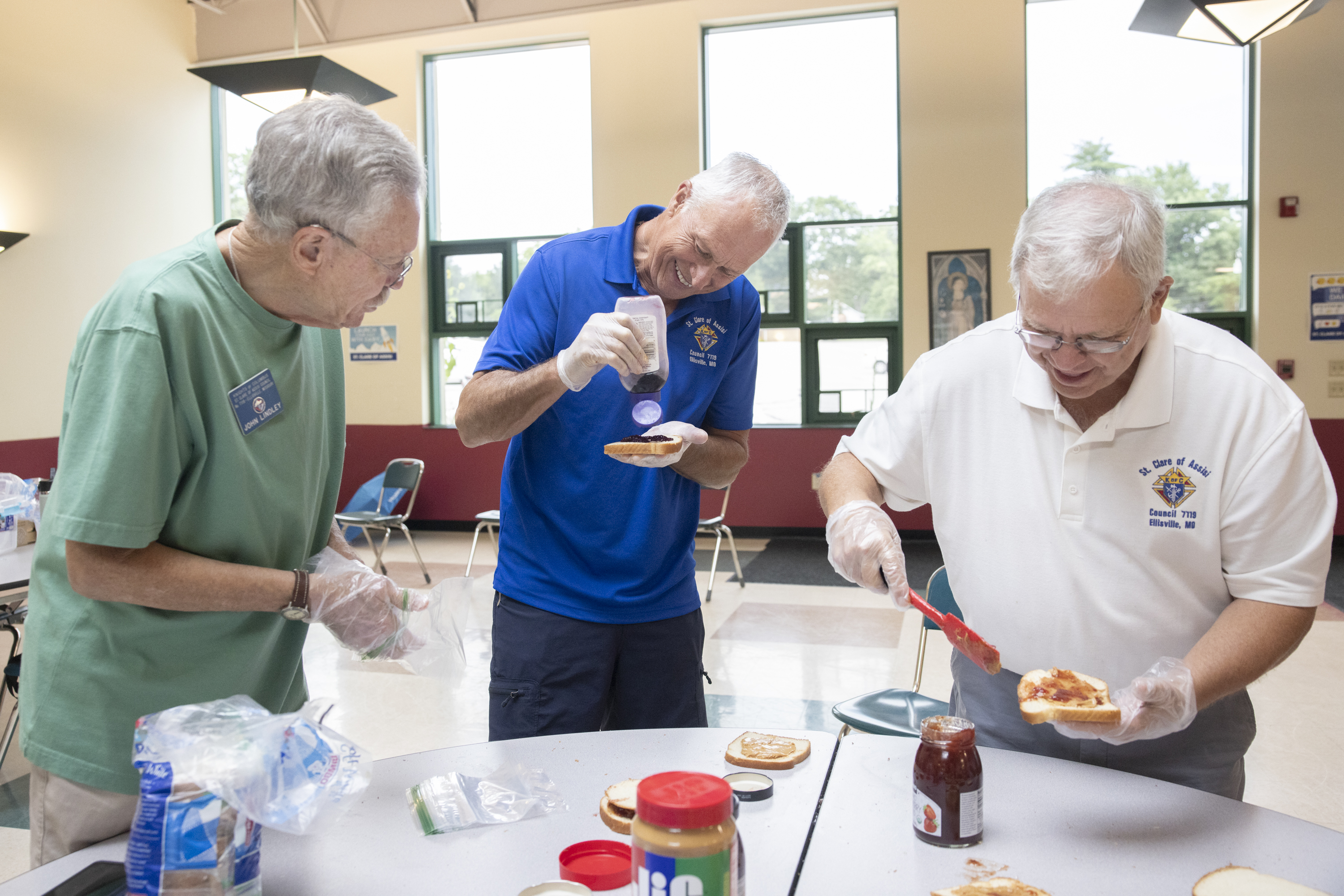
One Saturday a month, Roland Schriever gathers with a handful of other Knights of Columbus at St. Clare of Assisi Parish in Ellisville.
They’re not there to fundraise or barbecue; there are no yellow-and-red Tootsie Roll drive aprons in sight. These mornings are reserved for growing in personal relationship with Jesus and each other.
“You learn so much, and some of it is just from our personal histories, our reflections on how we grew up,” Schriever said. “…When we get in these groups, men tend to open up more. They express their experiences, ask questions, thoughts about the Holy Spirit.”
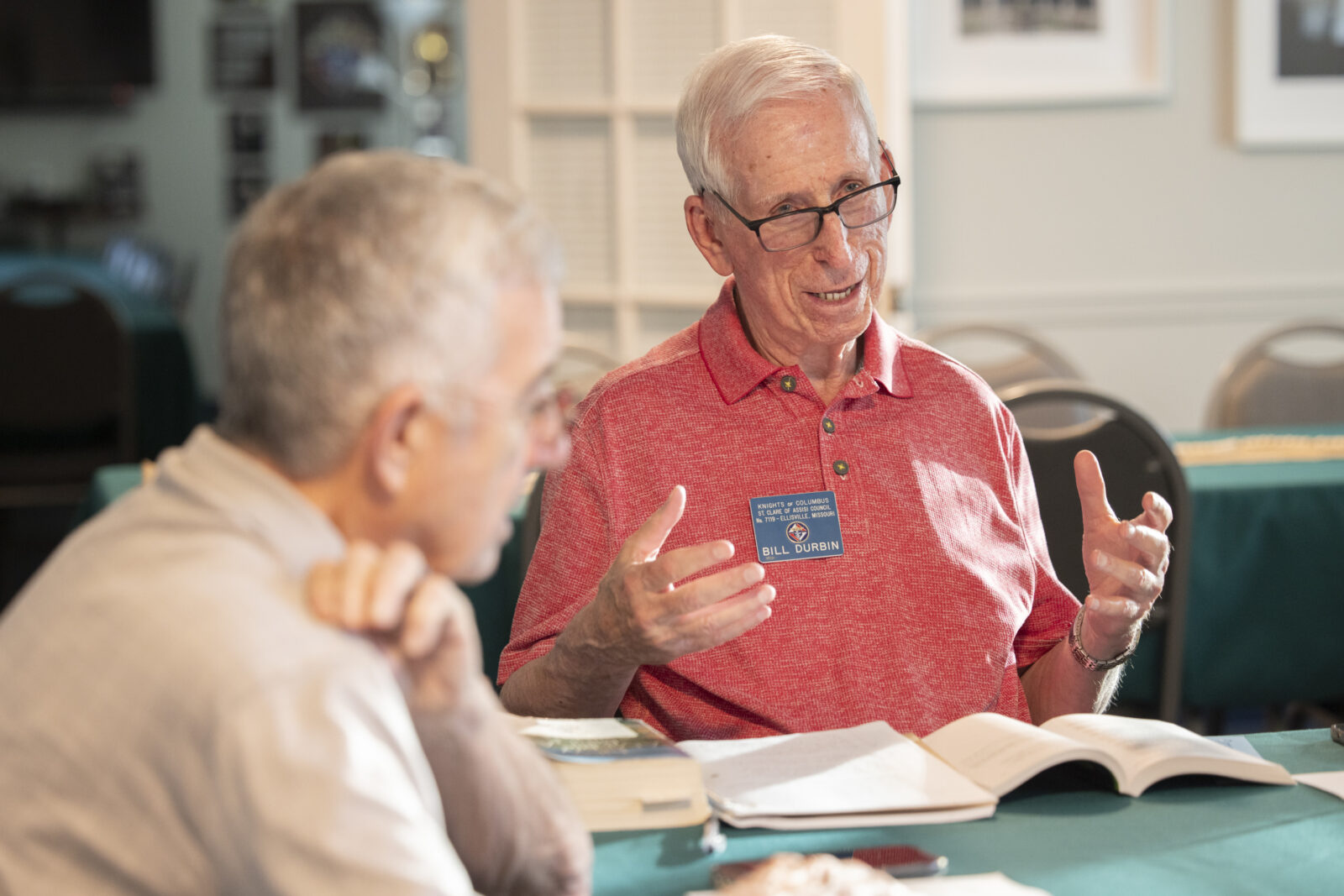
Cor, Latin for “heart,” is an initiative from the Knights of Columbus to help men grow as strong witnesses to the faith and family leaders. It focuses on three elements: prayer, formation and fraternity.
Cor was first unveiled at the Knights of Columbus supreme convention in 2023. Since then, 115 out of 266 councils in Missouri have started Cor groups, said Jason Kehl, Missouri state evangelization and faith formation officer. Nineteen councils in the Archdiocese of St. Louis have active Cor groups.
The groups are open to all men — not just Knights — and are based on a flexible framework that each council can adapt to its needs. The Knights provide some materials, including a 12-episode video series “Into the Breach,” a “Men of the Word” Bible study and a study of St. Joseph’s life, but groups may choose other content as well.
It all stems from the call to evangelize, Kehl said. Men who are actively growing in their own faith and rooted in a strong community are better equipped to be a witness to others. “We’ve got to be better men, fathers, leaders in the family,” he said.
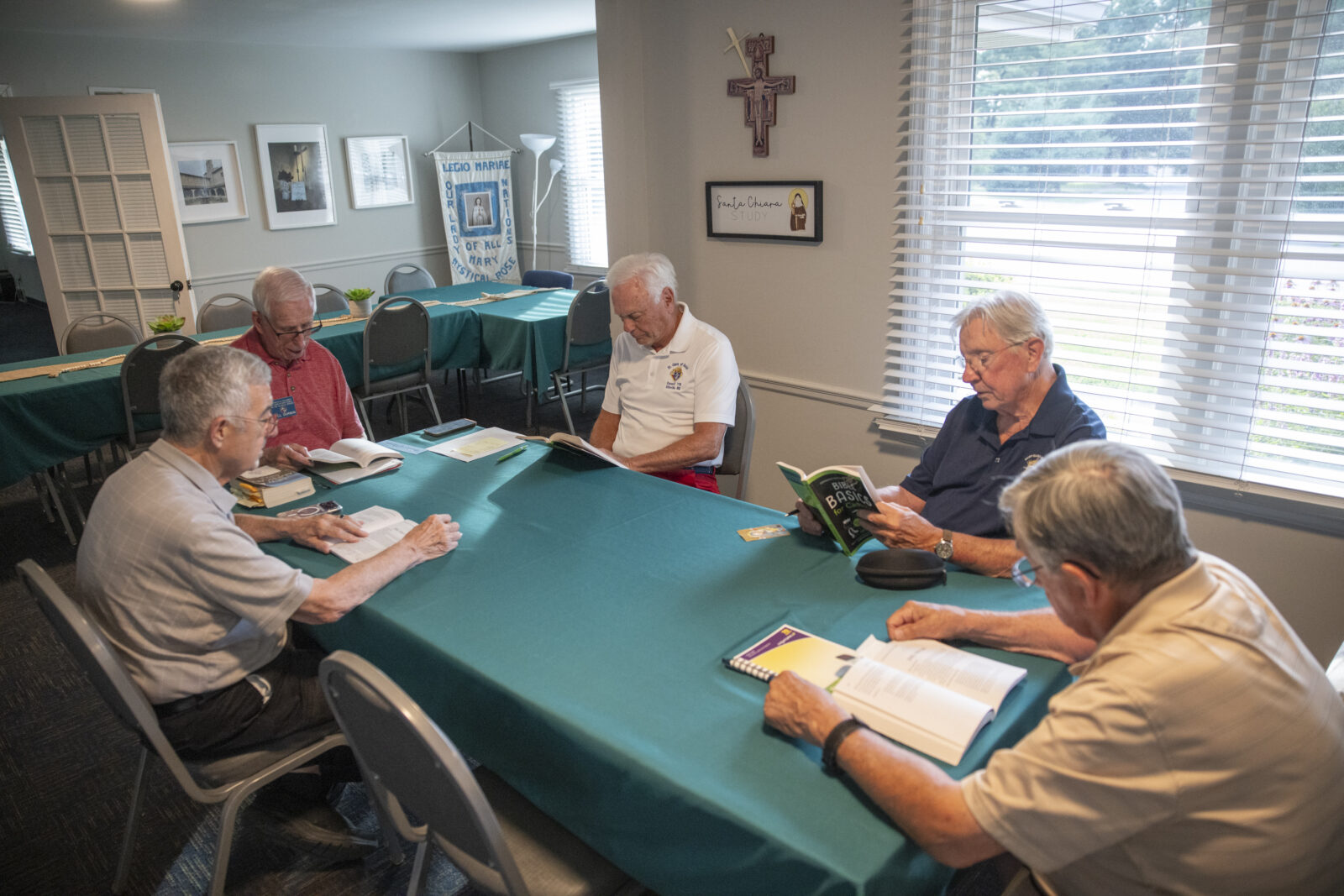
Knights of Columbus Council 7119, based at St. Clare of Assisi, decided to use a small-group model when the Knights adopted the Cor initiative nearly two years ago. They built on the parish’s previous “Whiskey Wednesdays” faith and fellowship group, which already included several Knights of Columbus, and have now grown to five small Cor groups.
The groups, capped at about eight men each, meet at different times and frequencies and select their own materials and focus. As the groups have taken off, men have also started inviting friends who are not in the Knights of Columbus — or even Catholic, Schriever said.
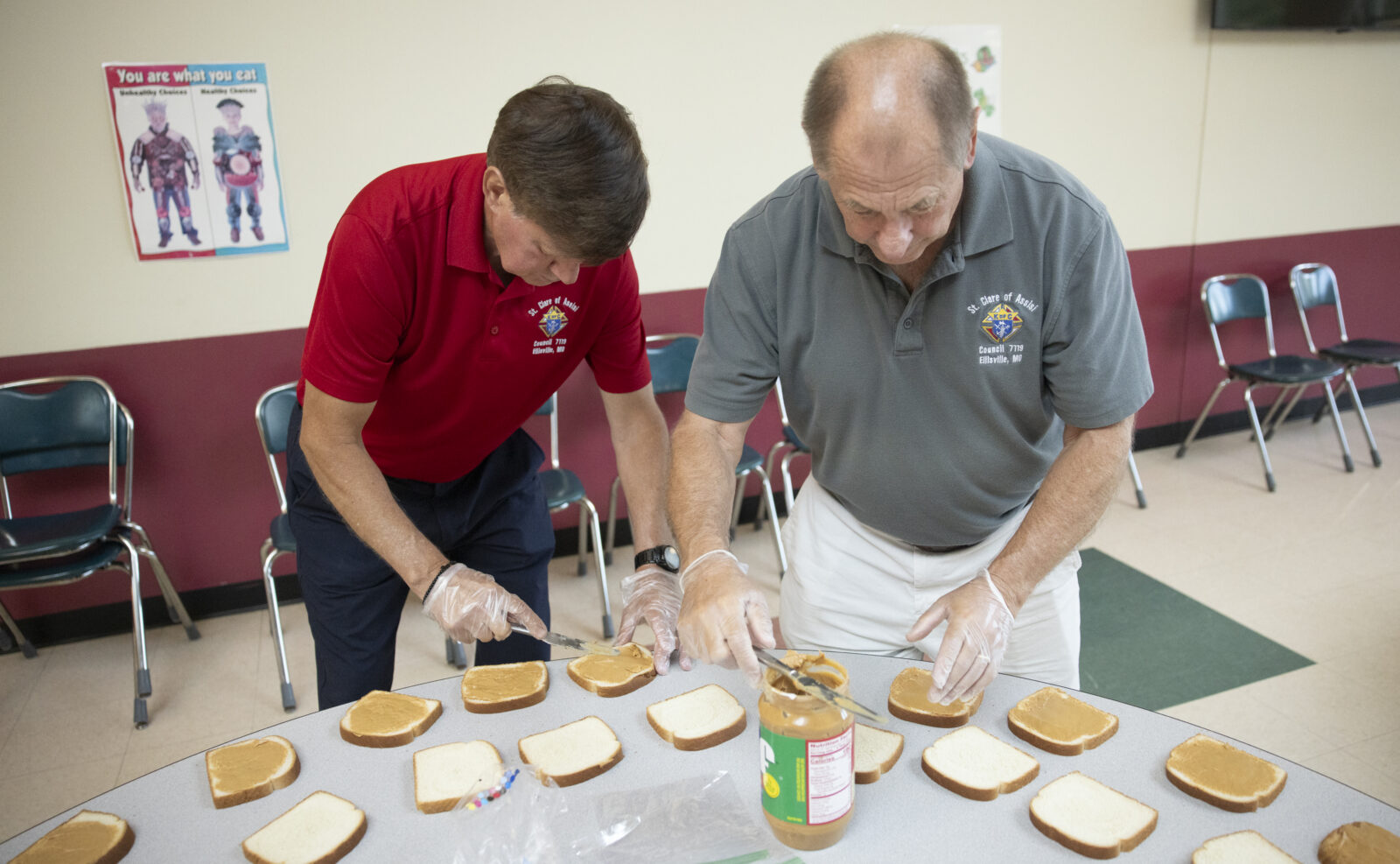
Schriever’s small group typically watches a video from the Augustine Institute’s Formed platform and discusses how to apply it in their lives, he said. This is his first time being part of a regularly meeting small group.
“We’ve all had different life experiences and times when our faith was strong and other times when we doubt some things,” he said. “You’re willing to admit that you’re not perfect and share that with other guys, and I’ll say nobody has been judgmental — just supportive.”
Cor has helped motivate Schriever and others to get more involved in the parish. He recalled looking around the church during Stations of the Cross in Lent and noticing how many other Cor participants were filling the pews. They’ve found a renewed zeal for service to others, too, in addition to their regular fundraising.
One of the first sessions his Cor group tackled focused on Catholic social teaching, including learning more about care for the poor and vulnerable. Schriever started occasionally bringing his grandchildren to serve lunch at Catholic Charities ministry St. Patrick Center with some fellow Knights.
“We’ve learned from these groups that men would rather do something than raise money, so it’s kind of directed our council to finding more things to help others,” he said. “I think that’s what’s drawn more of the guys into the Cor groups, is they want to be around guys that do stuff like that.”
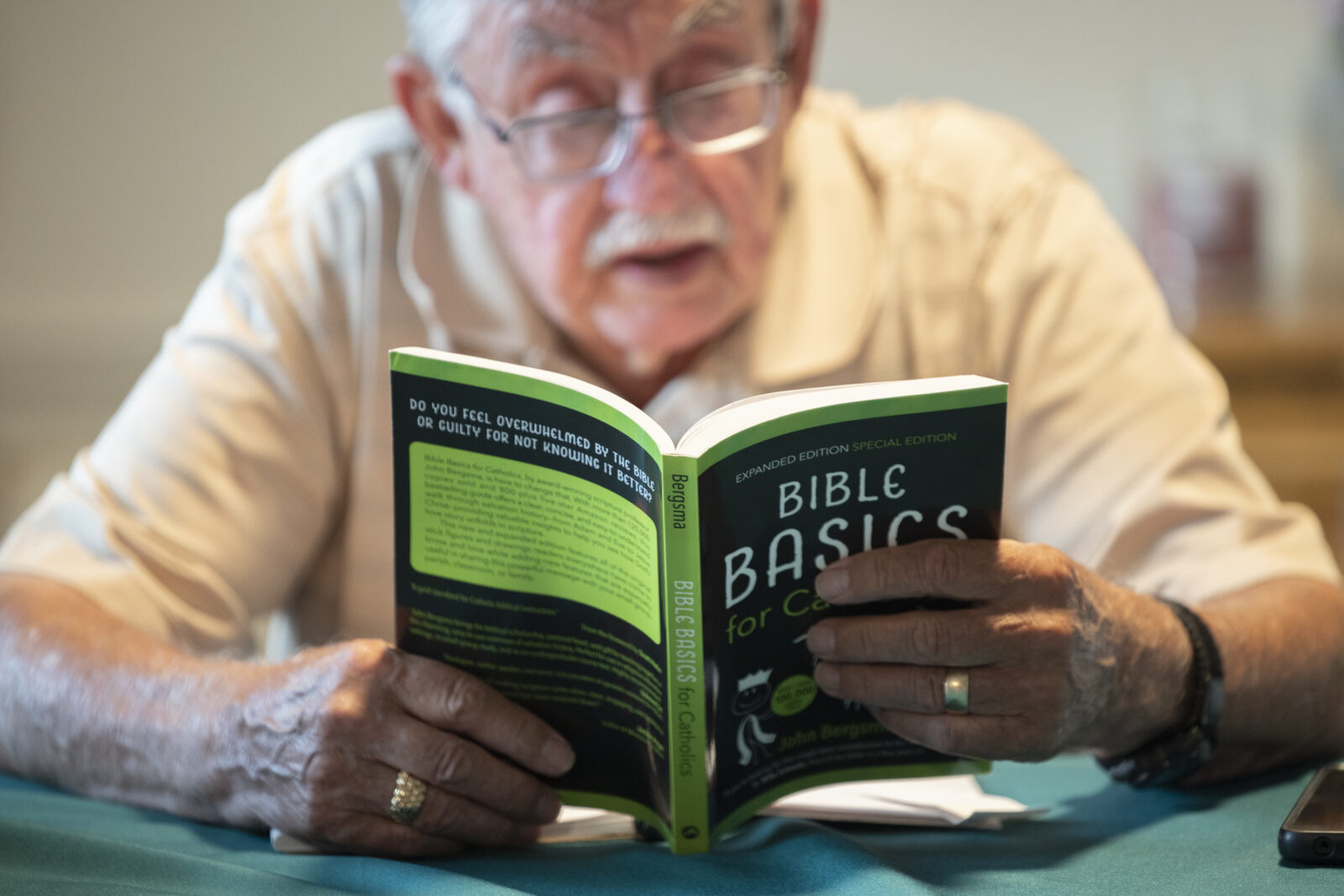
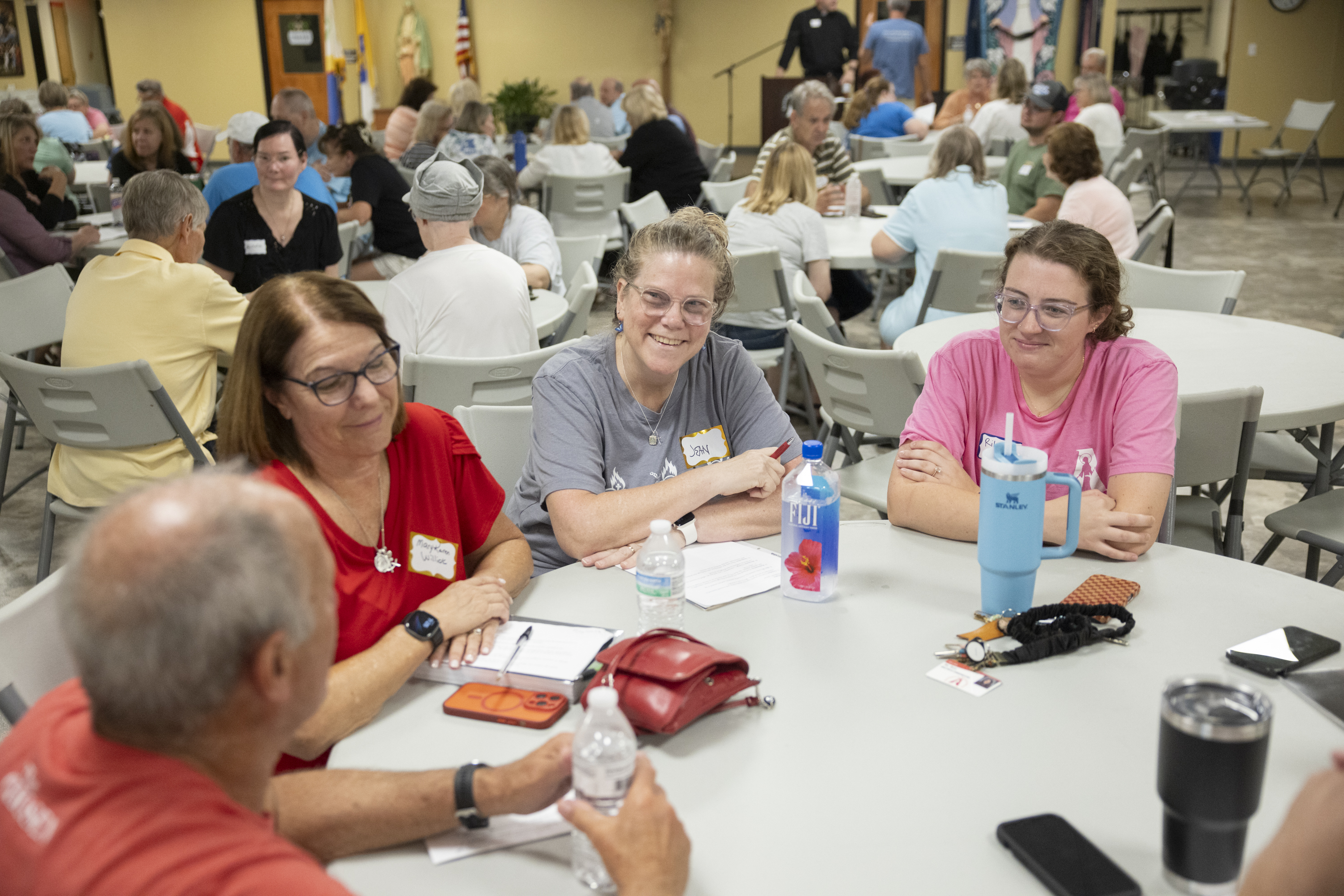
At Knights of Columbus Council 6525 in Troy, Cor gatherings take place once a month in a large group. The council has nearly 250 members, and as many as 50 or 60 men have attended Cor nights depending on the time of year, said CJ Brown, a member of the council and parishioner at Sacred Heart in Troy.
Their council has leaned into the Cor resources from the Knights of Columbus, including the “Into the Breach” video series on living lives of faith and virtue. Then, one or two men will share their personal testimony about their relationship with Jesus.
“It gets them out of their shells, and I’m included,” Brown said. Some men may be initially reluctant to share their feelings, but “you may help the next guy share — you know, I’m not alone in my thoughts, or in my struggles. This guy went through this, and this is how he got through it.”
That practice of talking about God’s presence in his life has helped Brown be more comfortable bringing up faith in everyday situations, he said. He works with lots of farmers around Lincoln County, and “we’ll talk about (faith). It’s not taboo. It used to be, you never mentioned church,” he said. “But just to your average person, you have to be comfortable doing that.”
While many Knights of Columbus members tend to join after reaching retirement age and having more free time, Brown has seen an increase in younger men getting involved in Cor. Several have come to Cor gatherings first and then joined the Knights, he said.
“Let’s help everybody grow in their faith. That’s what it’s all about,” Brown said. “Everybody needs a little push from time to time.”
Knights of Columbus
Blessed Michael McGivney founded the Knights of Columbus in 1882 in New Haven, Connecticut. Today, more than 2.2 million men in more than 17,000 councils around the world are members.
To learn more about Cor, visit kofc.org/cor.
To find a Knights of Columbus council near you, visit mokofc.org/Directory/Councils.
Blessed Michael McGivney
Michael McGivney was born in Waterbury, Connecticut, on Aug. 12, 1852, the oldest child of Irish Catholic immigrants Patrick and Mary McGivney. He was one of 13 children, six of whom died young.
He was ordained a priest on Dec. 22, 1877, for the Archdiocese of Hartford, Connecticut, and assigned to St. Mary’s Church in New Haven. Together with men of the parish, he founded the Knights of Columbus (named for Christopher Columbus) in the church basement in 1882 to unite men in faith and support families of deceased members both financially and spiritually.
During the global flu pandemic of 1899-1890, Father McGivney ministered among his people until his own weakening health forced him to be confined to bed. He died on Aug. 14, 1890, two days after his 38th birthday.
His cause for canonization was opened in 1997, and he was named venerable in 2008 by Pope Benedict XVI. He was beatified on Oct. 31, 2020, at the Cathedral of St. Joseph in Hartford.
In his apostolic letter that was read at the Mass for beatification, Pope Francis said that Blessed Michael McGivney’s “zeal for the proclamation of the Gospel and generous concern for the needs of his brothers and sisters made him an outstanding witness of Christian solidarity and fraternal assistance.”
His feast day is Aug. 13.
To learn more about Blessed Michael McGivney and his sainthood cause, visit fathermcgivney.org.