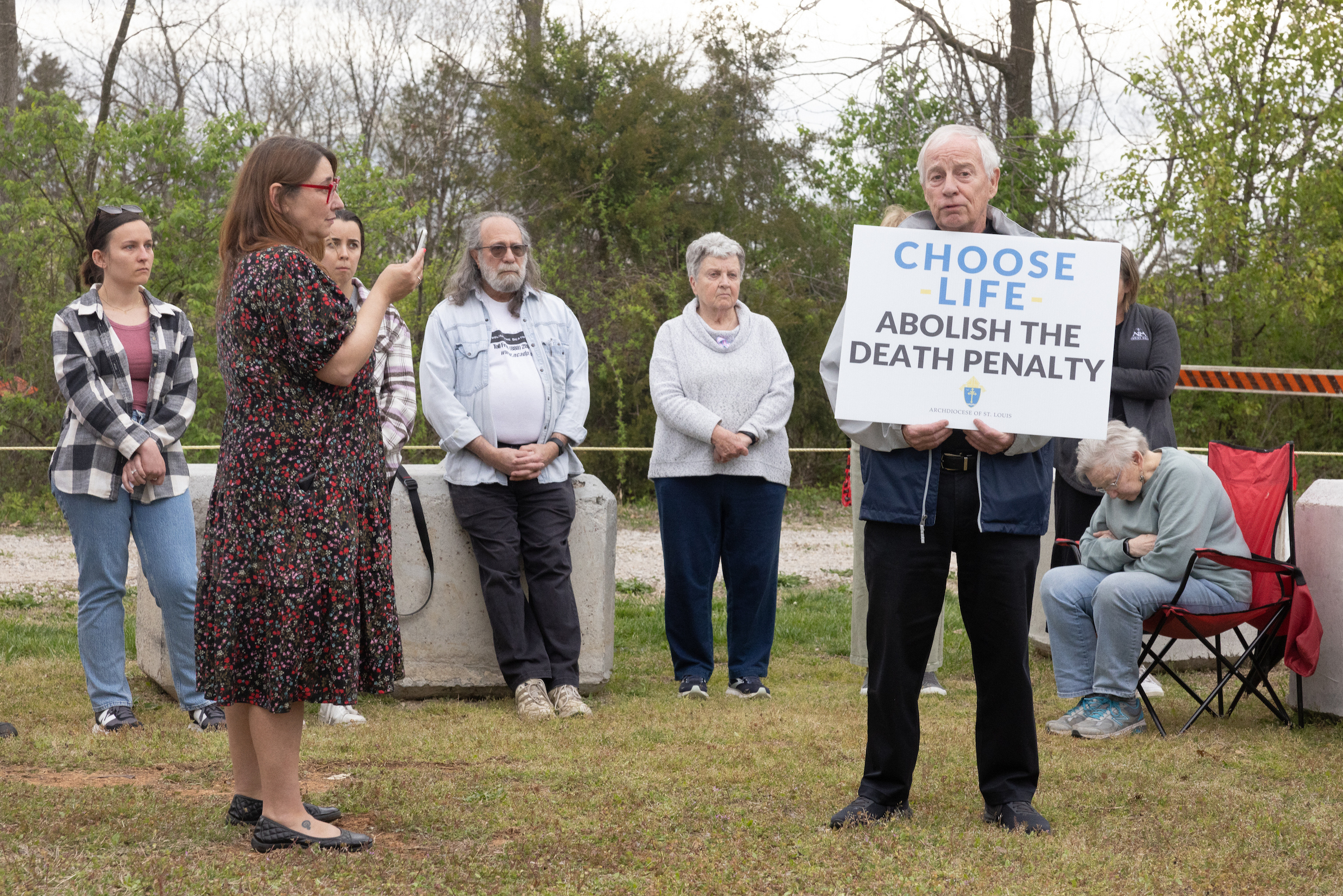
Archdiocesan project focused on education
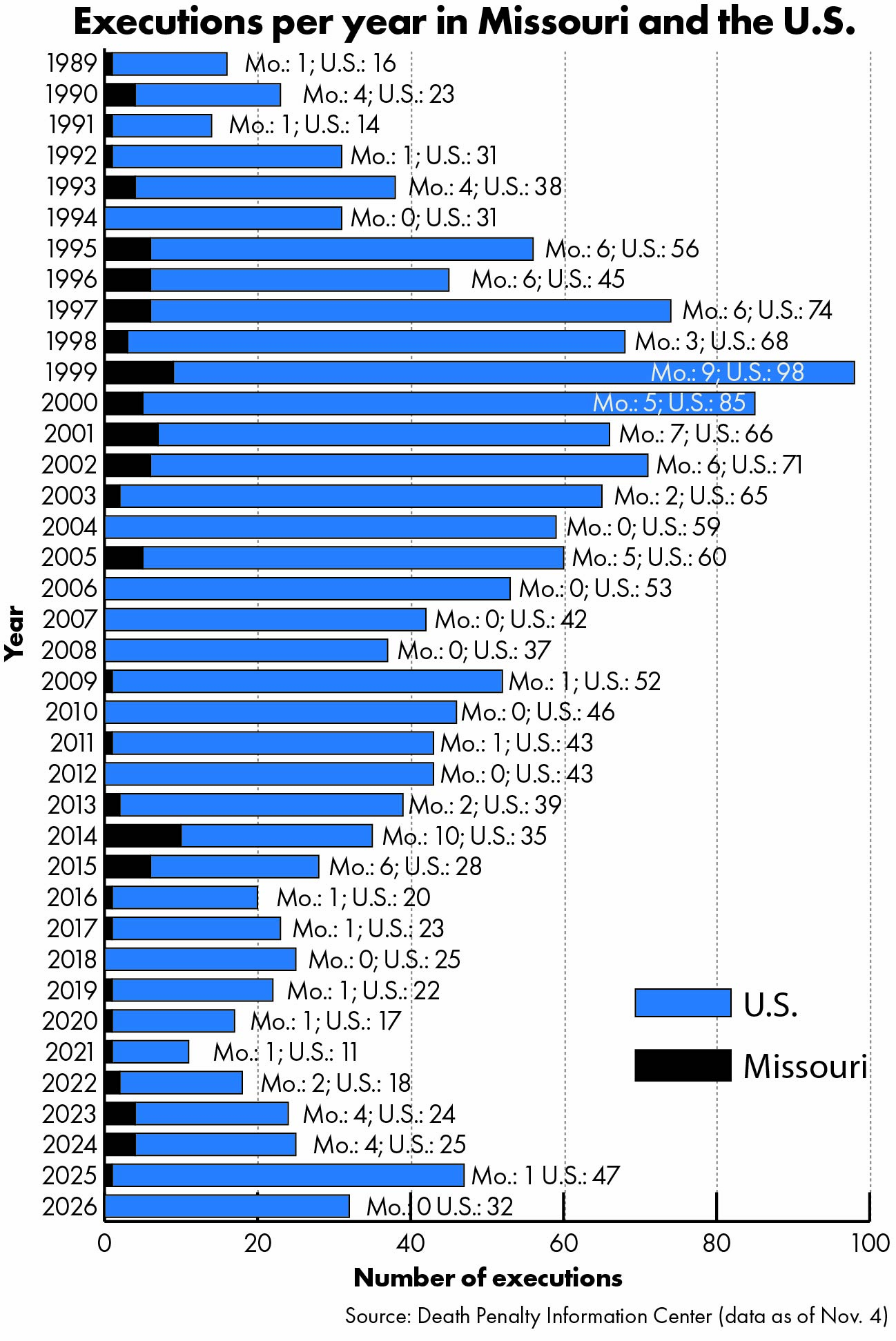
Missouri is close to marking a milestone not seen in the state since 2018: an entire calendar year without any executions.
While the execution chamber lies dormant, the Archdiocese of St. Louis’ Death Penalty Abolition Project continues to educate Catholics on the issue of the death penalty and advocate for a permanent end to the practice in the state of Missouri.
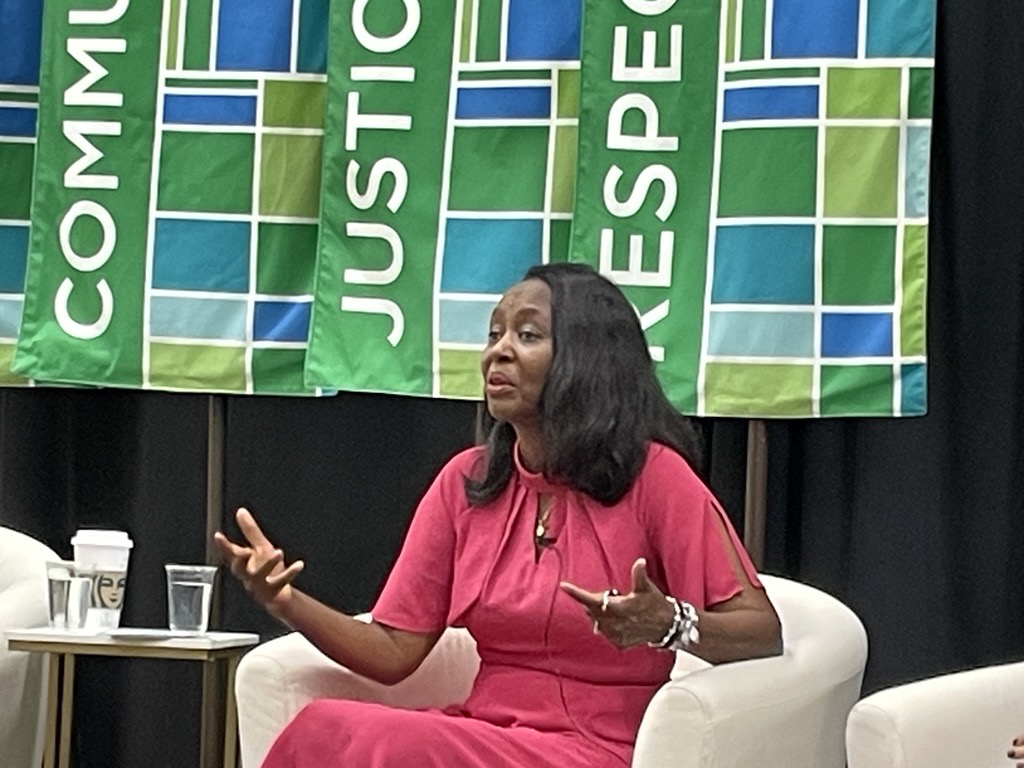
The project was founded in fall 2025 under the Office of Peace and Justice and is directed by Mary Fox, a parishioner at Christ the King in University City and former head of the Missouri public defenders system.
Fox, sometimes accompanied by Catholics involved in prison ministry, has spent the past year traveling to parishes, schools, community organizations and even a few assisted living facilities throughout the archdiocese to present information on the practice of the death penalty, stories of people who have been executed and Catholic teaching on the topic.
There are currently six people eligible for execution in Missouri and all are still working through post-conviction appeals and proceedings, Fox explained.
“We have to go through the process before anyone hits the level where they can be executed, and fortunately, no one is at that point right now,” Fox said. “But I think what we have seen from juries in Missouri in the last 20 years is that they are not as interested in giving a death sentence. It used to be a very regular occurrence, and it is not anymore.”
“We’re also seeing that prosecutors are not seeking the death penalty as often, and that they’re realizing that they can protect their community without having to seek the death penalty,” she added. “So, the combination of the prosecutors choosing to not seek death and the juries choosing to not impose death has limited the number of death sentences.”
Lance Shockley’s execution on Oct. 14, 2025, was the most recent in the state and the only one in Missouri in 2025. Missouri put to death four individuals in both 2024 and 2023. While its yearly numbers have fluctuated widely, Missouri’s total of 102 executions is the fifth-highest among states since the death penalty was reinstated in the U.S. in 1976.
This year has given Missourians another small victory on the issue, Fox said. In March, a bill to abolish the death penalty was heard in a Missouri legislative committee for the first time in several years. Archbishop Mitchell T. Rozanski testified in support of House Bill 2153, sponsored by Rep. Jim Murphy of south St. Louis County.
Ending capital punishment is an issue that brings together a wide coalition of groups, Fox said. Among the many arguments to abolish the practice, Catholics have an opportunity to be a strong moral voice reminding people of the human dignity of all involved, including in national news stories like the now-scrapped plan to livestream a military execution in Texas and the botched execution of Christa Pike in Tennessee that left her alive but in the hospital for several days..
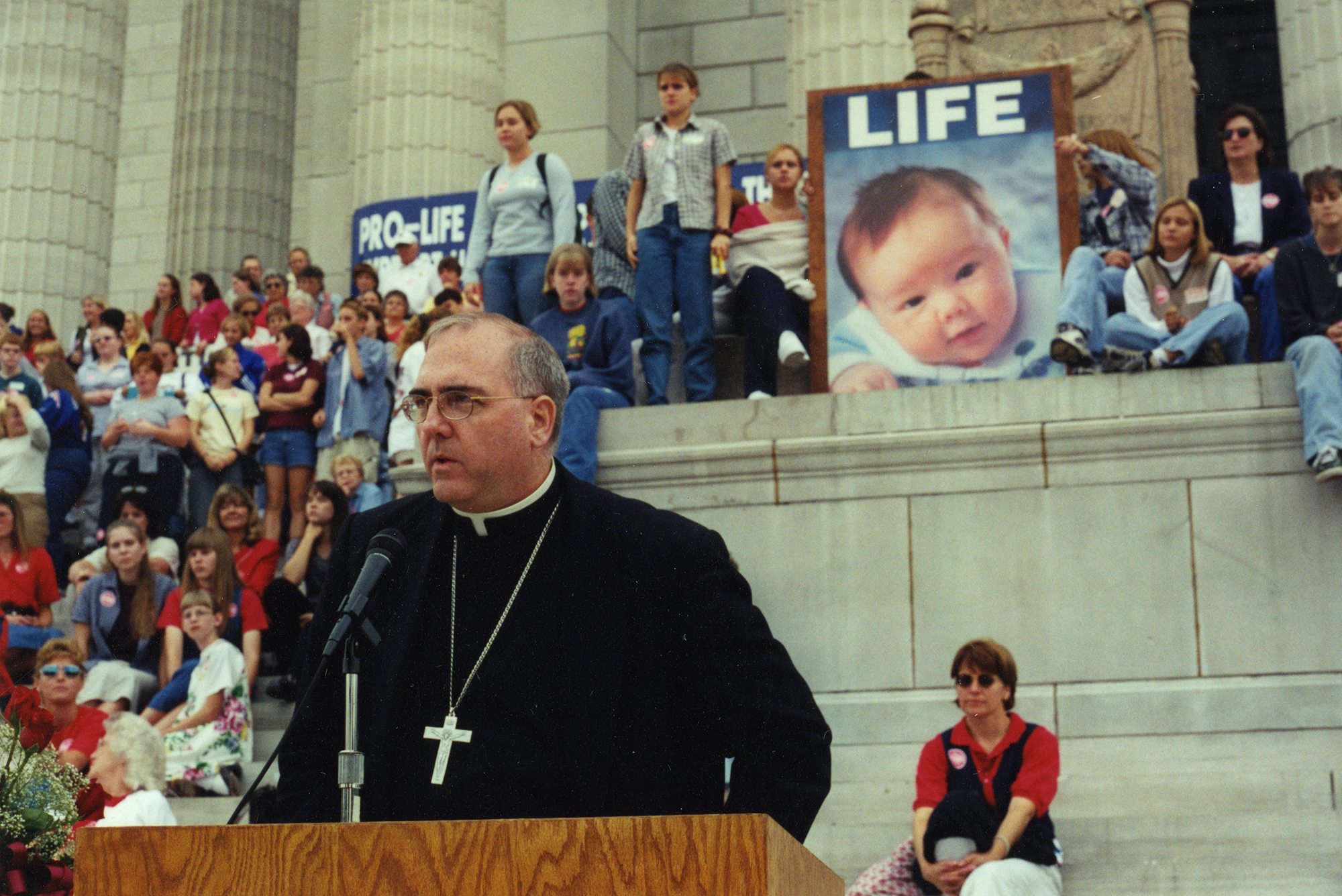
In 2018, under Pope Francis, the Catechism of the Catholic Church was amended to state that the death penalty is “inadmissible because it is an attack on the inviolability and dignity of the person” (CCC 2267). Pope Francis was not the first pope to speak out against capital punishment, though, Fox notes in her presentations. St. John Paul II preached against the practice, including during his 1999 visit to St. Louis at the Trans World Dome; Pope Benedict XVI also called for its abolition.
Pope Leo has continued the call to end the death penalty, most recently in a social media post on the World Day Against the Death Penalty on Oct. 10.
Fox also sees more opportunities for priests and parish leaders to speak about the issue and promote the Catholic understanding of it, she said.
“Our clergy have done such an excellent job preaching on other pro-life issues, so I would love to see more preaching on the issue in churches to their different congregations. I can come in and say something, but people are more inclined to listen to their pastor or the priest in their church,” Fox said.
Besides outright abolition of the death penalty, the archdiocesan project also supports efforts to remove the judicial override, which allows a judge to sentence someone to death if the jury cannot come to a unanimous decision. Missouri is one of two states, alongside Indiana, which allows that practice.
Even without a scheduled execution to speak out against, Catholics can continue to make their voices heard on the issue by contacting their state legislators and asking them to support legislation to abolish the death penalty and remove the judicial override, Fox said. Catholics can also take death penalty support into consideration when voting on legislators, county prosecutors and judges.
“That’s how we moved the abortion issue forward, by there being conversations in church on those issues and, obviously, continued legislation to move forward in the legislature,” Fox said.
First Friday prayer vigil
Archbishop Mitchell T. Rozanski will offer a reflection during Catholic Mobilizing Network’s December first Friday prayer vigil on Dec. 4. On the first Friday of each month, Catholic Mobilizing Network hosts a virtual vigil with guided prayer, petitions, Scripture reflections and contemplative silence to stand in solidarity with people facing execution, their victims and all who are impacted by the capital punishment system. To register for the vigil, visit catholicsmobilizing.org/our-work/death-penalty/prayer-vigils/.