Catholic high school marching bands promote school spirit, community through shared activity
For Ke’Von Reynolds, music is a universal language and powerful tool of communication.
The Cardinal Ritter College Prep High School sophomore has been making music since childhood, and now he hopes to help other young musicians discover that same love for music through his school’s marching band.
“Music is my favorite way to communicate,” said Ke’Von, a drumline captain and snare drummer with the Marching Musical Lions. “If I can’t communicate through words, I will communicate through music.”
Cardinal Ritter’s marching band is relatively new; it was formed about five years ago as part of the school’s overall band program. About two dozen students are part of the Marching Musical Lions, performing at football games, participating in marching band competitions and playing at other events.
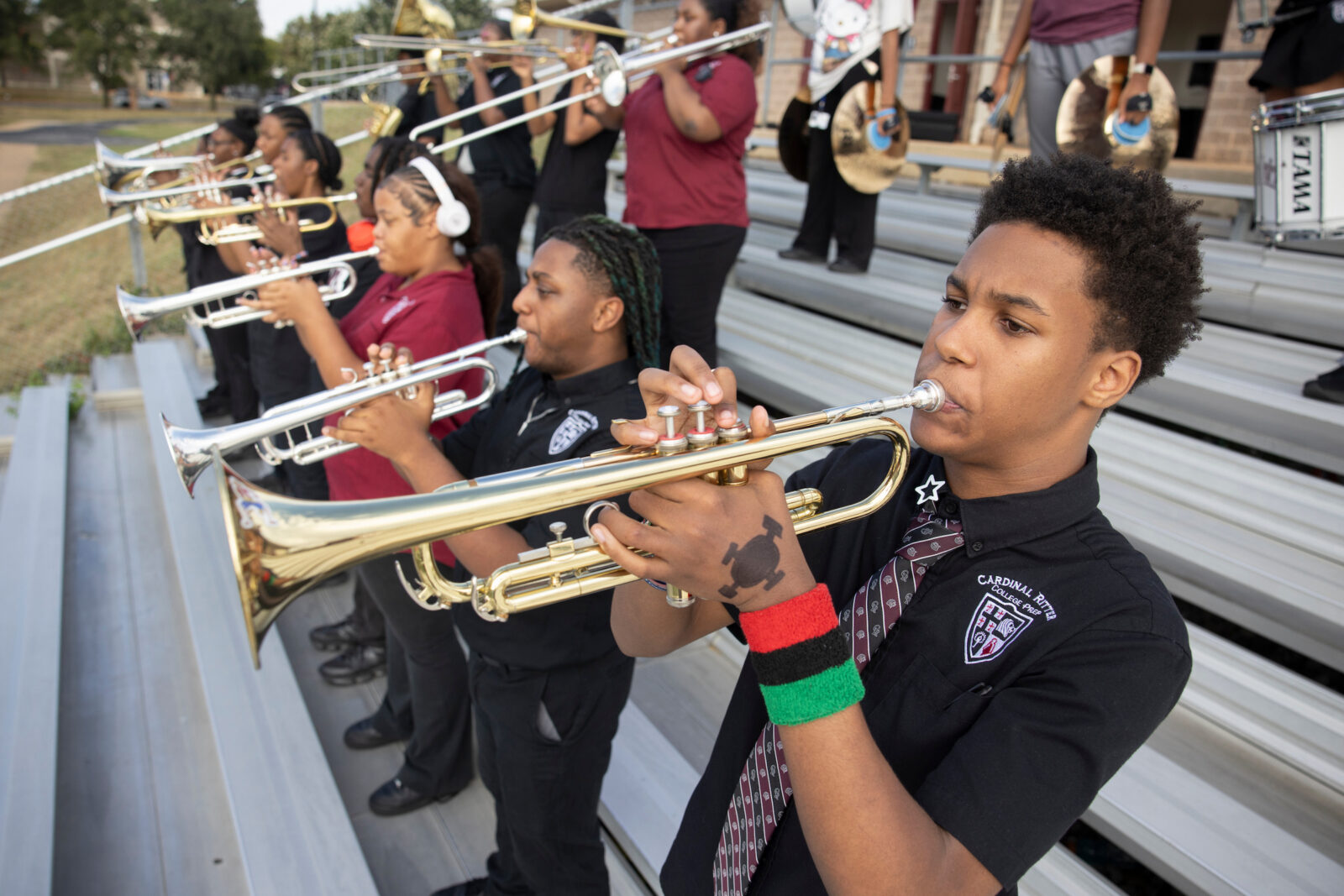
Band director Charles Smotherson Jr. said that a strong sense of community has formed naturally among the students. They’ve meshed into a close-knit group, and student leaders such as Ke’Von help their peers and strengthen the group.
“I’m glad they just kind of like meshed together,” Smotherson said. “It’s a really good group of kids.”
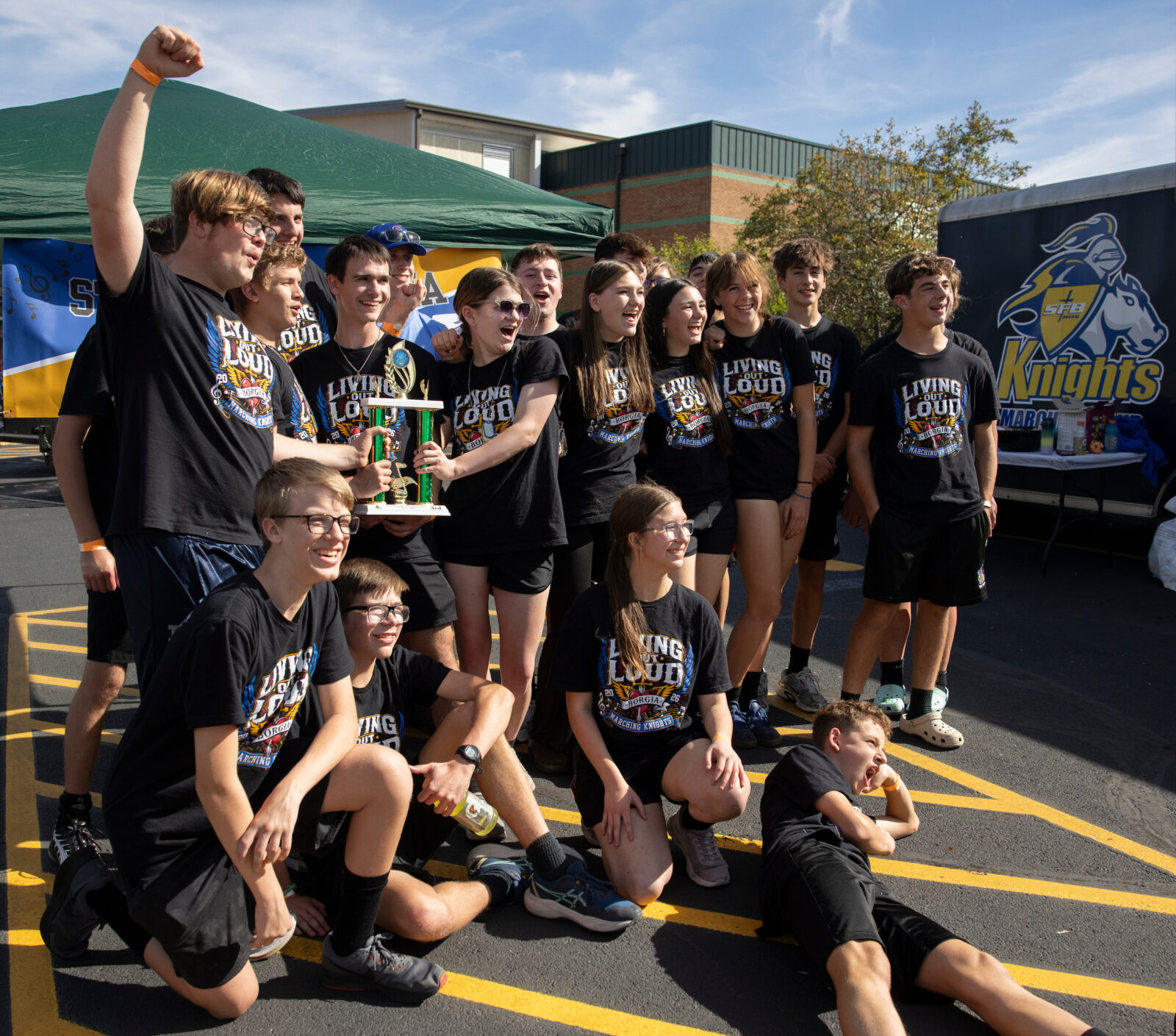
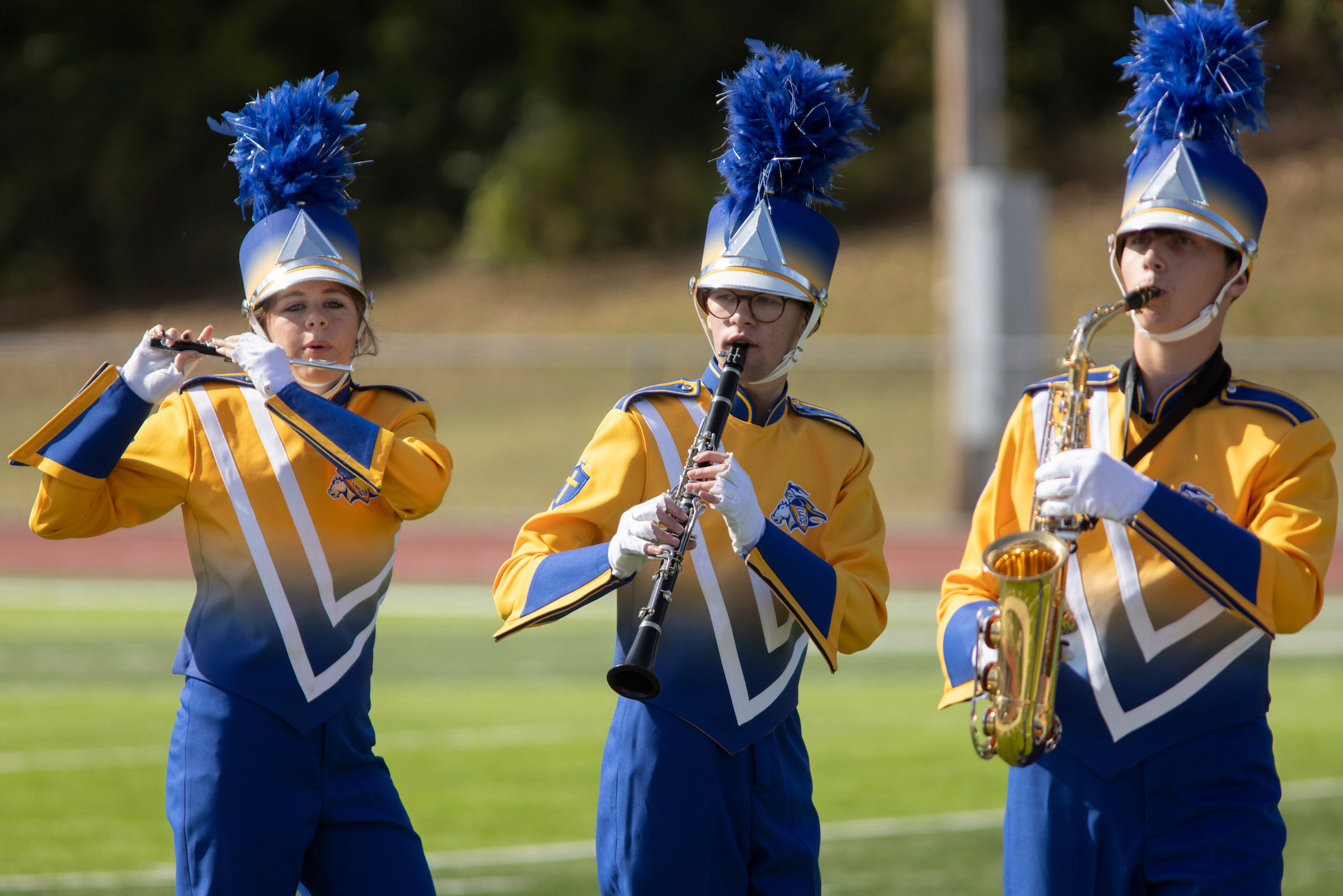
About 50 miles west of Cardinal Ritter, St. Francis Borgia High School in Washington has supported a marching band program for about 60 years. The Marching Knights also perform at football games and at competitions and in community parades, among other events.
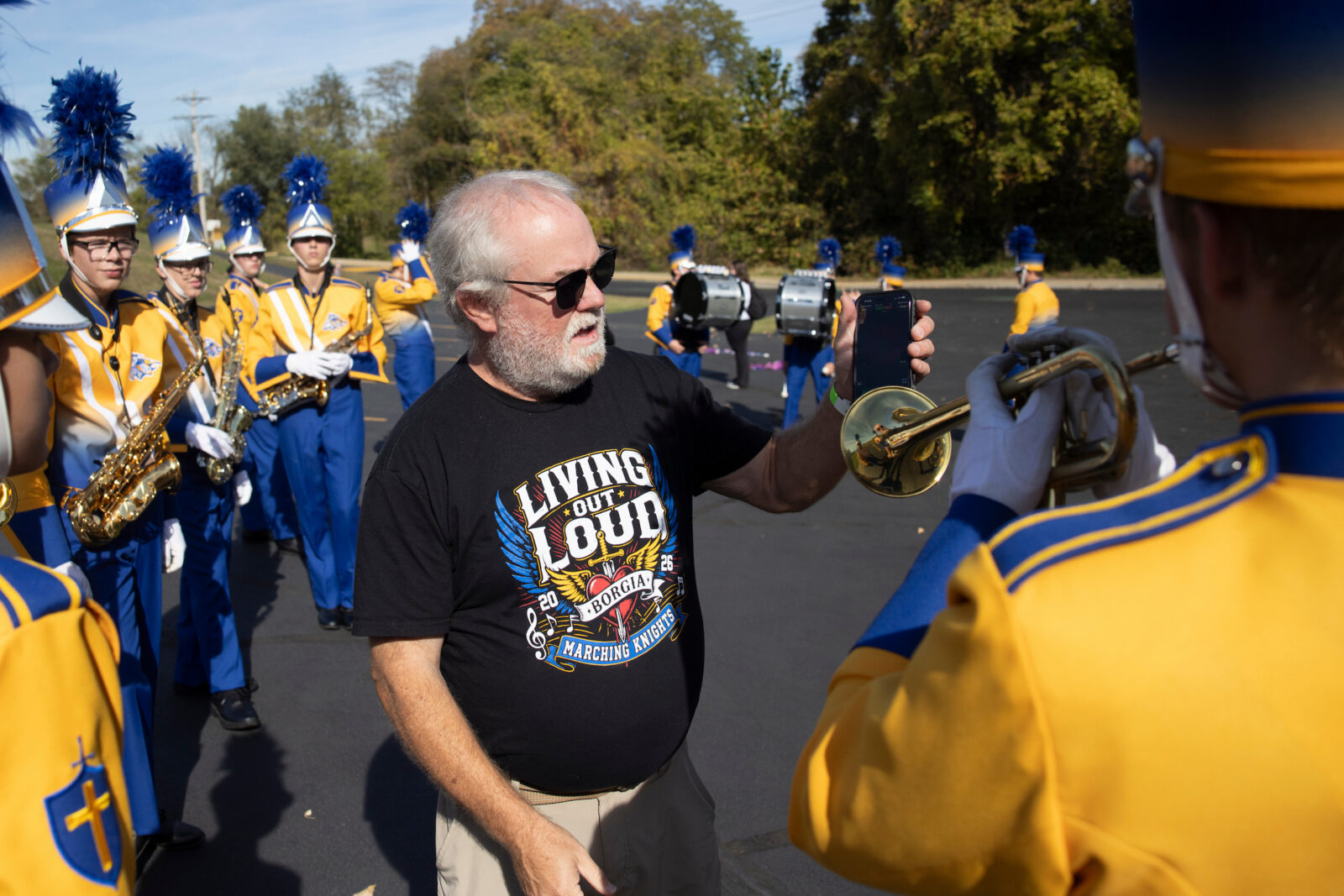
Band director Scott Rybolt said that marching band offers more than just an opportunity to perform. The program challenges students’ minds and bodies while building teamwork, responsibility and time-management skills.
“Marching band makes your brain fire (both sides) more than anything,” Rybolt said. “If you’re doing the hardest calculus, you’ve got one part of your brain that is on fire. But when you’re doing marching band, you’ve got to know: Is my music memorized? Not only that, you’ve got tactile going … and then you’ve also got dynamics and the aesthetics that go along with just the black and white reading of the music. You’ve got to know where you are on the field, and when you’re supposed to go there. It’s firing the left and right sides of your brain. It’s crazy how good marching band is for anybody.”
Beyond the music, marching band offers students a sense of community through activities that help students connect with one another, Rybolt said. The band spends hours together at summer camps, rehearsals outside of school time and Friday night games, forming bonds with one another as they work toward a common goal, he added.
Friday Night Lights
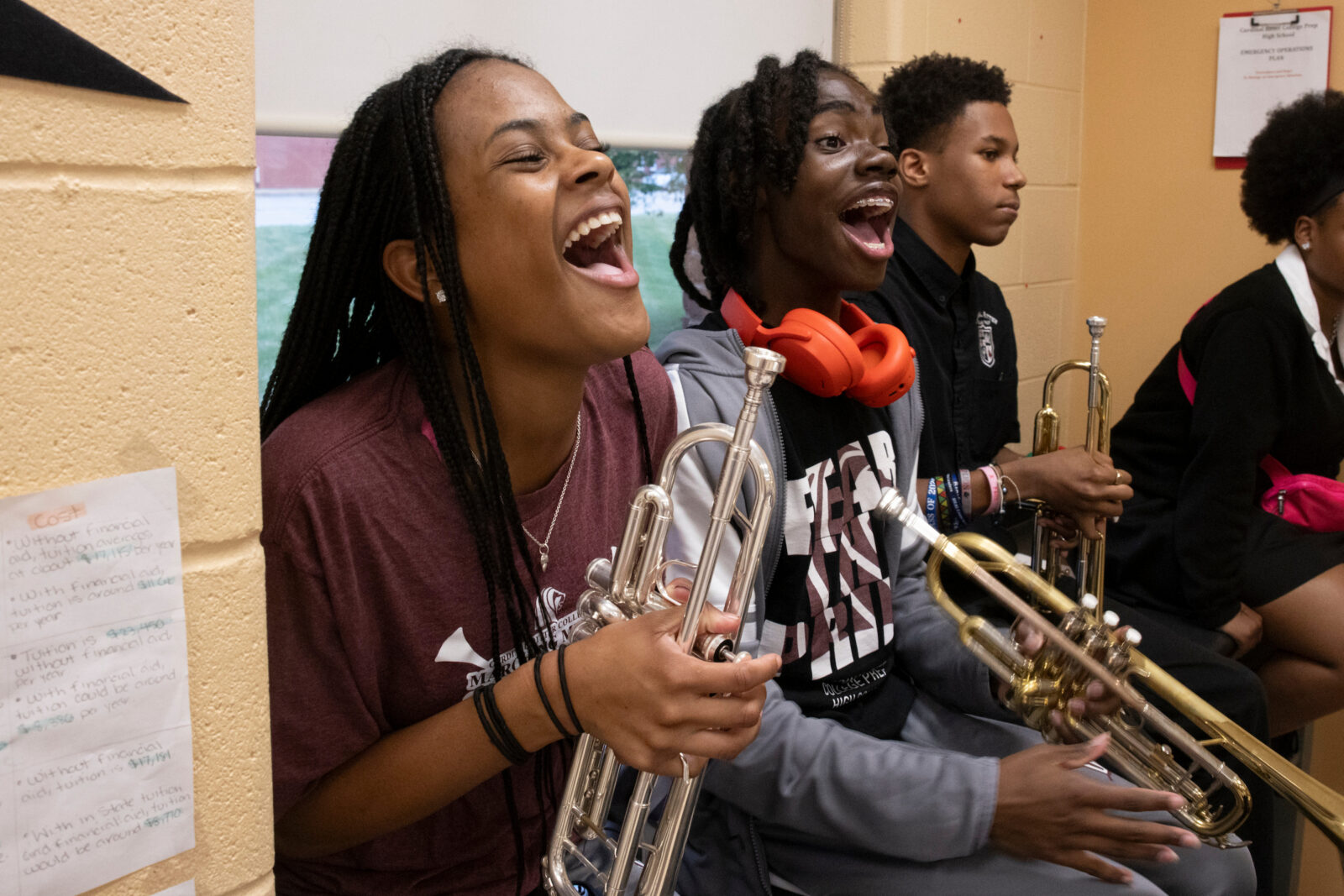
About an hour before Friday Night Lights at Cardinal Ritter, a cacophony of horns and drums drifted from a classroom as the band warmed up with some of their regular fight songs. Before they marched into the stadium where Cardinal Ritter was set to play Christian Brothers College High School on a mild October evening, Smotherson checked each row to make sure everyone was in order.
With a blow of his whistle, the band chanted: “C-R-C-P” as the drumline began pulsating and the band marched past tailgaters in the parking lot and into the stadium.
The halftime performance is the centerpiece of any band. For the Marching Musical Lions, the performance included a medley of several songs: Cheryl Lynn’s “Got to be Real” and Michael Jackson’s “Don’t Stop ‘Til You Get Enough” and “Remember the Time.” Throughout the game, the band also plays several tunes in the stands between plays to keep the crowd energized.
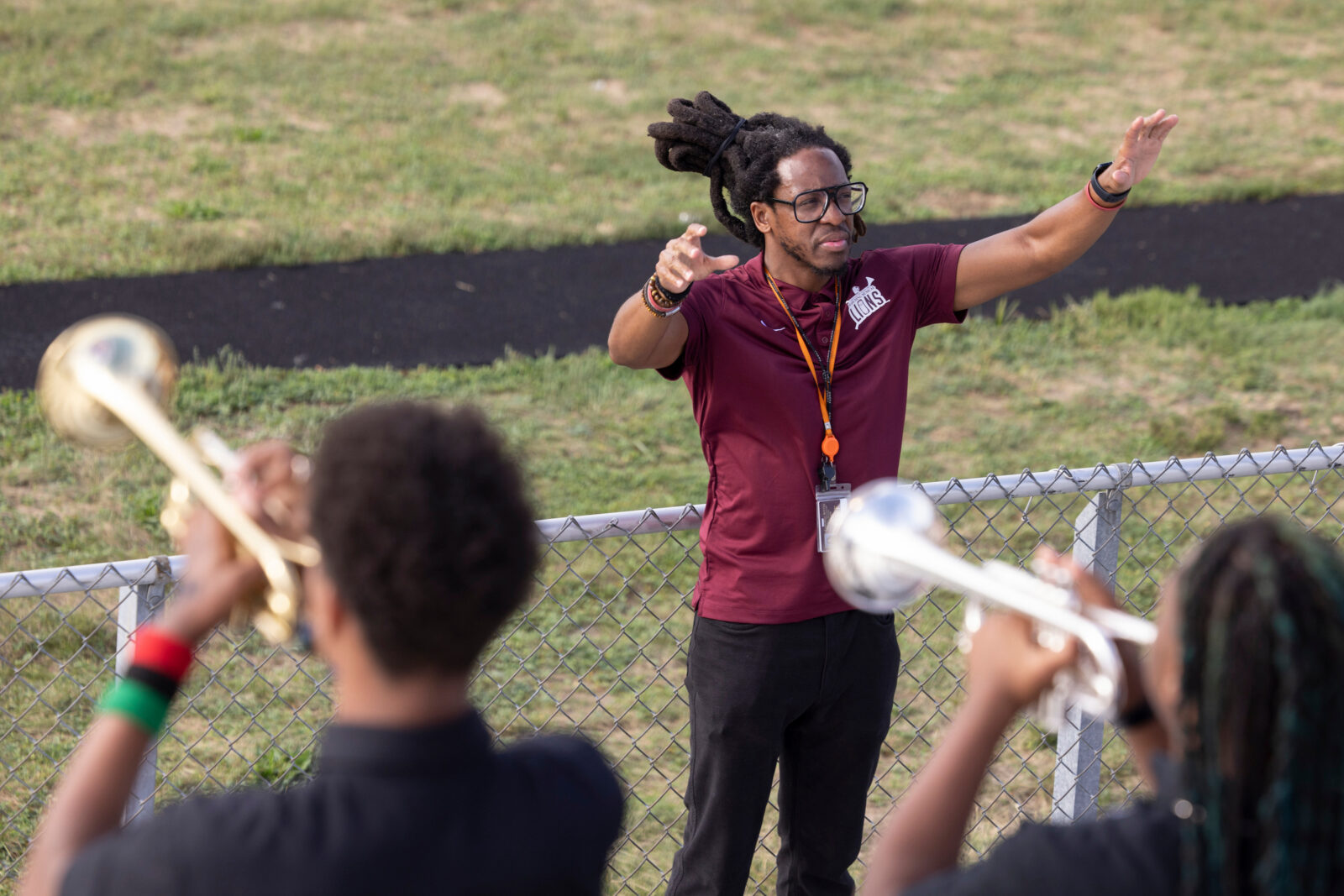
Students have a voice in what songs they get to perform, with the understanding their director will make the final call, said sophomore Briel James, who plays the cymbals. As the band works together throughout the season on their performance — the music, the movements and the presentation — band members help each other through their mistakes and encourage one another, she said.
“Sometimes we’ll do stuff by ourselves (outside of band) and come together. We’re like a family,” Briel said. “If you think about it, we’re like (Smotherson’s) kids, because not only do we joke and play, but we also have serious time and we know when it’s time to lock in and actually pay attention.”
About five years ago, a Cardinal Ritter colleague who knew Smotherson from his days in marching band at Lincoln University in Jefferson City, Missouri, reached out and asked Smotherson if he would consider heading up a band at the co-ed archdiocesan high school.
After spending several years away from the classroom and already considering a return to teaching, Smotherson agreed to give it a go. The marching band is now part of students’ class experience as well as an extracurricular commitment, with rehearsals and other band activities requiring time outside the classroom.
With about two dozen members, Smotherson said he hopes to grow the Marching Musical Lions by recruiting younger students and strengthening the brass line, while building on the percussion’s popularity. As the program becomes more established, he also hopes to add concert band as another opportunity for students.
“I’m trying my best not only to build it because I want to see it, but I think it should be seen around” the school and community, he said. “I’ve been really fortunate, really blessed to be able to work with them.”
Prayer before play
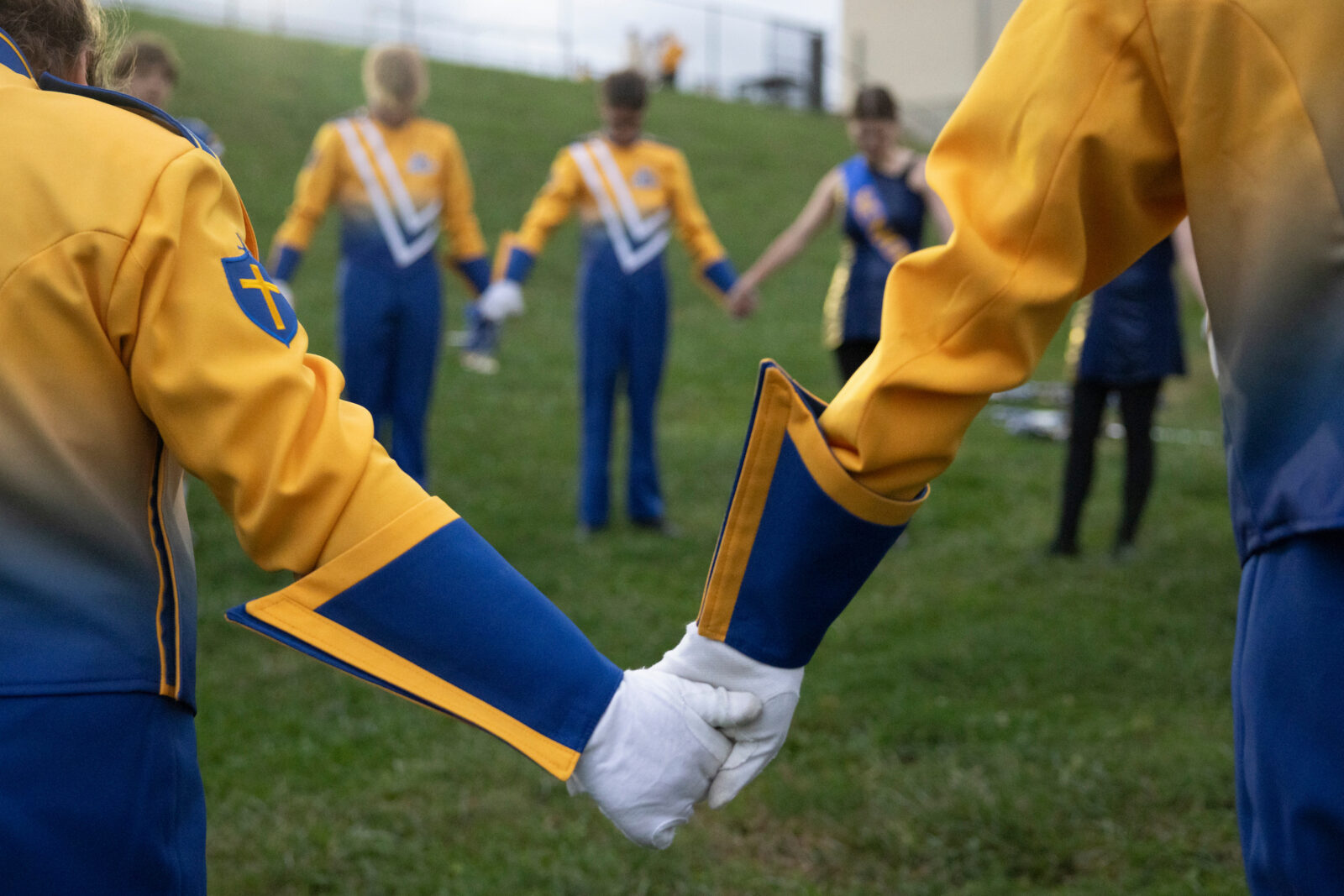
Moments before kickoff against Lutheran High School St. Charles, about two dozen members of the Marching Knights gathered in a circle near the football field on a chilly October evening at St. Francis Borgia and joined hands.
Senior Connor Trani led the prayer, lifting up the names of people connected to the band program and friends of the school who have died, along with St. Cecilia, patron of musicians; St. Francis Borgia, the school’s namesake; and Our Lady Queen of Victories. After each name, the band answered, “Pray for us.”
Praying together before each game has long been a tradition for the Marching Knights.
The prayer ended with a group chant, “One, two, three, haaaa!” Then came the call: “Alright, line it up.” The band formed a neat row and marched up the hill and around the track to its place in the stands.
Borgia introduced a band program as early as the 1950s, but in recent years, the marching band has undergone a rebuilding since the COVID pandemic. Today, about two dozen students, including two color guard members, perform at home football games, local parades and competitions.
Rybolt, who is in his fifth year as band director at Borgia, helps teach middle school students at Our Lady of Lourdes and St. Francis Borgia grade schools, helping those younger students gain experience and encouraging them to consider band when they reach high school.
“Kids who do music are prone to doing well in other things,” Rybolt said. “You’ve got to be responsible not just to yourself, but to a group. You’ve got to be able to plan your time pretty wisely, which I think helps kids even if they don’t do band in college.”
Band is part of the school day at Borgia High School. The group typically rehearses at 7 a.m. on weekdays, and before the school year starts, students attend a summer camp to prepare for the season. This year’s show, “Living Out Loud,” features music by Bon Jovi, including “Livin’ on a Prayer,” “You Give Love a Bad Name” and “It’s My Life.” Students also take part in concert band, and some join the school’s extracurricular jazz band.
The band’s small size means students might have to learn additional parts or step in where the band needs coverage.
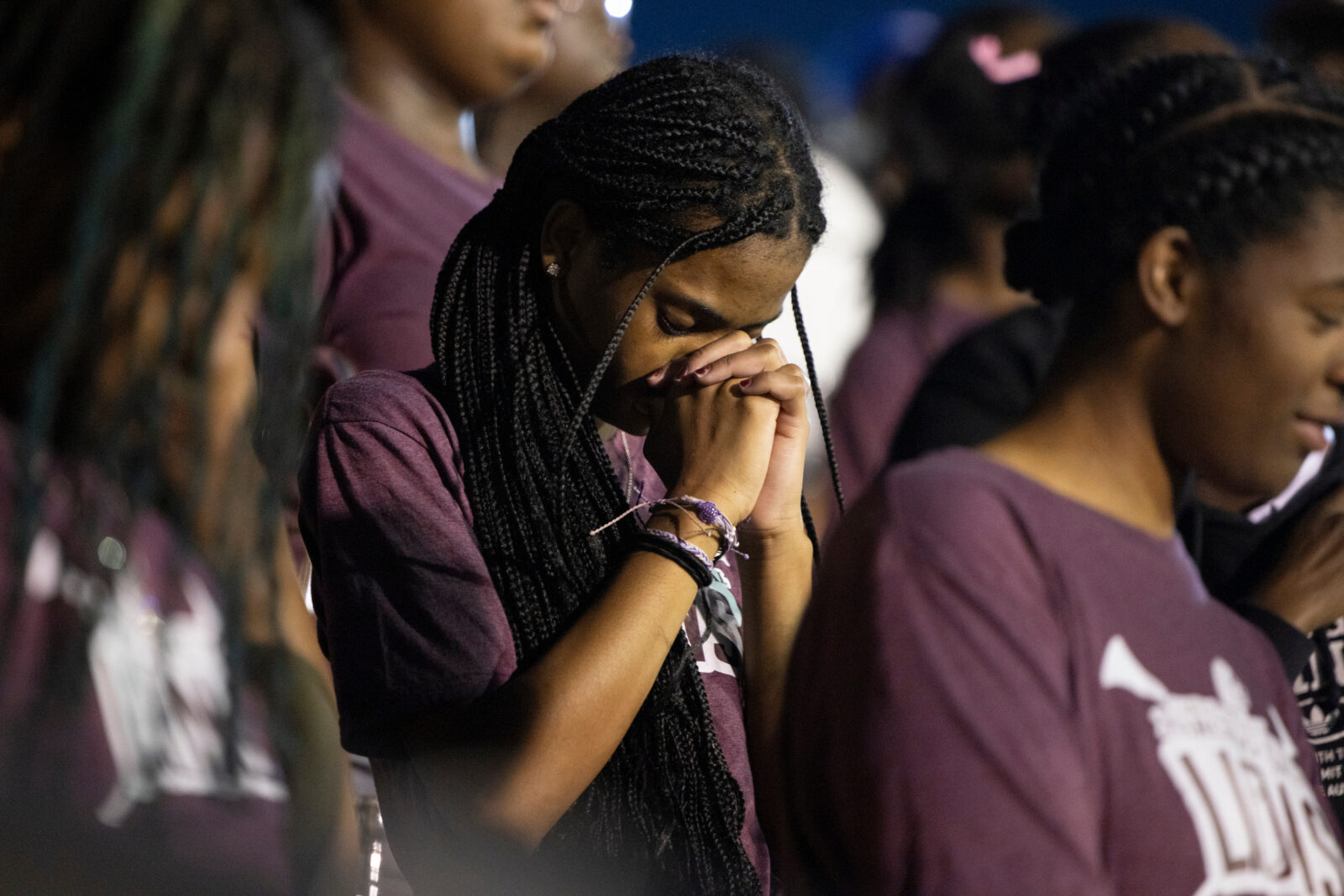
prayed before the start of the football game on Oct. 15 at
Cardinal Ritter College Prep High School in St. Louis. Aubrey
plays trumpet in the marching band.
Nick Garber, a sophomore and alto saxophonist, wasn’t involved in band until he reached high school. He said he’s learned how to work with others, which requires constant communication and placing trust in one another.
“If we don’t have good chemistry, then won’t really be able to perform well because won’t be able to get the work done,” he said.
Vivian Winkels, a sophomore percussionist, said she’s valued the friends she’s made in band. “Having a small band means that you gotta get to know everyone really well,” she said. “I’m pretty much friends with everybody in the band, and it’s a really nice feeling.”
Parents support the program through the school’s music association, fundraising events and practical help with props and equipment.
Kelly Benhardt, whose son, Harry, is a senior trombone player, said that marching band can be a lot of early mornings and late nights, but she sees their hard work pay off throughout the season.
“Band definitely takes a commitment because they miss out on a lot of stuff because of it,” she said. “But they gain so much more from it, because they’re such a close-knit group of kids.”