Feast day Mass for St. Rose Philippine Duchesne will be celebrated at the shrine on Nov. 18
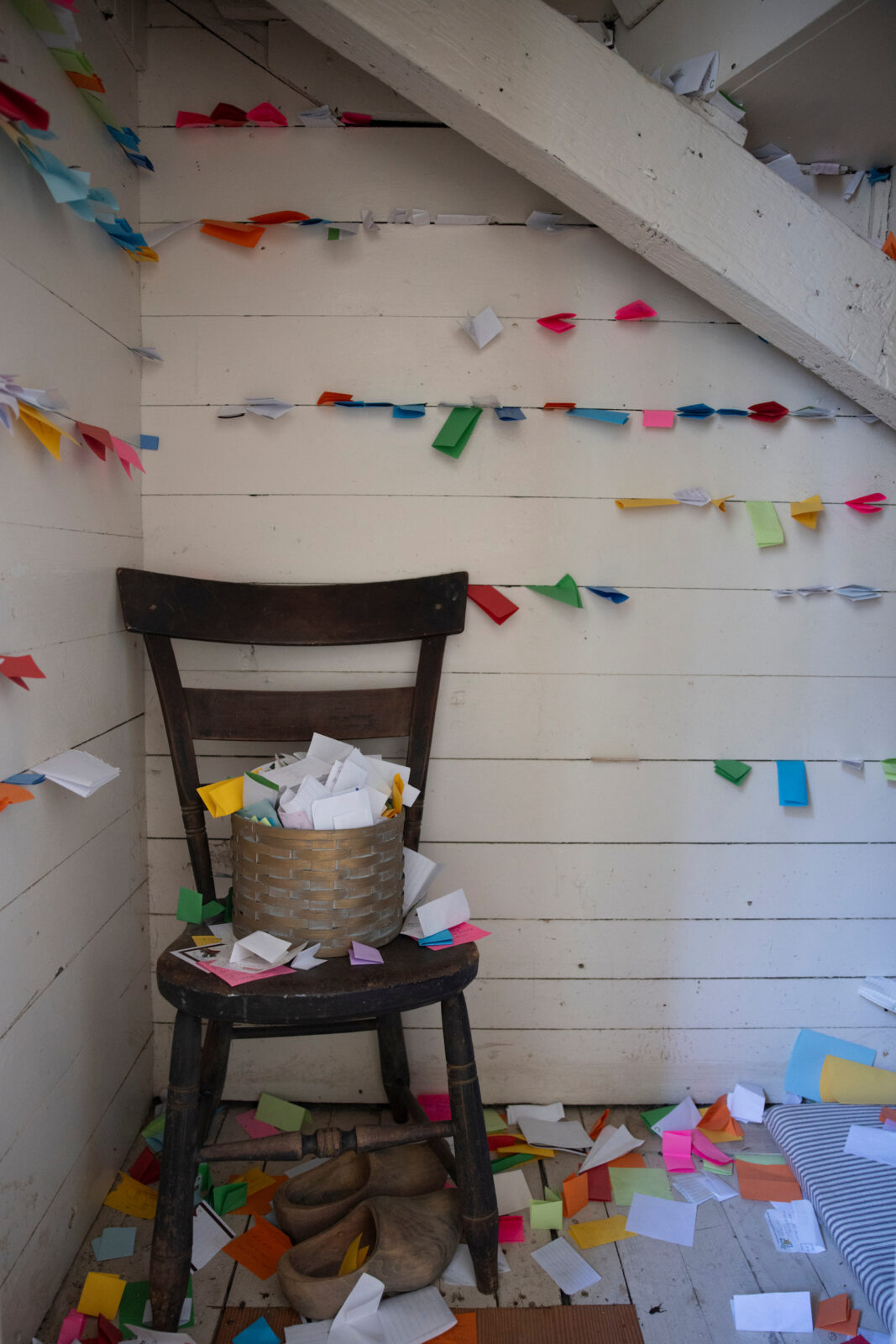
A rainbow of small slips of paper bearing prayer intentions are tucked into the wooden slatted walls of a small closet where St. Rose Philippine Duchesne once slept on the floor.
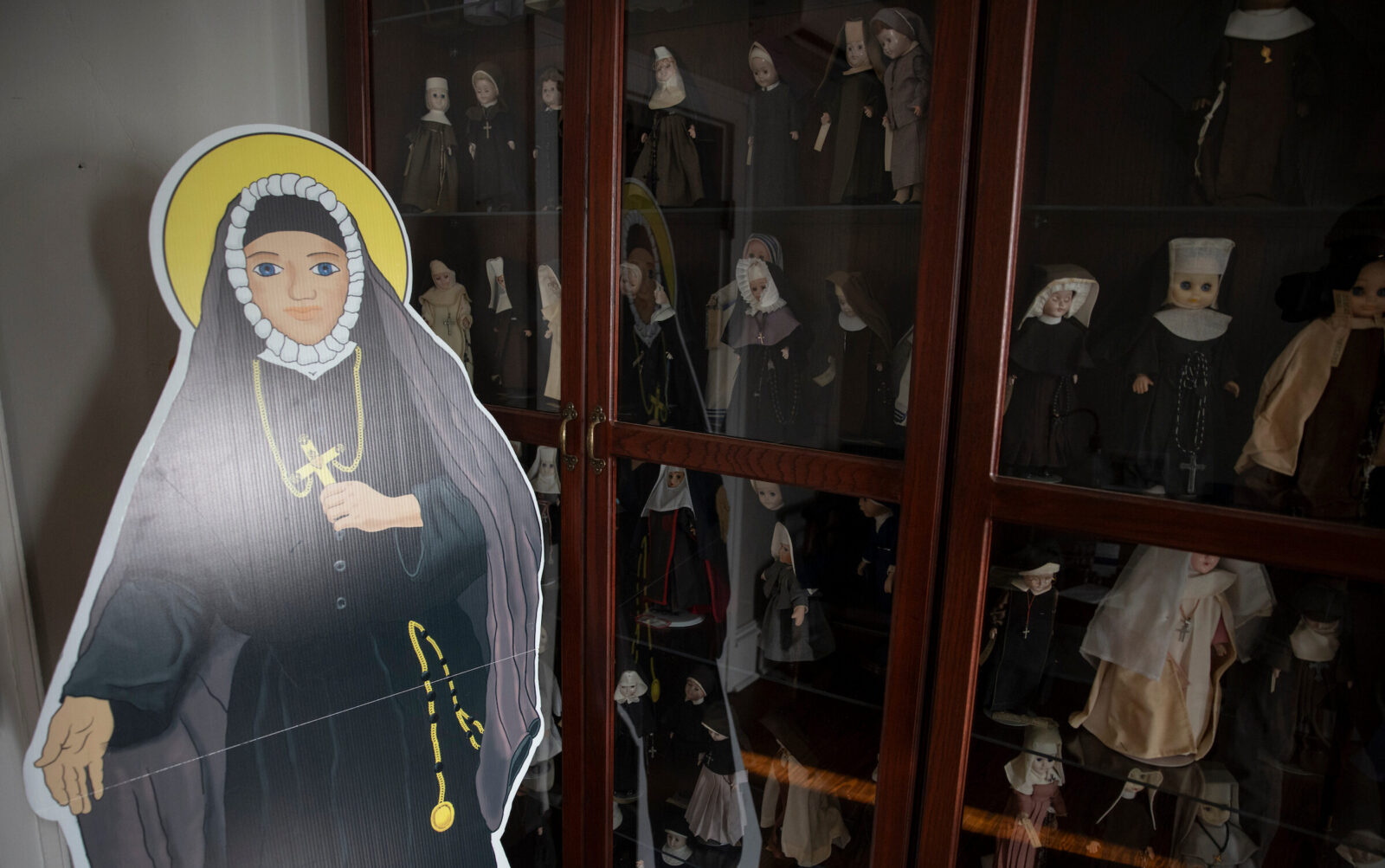
As the tradition goes, Mother Duchesne slept in the space underneath the staircase to be near the Blessed Sacrament in the nearby chapel. Today, visitors leave prayers of their own there at the Old St. Ferdinand Shrine in Old Town Florissant.
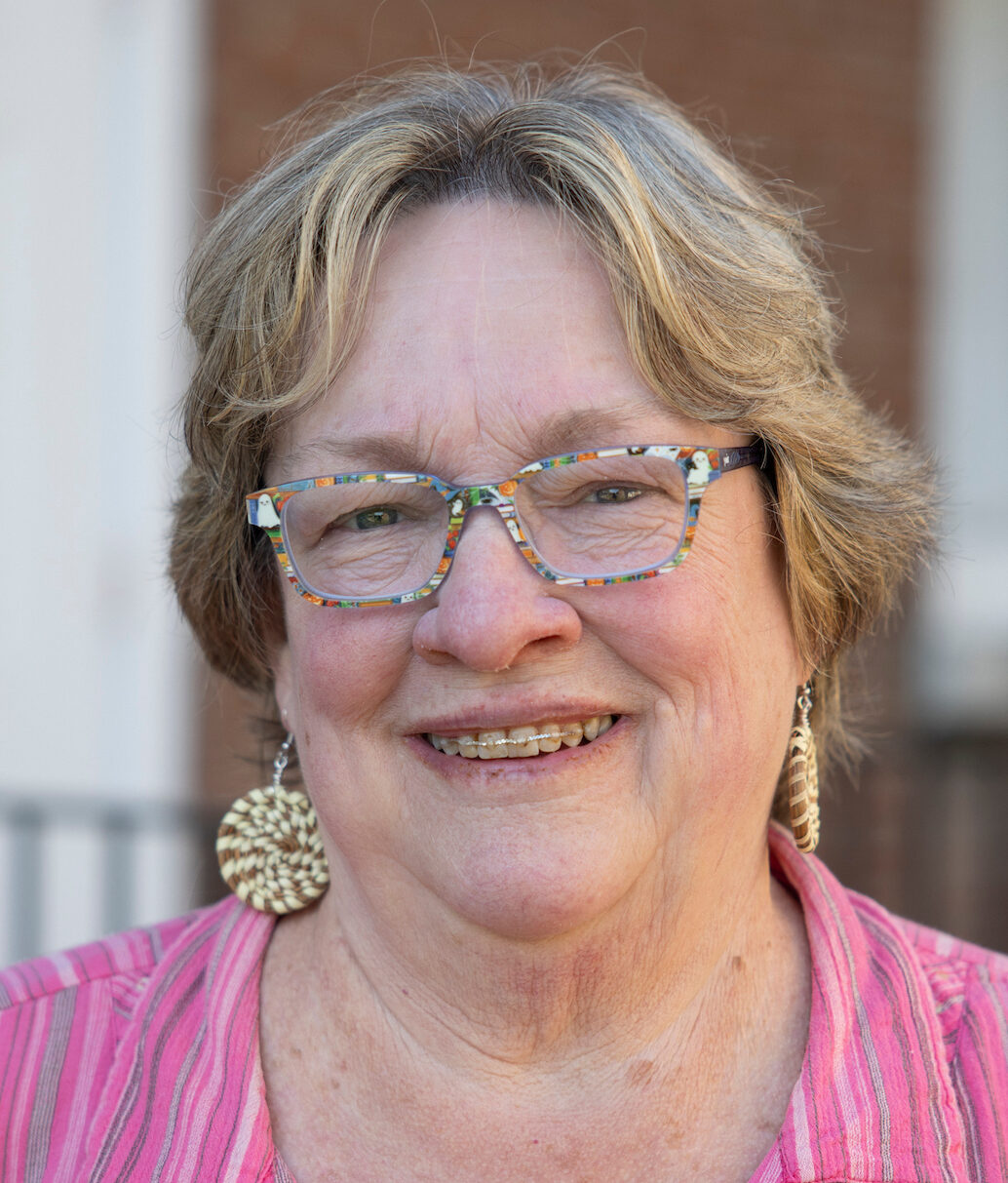
Known as the “woman who prays always,” St. Philippine Duchesne made prayer the center of her life as a Religious of the Sacred Heart. Shrine executive director Carol Campbell said that spirit is what the shrine is supposed to carry on — it’s not just a historical site, but a place where people can come to pray, she said.
“That’s what we’re supposed to be about,” Campbell said. “Everything else stems from that. That’s what we’re invited to do as Catholics and certainly as Christians.”
Twice a year, Campbell collects the slips of paper and takes a personal day of prayer, after which she burns the handwritten notes to maintain the privacy of the intentions.
As one of the oldest settlements in Missouri, the shrine is where St. Philippine Duchesne lived from 1819 to 1827 and again from 1834 to 1840. The site itself dates back to 1789, when St. Ferdinand Parish was established in a log church in Florissant. In 1819, at the invitation of Bishop William DuBourg, Mother Duchesne and her sisters moved from St. Charles to Florissant, where they built a brick convent and church and opened a school for Native American girls.
After St. Philippine Duchesne was canonized in 1988 by St. John Paul II, the property in Florissant was designated the Old St. Ferdinand Shrine. Today, the shrine is independently maintained by a nonprofit organization, Friends of Old St. Ferdinand Shrine. The maintenance and upkeep of the site, which is listed in the National Register of Historic Places, relies solely on the generosity of donors, said Campbell, who is the only paid staff member.
Repairs and restoration have been a constant at the shrine, both because of age and natural disaster. Some of the buildings are about 200 years old, and the property, which sits between two creeks, has flooded before, Campbell said, even in St. Philippine Duchesne’s time. The most recent flooding happened in 2022.
That flood brought about three feet of water into all four of the shrine’s buildings, Campbell said. The church’s wood floor buckled but dried and settled back into place, which allowed the original wood to be restored rather than replaced. Other repairs are still unfinished. The floor in the convent chapel needs work because of water damage, and while a temporary fix is in place, the shrine is looking to make permanent repairs. The chapel’s piano, which played before the flood, no longer works, and Campbell said it has been difficult to find someone willing to repair it.
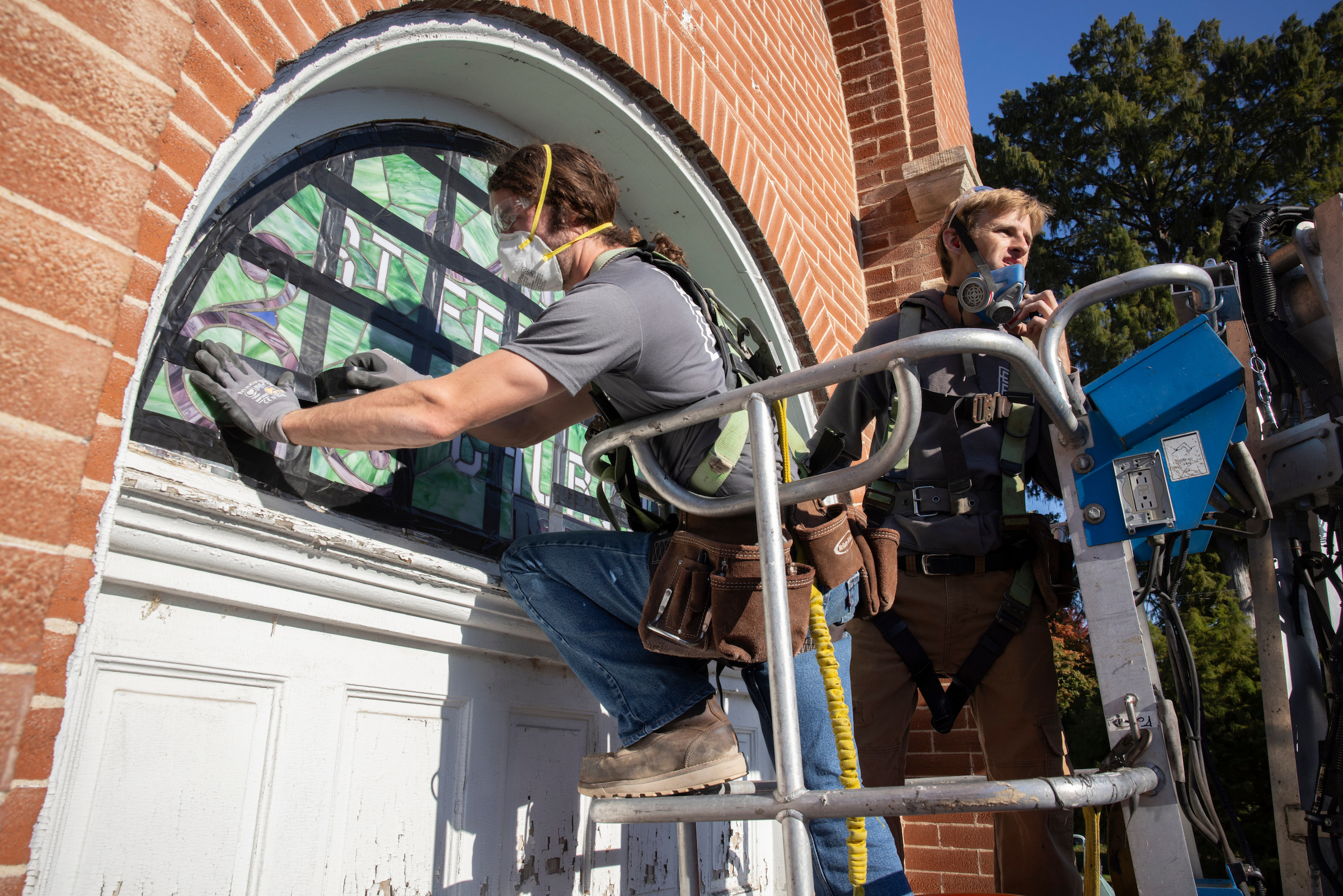
The shrine also is undergoing the restoration of several stained-glass windows in the church, which is being carried out in phases by Emil Frei & Associates. The first windows were restored in 2022, and another section was completed this past summer. The latest phase included removing the transom window above the main church doors on Oct. 28, as work moves forward on the church’s front entrance.
The restoration includes cleaning and reglazing the historic windows, along with adding protective glass, which will let in more light while helping preserve the original windows, company president Aaron Frei said. Funding for the window project comes from the shrine’s annual benefit and individual donations. Three large windows in the nave of the church still need to be restored.
While the shrine predates Emil Frei’s founding in 1898, Aaron Frei said that working on the project has been a joy because the restoration is being done in a way that will preserve the church for generations to come.
“These are some of my favorite groups to work with, because they will do everything to make it right,” he said. “This project has been such an effort borne of love by volunteers. This is something that the people of the area take immense pride in.”
The shrine remains more than a place to learn about St. Philippine Duchesne’s life, Campbell said. It welcomes people for prayer and worship, offers First Friday Masses, along with weddings and funerals, and hosts school groups, reunions and other gatherings.
Visitors’ prayer intentions tucked into the closet where the saint once slept reflect the shrine’s continuing life of prayer, Campbell said, adding that is why she handles them with care.
“I can’t throw them away. To me, there’s something more sacred,” Campbell said.
St. Ferdinand’s history
St. Ferdinand Parish was established in 1789 in a log church in Florissant. Bishop William DuBourg invited Mother Rose Philippine Duchesne to the diocese, and in 1819, she and her sisters moved from St. Charles to Florissant. They established a brick convent and a new brick church at the St. Ferdinand site and opened a school for Native American girls. Father Pierre De Smet was ordained at St. Ferdinand in 1827.
In 1847, the Sisters of Loretto took over the property and added five large buildings. By the 1950s, Archbishop Joseph Ritter changed the boundaries of St. Ferdinand Parish, and a new church and convent were built. The parish and schools were relocated to the current location on Charbonier Road in 1955 to accommodate the growing population.
The former site was maintained and restored by the Friends of Old St. Ferdinand Shrine, and after St. Rose Philippine Duchesne’s canonization in 1988, it was designated the Old St. Ferdinand Shrine, where it continues to host tours and events and welcomes the public for prayer.
Feast day Mass
The Old St. Ferdinand Shrine will host a Mass at 7 p.m. Wednesday, Nov. 18, on the feast of St. Rose Philippine Duchesne. Msgr. Jack Schuler, who was baptized as a baby in the shrine church, will be the main celebrant. The shrine is located at #1 Rue St. Francois St. in Florissant.