Students studied Immaculée Ilibagiza’s book ‘Left to Tell’ before her visit
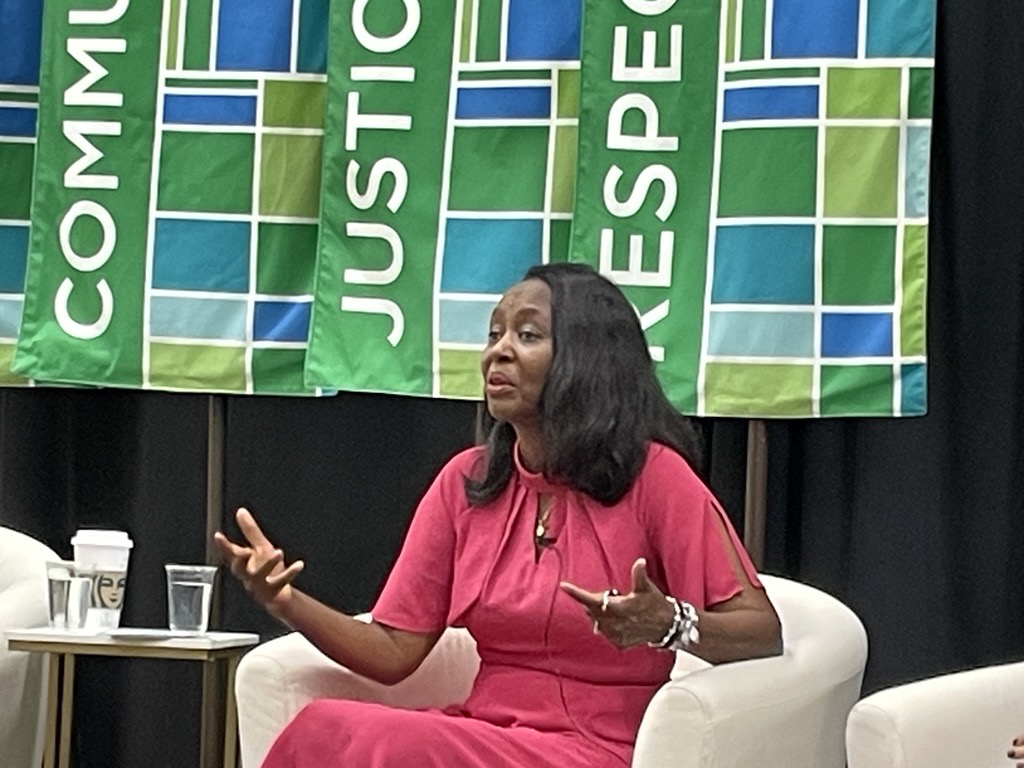
Through even great suffering, forgiveness is always ours to give, Immaculée Ilibagiza told the Nerinx Hall student body.
That was a hard-won lesson for Ilibagiza, who survived the 1994 Rwandan genocide by hiding in a 3-foot-by-4-foot bathroom with seven other women for 91 days.
Ilibagiza visited the all-girls high school in Webster Groves on Oct. 23 to share her experiences of faith and forgiveness during the genocide, where Hutu extremists killed between 800,00 and 1 million primarily Tutsi people, and in the 32 years since. Nerinx students read her first book, “Left to Tell,” over the summer.
Ilibagiza was in St. Louis for events with Wear & Give, a ministry that spreads devotion to the Blessed Mother through Miraculous Medal bracelets and personal encounters. Wear &Give founder Libby Rohlfing, a Nerinx alumna, had formed a friendship with Ilibagiza through several pilgrimage trips and helped make the connection for Ilibagiza to visit the school.
Before the Q&A session with Ilibagiza, freshmen presented her with more than 900 handmade Miraculous Medal bracelets to distribute at schools in Rwanda.
The most important tool that has sustained her through everything in life is prayer, Ilibagiza told the students, rosary entwined in her hands as she spoke.
“That’s where all power is — in prayer,” she said. “The best friend you have is the one you talk to more, the one you talk to about everything.”
When she went into hiding during the genocide, all she had was a rosary from her father. She clung to it, praying the familiar prayers every day, even as she wrestled with the words of the Our Father: “forgive us our trespasses as we forgive those who trespass against us.” For awhile, she skipped over that line.
“I need God, and I want Him to be powerful. So I put (the words) back, and I decided instead of saying it’s impossible, to ask Him to help me to forgive,” she said. “I don’t know how, but it was only prayer convincing me. Humanly, nobody can convince me I should forgive someone who’s killing my mother, killing my father, trying to kill me and everyone who looks like me.”
“In the world and the way we think: you forgive somebody who asks you for forgiveness. That’s not the way of Jesus. Jesus said forgive always,” she added.
Life continues to bring her many more opportunities to forgive others, three decades after the genocide. The best thing we can do is continue to ask God to help us in those situations, especially when it feels too difficult to extend forgiveness on our own. We won’t be judged on how others treated us, but on how we treated others, she said.
“In this life, we all carry crosses. We all have somebody who’s not kind to us, who hates us — nobody has everyone who loves them or who will always do good to them,” she said. “So the heroism comes from dealing with those things that come at you every day. How do I respond in love? How do I be the better person in this situation?”
After the Q&A, Ilibagiza joined students in the Nerinx library to view the “walking gallery” they produced as part of their study of her book. The series of panels dove deeper into the context of “Left to Tell,” exploring the history of Rwanda leading up to the genocide, the virtues and Catholic social teaching principles at play in the book, and the literary power of Ilibagiza’s strong narrative voice. The students also marked out an outline of a rectangle the same size as the bathroom Ilibagiza and seven others hid inside.
Ilibagiza’s story and message teach important lessons of what it means to bring Catholic social teaching to life, Nerinx theology department chair Jackie Watson said.
“I think the seven principles of Catholic social teaching are more important than ever in our world,” Watson said. “As students constantly get mixed messages about every little thing through social media, through friends, through the government, wherever, the Catholic social teaching themes are always steady, and they’re a good place to go when looking for direction.”
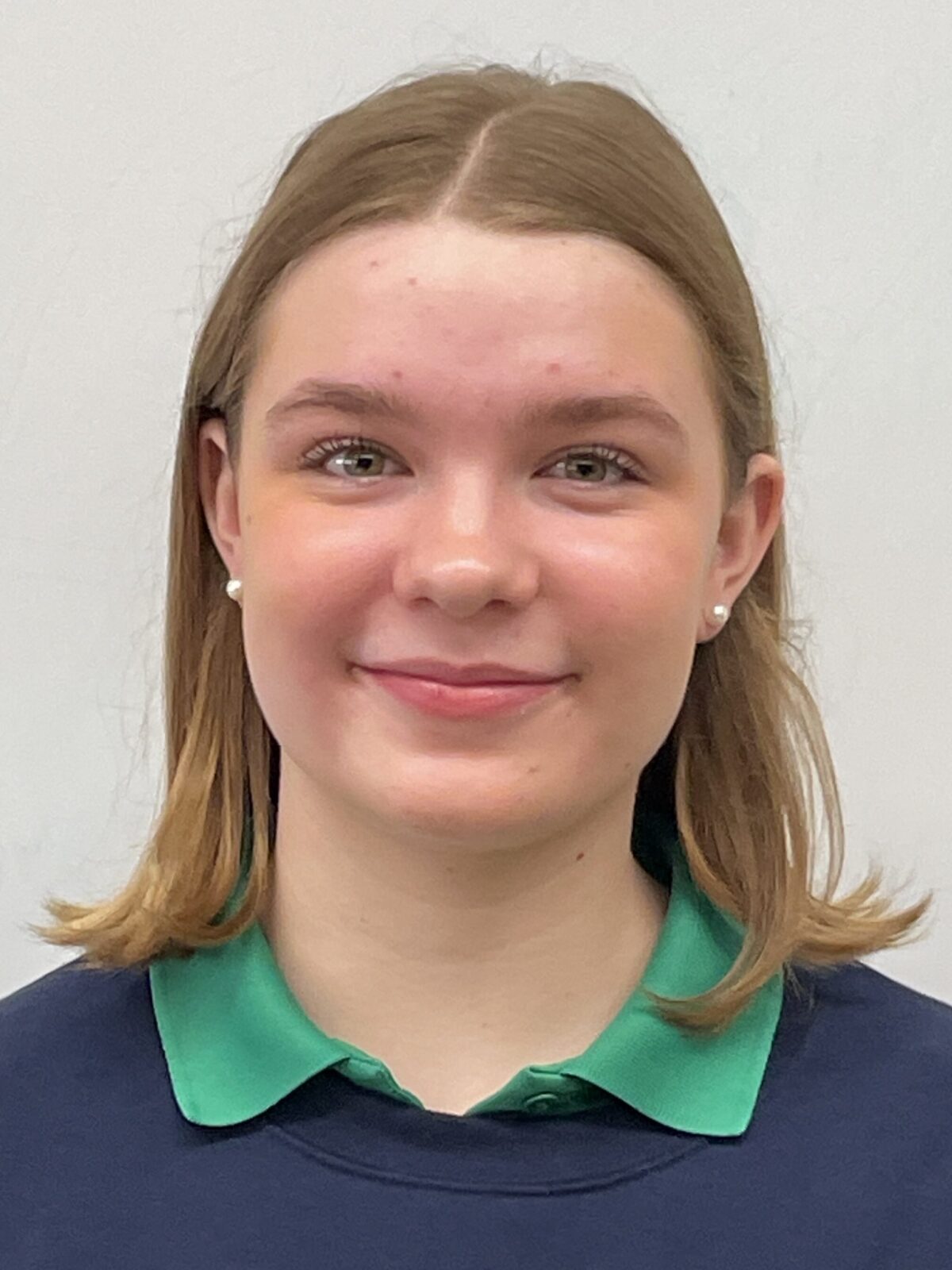
Treating every person with dignity is foundational to Catholic teaching, sophomore Ella Miller-Ruddy said. Ilibagiza’s story shows what can happen when that dignity is forgotten — and when it’s remembered.
“I thought it was really amazing that through her faith, Immaculée was able to still treat the people that she was with with dignity, like in that bathroom — they were obviously in a very vulnerable state, and she treated them with dignity,” Ella said. “Then to further that, when she got out of the bathroom and was able to have an interaction with the person who killed her family, how she was continuing to keep her belief in dignity.”
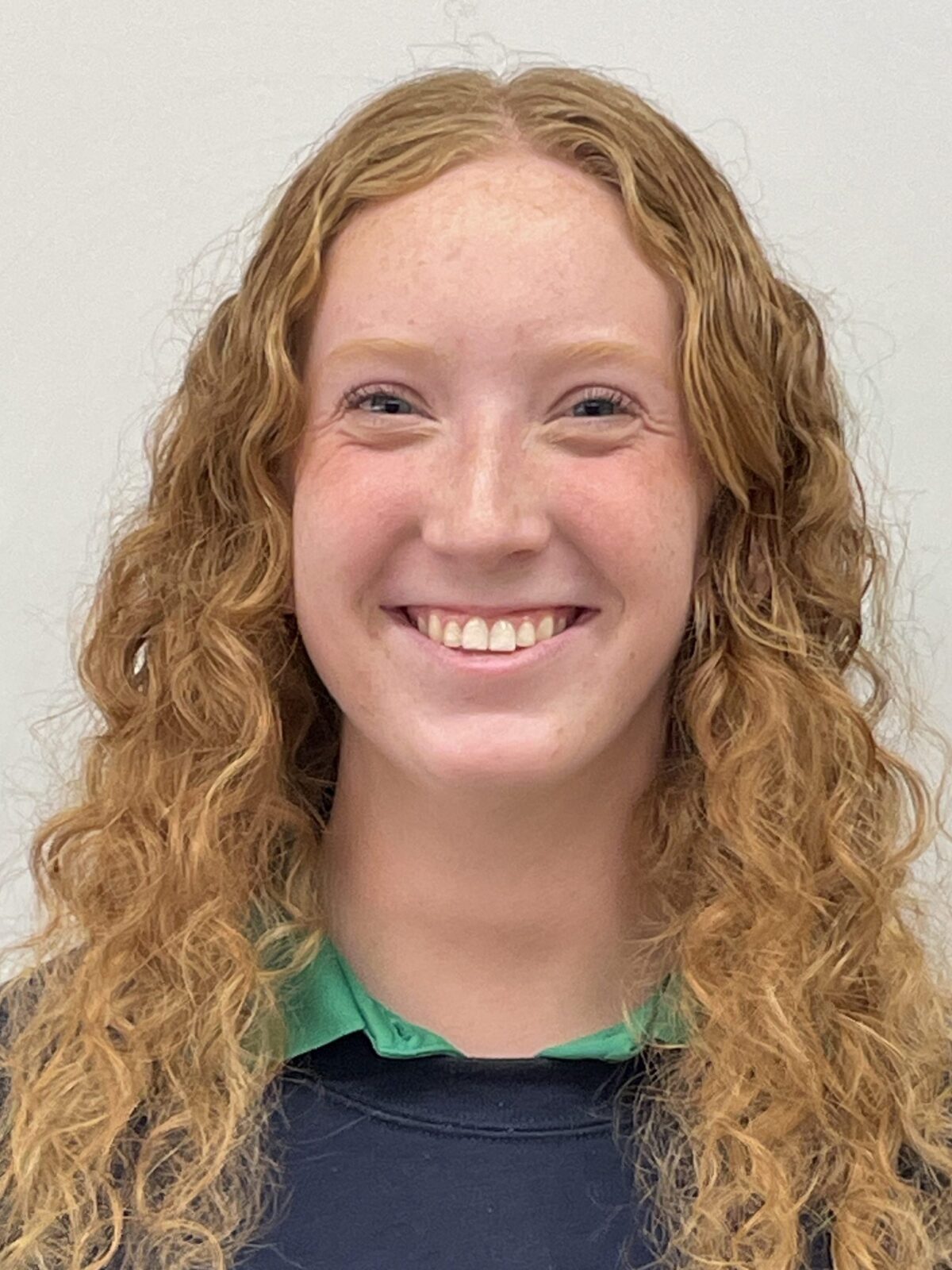
None of the students here will experience exactly what Ilibagiza did, senior Olivia Dibadj said. But Ilibagiza’s stories reminded her that God does have a special plan for each of their lives in their own particular circumstances.
“There’s a path in front of you that He made, but it’s up to you to take that first step and go on that journey,” Olivia said. “I thought that was really powerful.”
Junior Maeve Humphrey noticed a theme of interconnectedness throughout “Left to Tell,” both among the people in Ilibagiza’s Rwandan village and later in the French refugee camps. Ilibagiza met many others who went through the same thing as her, and even though they weren’t blood related, they were joined as brothers and sisters in Christ.
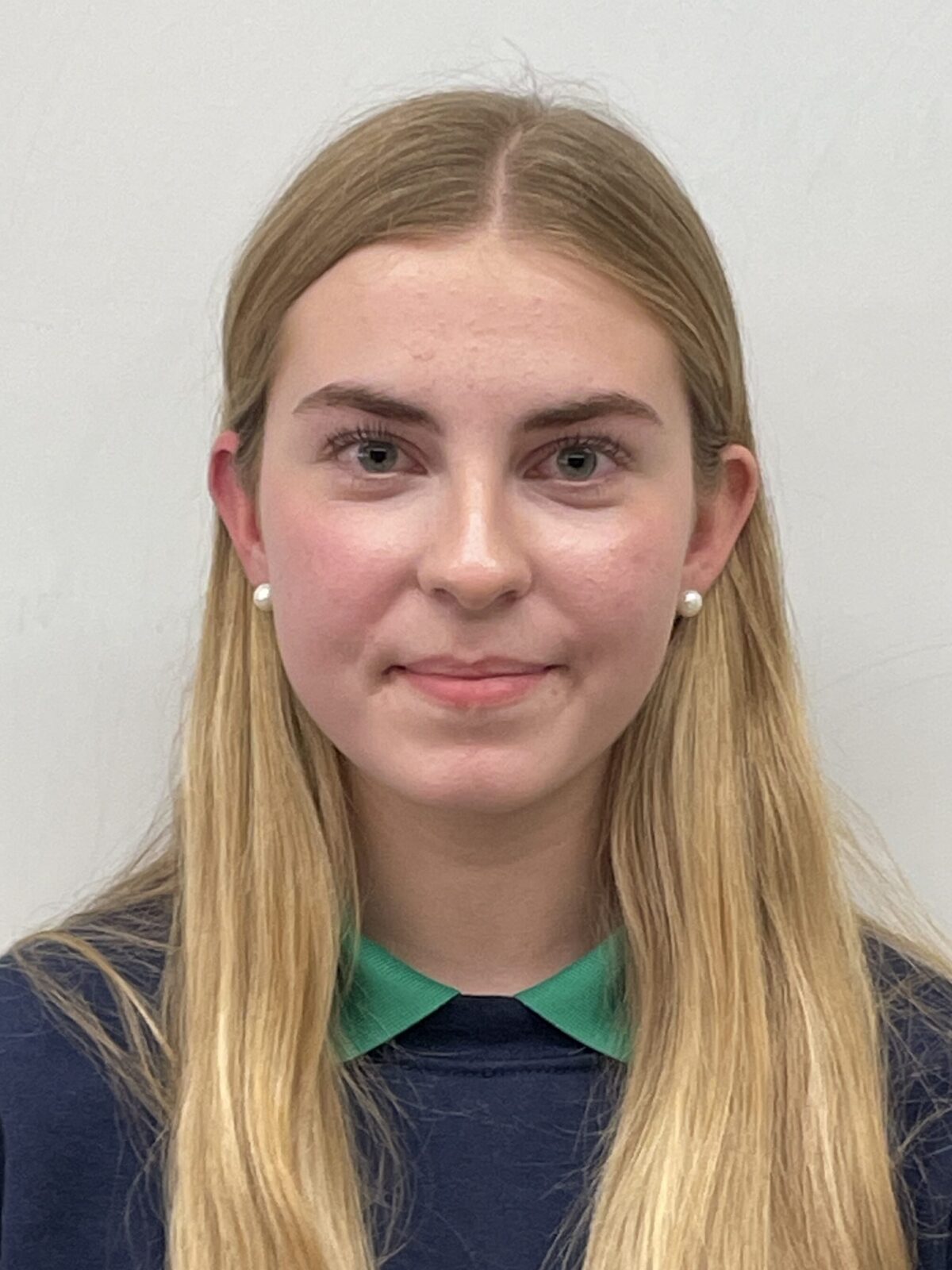
“Especially in a world where we’re constantly reminded of all of our differences, I think that being able to recognize the similarities we share between each other is really important to become more of a united people as a whole,” Maeve said. “…When we get distracted by things like social media or gossip, at Nerinx and just in high school in general, I think it’s really important to take a step back and think, does this really matter? Or is this more superficial? We need to look deeper, I think, in each other and find that friendship among us and that shared commonality.”
Immaculée Ilibagiza
Learn more about Ilibagiza’s story, her retreats and pilgrimages and her charity at immaculee.com.