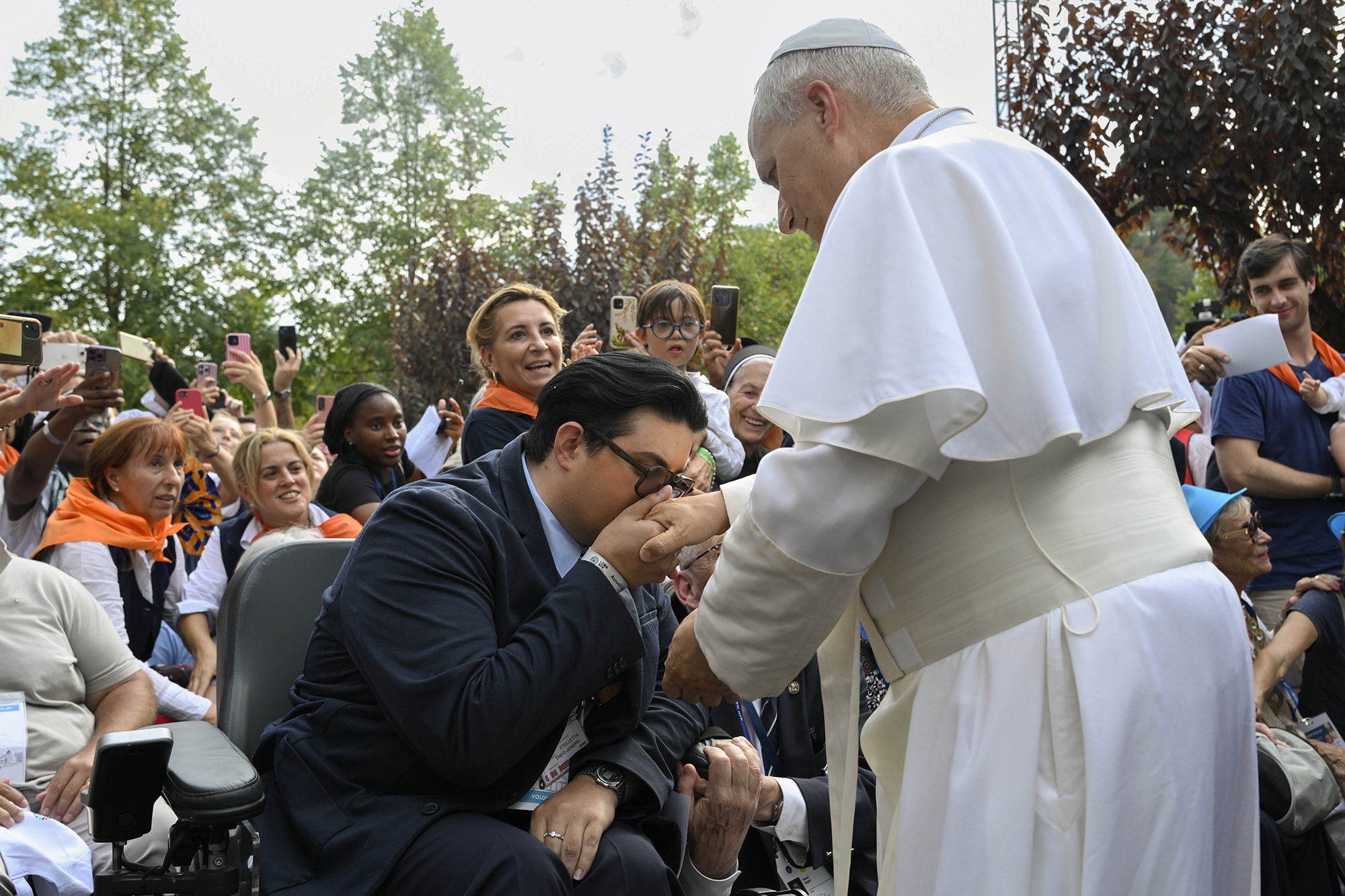
Rather than complaining, we should pivot into making an offering of the unfairness and frustrations that we experience
Dear brothers and sisters in Christ,
Can we talk about sin? I know it’s not comfortable, but it’s necessary and helpful.
Rather than start with a definition, however, let’s start with our experience. When something goes wrong — someone cuts you off in traffic, you get sick, your flight gets delayed and so on: What’s your first reaction, what’s your best reaction, and how long does it take you to get from the one to the other? (Or, how often is your first reaction your only reaction?)
Our first reaction is typically to rail against the other driver, to grumble about the sickness, to complain about airlines and so on. Sometimes we aren’t even sure what a best reaction would look like! (Hint: It involves turning the hardship into an offering.)
This is where it’s helpful to talk about sin. The distance between our first reaction and our best reaction is the distance between the spiritual state we’re living in and the kingdom of heaven. It gives us a sort of spiritual map of where we are and the route we need to take to grow in holiness.
We’re offered a series of readings from the prophet Ezekiel these weeks. He made his life a prophetic image of the consequences of Israel’s sin: the exile. Then, when the exile happened, he became the prophet of return. Remember the dry bones coming to life? Certainly, that looks forward to the future resurrection. But in its original context it was also a prophetic image of return from the lifelessness of exile.
As Ezekiel’s life and career were a lesson for ancient Israel, so the history of ancient Israel is a lesson in the spiritual life for us. We also undergo a spiritual exile from the promised land of joy because of our sins — each of us knows that from experience. We also long for return. Bringing our dry bones back to life involves undoing the habits of sin that have taken root in us.
We celebrate the feast day of St. John Eudes on Aug. 19, and he provides a beautiful meditation on what’s needed. He says: “He [Jesus] desires that whatever is in Him may live and rule in you: His breath in your breath, His heart in your heart, all the faculties of His soul in the faculties of your soul.” So, for example, all the sadness of Jesus (who wept over Jerusalem), and all His generosity (He gave His very life to us and for us) belong to us as members of His body. Do we use them?
The reactions of Jesus are like Christmas presents, already given, waiting to be unwrapped. Our progress in discipleship can be measured by our answer to three questions: Do you desire to unwrap those gifts? Are you working on using those gifts? How’s it going in letting those gifts become habits? The answers to those questions give us a kind of roadmap: They tell us where we are, how far we have to go in the life of discipleship and what our next step is.
There are so many situations in life about which we can say: It’s not fair! Even if that’s 100 percent true, it still leaves us to ask a key question: Will we pivot on that unfairness into complaining, or will we pivot — as Jesus did — into making the unfairness an offering?
We celebrate the feast of the Queenship of Mary on Aug. 22 and the feast of St. Louis, King of France, on Aug. 25. Let’s ask them to help us govern our lives more deeply, so we can move more quickly and easily from our first reactions to Jesus’ own reactions to the frustrations of the world.