Visitation policy limits time for clergy visits and permits conversation only by use of a phone, which prevents priests from administering the sacrament of reconciliation or distributing Communion
Editor’s note: Read the lawsuit filed by the Archdiocese of St. Louis on Oct. 5 here.
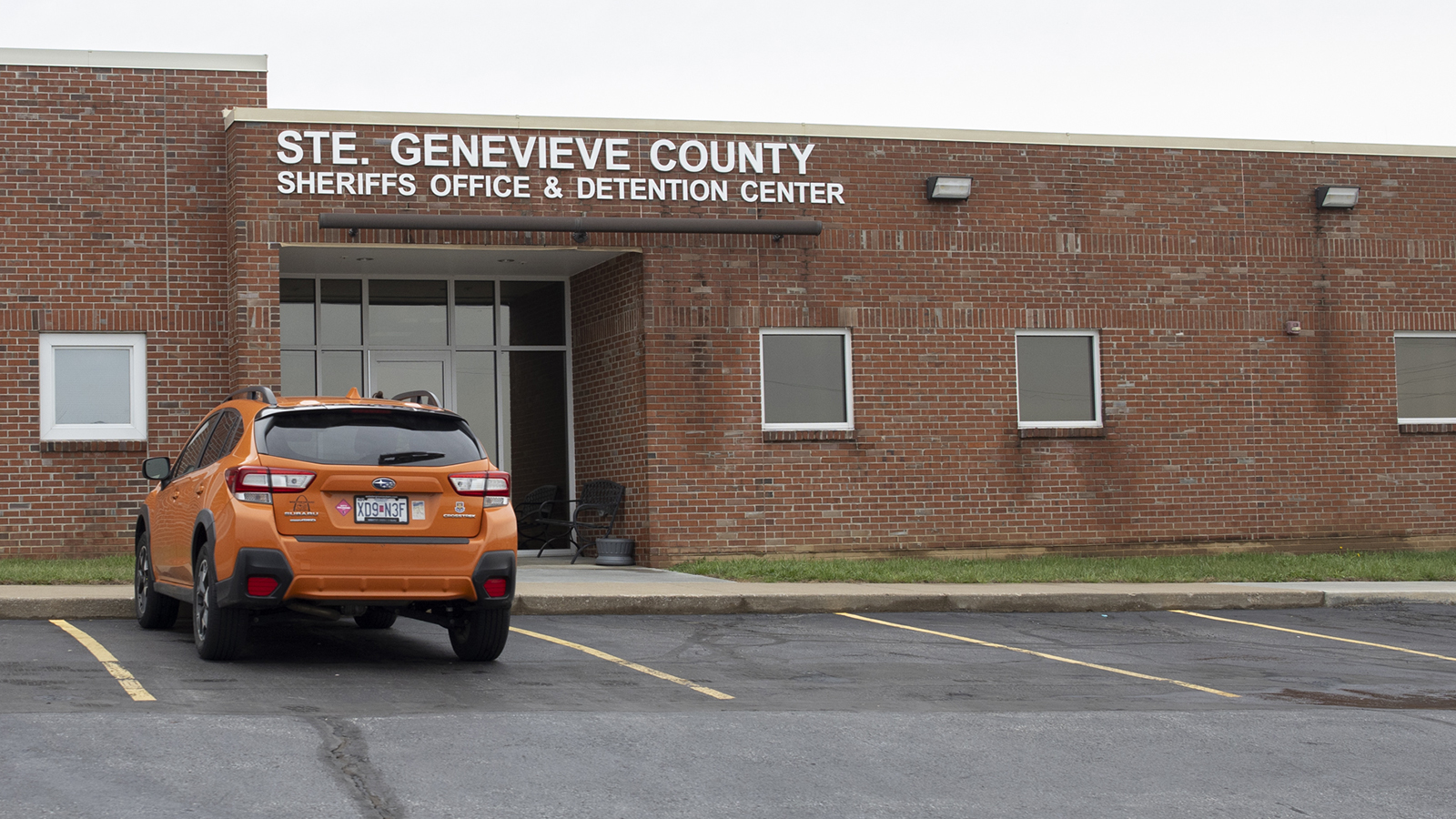
The Archdiocese of St. Louis has filed a federal lawsuit over a no-contact policy that prohibits priests from distributing holy Communion and hearing confessions in the Ste. Genevieve County Detention Center.
“Offering and receiving these sacraments is a central tenet of our faith. Catholics receive the real presence of Christ in the Eucharist, and the deprivation of these sacraments imposes real and immediate harm on Catholic detainees and priests,” the archdiocese said in an Oct. 5 statement.
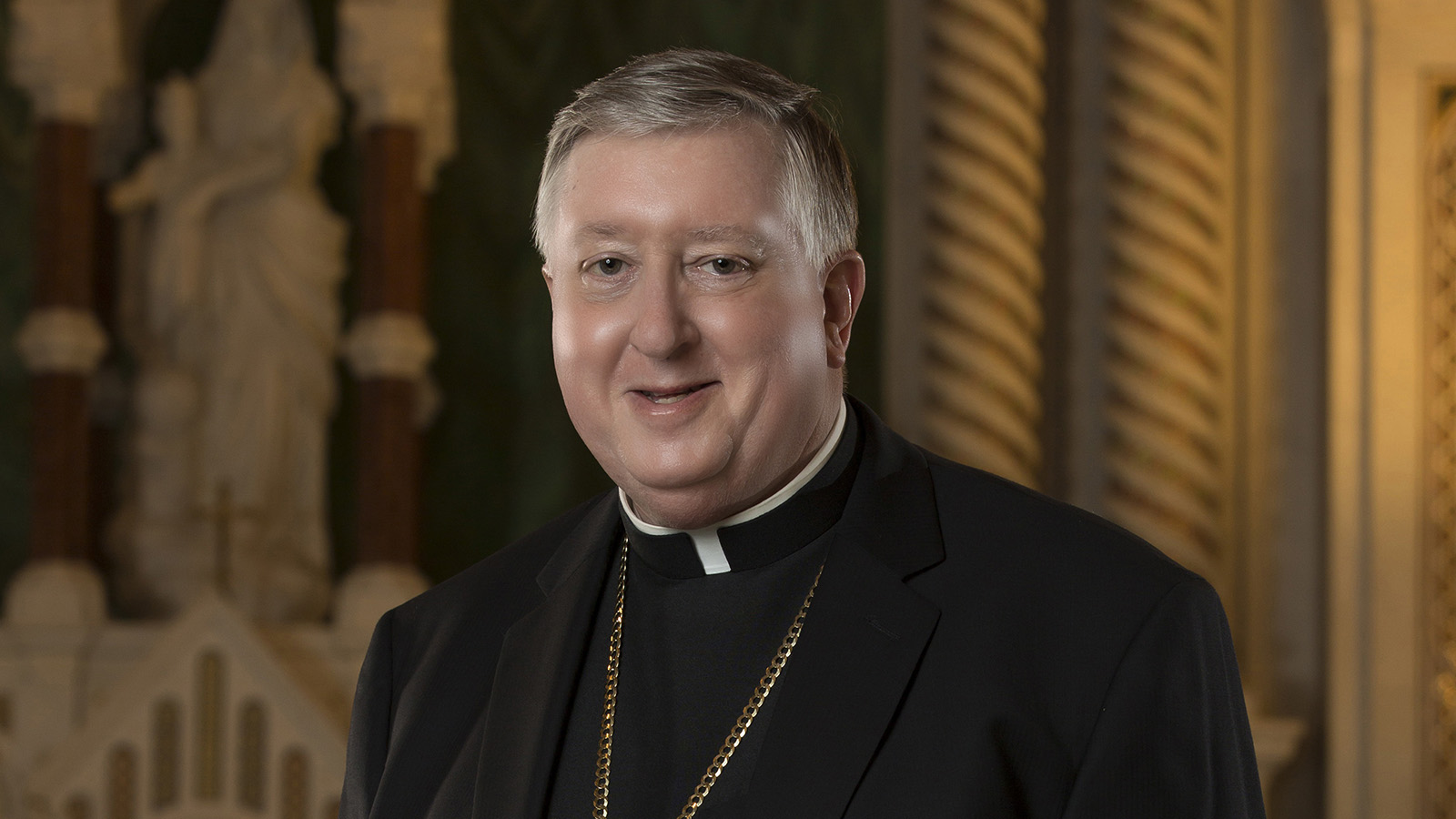
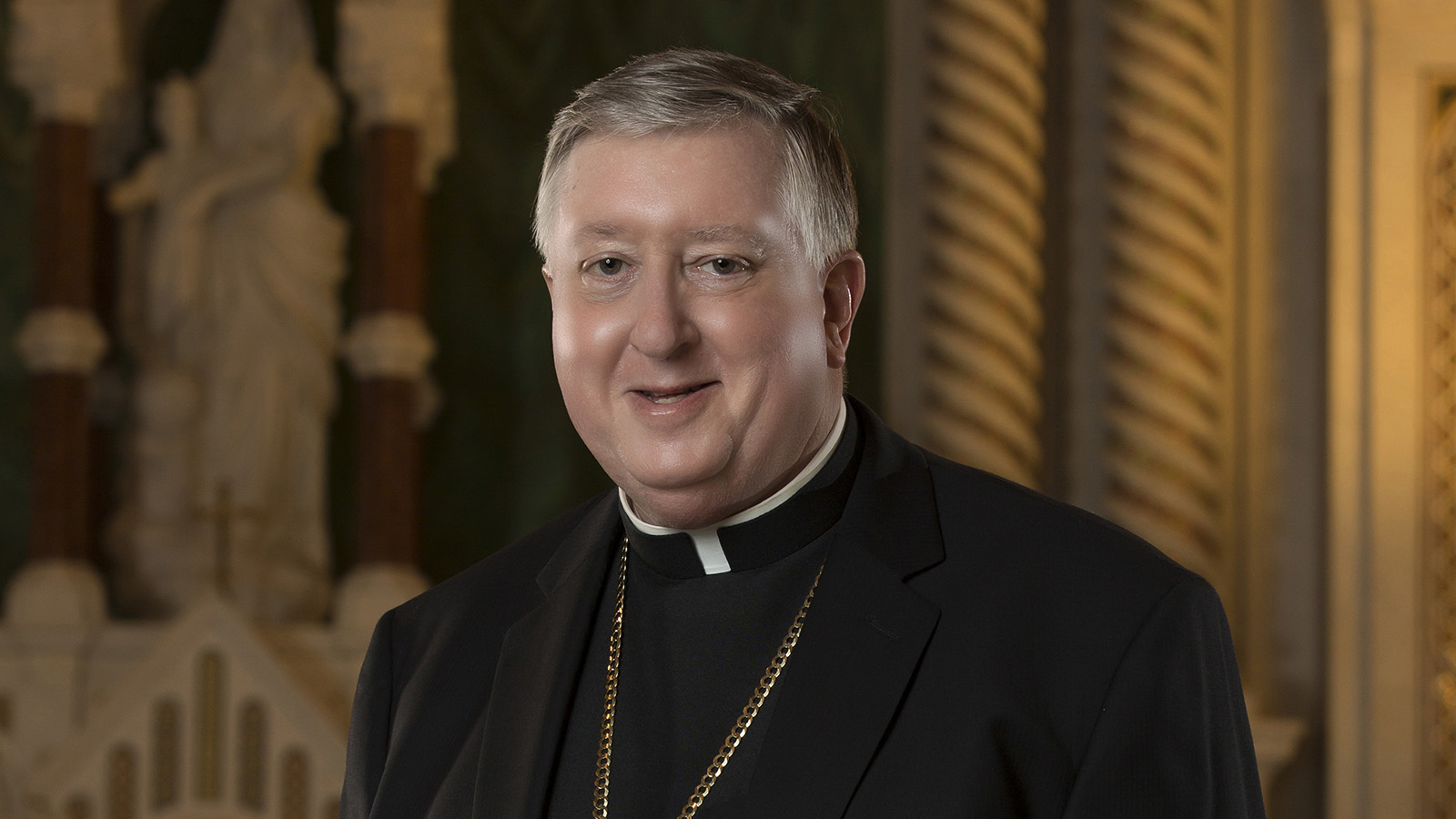
The Archdiocese of St. Louis, Archbishop Mitchell T. Rozanski and Father Chris Schroeder are plaintiffs in the lawsuit, which was submitted Oct. 5 to the U.S. District Court Eastern District of Missouri’s southeast division. It names as defendants Ste. Genevieve Sheriff Gary Stolzer, Chief Deputy Maj. Jason Schott and jail administrator Lt. Andrew Johnson in their official capacities; Markwayne Mullin, secretary of the Department of Homeland Security; David Venturella, acting director of U.S. Immigration and Customs Enforcement; and Jennifer Fenton, associate director of the Office of Professional Responsibility, in their official capacities.
The plaintiffs filed a simultaneous motion seeking a preliminary injunction, requesting the court to order the detention center to stop its restrictive policies while the lawsuit is pending.
The Ste. Genevieve County Detention Center began contracting with ICE in mid-2025 to house detainees as they await immigration proceedings, and often, deportation.
Father Schroeder is one of 10-15 archdiocesan and religious order priests in the Archdiocese of St. Louis who take turns making weekly visits to people detained there who request spiritual care. The jail allows priests to use only phones (which the jail can monitor, the complaint says) to talk to detainees through a glass partition, preventing them from giving holy Communion or hearing confession, which cannot be conducted over a phone. Priests are not permitted to celebrate Mass inside the detention center.
Clergy visiting hours are restricted to noon-4 p.m. on Mondays, which limits the number of detainees the priest is able to speak with. This means many are denied their right to even basic spiritual care, the lawsuit says.
“This visitation policy effectuates a total ban on clergy offering (and detainees receiving) the Catholic sacraments, including Communion and confession, and severely limits the basic spiritual counseling that clergy may provide (and which detainees desperately seek),” the complaint says.
The detention center’s no-contact policy and narrow visiting window does not apply across the board to all visitors, the complaint notes. Lawyers may arrange face-to-face meetings any time during business hours in conference rooms in which they and their detained clients can speak without screens or dividers and freely pass documents and other objects. Consular officials also are excepted from the no-contact policy, it says.
The complaint argues that the detention center’s policies violate the free exercise clause of the First Amendment, the Religious Land Use and Institutionalized Persons Act and both the Missouri and federal Religious Freedom Restoration Act.
Jail administration has offered “scant defense” for its visitation policy, saying only that the policies are designed to “maintain the safety and security of the facility, staff, visitors and detainees,” the complaint says.
The complaint argues that even if there were a compelling interest behind the no-contact policy, it is not the least restrictive means of achieving it because the policy already contains exceptions for private meetings with legal counsel or consular officials. Priests also regularly meet with and administer the sacraments to people detained in other area jails and prisons, it notes.
Volunteers with Abide in Love Ste. Genevieve, a nonprofit that seeks to support people in ICE detention, correspond with detainees and pass along requests for priest visits to the archdiocese. Detainees have explicitly asked to receive the sacraments, according to a declaration from Abide in Love Ste. Genevieve co-founder Sara Drost attached to the complaint.
Since mid-2025, about 3,000 ICE detainees have passed through the detention center, with approximately 150 present at any one time, the complaint says. ICE pays the detention center $103 per diem, per detainee housed, according to the intergovernmental agreement between the two entities.
According to ICE’s “National Detention Standards,” ICE acknowledges that it remains responsible for ensuring detainees receive reasonable and equitable opportunities to practice their faith, the complaint says. The complaint cites comments from Schott, the Ste. Genevieve chief deputy, that DHS visits the detention center weekly to inspect.
In late 2025, Southern Vicariate episcopal vicar Father Michael Lydon called Johnson, the jail administrator, to request permission for priests to visit face-to-face to hear confession and distribute Communion. The request was denied.
In May, Archbishop Rozanski sent a letter to Johnson making three requests: that the detainees be allowed to meet with priests face-to-face for confession and Communion; that clergy visiting hours be expanded from the current four-hour Monday allowance; and that a priest be allowed to celebrate Mass for the detainees.
Archbishop Rozanski received no response. In August, Father Lydon again called jail administrators to renew the request; it was denied by Schott.
The complaint cites Schott’s response to St. Louis Business Journal reporter Charlie Brennan, in which Schott proposed a solution for distributing Communion: a priest could, after consecration, pass an individually packed Communion host to a guard who would deliver it to the detainee. Canon law requires the Eucharist to be distributed to the faithful only by priests, deacons and lay persons trained as extraordinary ministers of holy Communion.
The restrictions preventing priests from administering the sacraments and limiting time to speak to detainees to a small window prevents priests from fulfilling Christ’s mandate to go into all the world and preach the Gospel and bring His presence to others, Archbishop Rozanski said.
“My pastoral concern reaches to every person in the limits of our archdiocese,” Archbishop Rozanski said. “That is why I’m very concerned about the restrictions that are placed on our priests in being able to minister to the detainees who are at St. Genevieve.”
“This is an issue that impacts all of us, because this concerns religious freedom in our country, the freedom in which we are able to minister to everyone in every area, in every place, including our prisons,” he continued.
Archbishop Rozanski has made pastoral visits in jails and prisons while serving as priest and bishop in the Archdiocese of Baltimore, Diocese of Springfield, Massachusetts, and the Archdiocese of St. Louis. The ability to bring the presence of the Church and the grace of Mass, reconciliation, anointing of the sick and sacraments of initiation to those inside are “very sacred moments,” he said.
“They desire, want and need the solace of the faith as much as or even more than others, and to see their appreciation of the presence of the Church (has been) very heartening to me and tells me we are in the right place and where we need to be, where Christ has called us,” he said.
The Archdiocese of St. Louis will persist in pursuing the religious rights of people detained in the Ste. Genevieve County Detention Center, the archbishop said.
“We are not giving up. We know that we are mandated to bring the presence of Christ to everyone, and especially to those in prison,” he said. “Jesus gave us that mandate, and we seek and will fulfill it.”
Prison and jail ministry
There are four prisons and 11 county jails in the Archdiocese of St. Louis’ territory. Mass is celebrated in all four prisons on a regular basis, including weekly at Potosi Correctional Center — a maximum security prison — and Pacific Correctional Center.
Mass, Communion services and other pastoral ministry such as Bible studies vary in frequency across the 11 county jails and can fluctuate over time with priest and deacon availability and jail administration turnover. A priest currently celebrates Mass twice a month at the St. Louis City Justice Center, and a deacon conducts a Communion service once a month in the St. Charles County jail.
Even when there are not regularly scheduled Masses or Communion services in the other jails, the Office of Peace and Justice has provided administrators at each jail with the name and contact information of a priest to provide sacramental care to people in the jail whenever requested, the office said.
Chicago and Minnesota
Two other groups of clergy, in the Chicago and Minneapolis areas, have sued ICE and won injunctions this year to enter ICE facilities and provide the sacraments.
A group of clergy and religious and Catholic social justice organization Coalition for Spiritual and Public Leadership filed a lawsuit Nov. 19 over being barred from bringing holy Communion and pastoral care to detainees at an immigration processing center in Broadview, Illinois, just west of Chicago.
The group said their rights were violated by ICE when they were not allowed to give holy Communion and pastoral care to detainees on Oct. 11 and Nov. 1, 2025. The late Mercy Sister JoAnn Persch and others had previously been allowed into the Broadview facility but were barred in fall 2025.
U.S. District Judge Robert W. Gettleman issued an order Feb. 12 to allow CSPL members to bring holy Communion and ashes to people inside the facility on Ash Wednesday. Members also were allowed in during the Triduum, and Judge Gettleman issued a preliminary injunction in April prohibiting the Department of Homeland Security from imposing a total ban on pastoral visits and compelling DHS to work out terms for the visits with CSPL. In mid-May, pastoral ministers were allowed to begin daily visits to the facility.
An ecumenical group of Minnesota clergy, including Jesuit Father Chris Collins, filed a lawsuit Feb. 23 against the Department of Homeland Security over being barred from giving spiritual care to those being detained at an ICE processing facility in the Twin Cities area.
The claimants similarly said their First Amendment right to practice religion freely and rights under the Religious Freedom and Restoration Act were violated.
On March 20, U.S. District Judge Jerry Blackwell granted an injunction allowing the clergy access to provide spiritual care inside the Bishop Henry Whipple Federal Building in Minneapolis.
A critical concern for U.S. bishops
Access to sacraments for ICE detainees is one of the USCCB’s six areas of critical concern for religious liberty in 2026.
Bishop Kevin C. Rhoades of Fort Wayne-South Bend, Indiana, then-chair of the USCCB’s Committee on Religious Liberty, told reporters during the U.S. bishops’ 2025 fall assembly in Baltimore that the religious liberty issue with ICE detention centers “is now at the top of our concerns.”
“It’s heartbreaking,” he said. “When you think of the suffering and especially those who’ve been detained, separated from families … they need spiritual support in this, and they need the sacraments.”