The pilgrimage began in St. Augustine, Florida, and traveled through many of the original 13 colonies
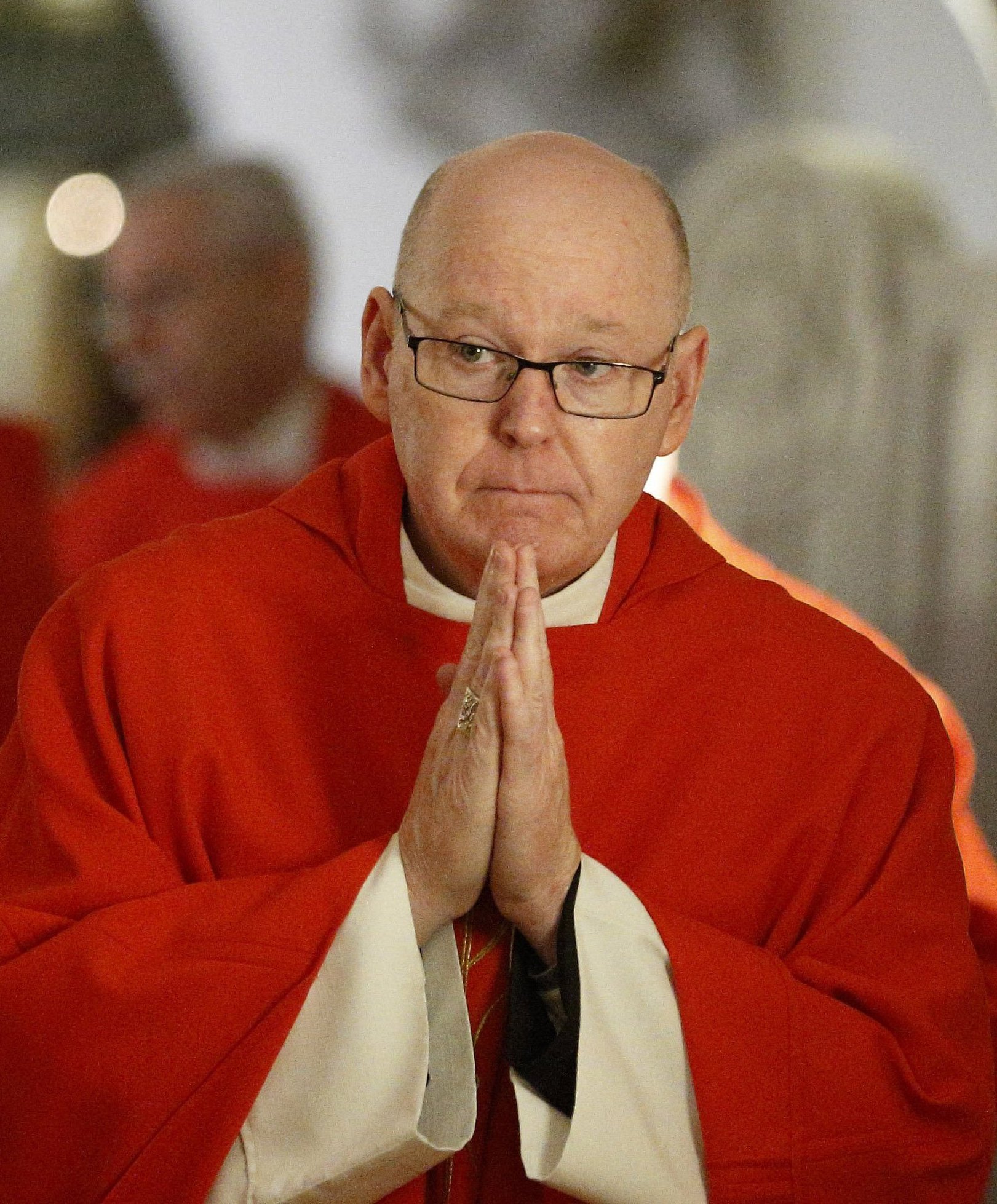
PHILADELPHIA — As the 2026 National Eucharistic Pilgrimage concluded amid the U.S.’s 250th anniversary, “the journey continues,” said Archbishop Nelson J. Pérez of Philadelphia.
And, he added, “we’re all walking to one place,” with the path leading to the “powerful, transformative and lifegiving” love of God.
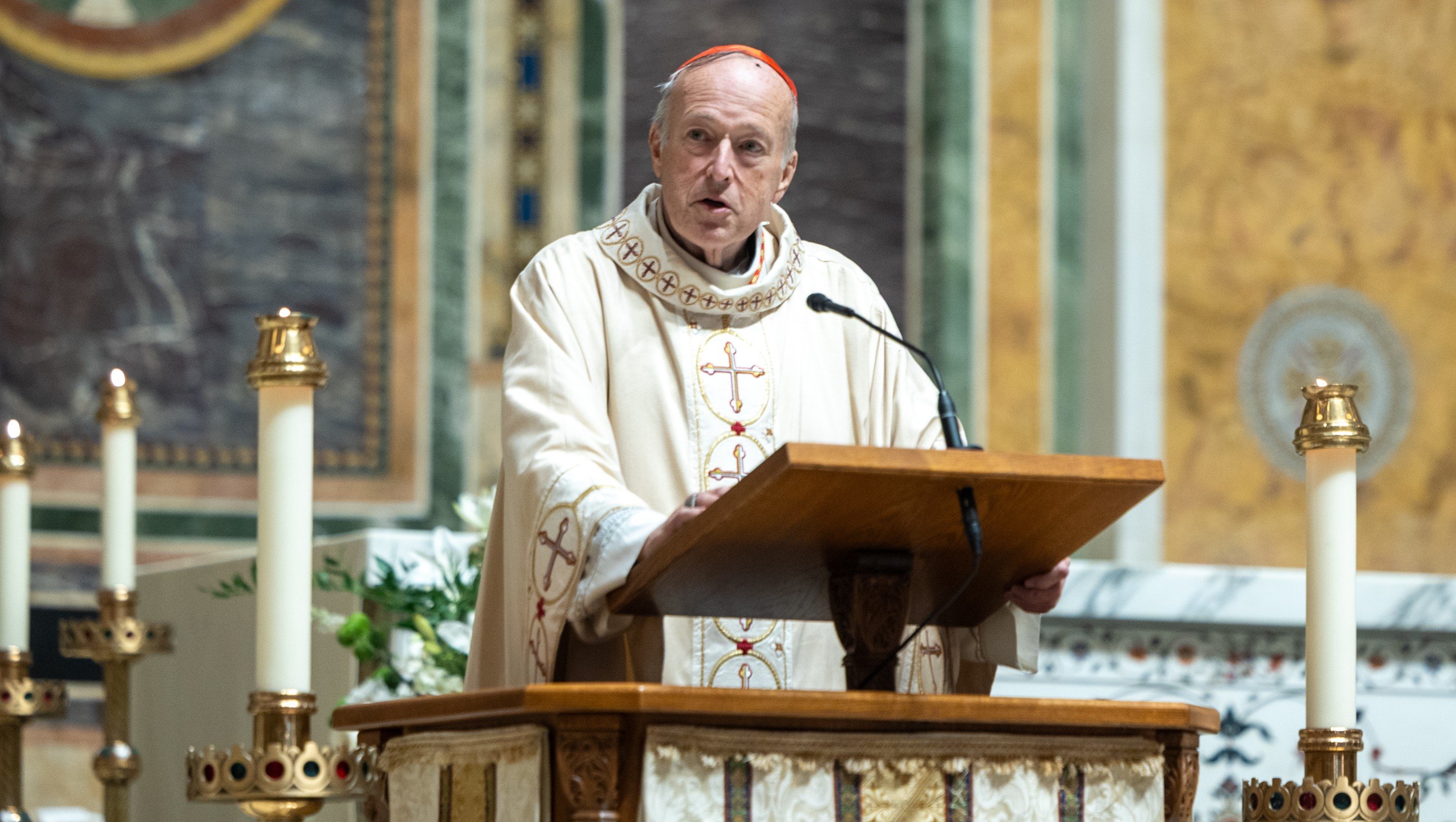
The archbishop was the principal celebrant and homilist at the final liturgy for the pilgrimage, which took place July 5 at the Cathedral Basilica of Saints Peter and Paul in Philadelphia, the second to last stop on the pilgrimage route.
At the start of the Mass, Pope Leo XIV — the first U.S.-born pope — addressed the faithful in a pre-recorded video message, saying that the “strong, though largely unknown, Eucharistic heritage” of the nation “must continue to serve as source of both renewal and unity.”
The pilgrimage arrived in Philadelphia July 2, having traveled through most of the nation’s original 13 colonies — spanning 18 dioceses and archdioceses, as well as two Eastern Catholic eparchies — since its May 24 launch.
With a theme of “One Nation Under God,” the pilgrimage had been placed under the patronage of St. Frances Xavier Cabrini, the woman religious and Italian immigrant who became the first U.S. citizen to be canonized after a lifetime of work ministering to immigrants. Stops along the Cabrini Route highlighted sites significant to Catholicism’s contributions to U.S. history.
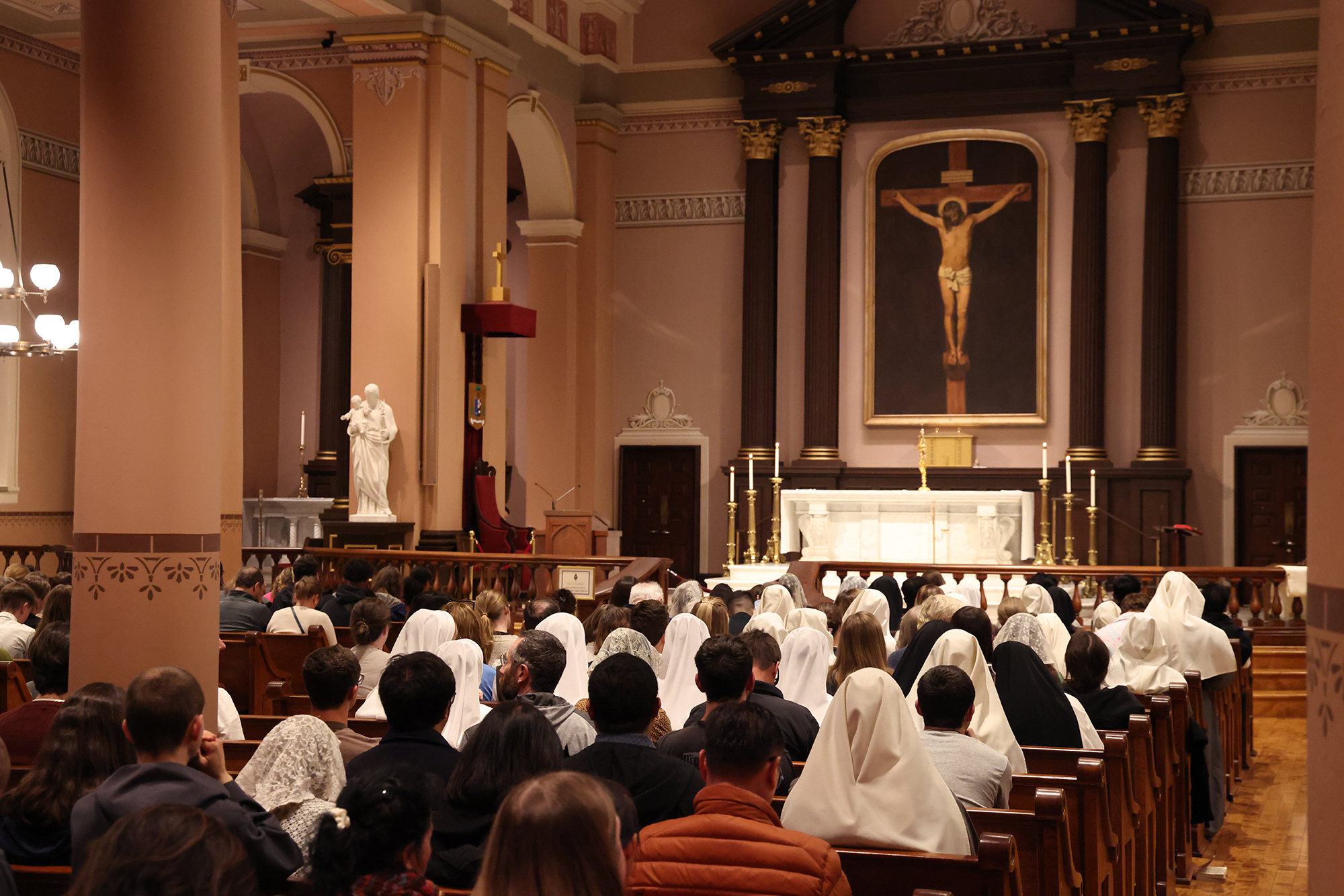
Despite an ongoing heatwave, hundreds filled the cathedral’s pews for the July 5 liturgy, overflowing into aisles and side chapels and joining in the hymns led by multiple multicultural choirs.
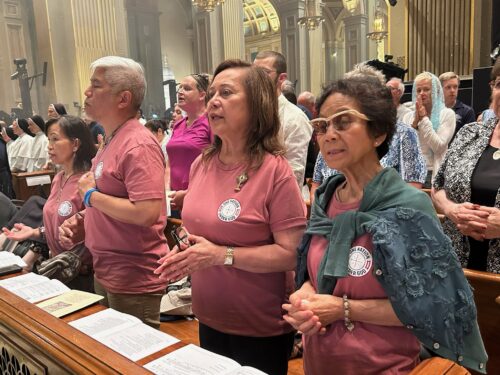
Pilgrims attended the closing Mass of the 2026 National Eucharistic Pilgrimage at Saints Peter and Paul Basilica in Philadelphia July 5.
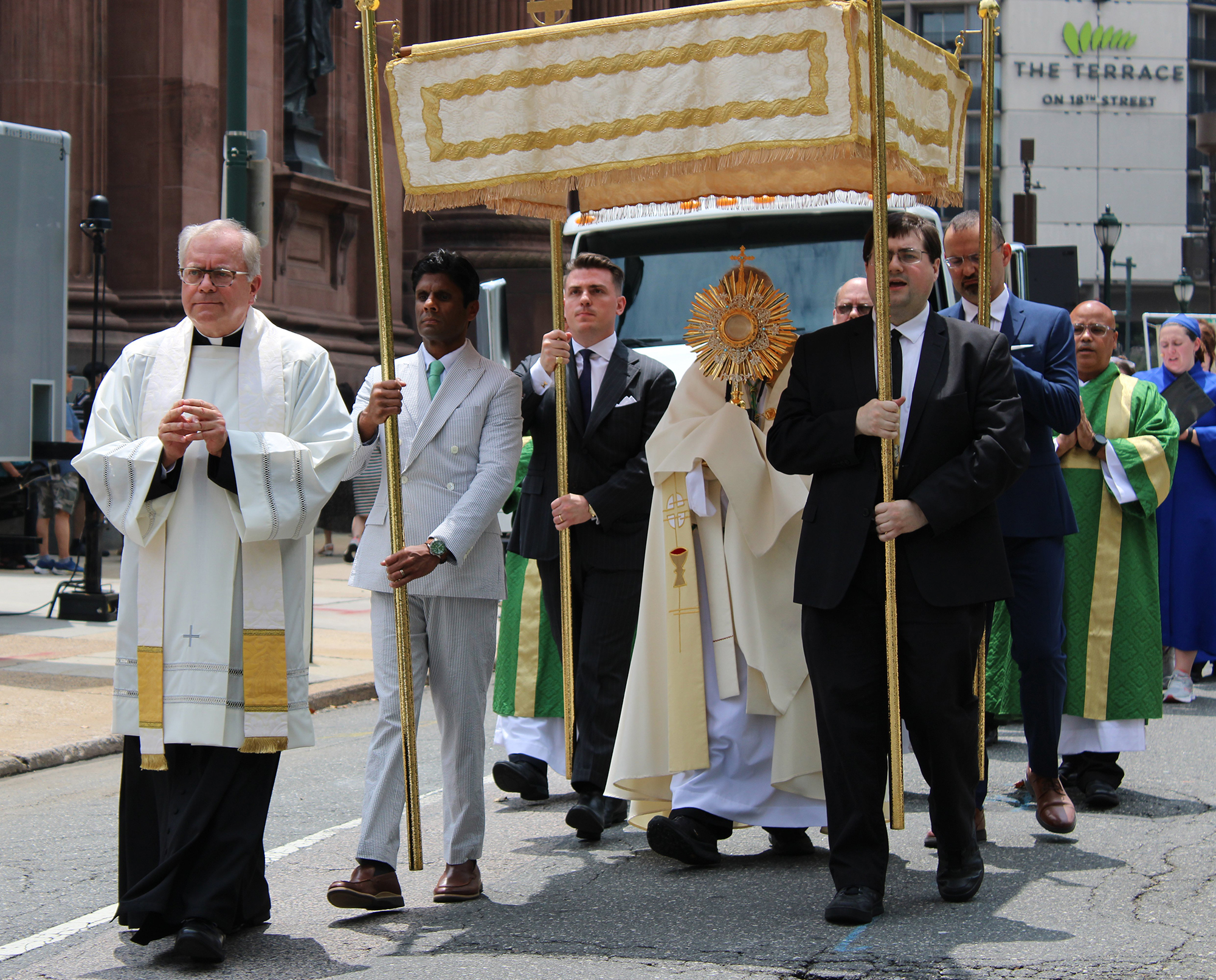
Following the Mass, attendees braved temperatures above 90 degrees and high levels of humidity for a Eucharistic procession through the streets of Philadelphia to the National Shrine of St. John Neumann, located at St. Peter the Apostle Church some two miles away.
Archbishop Pérez held the monstrance as he processed under a canopy held aloft by attendants, with the Knights of Columbus forming an honor guard and choir members, in full choral robes, leading pilgrims in multiple hymns.
Walking along the route, Kevin DePaulo and Helen Chalhoub — young adult Catholics from the Philadelphia suburbs — said that participating in the Philadelphia stop of the pilgrimage was a source of joy.
DePaulo described the Eucharistic procession as “a meaningful opportunity to really do something that shows our faith outside of just going to church on Sunday. It’s a public witness.”
Chalhoub, who carried a banner with the image of the Divine Mercy and the text of the Hail Mary, said that she looked forward to continuing “to lean on the Lord through everyday life, through challenges, and even when things are going well. Just to always lean on the Lord and be with him.”
Patrick McNabb, a Philadelphia-area native now living in Rhode Island, brought his young children Grace and Brendan to the Mass and procession, having already attended earlier pilgrimage events in both Rhode Island and Massachusetts.
As a father, said McNabb, he hoped his kids would “grow closer to God” as a result of their participation.
Several members of the Immaculate Heart of Mary Sisters of Wichita, Kansas, said after the procession that the liturgy and the journey to the St. John Neumann Shrine — at which Benediction took place — were an experience of oneness among Catholics.
“We certainly saw the universal Church in our procession today,” said Sister Mary Monica. “It was beautiful coming together, because Christ is unity, and so our nation needs to come together. And it’s only through Christ that will happen.”
Bishop Erik T. Pohlmeier of St. Augustine, Florida — whose diocese hosted the start of the 2026 National Eucharistic Pilgrimage — said that “what binds us all together is the Eucharist.”
“Our greater identity is unity with each other, (more) than anything else,” he said.
Bishop Pohlmeier said the nine young adults who accompanied the Blessed Sacrament throughout the 2026 pilgrimage — known as “perpetual pilgrims” — had gotten “a glimpse into the bigger reality of the Church” as a result of their journey.
Several pilgrims affirmed the bishop’s insight during a post-procession press conference.
“I think it’s so beautiful going through so many different parts of the country, so many different dioceses,” said Cheyenne Johnson, who had also been a 2025 perpetual pilgrim.
Johnson said she and her fellow pilgrims had experienced “so many different cultures in different places,” adding, “And I think that’s a beautiful thing.”
Yet at the heart of such diversity remains a divine unity, said Archbishop Pérez.
The “enduring presence” of Christ’s “body, blood, soul and divinity” in the sacrament of the altar was given as a “gift” that gathers the faithful, he said during his homily at the cathedral.
“It transforms us,” said Archbishop Pérez. “It conquers us.”