Special grace for people experiencing sickness
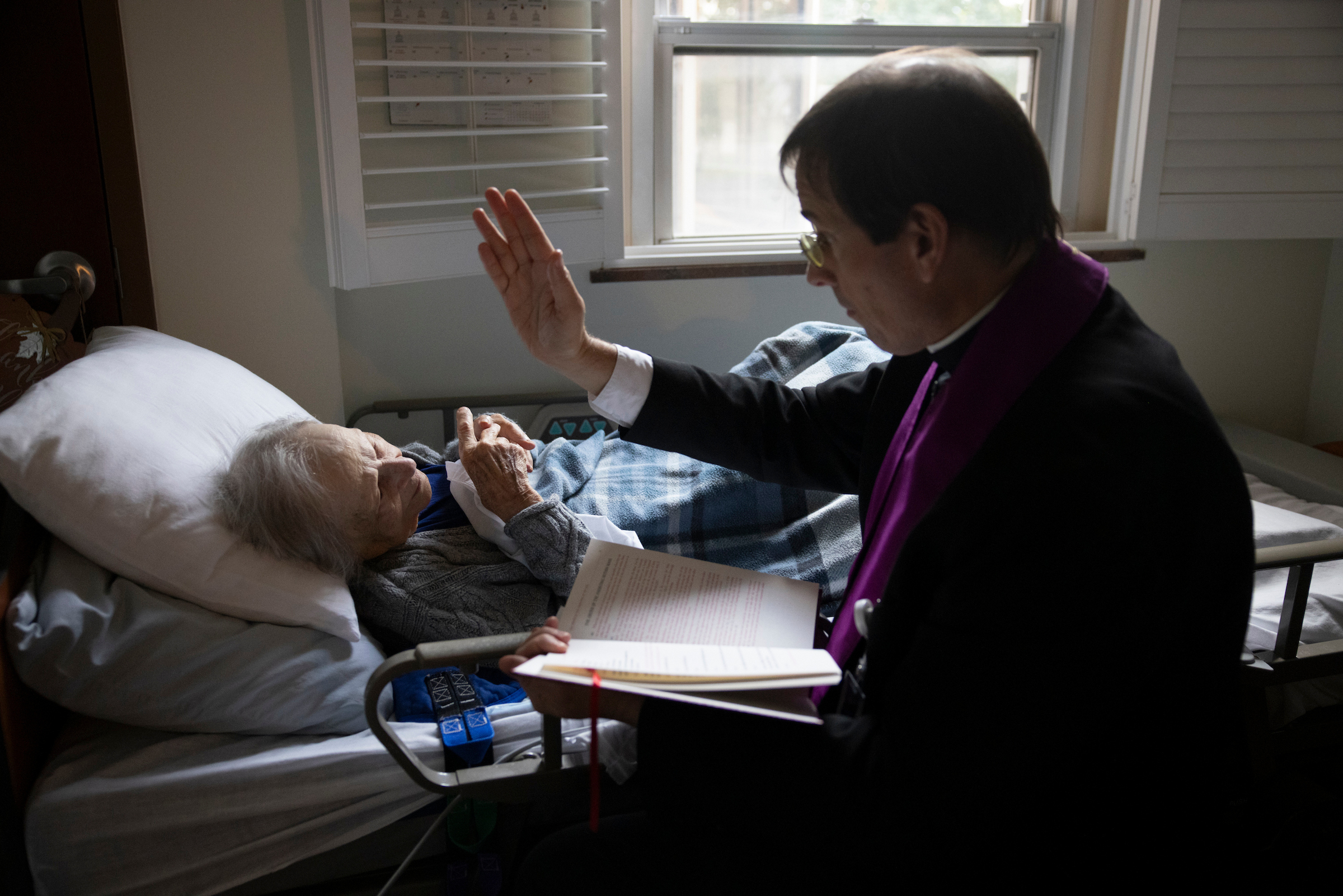
Father Nick Muenks knocked on the open door of Sister Elizabeth Ruppert’s room at Mother of Good Counsel Home in Northwoods.
“Would you like to receive the anointing of the sick?” Father Muenks asked.
As the chaplain at Mother of Good Counsel Home, Father Muenks offers the sacrament of anointing of the sick quarterly to all Catholic residents who desire it, as well as on an ongoing, as-needed basis. During the quarterly anointings, he gathers on each of the home’s three floors to lead a group prayer service with anointing, then makes his rounds to the rooms of residents who were unable to join the group.
As Sister Elizabeth sat in her wheelchair, Father Muenks led her through a short series of prayers. He anointed her forehead and hands with the holy oil of the sick as he prayed, “Through this holy anointing, may the Lord in His love and mercy help you with the grace of the Holy Spirit. May the Lord who frees you from sin save you and raise you up.”
Sister Elizabeth bowed her head for a final blessing, then looked up at Father Muenks with a smile.
“Thank you so much,” she said. “I can never get enough of that!”

A sacrament of healing
Anointing of the sick is one of two sacraments of healing in the Church, along with reconciliation. Its roots are found in Jesus’ healing ministry, then taken up by the apostles:
“Is anyone among you sick? He should summon the presbyters of the church, and they should pray over him and anoint [him] with oil in the name of the Lord, and the prayer of faith will save the sick person, and the Lord will raise him up. If he has committed any sins, he will be forgiven” (James 5:14-15).
Anointing of the sick can only be offered by a priest or bishop. During the celebration of the sacrament, the priest lays his hands on the sick person and anoints them with the oil of the sick, one of three holy oils blessed by the archbishop at the annual Chrism Mass on Holy Thursday and distributed to parishes throughout the archdiocese. The holy oil is a sign of the sick person’s connection to the entire Body of Christ and communion of saints.

The sacrament is not just for those who are at the point of death, the Catechism of the Catholic Church states. It may be administered to any Catholic who “begins to be in danger of death from sickness or old age” (CCC 1514).
If a sick person receives the sacrament and later recovers, he may receive it again later; if during the same illness the person’s condition becomes more serious, it may be repeated. It is fitting to receive it before a serious operation, too. Father Muenks recommends the sacrament before anyone undergoes anaesthesia, he said.
“I never hesitate to anoint people kind of in the way that’s still in the Catholic imagination, that it’s done at the very last minute,” Father Muenks said. “But we don’t want to wait that long, because we would like the person to be able to consciously benefit from the graces God gives them through the sacraments.”
The sacrament confers special grace on the person experiencing the difficulties that come with illness or old age, the catechism says. It gives strength, peace and courage to endure the suffering; forgives sins if the sick person was unable to participate in the sacrament of reconciliation; prepares the person for passing over to eternal life; and unites the sick person to the passion of Christ.
Anointing also completes our conformity to Christ’s death and resurrection, the catechism says.
“It completes the holy anointings that mark the whole Christian life: that of baptism which sealed the new life in us, and that of confirmation which strengthened us for the combat of this life. This last anointing fortifies the end of our earthly life like a solid rampart for the final struggles before entering the Father’s house” (CCC 1523).
In addition to anointing of the sick, the Church offers Viaticum — holy Communion given to a person who is dying — with the thought that this is potentially their last time receiving the Eucharist, Father Muenks said.
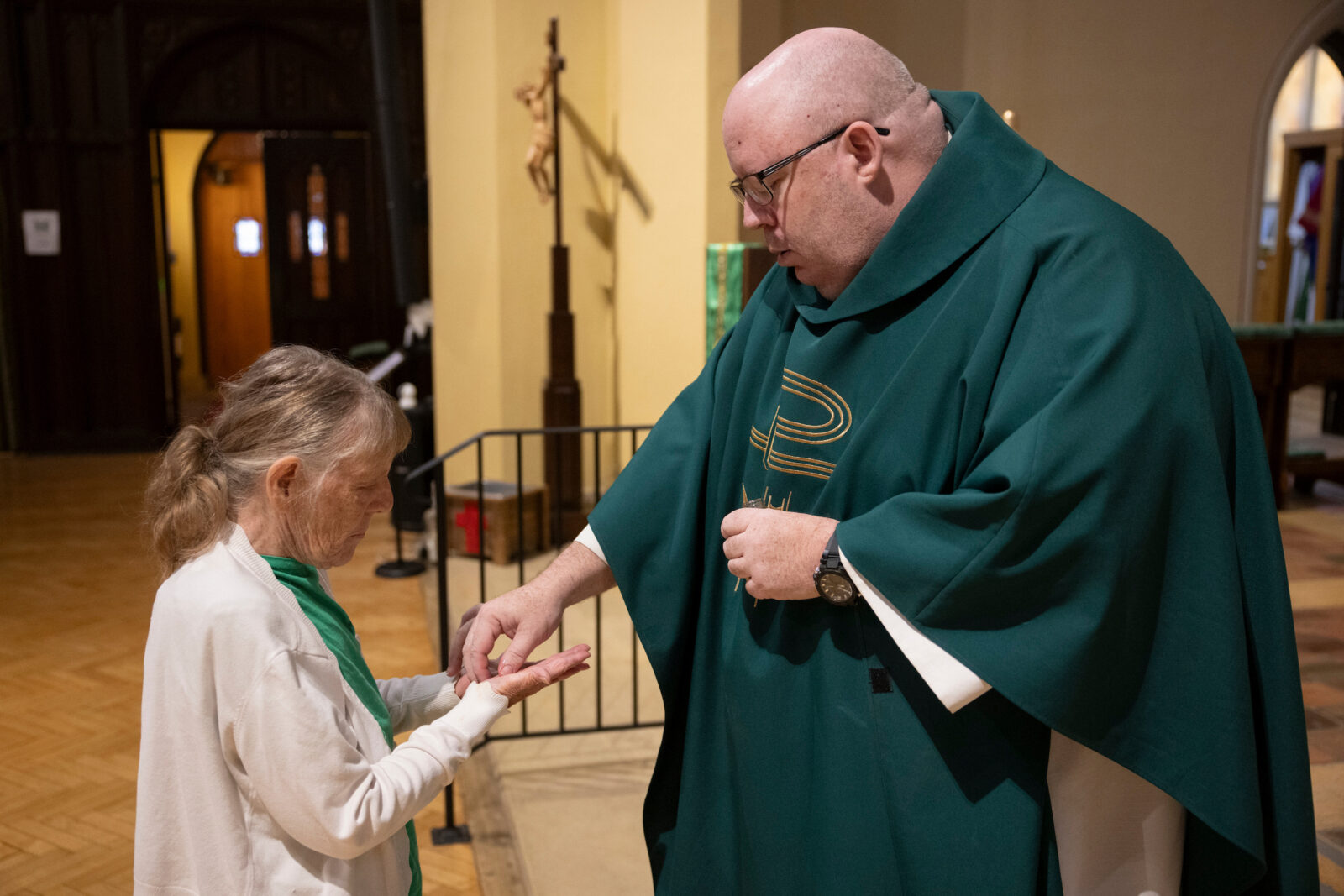
“Viaticum is your last meal before you set off on your journey to the Lord, and in receiving Him, the Lord Himself goes with you, kind of like the disciples going to Emmaus,” he said.
An elderly confessor of Father Muenks’ once told him that “the last battle is with despair,” and that has stuck with him as he ministers to those who are elderly or seriously ill.
“Most of our suffering cannot actually be seen or measured by medical science. It’s interior, and so the presence of the Church, the grace of the sacrament is so important there,” he said. “Even when we can’t see what has happened, the person understands that they are not alone. The anointing of the sick brings the Lord into their situation, but it also brings the Church through the minister and the other people who gather for the sacrament, to give them that solidarity and company.”
One thing that is sometimes lost in discussion of the sacrament is that anointing of the sick asks the Lord for physical healing, not just spiritual benefit, Father Muenks said. When he comes to anoint someone, he encourages them to think about what healing they are asking for and to pray for that very intentionally.
“I find that I have had some remarkable changes in people’s condition when anointing, not only with faith and the sacramental grace to save the soul, but actually that it is for the body, just as the Lord intended it,” he said.
In a nursing home, no one is expecting God to suddenly grant someone “the fountain of youth” again, Father Muenks said.
“But there have been definite things that happened because of prayer with faith and because of the sacrament,” he said. “So I just want to encourage anybody who is asking for the sacrament to have faith that God can bring physical healing through it. I want to encourage priests to have faith that God can do that, because as we see in the Bible over and over again, Jesus has all power to do everything, and yet it’s somebody’s faith that unlocks the miracle.”
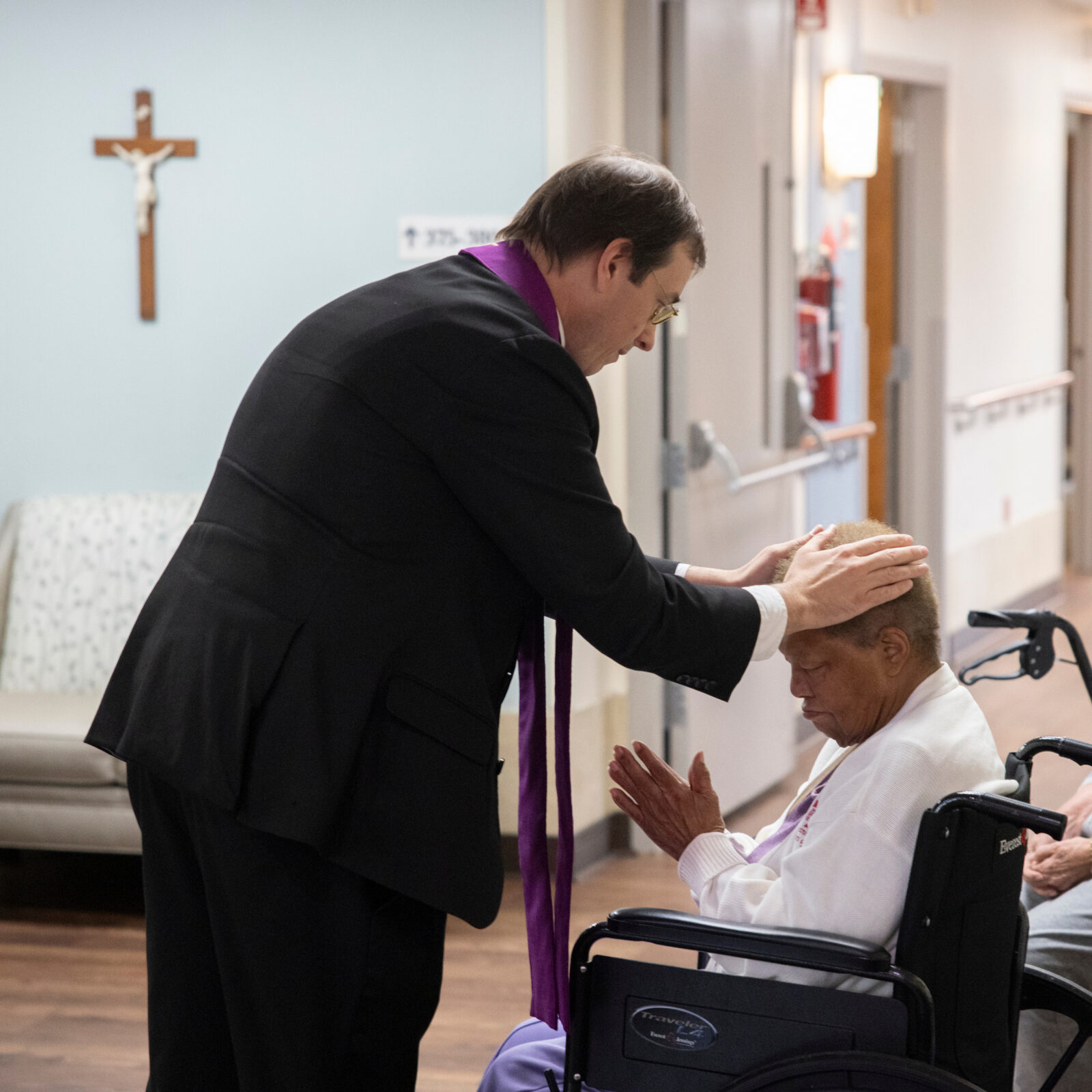
Father Nick Muenks prayed over Sister Thelma Mitchell, FSM, during the sacrament of anointing of the sick on Nov. 4 at Mother of Good Counsel Home in Northwoods.

Anointing of the sick
“By the sacred anointing of the sick and the prayer of the priests the whole Church commends those who are ill to the suffering and glorified Lord, that He may raise them up and save them. And indeed she exhorts them to contribute to the good of the People of God by freely uniting themselves to the Passion and death of Christ” (Catechism of the Catholic Church 1499).
Matter and form
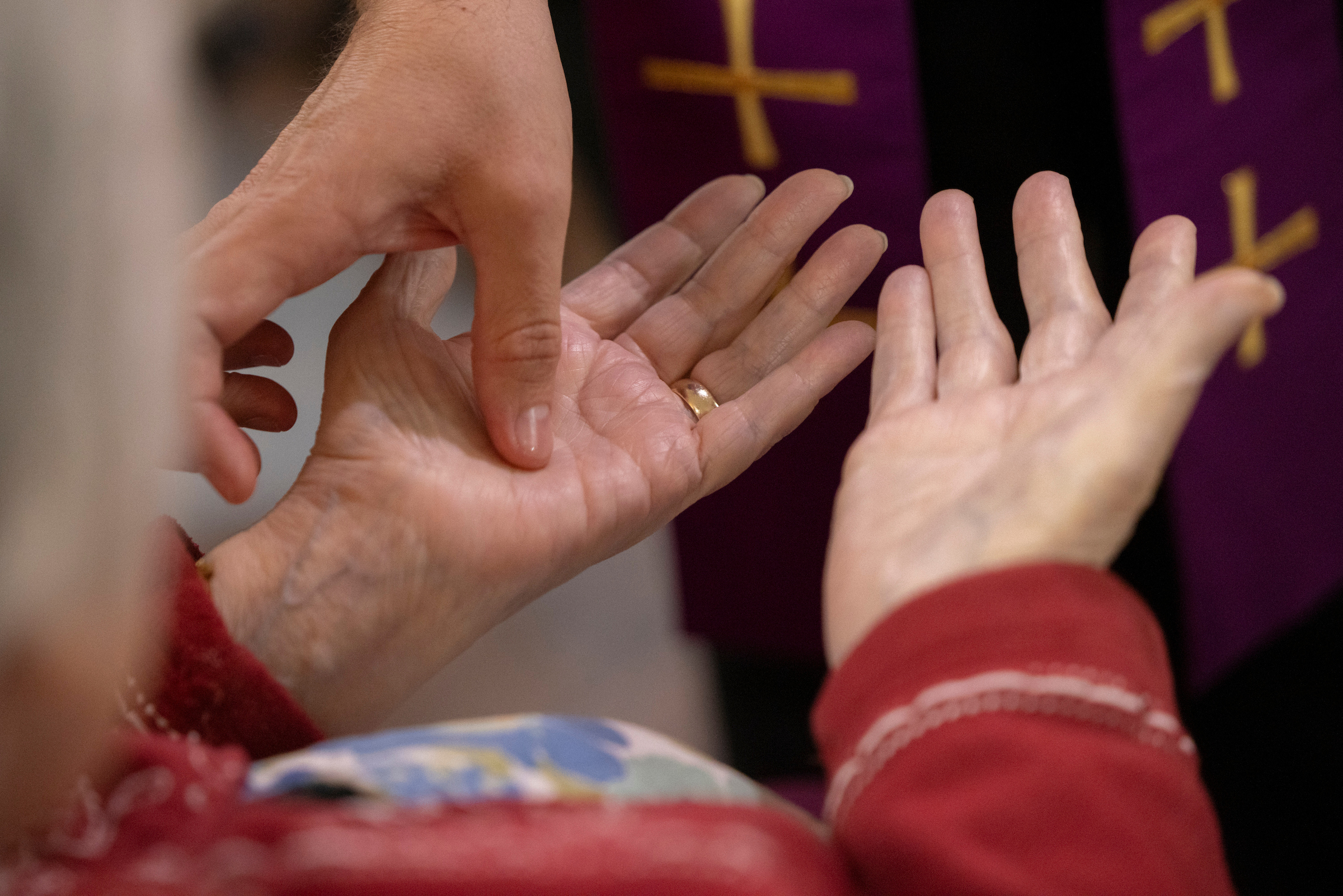
The oil of the sick (oleum infirmorum) is one of three holy oils blessed by the archbishop at the annual Chrism Mass and distributed to parishes throughout the archdiocese. The priest uses the oil to anoint a sick person’s head and the palms of their hands.
The priest prays these words: “Through this holy anointing, may the Lord in His love and mercy help you with the grace of the Holy Spirit. May the Lord who frees you from sin save you and raise you up.”
The celebration of the sacrament can also include a penitential rite and a Liturgy of the Word.