About 1 in 5 adults in the U.S. experience mental illness
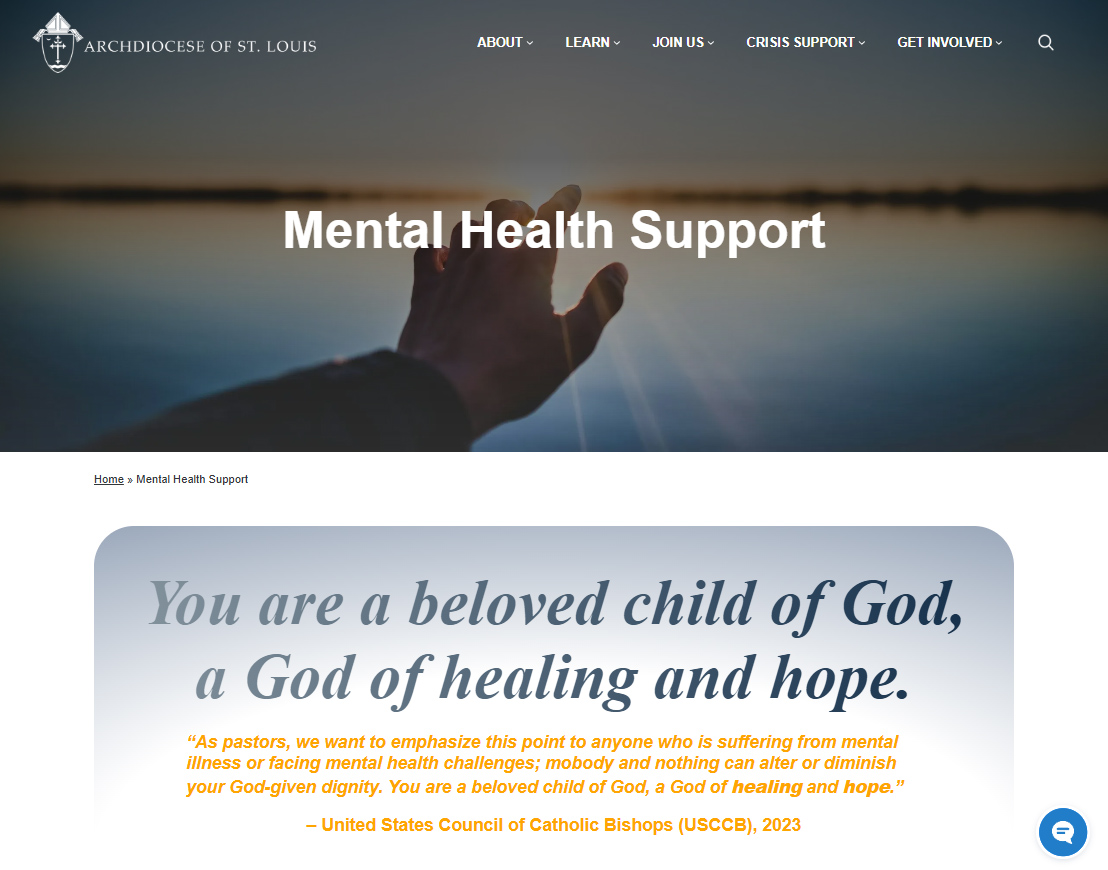
About 1 in 5 adults in the U.S. experience mental illness, and the Archdiocese of St. Louis’ new Mental Health Support site is here to remind them they’re not alone.
The website offers information about a number of Catholic and community-based mental health resources, as well as crisis contacts, Church teaching, pastoral guidance and focused resources for specific categories including anxiety and depression, pregnancy and parenting, youth and young adults, marriage and divorce, trauma, substance use and more.
It also includes a directory of the archdiocesan Catholic Therapist Network, made up of counselors who integrate their Catholic faith into their mental health practices and strive to meet the needs of Catholic clients who would like to incorporate their own Catholic faith into the therapeutic process.
May is observed as Mental Health Awareness Month. Twenty-three percent of adults in the U.S. experienced mental illness in 2024, according to the National Alliance on Mental Illness. More than 1 in 7 youth (16.5%) ages 6-17 experienced a mental health disorder that year.
In 2023, the United States Conference of Catholic Bishops launched its National Catholic Mental Health Campaign, spearheaded by Archbishop Borys A. Gudziak of the Ukrainian Catholic Archeparchy of Philadelphia, then-chairman of the USCCB’s Committee on Domestic Justice and Human Development, and Bishop Robert E. Barron of Winona-Rochester, Minnesota, who then led the USCCB’s Committee on Laity, Marriage, Family Life and Youth.
“As pastors, we want to emphasize this point to anyone who is suffering from mental illness or facing mental health challenges; nobody and nothing can alter or diminish your God-given dignity. You are a beloved child of God, a God of healing and hope,” Archbishop Gudziak and Bishop Barron said in an introductory message for the campaign.
In September 2025, the U.S. bishops introduced a new component called “Healing and Hope” focused on amplifying local engagement on mental health issues.
Professional mental health treatment can go hand-in-hand with a devoted spiritual life, said Maria Watkins, a licensed professional counselor at Saint Louis Counseling, a ministry of Catholic Charities of the Archdiocese of St. Louis.
Watkins, a parishioner at St. Paul in Fenton, has been in practice for 32 years. For clients who are Catholic and want to talk about their faith as part of their overall health, she incorporates examples from Scripture and the saints. They discuss a prayer life and how graces from the Eucharist and the sacrament of reconciliation can fit in alongside counseling.
Watkins sometimes sees clients who have been referred to counseling by a spiritual director, she said. “They’re already using the prayer skills. They’re already going to adoration. They’re already saying the Rosary. But looking at it a different way, using cognitive behavioral therapy skills” can help them discover the underlying cause from a mental health standpoint and learn new tools to address it, she said.
Sometimes people who are experiencing mental illness need medication to treat it, too, she added.
“It’s OK to have some medicine help us, just like a person with diabetes would need help. Of course, diet, exercise and good sleep are essential, but sometimes it’s more than that,” she said. “We give people the grace that if their pancreas isn’t working, they need to take insulin; sometimes an antidepressant or ADHD medication are essential to somebody.”
She’s occasionally seen the misconception that professional mental health treatment is only a last resort if things get really bad, Watkins said. There are some obvious warning signs to seek help: If someone is wanting to hurt someone or hurt themselves, they should seek crisis help immediately.
But many people could benefit from counseling in other situations, Watkins said. She suggests some basic questions to ask yourself or a loved one: How is this impacting your daily life? Are you able to get out of bed in the morning? Do you feel joy in your day? Are you unable to function without drinking or taking drugs (not prescribed by a doctor)? Do you feel like you have people who are supporting you?
“Counseling is there to help somebody, support them, validate them, help them with a place to share their feelings, a place to reorganize their thoughts and problem-solve, and everybody needs that sometimes,” Watkins said. “I think Catholics might sometimes be a little proud because we have so many wonderful gifts with the sacraments and the community of Catholics, but sometimes they do also need counseling.”
Mental health support
Archdiocese of St. Louis Mental Health Support site: archstl.org/mentalhealth
USCCB National Catholic Mental Health Campaign: usccb.org/mentalhealth
Missouri suicide and crisis lifeline: Call or text 988
Upper Room Crisis Hotline (Catholic-specific support): 1-888-808-8724