On Nov. 12, the U.S. bishops approved a ‘special pastoral message’ on behavior toward immigrants at their fall plenary assembly
Editor’s note: This story was updated Nov. 20.
Insisting that the dignity of all people, including immigrants, must be respected, Pope Leo XIV asked U.S. Catholics and “people of goodwill” to read and listen to the U.S. bishops’ recent pastoral message on the topic.
“When people are living good lives — and many of them (in the United States) for 10, 15, 20 years — to treat them in a way that is extremely disrespectful, to say the least,” is not acceptable, the pope said Nov. 18.
Meeting reporters outside his villa in Castel Gandolfo, Pope Leo was asked what he thought of the “special pastoral message on immigration” approved overwhelmingly by members of the U.S. Conference of Catholic Bishops Nov. 12.
“We are disturbed when we see among our people a climate of fear and anxiety around questions of profiling and immigration enforcement,” the bishops said. “We are saddened by the state of contemporary debate and the vilification of immigrants. We are concerned about the conditions in detention centers and the lack of access to pastoral care. We lament that some immigrants in the United States have arbitrarily lost their legal status.”
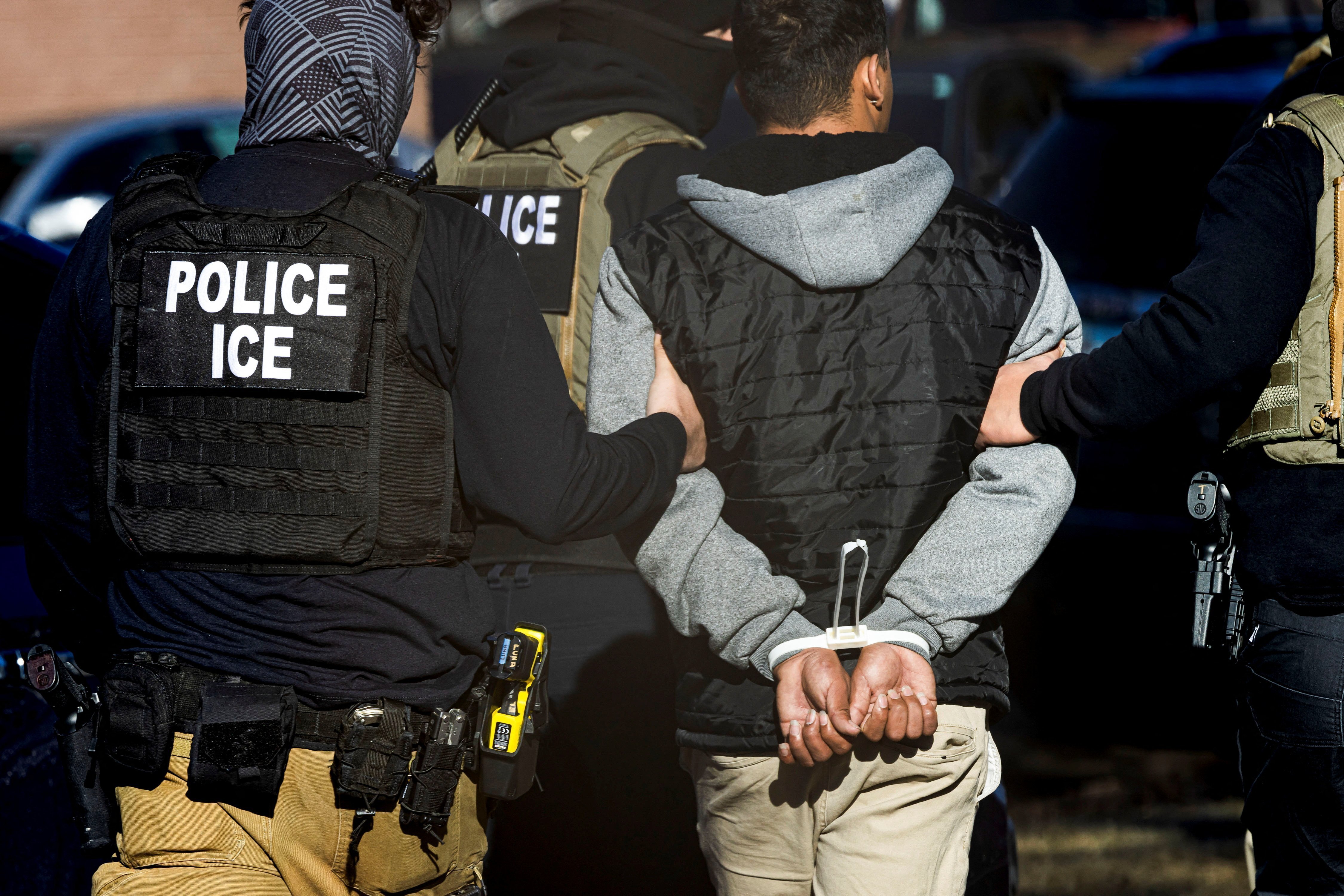
The bishops also said, “We oppose the indiscriminate mass deportation of people,” and they prayed “for an end to dehumanizing rhetoric and violence, whether directed at immigrants or at law enforcement.”
The U.S. Conference of Catholic Bishops approved the “special pastoral message on immigration” Nov. 12, voicing “our concern here for immigrants” at their annual fall plenary assembly in Baltimore.
The statement came as a growing number of bishops have acknowledged that some of the Trump administration’s immigration policies risk presenting the Church with both practical challenges in administering pastoral support and charitable endeavors, as well as religious liberty challenges.
‘In defense of God-given human dignity’
The statement, released in the late afternoon, said, “As pastors, we the bishops of the United States are bound to our people by ties of communion and compassion in Our Lord Jesus Christ.”
“We are troubled by threats against the sanctity of houses of worship and the special nature of hospitals and schools,” it continued. “We are grieved when we meet parents who fear being detained when taking their children to school and when we try to console family members who have already been separated from their loved ones. Despite obstacles and prejudices, generations of immigrants have made enormous contributions to the well-being of our nation.
“We as Catholic bishops love our country and pray for its peace and prosperity. For this very reason, we feel compelled now in this environment to raise our voices in defense of God-given human dignity.”
References to Catholic social teaching

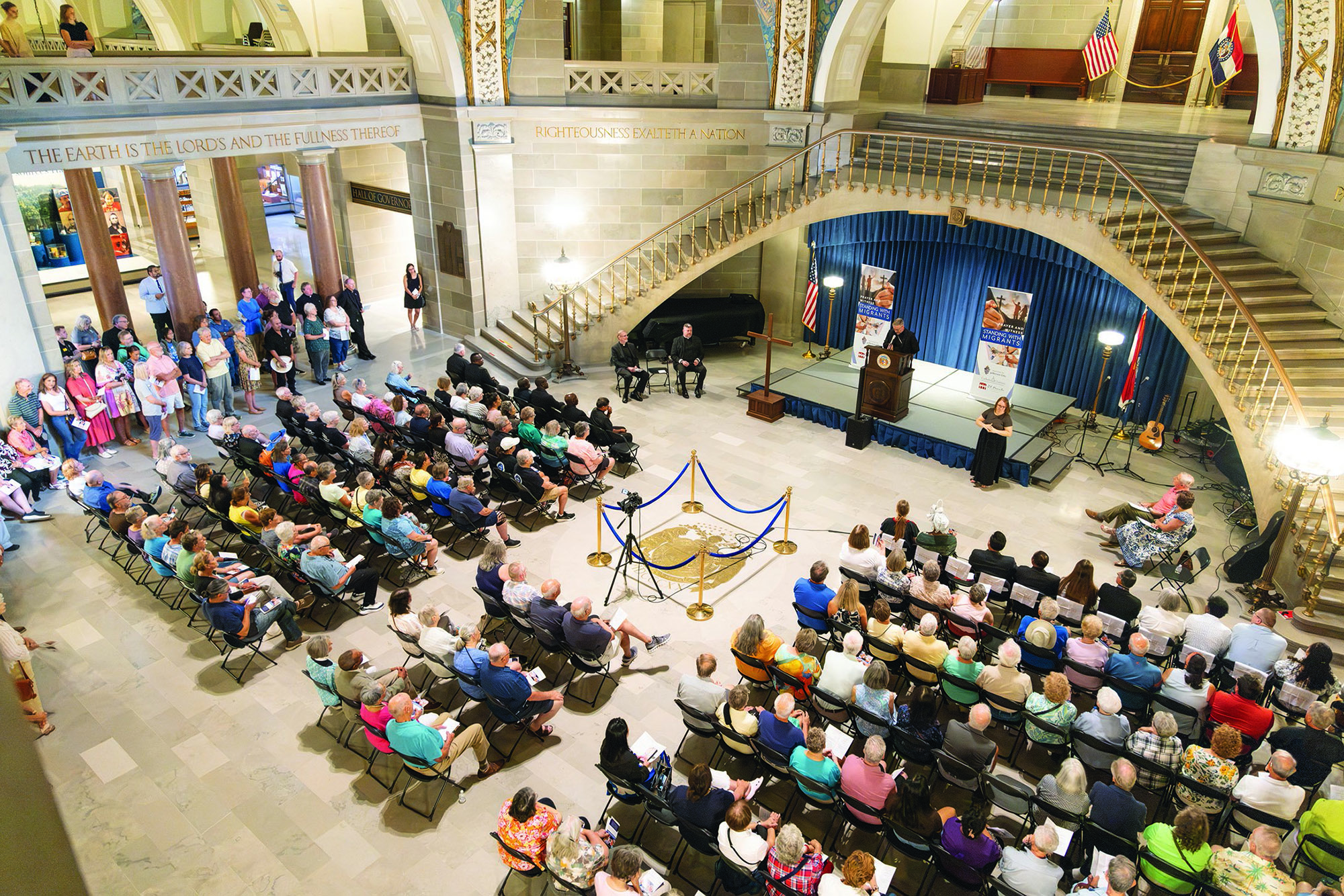
Prelates attended the Nov. 11 session of the fall general assembly of the U.S. Conference of Catholic Bishops in Baltimore.
The statement also refers to Catholic social teaching on immigration, which seeks to balance three interrelated principles: the right of persons to migrate in order to sustain themselves and their families; the right of a country to regulate its borders and immigration; and a nation’s duty to conduct that regulation with justice and mercy.
Catholic teaching “exhorts nations to recognize the fundamental dignity of all persons, including immigrants,” the statement said. “We bishops advocate for a meaningful reform of our nation’s immigration laws and procedures. Human dignity and national security are not in conflict.
“Both are possible if people of good will work together. We recognize that nations have a responsibility to regulate their borders and establish a just and orderly immigration system for the sake of the common good. Without such processes, immigrants face the risk of trafficking and other forms of exploitation. Safe and legal pathways serve as an antidote to such risks.”
The Church’s teaching, it noted, “rests on the foundational concern for the human person, as created in the image and likeness of God (Genesis 1:27).”
“As pastors, we look to Sacred Scripture and the example of the Lord Himself, where we find the wisdom of God’s compassion,” it continued. “The priority of the Lord, as the Prophets remind us, is for those who are most vulnerable: the widow, the orphan, the poor, and the stranger (Zachariah 7:10). In the Lord Jesus, we see the One who became poor for our sake (2 Corinthians 8:9), we see the Good Samaritan who lifts us from the dust (Luke 10:30–37), and we see the One who is found in the least of these (Matthew 25).
“The Church’s concern for neighbor and our concern here for immigrants is a response to the Lord’s command to love as He has loved us (John 13:34),” it said.
Discussion on the statement
The vast majority of voting bishops approved the message, and many gave a standing ovation. Archbishop Paul S. Coakley of Oklahoma City, newly elected president of the USCCB, said, “I’m strongly in support of it for the good of our immigrant brothers and sisters,” adding that the statement sought “balance” in “protecting the rights of immigrants, but also securing and calling upon our lawmakers and our administration to offer us a meaningful path of reform for our immigration system.”
According to a USCCB news release issued with the text of the statement, this “marked the first time” in 12 years the bishops’ conference “invoked this particularly urgent way of speaking as a body of bishops. The last one issued in 2013 was in response to the federal government’s contraceptive mandate.”
Details of the statement were a matter of some debate at the public session Nov. 12, with Cardinal Blase J. Cupich of Chicago suggesting the addition of language opposing “indiscriminate mass deportation.” Others voiced concurrence but raised qualifications, like also adding “without due process,” or questioned the conference’s procedures for making an amendment at the assembly. The bishops approved the added phrase, found in the final paragraph of the message: “We oppose the indiscriminate mass deportation of people. We pray for an end to dehumanizing rhetoric and violence, whether directed at immigrants or at law enforcement. We pray that the Lord may guide the leaders of our nation, and we are grateful for past and present opportunities to dialogue with public and elected officials. In this dialogue, we will continue to advocate for meaningful immigration reform.”
The bishops’ concern has a reference point in existing magisterial teaching. St. John Paul II’s 1993 encyclical “Veritatis Splendor” (“Splendor of Truth”) and 1995 encyclical “Evangelium Vitae” (“The Gospel of Life”) both quote the Second Vatican Council’s teaching in “Gaudium et Spes,” that names “deportation” among various specific acts “offensive to human dignity” that “are a disgrace, and so long as they infect human civilization they contaminate those who inflict them more than those who suffer injustice, and they are a negation of the honor due to the Creator.”
St. John Paul underscored that these acts were examples of “intrinsic evil” incapable of being ordered to God or the good of the human person.
“We are disturbed when we see among our people a climate of fear and anxiety around questions of profiling and immigration enforcement. We are saddened by the state of contemporary debate and the vilification of immigrants. We are concerned about the conditions in detention centers and the lack of access to pastoral care. We lament that some immigrants in the United States have arbitrarily lost their legal status.”
Pastoral statement from the USCCB