Among other business, the U.S. bishops voted to approve updates to child protection documents
At the USCCB spring assembly in Orlando, Florida, the U.S. bishops focused on strengthening the Church’s mission and addressing challenges while keeping the Sacred Heart of Jesus as the key to personal and public transformation in focus.
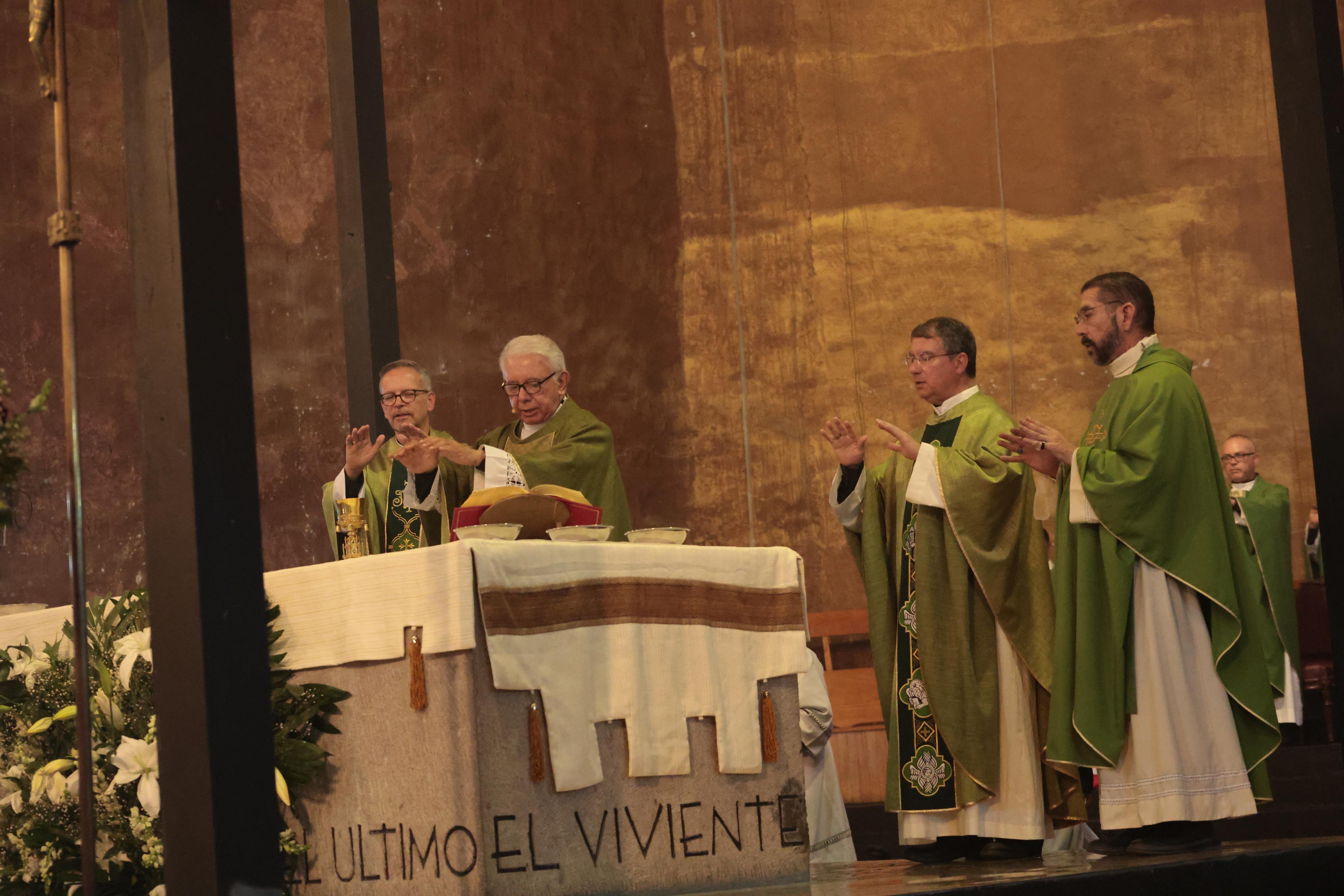
The June 10-12 assembly was animated in particular by its culminating event, the national consecration of the United States during a June 11 Mass at Orlando’s Basilica of the National Shrine of Mary, Queen of the Universe.
The opening session of the U.S. bishops’ meeting June 10 had two addresses that reflected on the Church’s evangelizing mission and the Sacred Heart.
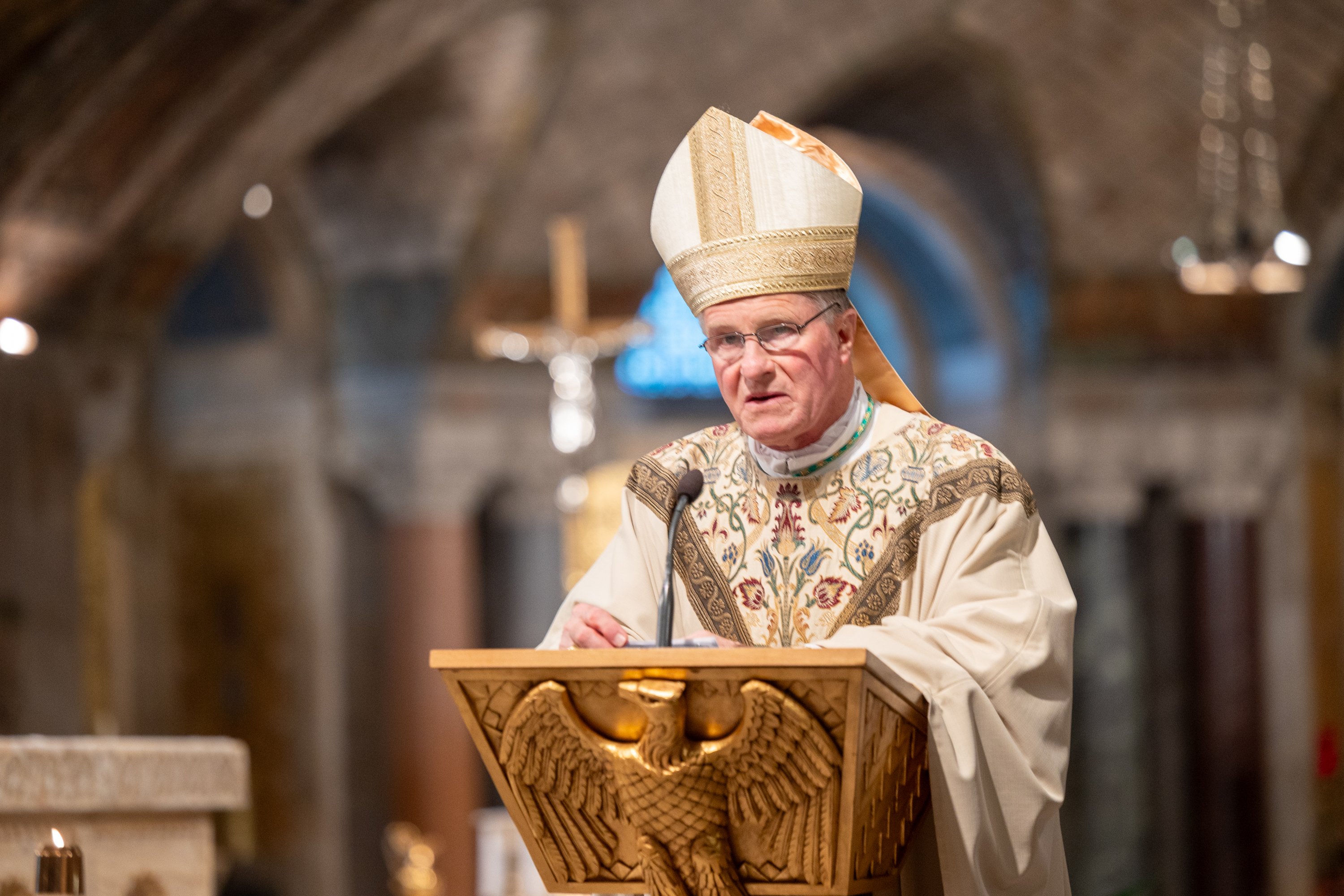
Archbishop Paul S. Coakley of Oklahoma City, in his first address to the bishops as USCCB president, spoke of how “the truth of Christ must be proclaimed all the more confidently” to restore hope that is under threat from wide-ranging attacks on human dignity and polarization “within our country, and even within our Church.”
In response, he called for preaching that “life is a gift from God,” the “cultivation of interpersonal relationships and conversations between those who may disagree,” and acting on the bishops’ mission directive “to reach out to the disaffiliated and the unaffiliated.” But above all, Archbishop Coakley reminded his brother bishops, “It is the love flowing from the Sacred Heart of Jesus that feeds our hope.”
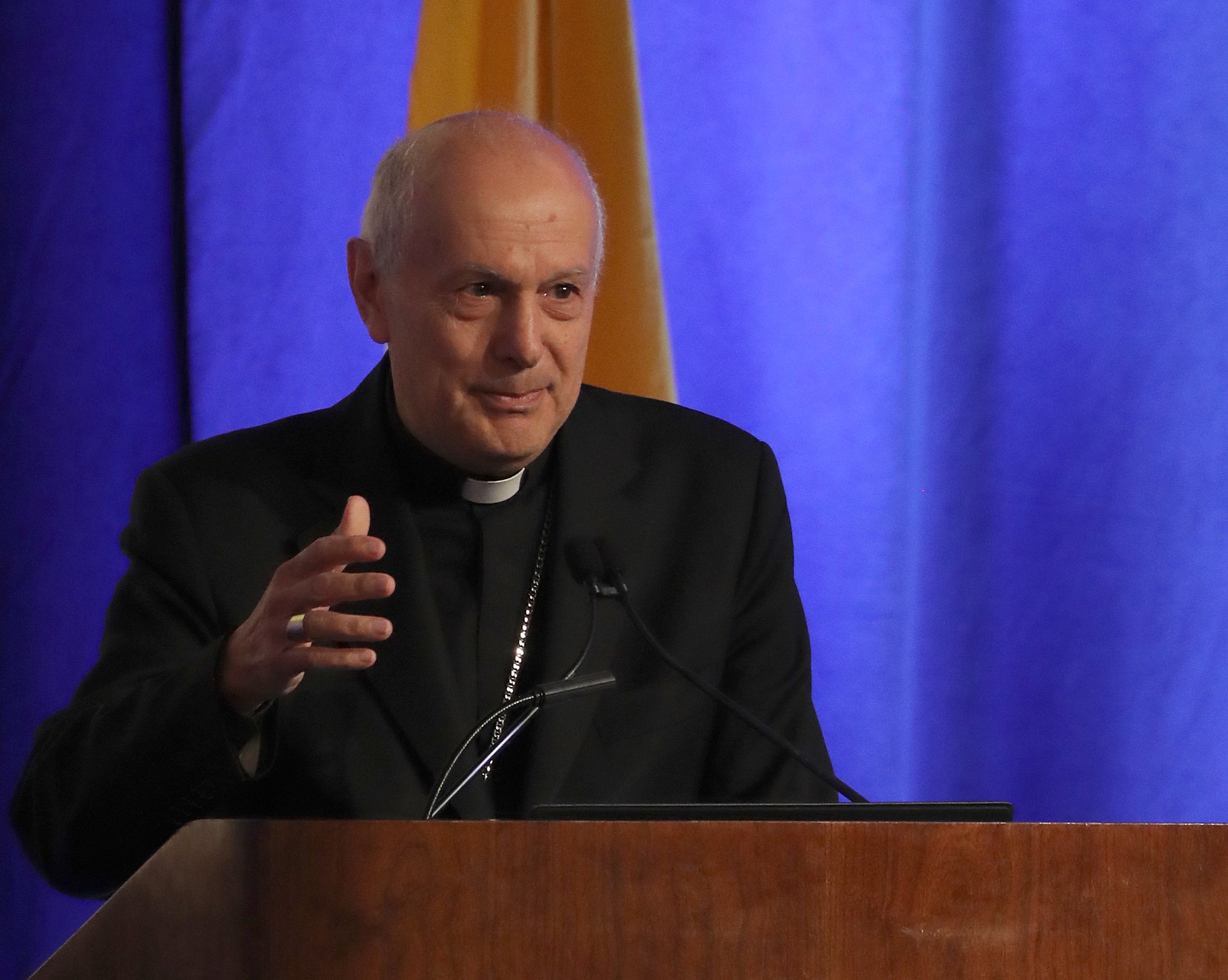
Archbishop Gabriele G. Caccia gave his inaugural address to the bishops as nuncio to the U.S. and also highlighted the consecration of the U.S. Church to the Sacred Heart of Jesus. He urged the bishops to fulfill their mission as missionary disciples by welcoming immigrants in their midst and reminded the bishops his ministry is there to support them.
The start of the public session also included a message from the U.S. bishops to Pope Leo XIV thanking him for shining “the light of the Gospel and the tradition of the Church on the new opportunities and challenges posed by the rise” of artificial intelligence and “emerging technologies” through his new encyclical “Magnifica Humanitas.”
The bishops gave a unanimous consent June 10 to support the advancement of two American canonization causes: Duluth, Minnesota’s pioneer missionary priest Msgr. Joseph Buh, and upstate New York’s entrepreneur-turned-evangelist John Rick Miller.
On the second day of public sessions, the U.S. Catholic bishops approved portions of two texts with near unanimity: a new edition of the Lectionary for Mass, which provides the Scripture readings and psalm for each day’s liturgy; and the 2025 Roman Missal-Liturgy of the Hours Supplement.
The bishops also ultimately agreed to move ahead and approve updates to their landmark document on protection policies for minors. The revision commits the Church to “act on the presumption of the sincerity of those who bring forth a complaint of sexual abuse” while also maintaining “a corresponding presumption of innocence on the part of the accused until guilt is proven.”
The bishops voted on the floor to add a further revision that would commit themselves to form future clergy in “trauma-informed” pastoral care.
While the scope of the charter’s revision did not address adults and stayed within its mandate to focus exclusively on protecting minors, Deacon Bernie Nojadera, executive director of the USCCB’s Secretariat of Child and Youth Protection, said that they anticipate possible related developments in this area coming from the Vatican’s Pontifical Commission for the Protection of Minors.
Auxiliary Bishop Juan Miguel Betancourt of Hartford, Connecticut, then spoke on behalf of a USCCB task force on the ongoing implementation of synodality in the life of the Church. He provided the bishops on June 11 with an update on recent consultations among the bishops, but also invited them to hear directly from Pope Leo himself.
The bishop played a video of the pope addressing some of the U.S. concerns about synodality at a Jubilee 2025 gathering, where Pope Leo emphasized the importance of a patient and proper formation “on every level” about what it means to be a “Church which is synodal.” But Pope Leo also affirmed the Church in the U.S. already has many existing structures that “have great potential for being synodal” and encouraged them “to find ways of continuing to transform them into more inclusive kinds of experiences” for the laity, the clergy and women and men religious.
Bishop Oscar Cantú of San Jose, California, chairman of the bishops’ Subcommittee on Hispanic/Latino Affairs, addressed his fellow bishops June 11 about preparations for the 500th anniversary of Our Lady of Guadalupe’s appearance to St. Juan Diego Cuauhtlatoatzin in five years, and dioceses’ participation in the Intercontinental Guadalupan Novena.
The final day of the conference, June 12, was spent in executive session. The remaining bishops then returned home to their own dioceses to carry out the consecration to the Sacred Heart of Jesus from their own cathedrals.