U.S. bishops consecrated the country to the Sacred Heart as part of the nation’s 250th anniversary celebrations
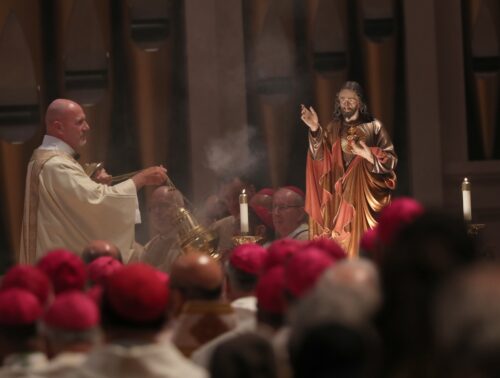
ORLANDO, Fla. — At a Mass at the Basilica of the National Shrine of Mary, Queen of the Universe in Orlando on June 11, the U.S. bishops formally consecrated the United States to the Sacred Heart of Jesus as part of the celebration of the 250th anniversary of the signing of the Declaration of Independence.
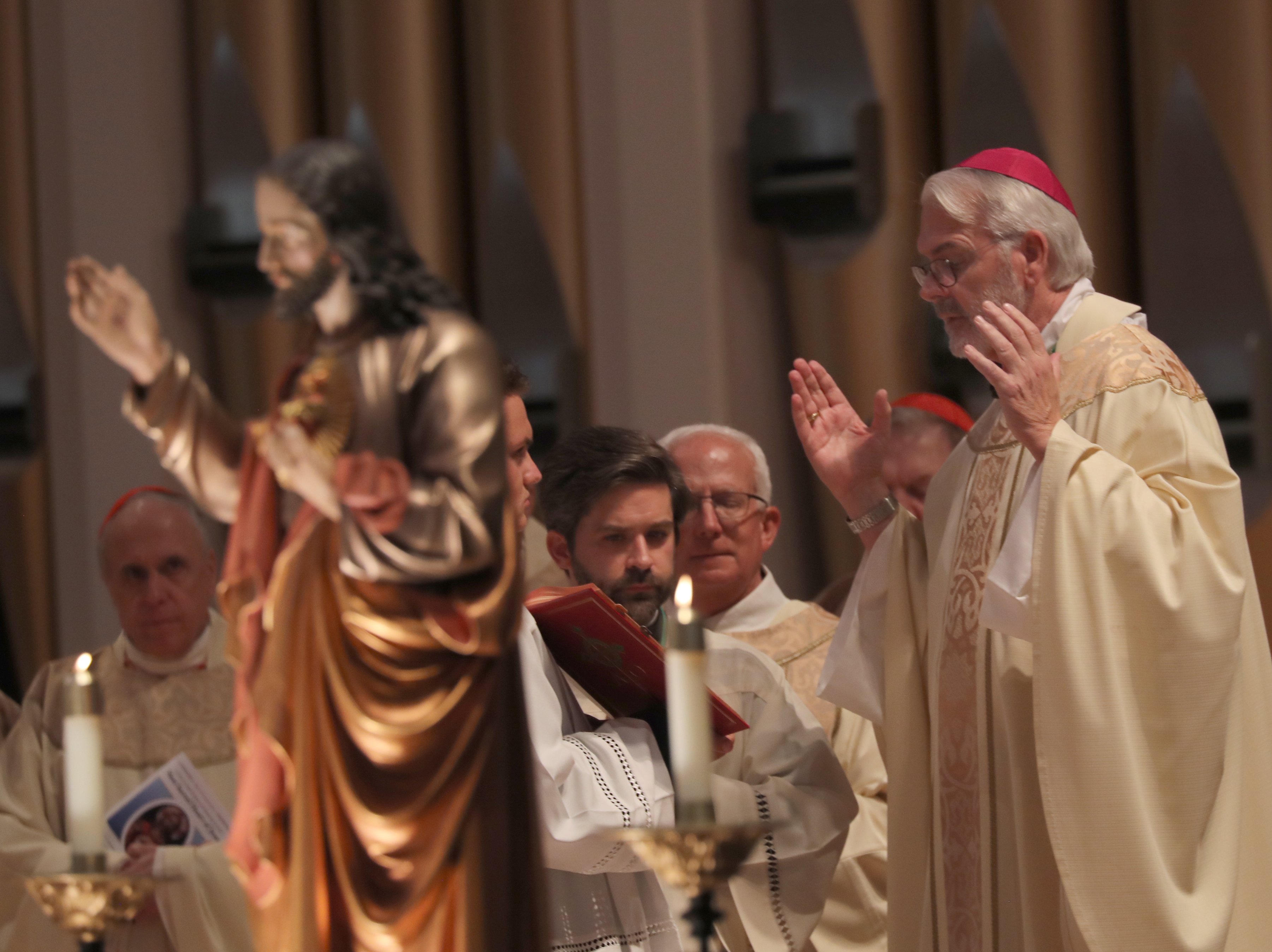
Archbishop Paul S. Coakley of Oklahoma City incensed the altar after processing in from the thick humidity and cloudy skies of a typical Orlando afternoon outside the shrine. The president of the U.S. Conference of Catholic Bishops was joined on the altar by bishops and deacons of the Orlando Diocese.
“Clothe us, Lord God, with the virtues of the heart of your Son, and set us aflame with His love,” the archbishop prayed at the opening of the Mass.
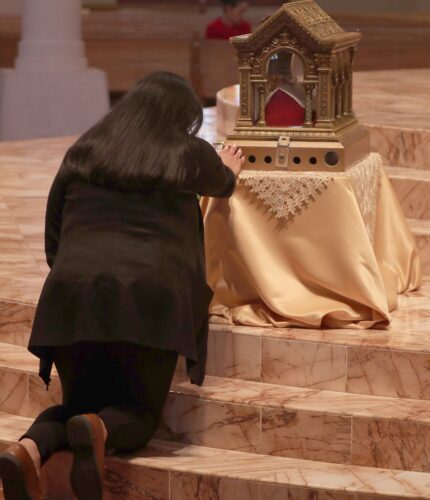
A woman venerated a reliquary containing the relics of St. Margaret Mary Alacoque. The relics of the saint who experienced visions of Jesus revealing His Sacred Heart were brought over from France and will be in the United States for several weeks.
More than 200 bishops who were gathered in Orlando for their spring plenary assembly were present, along with about 150 observers, mostly benefactors and staff of the Diocese of Orlando. The monstrance used ahead of Mass for eucharistic adoration was from the Servants of the Pierced Hearts, a Miami-based religious institute.
The relics of St. Margaret Mary Alacoque — the French Visitation sister who experienced visions of Jesus revealing His Sacred Heart — also were present at the Mass, on loan from the Knights of Columbus for the consecration.
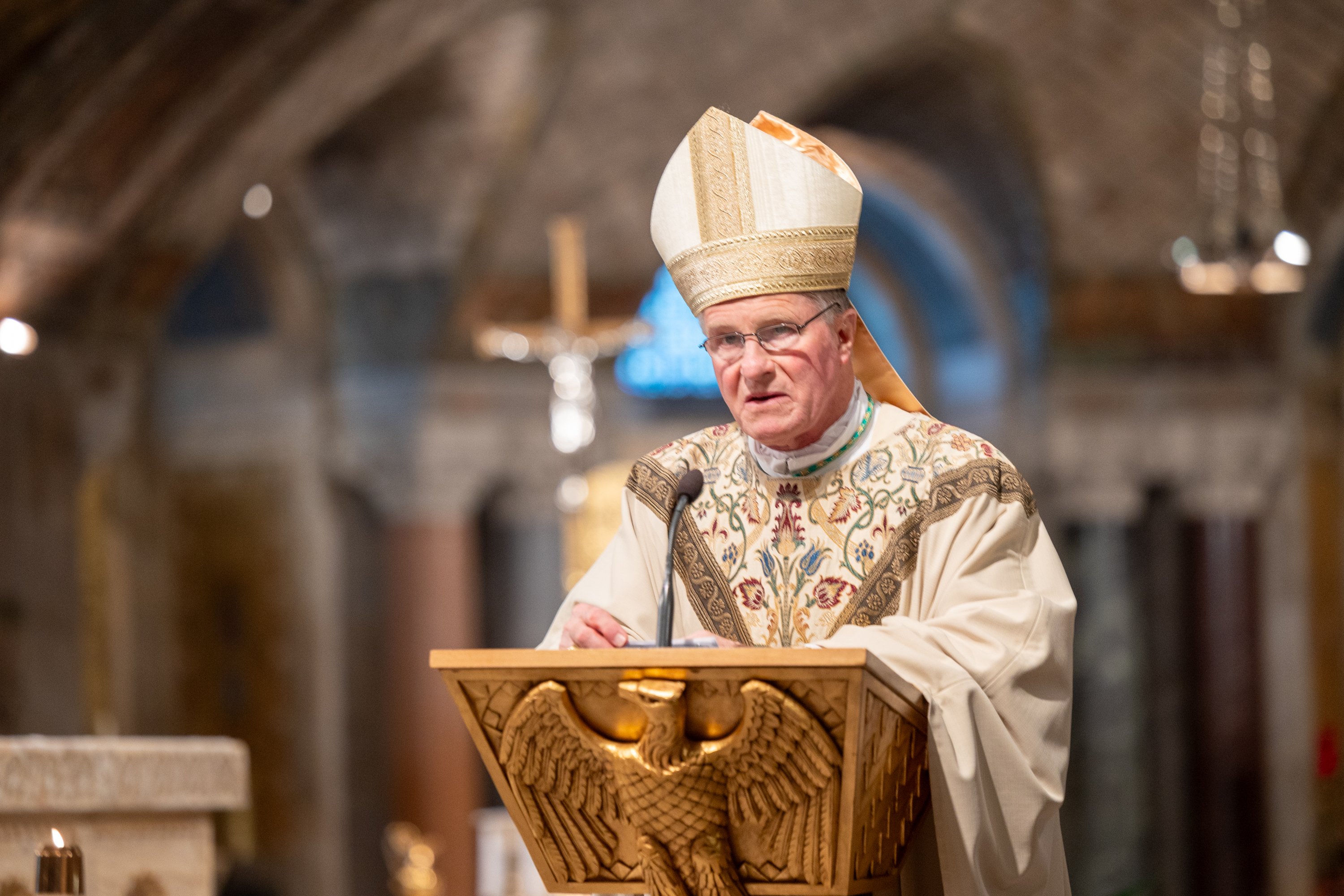
In his homily, Archbishop William E. Lori of Baltimore described the Sacred Heart of Jesus not as an “abstract devotion,” but as a “visible sign of love.”
He said that consecration is an act of faith and acknowledgment of the need for God’s mercy, wisdom and guidance. It is also an act of hope. It is “a heart that has known joy and sorrow, friendship and betrayal, suffering and sacrifice,” he said.
The archbishop said the act of consecration also is an acknowledgment of God’s faithful work and love in the world and how we as people and as a Church have not always “clearly reflected that love.”
“Indeed, it is sometimes obscured almost beyond recognition,” Archbishop Lori said. “To be sure, there have been moments of extraordinary witness and holiness. But there have also been moments of failure, division and sin. Consecration requires the humility to acknowledge both.”
And why the Sacred Heart? Because it reveals a Savior who “desires not merely our obedience, but our friendship; not simply our service, but our communion with Him,” he said.
“To consecrate ourselves to the Sacred Heart is ultimately to accept Christ’s invitation to remain in His love and to allow that love to shape every aspect of our lives, public and private,” Archbishop Lori said. “It is a declaration that the future does not belong merely to political movements, economic forces or human plans. The future belongs to God.”
The Sacred Heart reconciles divisions and transforms hardened hearts, the archbishop said.
“It means building communities — ecclesial and civil — where truth is proclaimed clearly and charity is practiced generously. It means resisting the temptation to define ourselves by division, ideology or resentment,” Archbishop Lori said. “We consecrate our nation, not because it is perfect, but because it is beloved by God. We entrust to the heart of Christ our achievements and failures, our hopes and anxiety, our present challenges and our future aspirations.”