
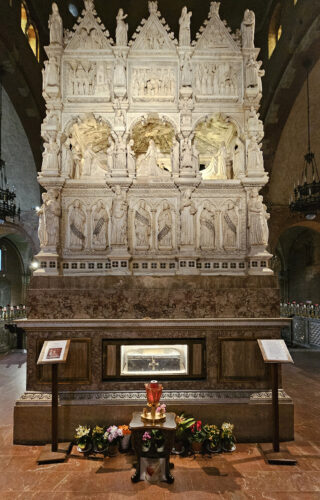
Recently, I had the grace to visit the tombs of St. Ambrose in Milan and St. Augustine in Pavia. Standing before their resting places, I was struck by how profoundly their lives are intertwined — not only through history but through the mystery of spiritual generativity: the grace-filled process by which faith is handed on from one person to another, not merely preserved, but made new. In those two tombs lies a story of spiritual fatherhood and sonship, of how one man’s fidelity became the seed of another’s conversion, and how that encounter continues to bear fruit across the centuries.
When Augustine arrived in Milan, he was a man of deep intellect but restless heart — searching, skeptical and weary of half-truths. Ambrose, the bishop of Milan, was already a figure of wisdom and holiness, known for his eloquence and courage. Yet it was not Ambrose’s authority that won Augustine over; it was his authenticity. Augustine first admired Ambrose’s oratory skills, but soon came to see in him a harmony between word and life. The bishop’s preaching was compelling, but it was his manner of living — his patience, joy, and serene confidence in Christ — that began to move Augustine’s heart.
Ambrose did not force conversion; he fathered it. He made space for Augustine’s questions while quietly offering a living example of faith that was both intelligent and humane. Through this witness, Augustine discovered that Christianity was not a system of rules but a relationship of love. Ambrose became, in the deepest sense, a spiritual father — one who generates new life in others by allowing the Spirit to work through him.
This dynamic — of faith transmitted through fidelity — reveals the heart of spiritual generativity. Ambrose did not simply teach doctrines; he communicated the living Word. Augustine later reflected, “I began to love him, not as a teacher of truth, but as a man who was kind to me.” That kindness, rooted in divine charity, opened the door for grace to enter. Ambrose’s steadfast witness drew Augustine toward baptism, and in turn, Augustine’s own passionate faith became a fountain of renewal for generations to come. The fruit of Ambrose’s fidelity was not merely Augustine’s conversion but the countless souls reached through Augustine’s sermons, writings and sanctity.
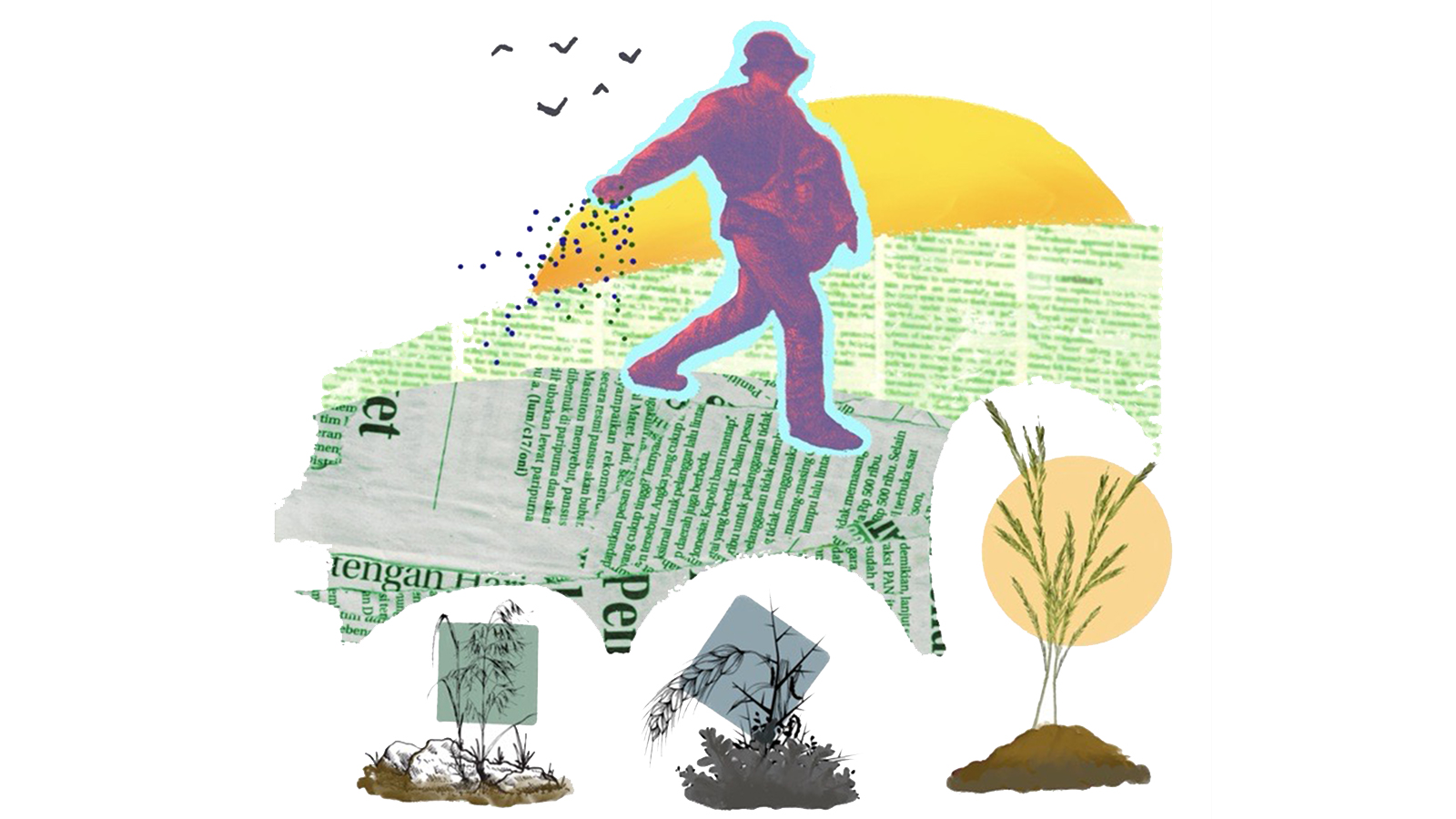
This pattern is not unique to saints of old — it is the call of every disciple. Faith endures only when it is shared and it flourishes when it is communicated through love. Each of us is invited to be a spiritual ancestor — to invest in others with patience, prayer and presence, so that the faith may not only survive but shine more brightly. To be faithful, as Ambrose was, is to permit others to believe more deeply. To be receptive, as Augustine was, is to let another’s witness awaken the divine spark within.
At the tombs of Ambrose and Augustine, the lesson is clear: The faith grows by being given away. When we invest in others, we participate in the same chain of grace that was present in Milan and Pavia — the faith of one calling forth faith in another, that now ripples through eternity. Like Abraham looking up at the stars in the sky, we never know how investing in one will benefit countless others.