St. John Henry Newman spoke of moving beyond notional assent — where our beliefs don’t affect our actions — to real assent
Dear brothers and sisters in Christ,
How do you imagine it?
This week’s readings and feasts raise that question for us about a variety of things. Let’s exercise our imagination for a few minutes.
Ezekiel saw a vision of God’s glory. Now, I don’t think we have to imagine God’s glory in terms of fire, electrum, crystal and sapphire — which is how he described his vision. But I do think it’s worth asking: how do you imagine it?
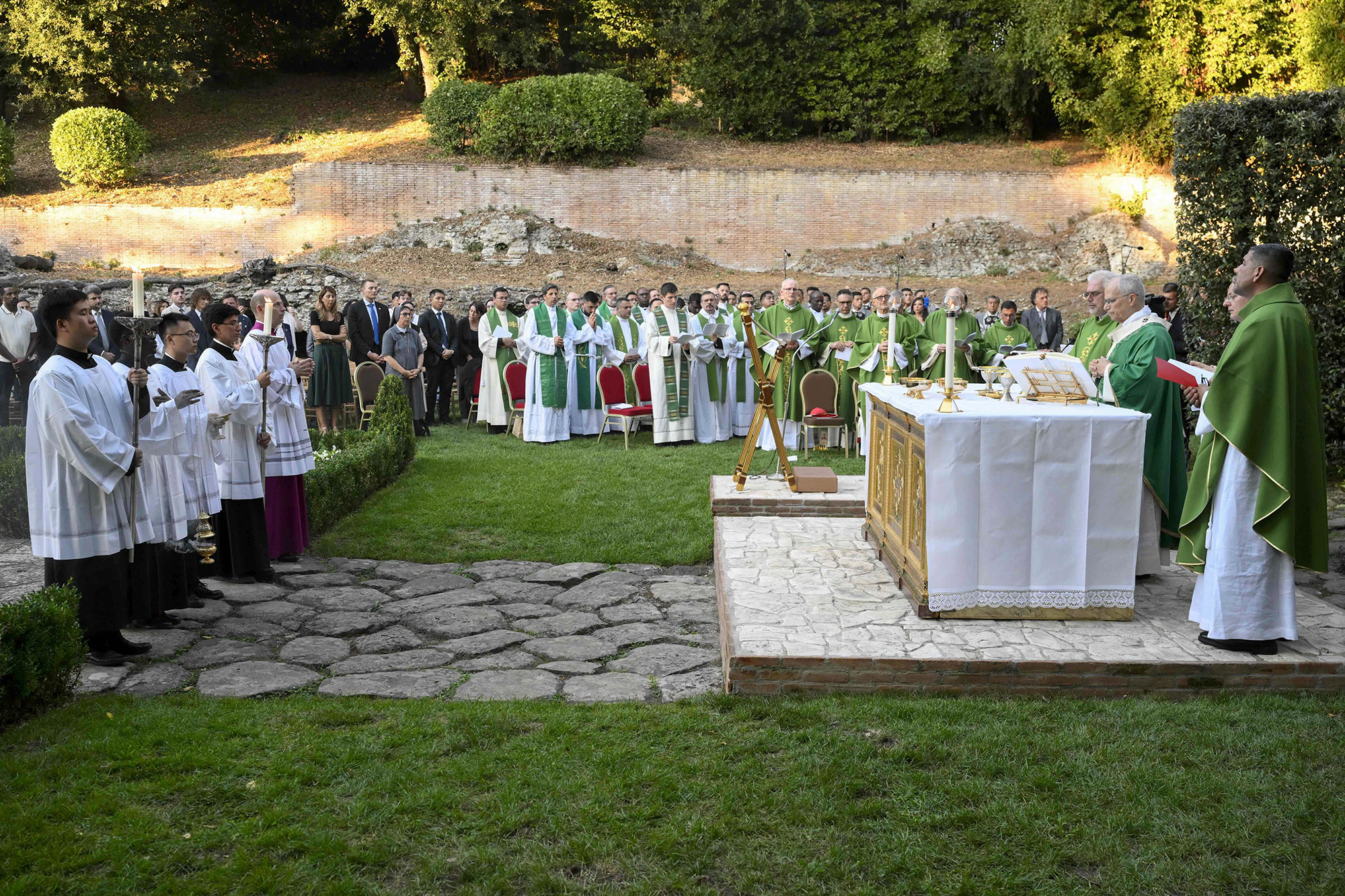
We tend to imagine victory in terms of the World Series, or the Super Bowl, or the Stanley Cup. But this week we celebrate the Exaltation of the Holy Cross (Sept. 14). That’s a different image of victory.
Many people imagine the Christian life in terms of the prosperity Gospel: If I have deep enough faith, everything will go well. St. Augustine articulated the proper critique of this 1,600 years ago! Keeping his eyes fixed on Jesus’ Cross, he proposed a different imagination: “Precisely because he is a Christian, he is destined to suffer more in this world.”
We tend to imagine our share in God’s glory in terms of being on the winning team. The feast of Our Lady of Sorrows (Sept. 15) invites us to a different imagination. Just as part of Jesus’ glory was the Cross — and remember, He still bore the wounds of the nails when He rose from the dead — so part of Mary’s glory is to stand at the foot of His Cross. What does that mean for us — how could it reshape our imagination?
The prophet Ezekiel is a great tutor for our imagination. He sees God’s glory leaving the Temple and describes that for us. Ezekiel also gives a great connection: What Israel has already done in its heart — turn away from God — is what will happen to its land in the Exile — the land will be without God. What might that offer us as we try to imagine the consequences of sin today?
Supposing we have fallen into sin, what do we imagine our purification to look like? Did anyone else notice that Pope Leo, in his encyclical “Magnifica Humanitas,” quoted from The Lord of the Rings? (See paragraph 213.) It’s a great imaginative vision of a world fallen into darkness, and how every person — even and especially the very small — has a role to play in restoring the light.
Perhaps we feel too much awash in images these days. There’s some truth to that. A little less visual pollution might be good for us!
But St. John Henry Newman, the newest doctor of the Church, thought that images play a crucial role in developing a living faith. He spoke of “notional assent” — where we believe something in our head, but it plays no role in how we actually live; and he spoke of “real assent” — where our beliefs actually shape our actions. He said the shift from notional to real assent happens because of the presence of images. Our world could definitely use more Christians who give “real assent” to the truths of the faith!
So, perhaps the problem is that our images are simply not disciplined enough. The readings and feasts the Church gives us this week invite us to be more deliberate in cultivating our imagination. And cultivating our imagination can bring our faith more deeply to life.