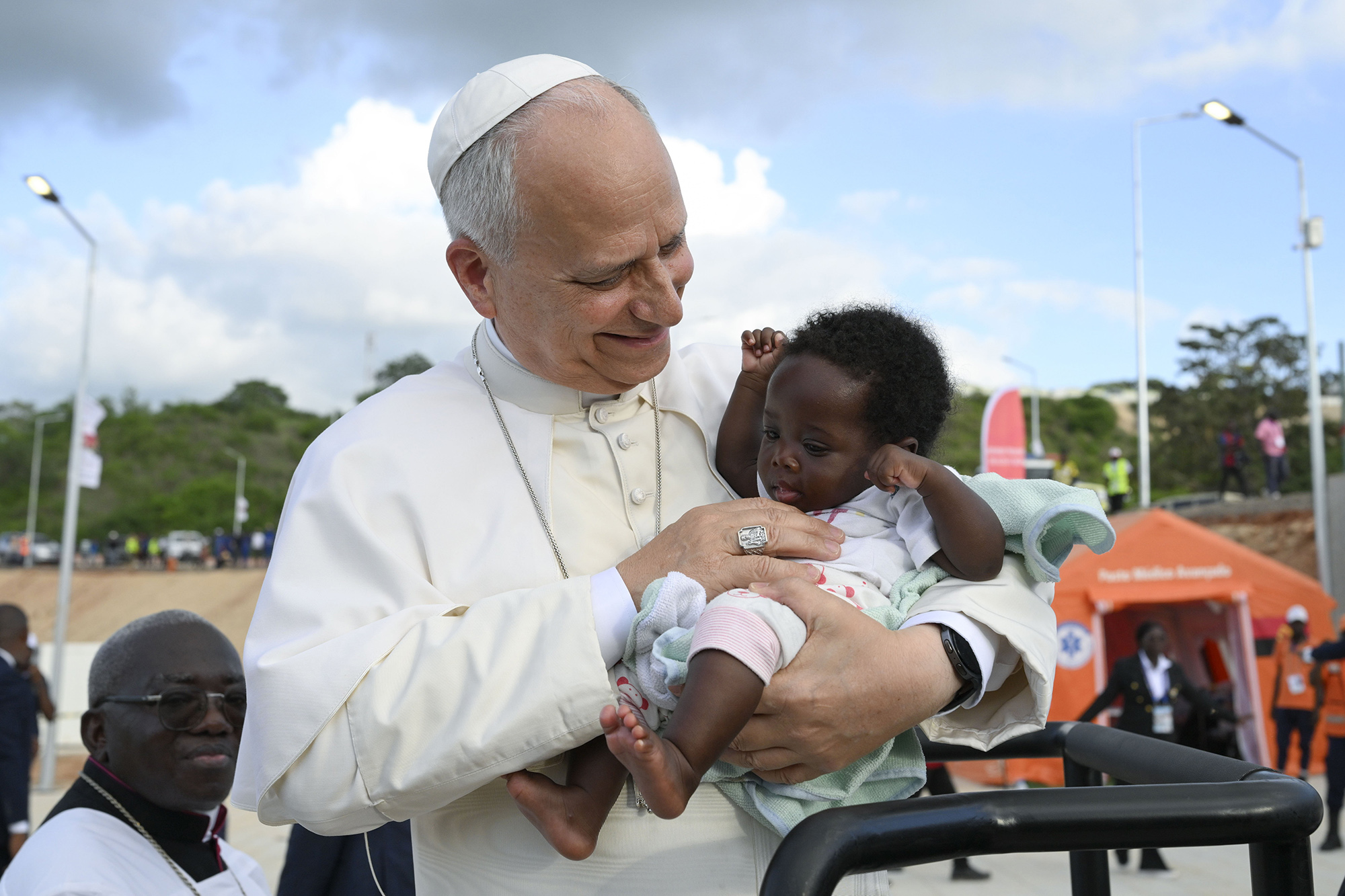
The first year of his papacy is shaped by the Augustinian charism, rooted in a life of community, the search for God and a dedication to service
Every time Father Brian Barker sees Pope Leo XIV in the news, he notices the same thing again and again — St. Augustine.
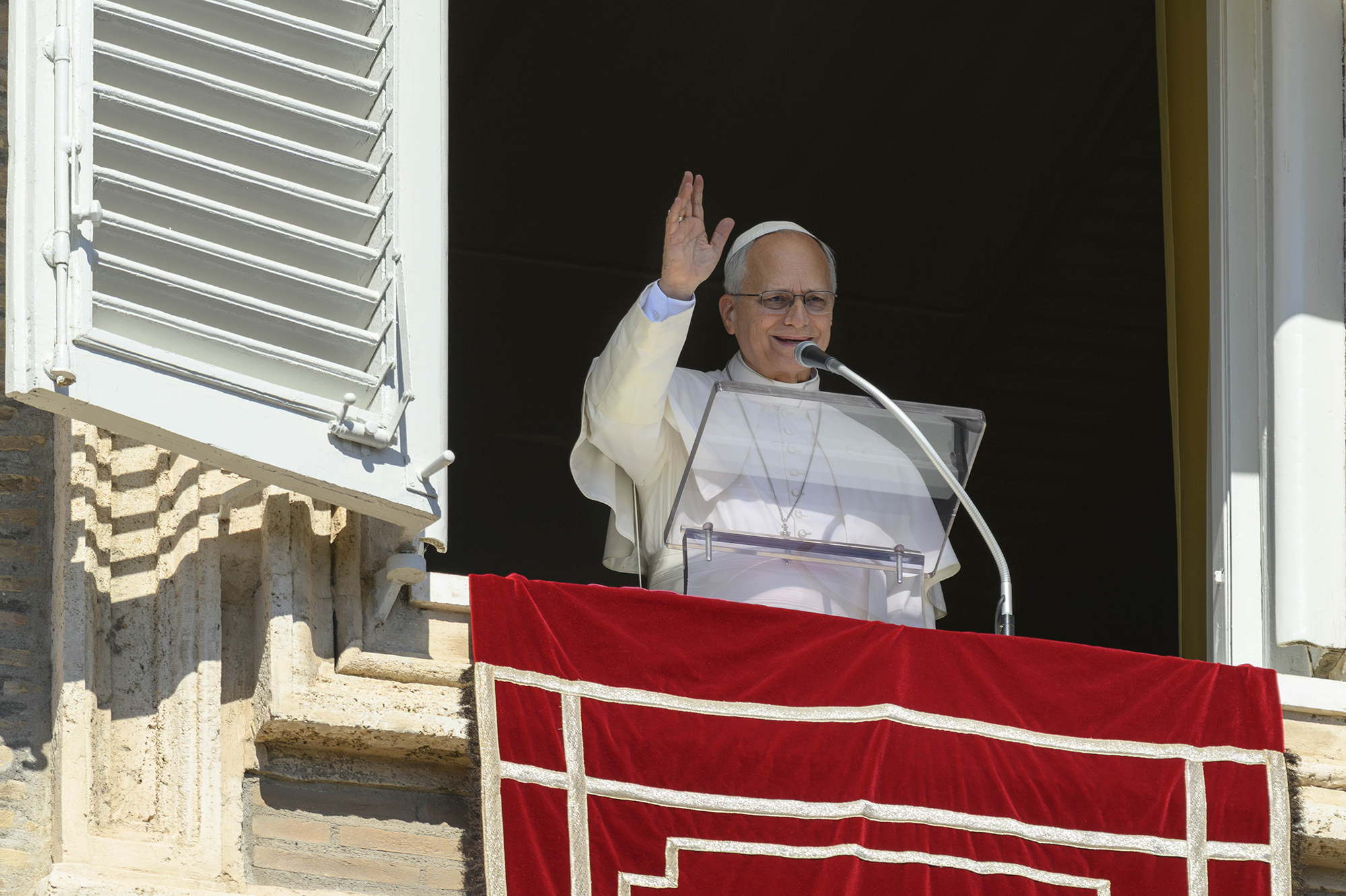
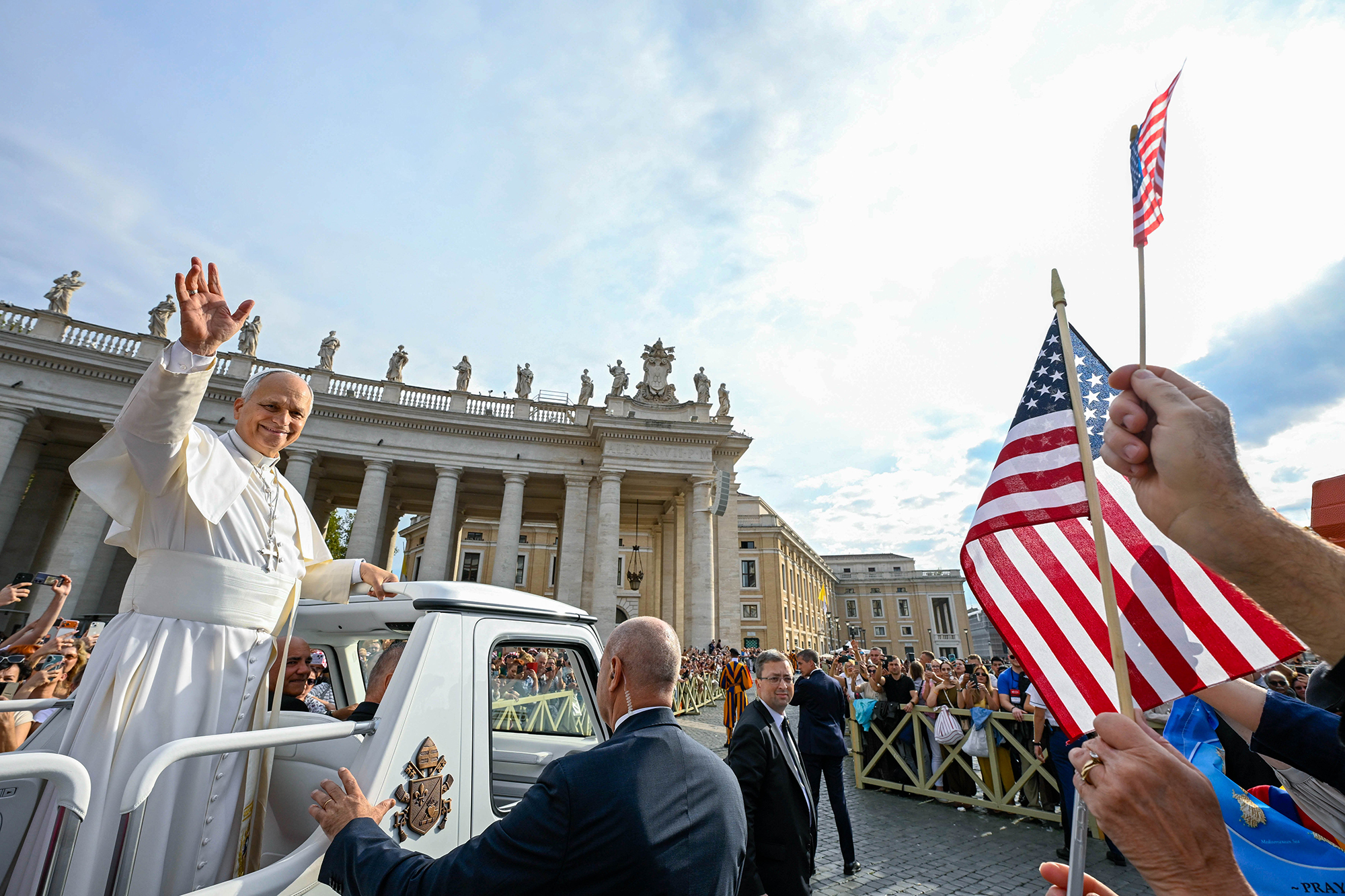
And he’s right. In the first year of his pontificate, Pope Leo mentioned St. Augustine more than 150 times in his talks and writings, surpassing Pope Francis and St. John Paul II’s mentions of the saint and spiritual founder and namesake of the Augustinians, Pope Leo’s religious order.
Father Barker, a priest of the Diocese of Belleville who has known the former Robert Prevost since high school and through their formation as Augustinians, said those frequent mentions are a telling sign of who Pope Leo is and how he’s led the Church in the first year of his pontificate.
“It makes me smile whenever I see something about him in the news — he’s always quoting Augustine,” said Father Barker, pastor of Immaculate Conception Parish in Columbia, Illinois. “Augustine was a prolific writer, so I see that (Pope Leo’s) relying on his formation as a young man and what he’s learned of Augustine. That’s the most edifying for me — seeing him applying the teachings and writings.”
Father Barker was just starting at St. Augustine Seminary High School in Holland, Michigan, when Prevost had just graduated, but the older student kept coming back to visit, and a friendship developed. It stretched through college at Villanova, formation with the Augustinians and into the priesthood. Their paths eventually diverged — Father Prevost stayed with the order while Father Barker pursued diocesan priesthood — but they stayed in touch.
He sees in Pope Leo that the Augustinian charism — rooted in a life of community, the search for God and a dedication to service — is evident in the way he’s leading the Church.
“I hope people see him just the way I have known him,” Father Barker said. “He is a gentle giant. He is compassionate, he is brilliant, he loves God and God’s Church. He’s never going to steer you wrong, and he’s never going to steer you away from God. He knows his job is to bring people home to God and he will do that — that’s an Augustinian flavor.”
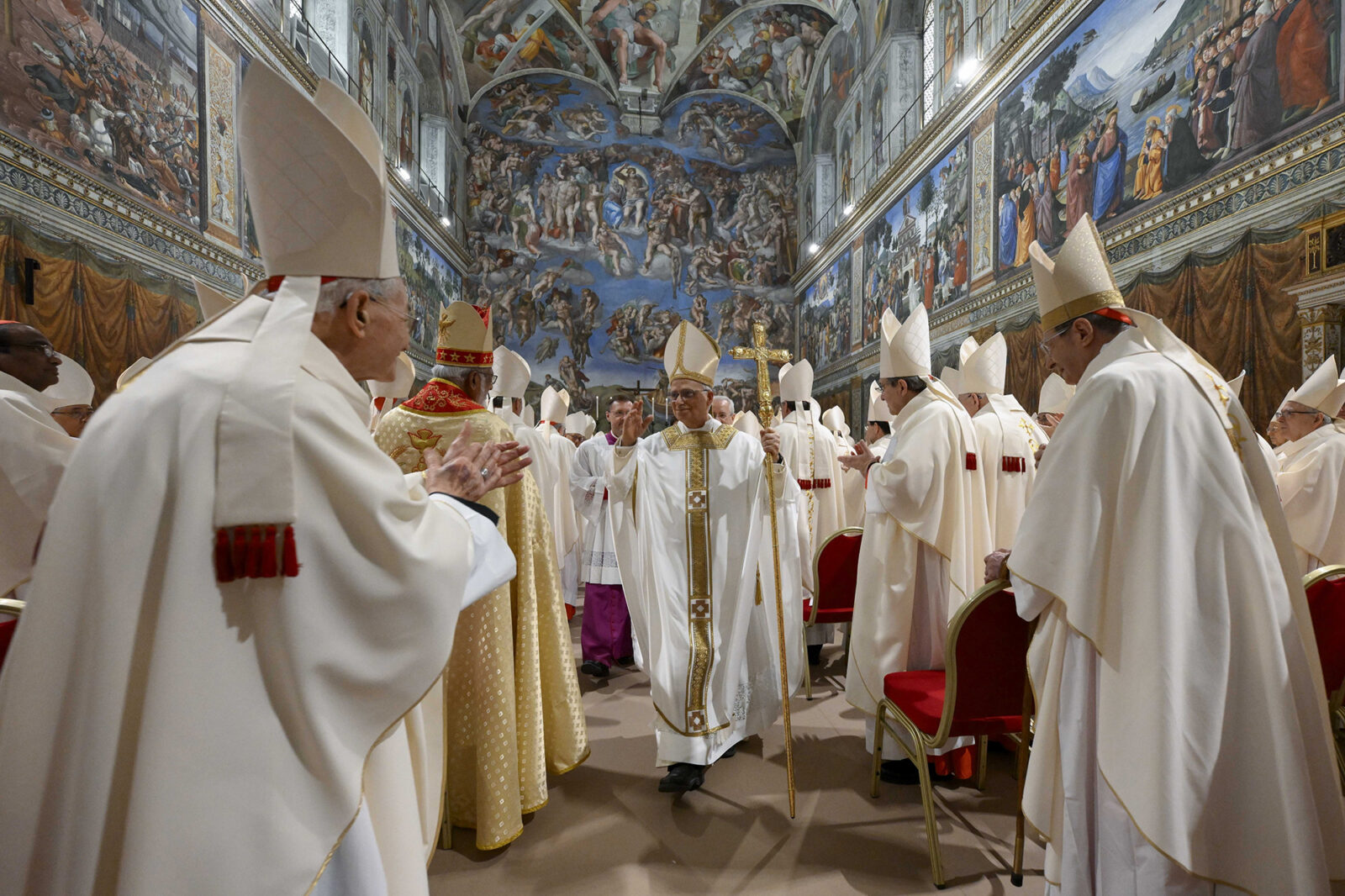
Pope Leo XIV processed out of the Sistine Chapel on May 9, 2025, after celebrating his first Mass as pope with the cardinals who elected him at the Vatican the previous day.
Andrew Chronister, an associate professor at Kenrick-Glennon Seminary and scholar of St. Augustine, said he also sees an Augustinian influence in Pope Leo’s work to overcome and heal divisions within the Church and the world.
“One of St. Augustine’s greatest concerns as a bishop and pastor was Christian unity,” Chronister said. “The Church in North Africa in Augustine’s day was divided by schism — and had been for almost a century. One of Augustine’s ‘priorities’ as a bishop was to bring about an end to the schism, to bring about unity in the Church. I sense that Pope Leo shares this ‘Augustinian priority,’ and that he is working to overcome and heal the divisions within the Church. We can see this in his episcopal motto, taken from one of Augustine’s homilies on the Psalms: ‘In Illo Uno Unum — in the One (we are) one.’”
As a scholar of St. Augustine, Chronister has enjoyed reading the pope’s speeches and writings so far because of the prominence he’s placed on the saint in them.
“I really believe Augustine has a lot to teach the Church today — about the heart, about the need for grace, about the emptiness of sin and a life lived apart from God,” Chronister said. “Who better to (re)introduce us to these concepts than an Augustinian pope?”
Ben Akers, chief mission officer and associate professor of theology at the Augustine Institute in St. Louis, said Pope Leo’s Augustinian identity has given a new energy to the institute’s mission.
Pope Leo’s teaching is strongly Christocentric and marked by classic Augustinian themes — totus Christus (Christ as head and body), charity as love of God and neighbor, a “restless heart” made for God and interiority (going inward to meet God), Akers said. He also sees the pope’s emphasis on peace, starting with his first words on the loggia as pope, invoking the peace of the risen Lord, as an Augustinian understanding of peace as restored order and right relationship.
“He has a complete confidence that we’ve all been made by God for God, we’ve all been designed the same way,” Akers said. “And he has a sure confidence that we will all find peace in the same thing, which is a relationship with God that’s given to us by Christ in the Spirit. (He’s) started to emphasize the importance of sharing our faith with others. If we believe that we can witness to the fact that we have a relationship with God, that everyone else is made for a relationship with God, that gives me great confidence and hope for evangelization.”