Pope Francis set up Commission after Synod of Bishops on Synodality to study the question
VATICAN CITY — A commission set up by Pope Francis to study women deacons has voted against the possibility of ordaining women deacons while also supporting more study on the issue.
It also expressed hope that women’s access to other ministries would be expanded.
Pope Francis established the “Study Commission on the Female Diaconate” in 2020 as a follow-up to a previous group that studied the history of women deacons in the New Testament and the early Christian communities.
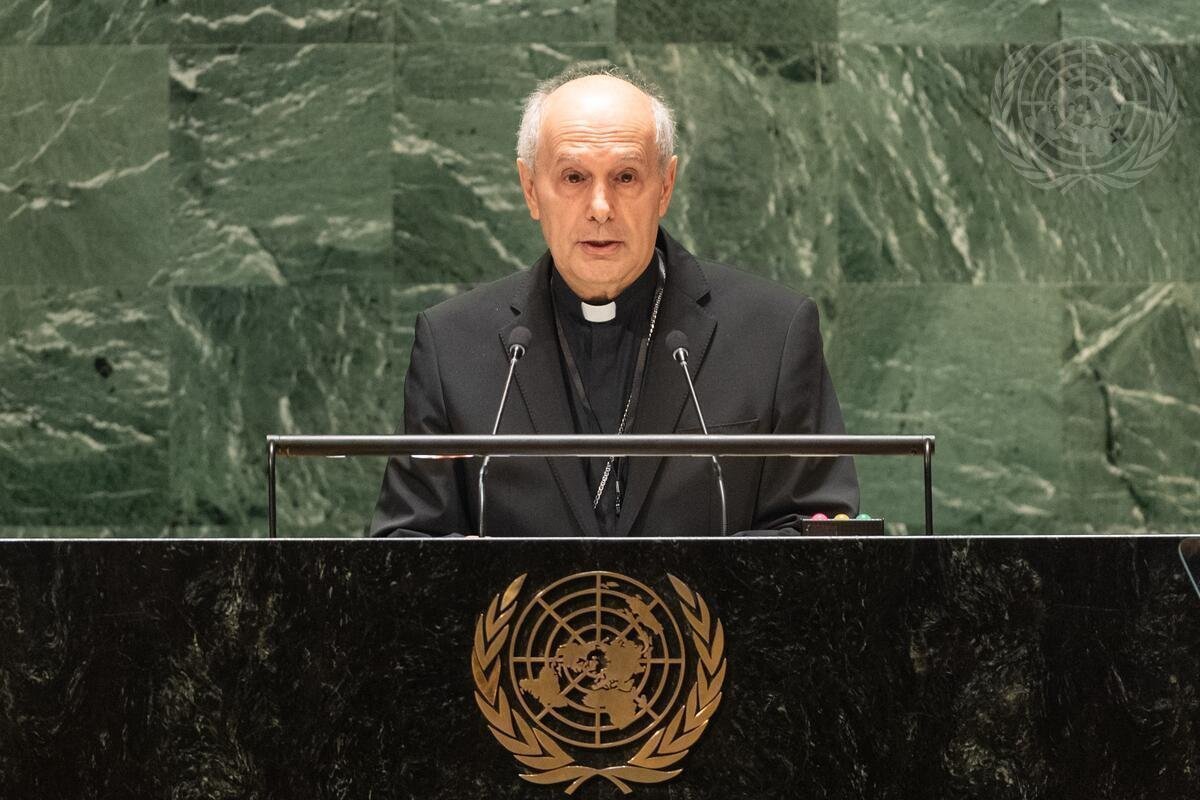
Cardinal Giuseppe Petrocchi of Aquila, Italy, was chosen as president of the commission and Msgr. Denis Dupont-Fauville served as secretary. Pope Francis had named 10 other members of the commission — five women and five men, including two permanent deacons from the United States and three priests.
The seven-page report published Dec. 4 was a synthesis of the commission’s work, which concluded in February, and was addressed to Pope Leo XIV. According to Vatican News, the pope requested the synthesis — which was dated Sept. 18 — be made public.
The Vatican published the synthesis, including the results of votes the commission members took on eight different statements or “theses.”
One proposition that showed members split exactly down the middle was: “The masculinity of Christ, and therefore the masculinity of those who receive Holy Orders, is not accidental but is an integral part of sacramental identity, preserving the divine order of salvation in Christ. To alter this reality would not be a simple adjustment of ministry but a rupture of the nuptial meaning of salvation.”
When this statement was put to a vote among 10 members in February, it received five votes in favor, confirming its current form, while the other five members voted to remove it.
A statement that received six votes against, two for and two abstaining was: “The undersigned is in favor of the institution in the Church of the female diaconate as understood as the third degree of holy orders.”
During the commission’s second session in July 2022, members agreed seven to one on the following statement: “The ‘status quaestionis’ of historical research and theological investigation, as well as their mutual implications, rules out the possibility of moving in the direction of admitting women to the diaconate understood as a degree of the sacrament of Holy Orders. In light of sacred Scripture, tradition and the Church’s magisterium, this assessment is strongly maintained, although it does not at present allow for a definitive judgment to be formulated, as is the case with priestly ordination.”
The commission unanimously expressed support in 2021 for the establishment of new ministries that “could contribute to synergy between men and women. Their implementation would require the development of appropriate means of formation — theological, practical, mystagogical — and support.” Pope Francis had announced several months before, in January 2021, that the ministries of lector and acolyte would be open to women.
During its last working session in February, the commission also reviewed materials it received after the Synod of Bishops had allowed anyone to contribute to the commission’s deliberations.
On Nov. 17, several study groups gave an update on their work on “emerging” questions raised during the Synod of Bishops on synodality.