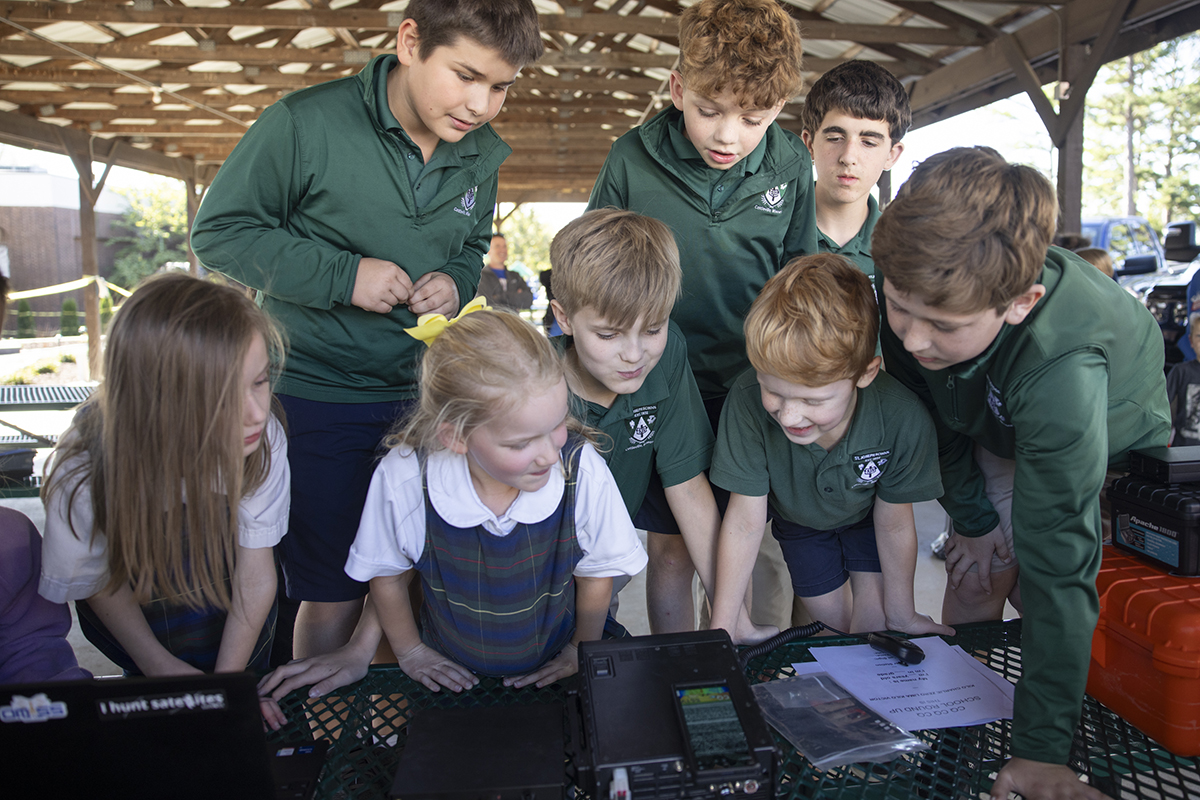
Ham radio offers St. Joseph School students lessons in science, math and communication
“CQ, CQ, CQ, school roundup. This is kilo charlie zero lima kilo victor.”
A St. Joseph School student released the button on the side of the ham radio’s microphone. Within seconds came a response through the radio’s crackle.
“This is kilo foxtrot three delta juliet,” the man on the other end of the receiver called out.
Andrea Nunziante took over the microphone, introducing his new contact — Ronald Reiff (KF3DJ), a retired radio announcer from Columbus, Pennsylvania — to students at St. Joseph in Cottleville, who eagerly watched the amateur radio demonstration.
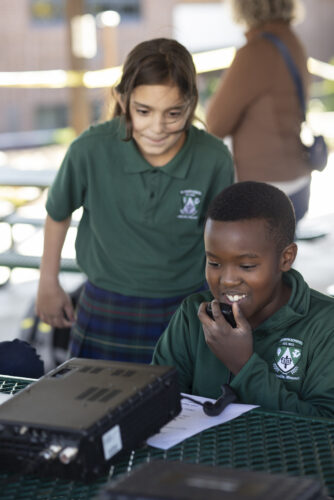
On an October afternoon, students took turns contacting other ham radio operators across the country as part of the American Radio Relay League’s School Club Roundup, a twice-yearly event for ham radio clubs at elementary, junior high, high schools and colleges that gives them experience exchanging information with other amateur radio stations.
Nunziante, St. Joseph’s technology director and an amateur radio operator (KCØLKV) for more than 25 years, introduced students to ham radio this school year to show how the technology can connect people in new ways. Lessons in math, science and language arts have also emerged from their discussions.
“It is cross-discipline because you can use it for geography, you can use it for language, you can use it for science,” he said. “So there are several ways that the teacher can integrate that into the curriculum. The overall goal is to get them interested in a way of communication that it’s different than cellphone and computer.”
Students have learned basic radio concepts, including frequencies and propagation (the way some radio signals travel from one amateur radio station to another), and operating etiquette when contacting other hams.
Connecting with other amateur radio operators depends largely on solar and weather conditions, Nunziante explained to about two dozen students who stayed after school to participate in the roundup event. The occurrence of a solar flare — a burst of radiation from the sun’s surface caused by the release of built-up magnetic energy — can interfere with high-frequency signals, causing a sudden loss in communication.
“When there is a big magnetic flare and you turn on the radio, it’s just quiet — really quiet,” he said.
Seventh grader Joey Risley made contact with a radio operator at Red River Gorge, Kentucky, who was participating in Parks on the Air, a program that promotes communications from national and state parks.
“It’s really cool that you can talk to people, it’s just really fun,” said Joey, who plans on exploring more with ham radio as part of a Scouting merit badge on radio. “It’s a new perspective, just like talking on the phone. We do that every day. But this is a bit more like, you don’t know who you’re going to talk to next or where they’re from. So I just find it really exciting.”
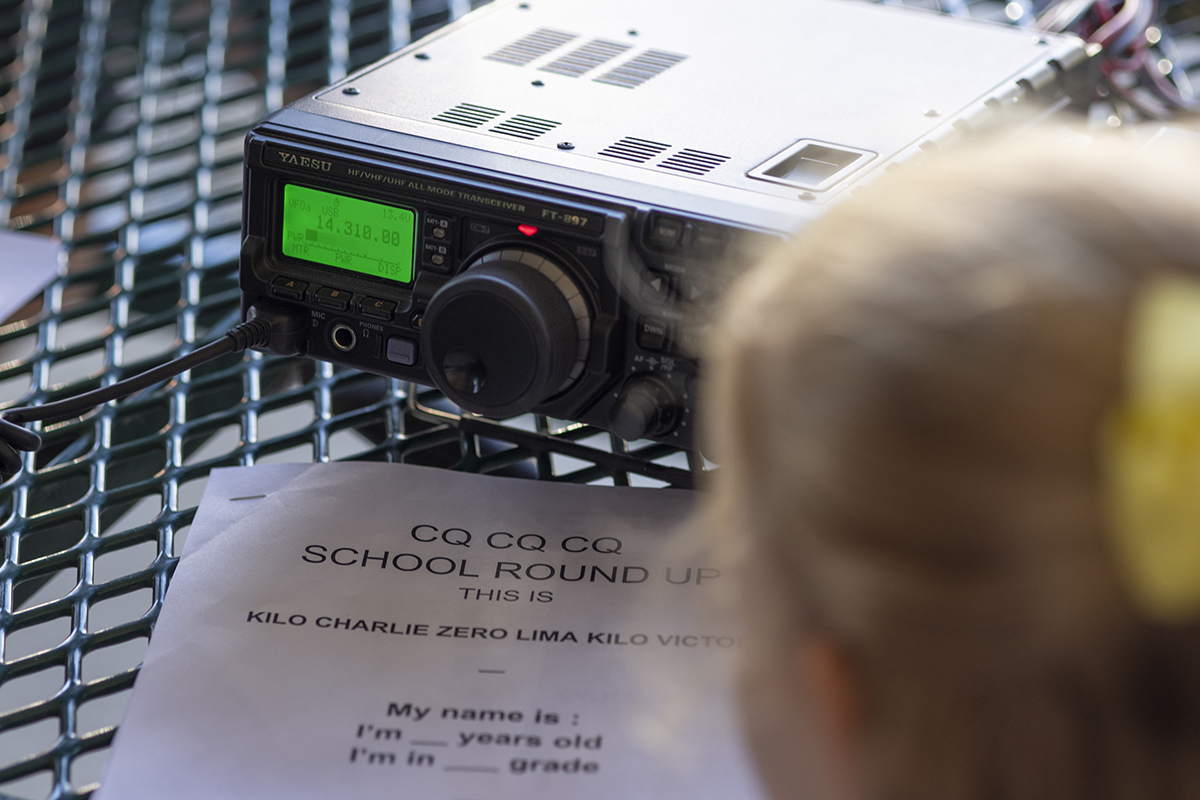
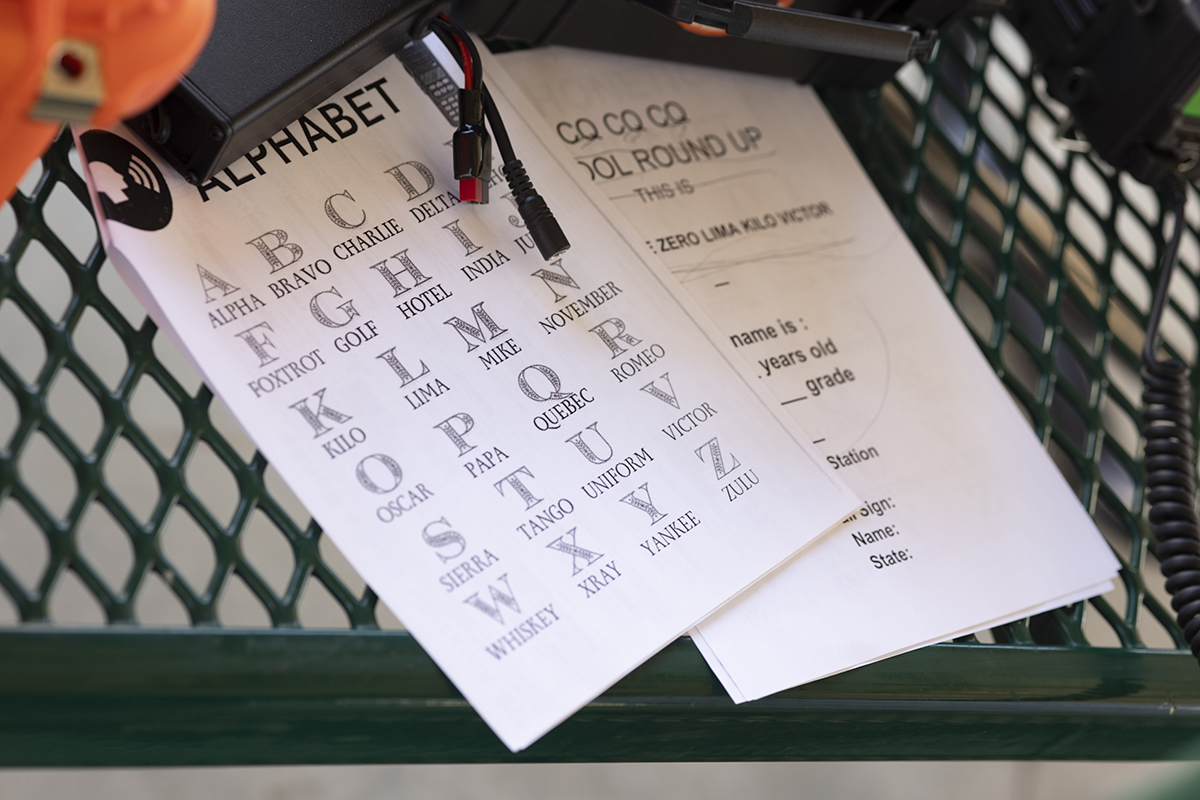
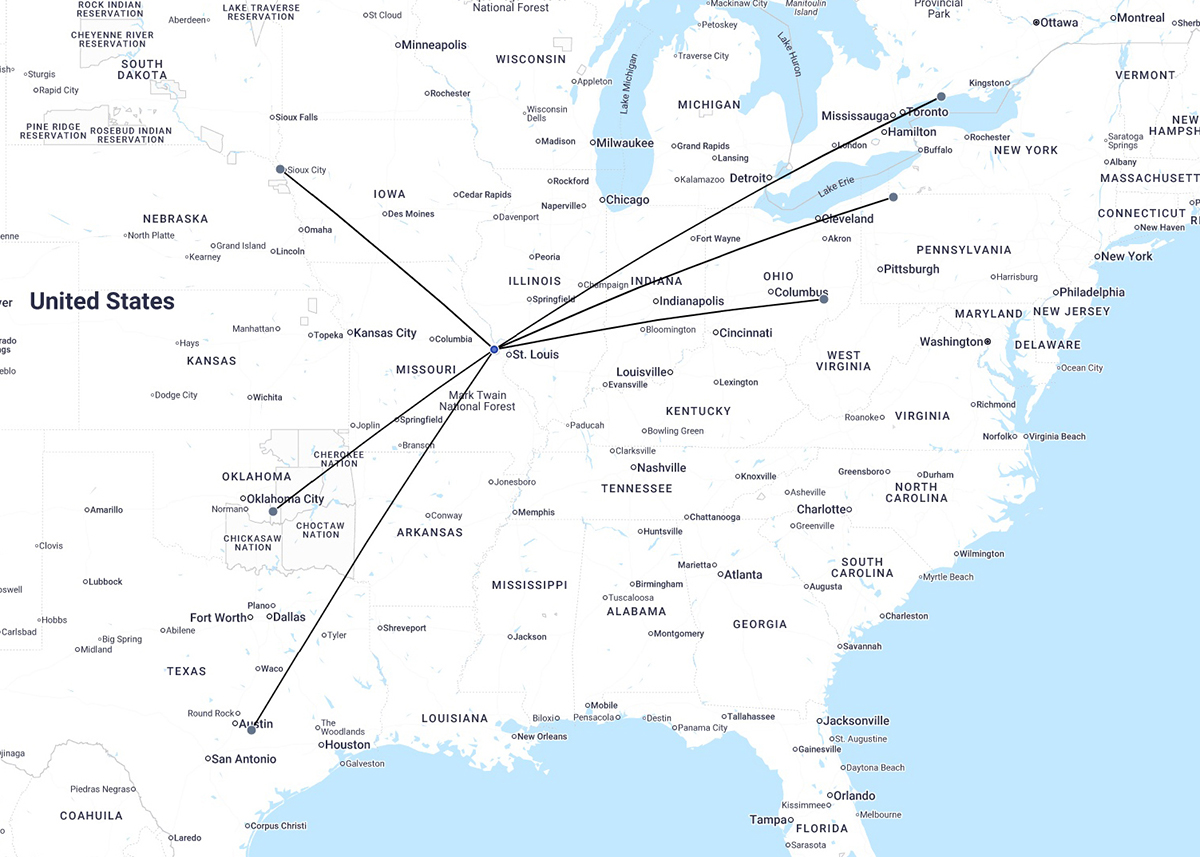
During the ham radio demonstration, students at St. Joseph School in Cottleville used frequencies capable of long-range communication. They were guided on how to call “CQ,” a code for “calling any station,” and using the standard phonetic alphabet. They made contacts to ham radio operators in South Dakota, Oklahoma, Texas, Ohio, Pennsylvania and Ontario, Canada.
Throughout the afternoon, students made contact with ham radio stations in other states, including Oklahoma, South Dakota and Texas, as well as one in Canada. Nunziante explained that proper etiquette involves listening before transmitting, avoiding monopolizing a frequency and being respectful of other operators. CQ (pronounced “seek you”), for example, is a general call used by an operator to invite other stations to make contact.
“Is the frequency open?” Nunziante called into the microphone. Turning to students, he said, “Let me ask you a question: Do you know why I did that? I’ll show you,” as he walked over and wedged himself in between two students sitting on a bench. “Was that good? No. But if I come over and say, ‘May I come over and join you in this seat?’ That’s polite, right?”
Students made contact with Andrew Piper (KI5AIE), an 80-year-old operator from Calera, Oklahoma. Fourth grader Marianna Dwyer asked him what he likes most about ham radio. Piper told her that he enjoys taking apart radios and putting them back together and has been a ham radio enthusiast since he was 10 years old.
Nunziante hopes the school eventually will form a ham radio club and apply for a club station license. But for now, he hopes that students will grow in their enthusiasm for ham radio.
People have told Nunziante that ham radio generally attracts older enthusiasts, but he said it’s really a hobby for any age and is easy to learn. “This is something that the kids can actually do,” he said. “You start with the tech class (entry-level license), and then you can go out from there.”