Final exhibit ‘Liminal’ will run through May 31
After more than three decades as a space for contemplation and dialogue of faith and art, the Museum of Contemporary Religious Art at Saint Louis University is preparing to close, marking its final chapter with a farewell exhibit.
“Liminal” includes work from 47 artists, with many pieces from the museum’s collection. MOCRA director David Brinker invited contributing curators Jessica Baran, René Paul Barilleaux, Aaron Rosen and Summer Sloane-Britt to select works by artists not previously shown at the museum. The exhibit will be on display through May 31.
“You’ve had for the past 30-plus years a place that is focused specifically on that slice of contemporary (art) and examining the many different manifestations of that,” Brinker said. “Having a specific locus has been a unique contribution. There have been a number of major exhibitions at major museums that tread in this area, but then the museums are going off and doing other things again. We’re just been steadily with the field, so I think that’s been our primary contribution.”
SLU announced last year that MOCRA would close at the end of the 2025-26 academic year due to budget cuts. Its permanent collection will be preserved and incorporated into exhibits at SLU’s Museum of Art, with MOCRA’s staff remaining part of the University Libraries and Museums staff.
At the forefront of contemporary religious art
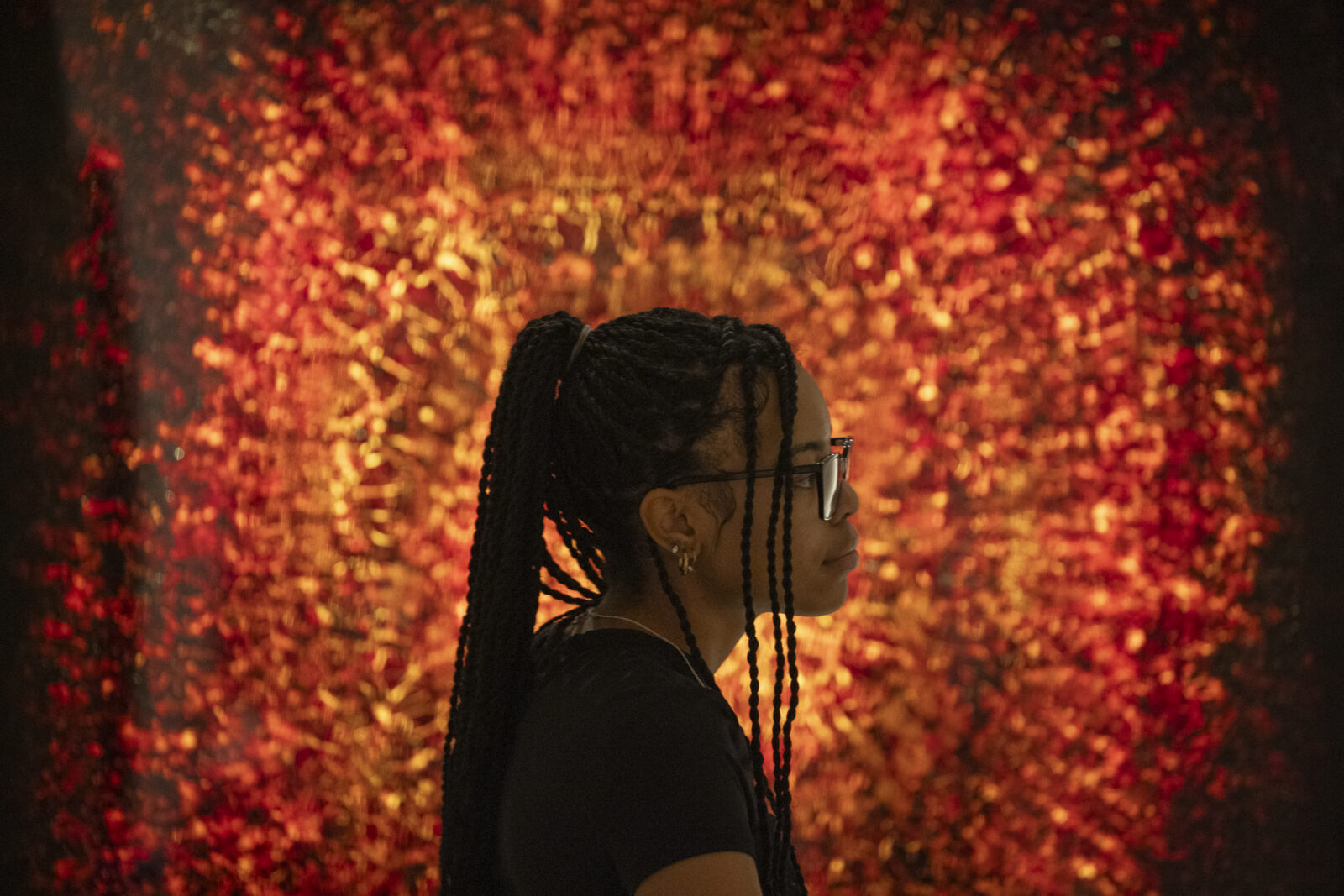
After opening on SLU’s campus on Valentine’s Day in 1993, MOCRA became what many regarded as the first museum of contemporary religious art in the United States, rooted in the vision of Jesuit Father Terrence “Terry” Dempsey and nurtured by SLU and Jesuit colleagues.
Over the next three decades, the museum hosted more than 80 exhibits — from Andy Warhol’s shimmering “Silver Clouds” to displays reflecting issues such as AIDS, racial injustice, migration and care for creation — while building a focused collection of about 600 works that have drawn students and visitors into deeper questions of belief, suffering and hope, Brinker said.
Brinker joined the staff in 1995 and eventually became the museum’s director in 2019. At the time of MOCRA’s beginning, there was a general perception that contemporary art and religion didn’t have much to say to each other, he said. “What Father Terry saw was that there were quite a number of artists who were still really engaged with this,” Brinker said. “Maybe their artwork wasn’t obvious, not in traditional, recognizable ways … but it was that they were really wrestling with these questions.”
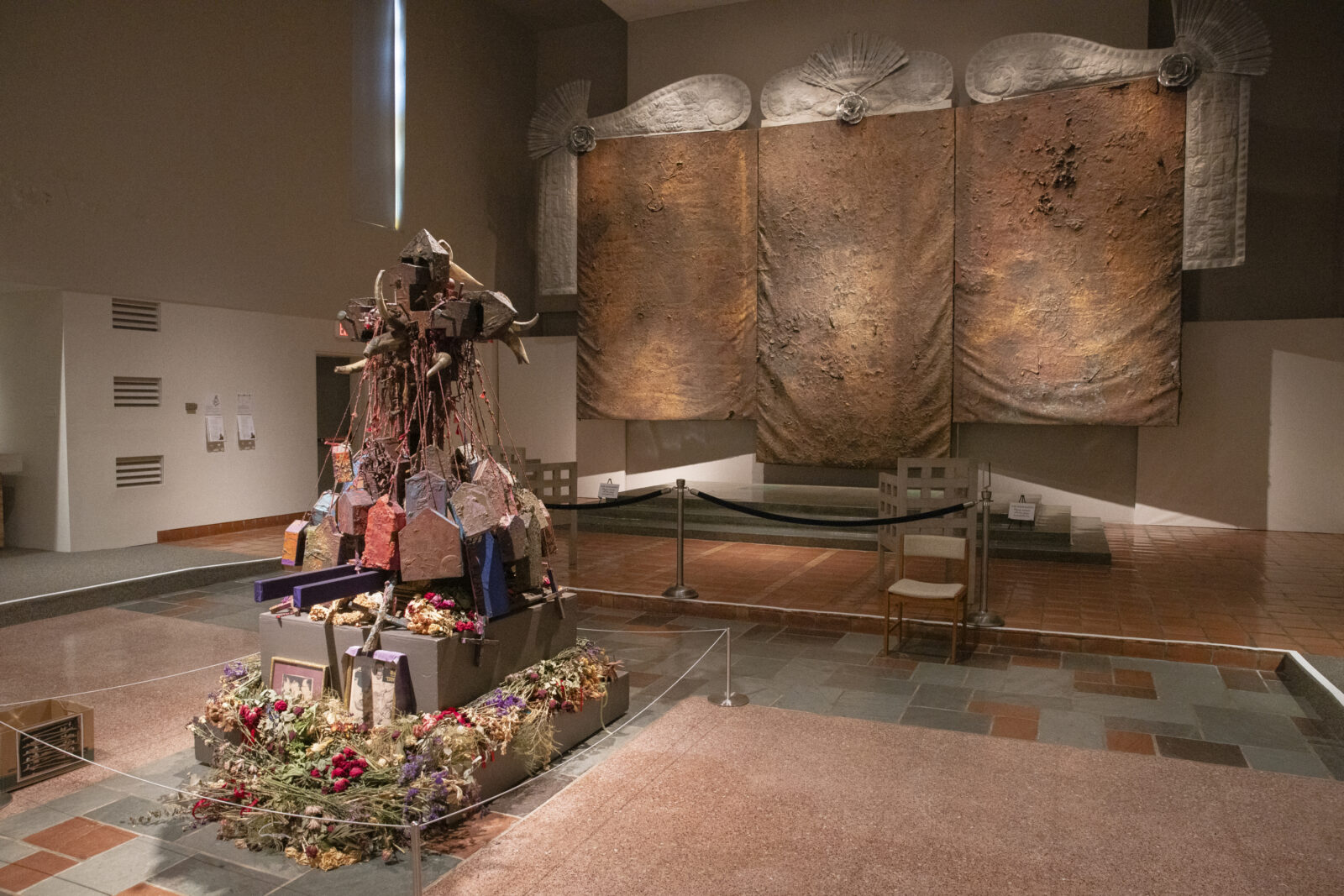
MOCRA opened in the former chapel space at Fusz Memorial Hall, where Jesuit scholastics lived on campus until the 1980s. Father Dempsey had been nurtured by another Jesuit and founder of SLU’s visual and performing arts department, Father Maurice McNamee. He wanted to ensure that the arts could be part of both the students’ academics and their growth in faith and spirituality.
During his studies at the Graduate Theological Union in Berkeley, California, Father Dempsey completed his dissertation on contemporary religious art in the 1980s, working with hundreds of artists. He returned to SLU in 1990 as a professor of art history, and with the support of others, the seeds were planted for what would become MOCRA.
Over the years, the museum has become part of St. Louis’ rich cultural and arts landscape, a place focused on religion and spirituality with an interfaith approach that Brinker now describes as an “expansive and inclusive approach” speaking to a diverse population of visitors with various faith backgrounds and no faith.
“That’s also reflective of the increasing diversity of our student population,” he said. “What distinguishes MOCRA is we have that way of contributing — and that’s an important part of our mission — to the dialogue, to respect and understanding, and art is one way into that.”
‘Liminal’ exhibit
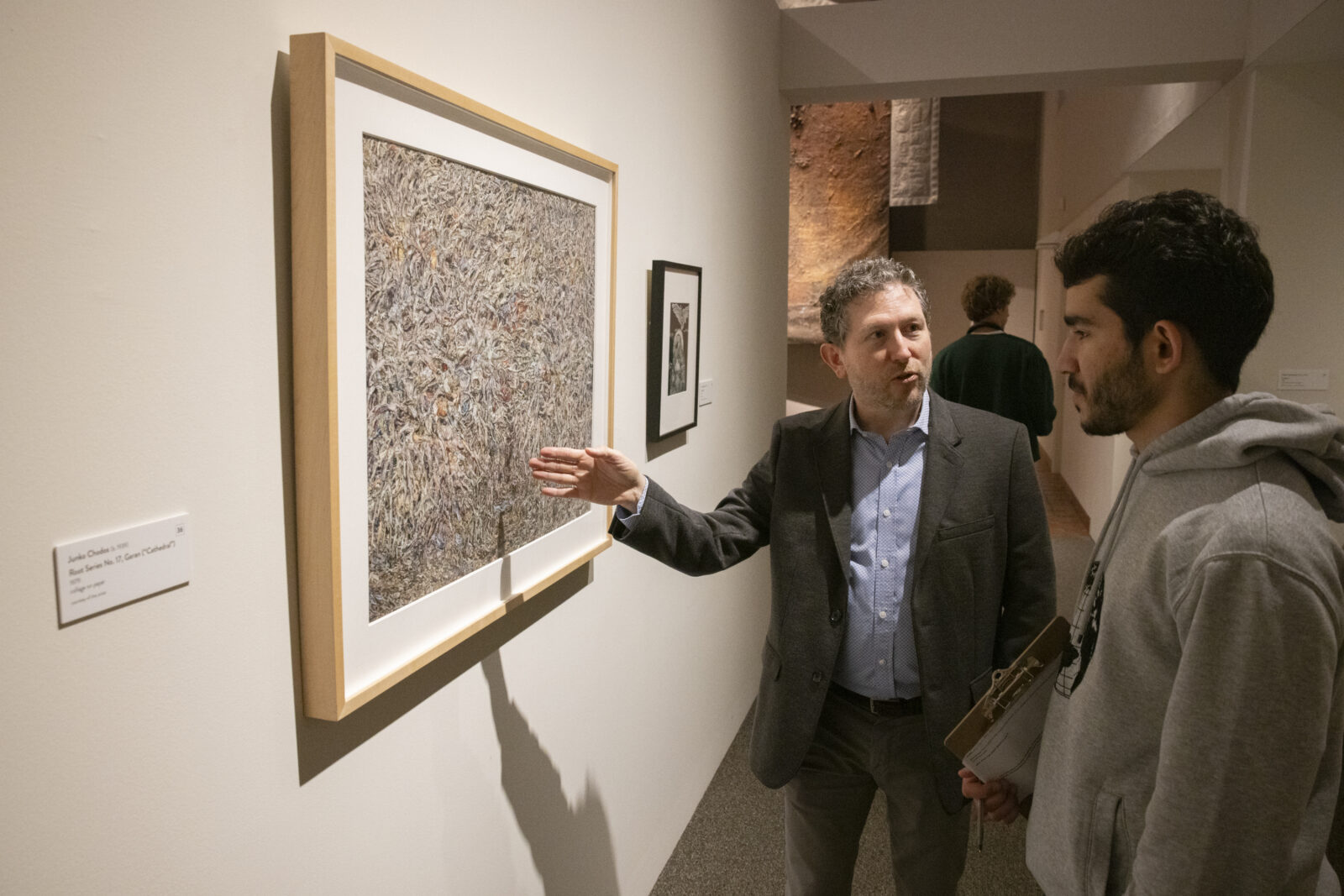
As part of the final exhibit, Brinker invited guest curators to find pieces from new artists and place those into dialogue with works from some of MOCRA’s permanent collection, which were chosen to highlight the variety and mission of the museum.
One wall of the final exhibit shows how MOCRA has invited visitors to contemplate faith through contemporary art. Jim Morphesis’ thickly textured 1985 skull painting, built on salvaged wood and cloth, updates the traditional memento mori by treating death as an ongoing process of transformation rather than a static symbol. Nearby, Frederick Brown’s “Light of Christ Altarpiece” culminates in a largely abstract panel on “The Descent into Hell,” asking viewers to contemplate the spirit of Christ as He enters the realm of the dead.
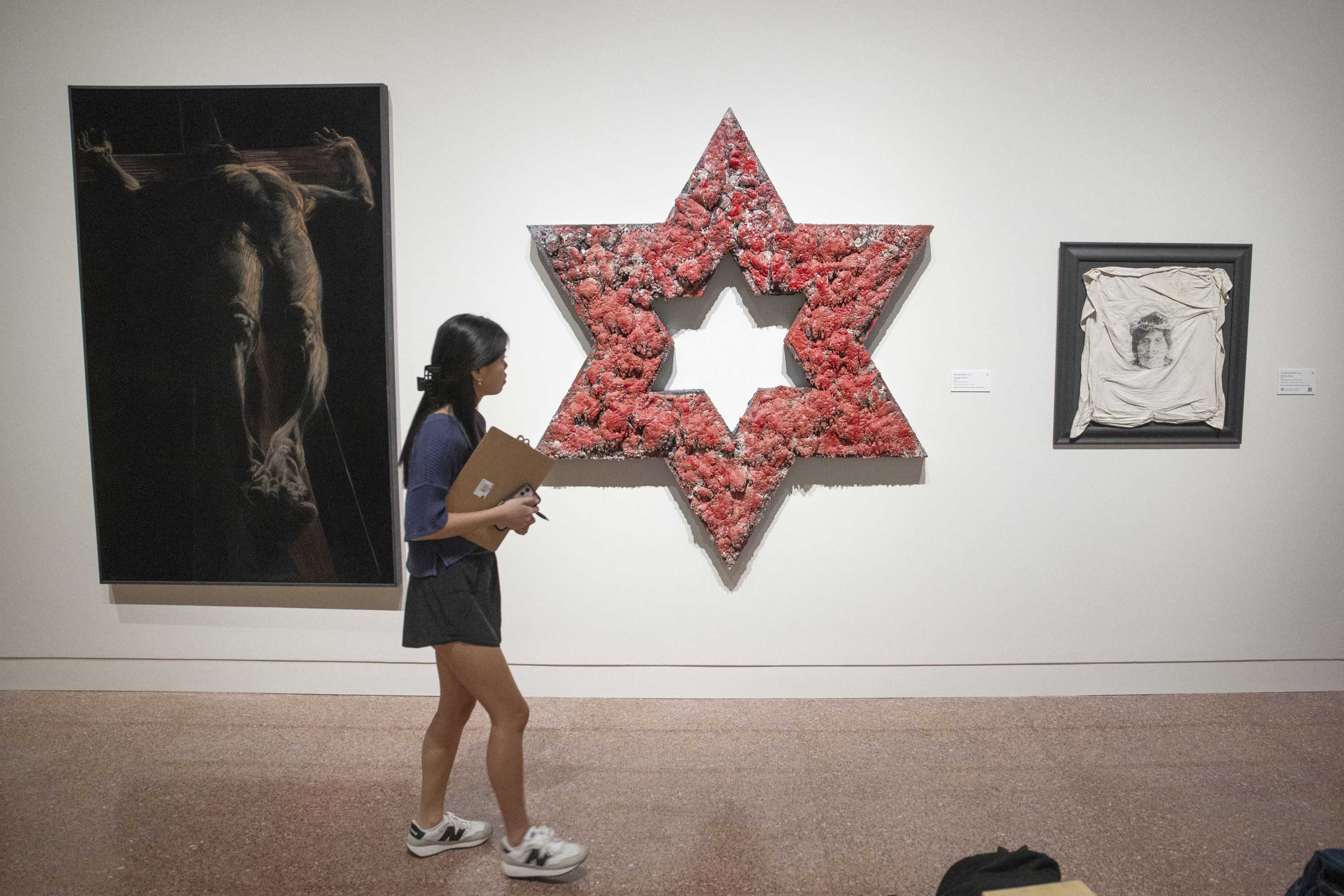
Other pieces, such as Michael David’s “Missing in Action,” a panel encrusted in wax and pigment, draw viewers into the layered history of suffering of Jewish communities during periods of persecution. Newer art includes short videos and photography from St. Louis-based artist Damon Davis, who co-directed the “Whose Streets?” documentary on the Ferguson unrest and designed the “Pillars of the Valley” monument to Mill Creek Valley in St. Louis.
Brinker said it’s been a privilege to carry on the museum’s mission for more than three decades and he’s grateful to the university and all the artists and others who the museum has worked with over the years.
“Even if this particular expression is ending, I hope we’ve cast some seeds out into the world — in terms of ideas, in terms of encouraging artists, in terms of stimulating curators’ ideas and showing possibilities in other places,” he said. “Those seeds might lie quiet in the ground for a time, and then maybe they’ll bloom.”
Visit MOCRA
The Museum of Contemporary Religious Art is located in Fusz Memorial Hall, 3700 West Pine Blvd. on the Saint Louis University campus. The museum is open on Sundays, Wednesdays, Fridays and Saturdays from 11 a.m.-4 p.m. and Thursdays 11 a.m.-7 p.m. The museum is closed on Mondays and Tuesdays. Admission is free and donations are accepted. For more information, including directions and parking, visit www.slu.edu/mocra.
A celebration of MOCRA will take place from 2-5 p.m. Sunday, April 19, in the Cook Hall Anheuser-Busch Auditorium, 3674 Lindell Blvd. The event will preview the forthcoming book, “Pursuing the Spirit,” on MOCRA’s history and development and its wider contexts in the art world and St. Louis. The program will be followed by a reception in the Cook Hall Atrium. There also will be an opportunity to visit MOCRA’s final exhibit, “Liminal.”