Cardinal Glennon, U.S. Air Force partnership trains military staff in pediatric combat zone care
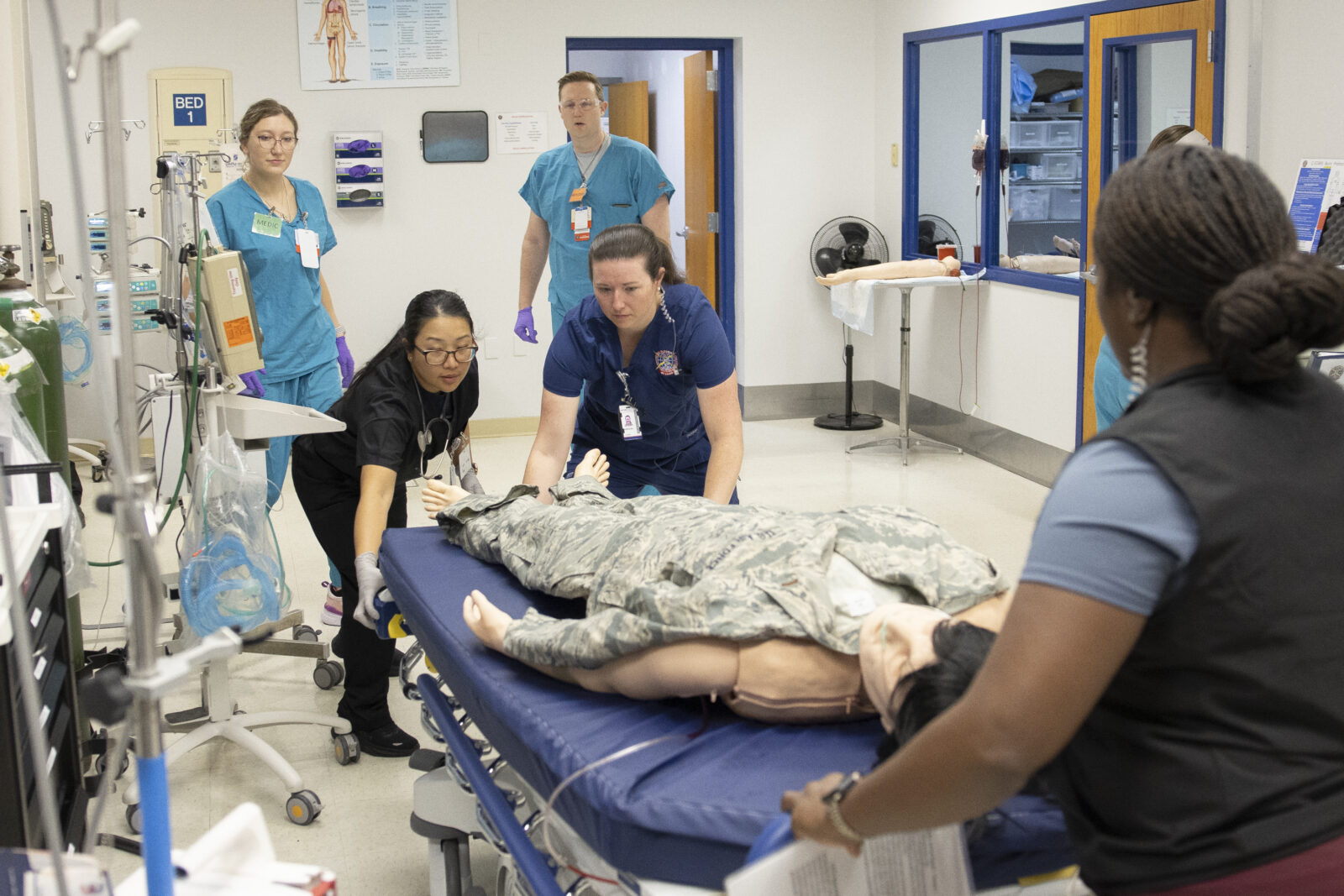
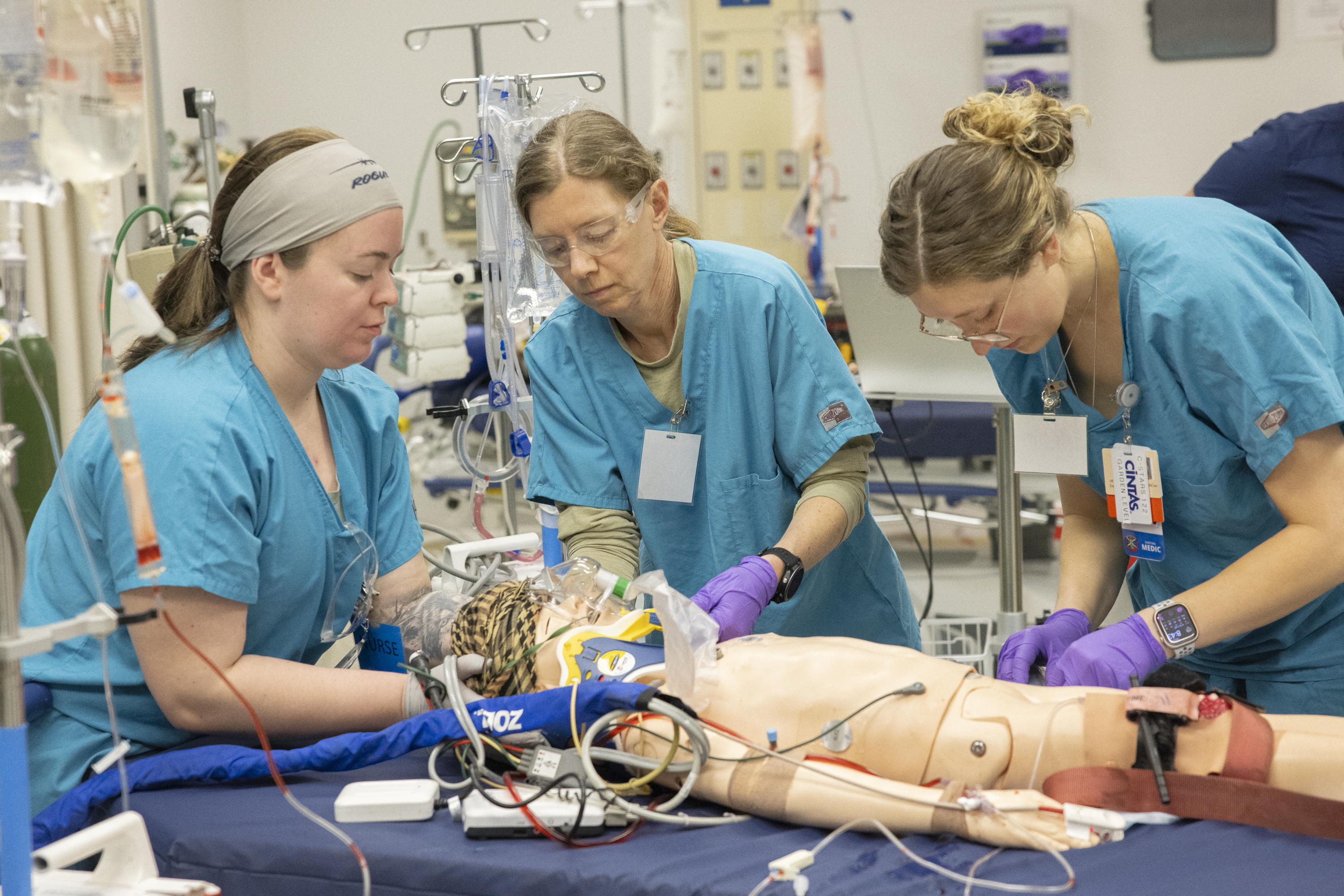
A team of six medical providers received word that a patient would be arriving in two minutes: A 29-year-old female, involved in a blast or explosion, was experiencing back and pelvic pain, abrasions to the face and arms and shortness of breath.
The team sprang into action to assess and treat the injuries. A few minutes later, though, a second patient was brought in, this time a child with a severe leg injury.
These particular “patients” were high-tech mannequins, but the situations the medical staff were training for are real. The simulations are part of an SSM Health Cardinal Glennon Children’s Hospital partnership with the U.S. Air Force to offer trauma training for military medical personnel.
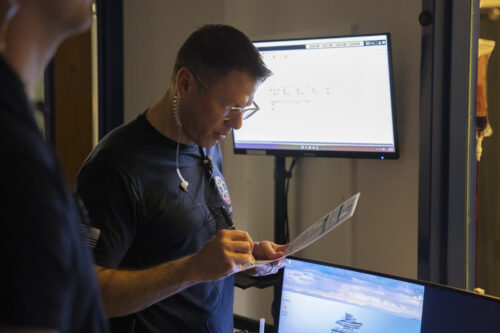
The Center for Sustainment of Trauma and Readiness Skills (C-STARS) is a program of the U.S. Air Force School of Aerospace Medicine that partners with civilian hospitals to maintain trauma readiness between deployments. Cardinal Glennon Children’s Hospital is the first pediatric facility in the country to be part of the partnership.

Throughout the two-week C-STARS course, rotators participate in lectures, clinical rotations and simulations. Because pediatric patients require different care than adults, that specific training prepares military medical personnel to treat injured children while on deployment, said Lt. Col. Dr. Brian Thompson, assistant trauma medical director at SSM Health Cardinal Glennon and director of the Office of Military Medicine-St. Louis Region for the U.S. Air Force.
“In the lessons we teach on pediatric care, we go through those sorts of things: How do you approach the patient? What’s special about a pediatric airway? What’s special about the dosing? How do you give blood to a pediatric patient?” Thompson said.
Maj. Dr. Ashley Packett, a pediatric intensivist, works in Cardinal Glennon’s pediatric intensive care unit and helps integrate the C-STARS program within the SSM Health system. She’s seen how the program benefits both Cardinal Glennon and the military; military doctors and nurses share their field experience with their colleagues at Cardinal Glennon, then in turn bring their experience in a major pediatric trauma hospital back into their military assignments.
Doctors, nurses and medics who work in military hospitals generally see fewer pediatric cases than those in civilian hospitals, Packett said.
“While they may see a lot of bread-and-butter pediatrics at a military facility, they normally won’t see a lot of pediatric trauma, a lot of procedures, a lot of critical care,” she said. “…What we feel is so important about this course and having SSM in partnership with us is just to provide the volume and the acuity that we might not otherwise see for both us and the rotators. Having their partnership is just totally invaluable to our experience as military providers and helping us stay ready.”
Respiratory therapists also can participate in C-STARS at Cardinal Glennon, including brushing up on emergency skills like intubation that they may not have used in a long time.
Alyssa Cavner is a registered nurse and a medic in the Oklahoma Air National Guard. She doesn’t treat children very often, so during the simulation, she had to remind herself to adjust her framework for vital signs and medication doses, she said.
“It’s always good to have hands-on experience with mannequins, because you hear about all this stuff in lecture, but then when you’re actually doing it, it’s a lot different — in the moment, you get really nervous, and your hands get a little shaky,” she said. “You’re put in the moment, put on the spot. It really makes your brain start thinking. And we’re able to mess up, because these are mannequins, and then take these experiences and apply it to real world stuff.”
Maj. Wesley Roberts serves with the U.S. Air Force and is stationed overseas in Lakenheath, England. As a family medicine doctor serving in a rural urgent care facility, he doesn’t deal with high-level emergency trauma situations regularly.
“I’m getting ready to deploy at some point, so I really wanted to brush up on these skills, because when you go down range (on deployment), you never know who’s going to be around, so you might be the person who has to do something you’re otherwise a little uncomfortable with and maybe a little bit approaching the edge of your scope of practice,” he said.
The C-STARS training at Cardinal Glennon was “invaluable,” he said, and he planned to recommend it to everyone else in his unit.
“If someone’s offering you to train up, brush up on a new skill, take every one of those opportunities,” he said, “because you never know what you’re going to have to do to save someone’s life or help somebody down range.”