Our culture seems to exalt who is doing the choosing over what is being chosen
Dear brothers and sisters in Christ,
I wonder if we’re living in a time of “foolish freedom.”
Foolish freedom means being more concerned with who’s doing the choosing rather than whether the choices are good or even what the person really wants. “As long as it’s my choice, it’s freedom.”
On a whole series of issues across the last decade, and even more intensely across the last few years — from gambling to marijuana to abortion to marriage — we, as a nation and as a state, have consistently focused on the question “shouldn’t we just leave people to make their own choices” and consistently avoided the question “is this good, and good in the long term?” One by one, each of those decisions may have been politically understandable. Taken all together, however, I think they represent a mistake about human freedom.
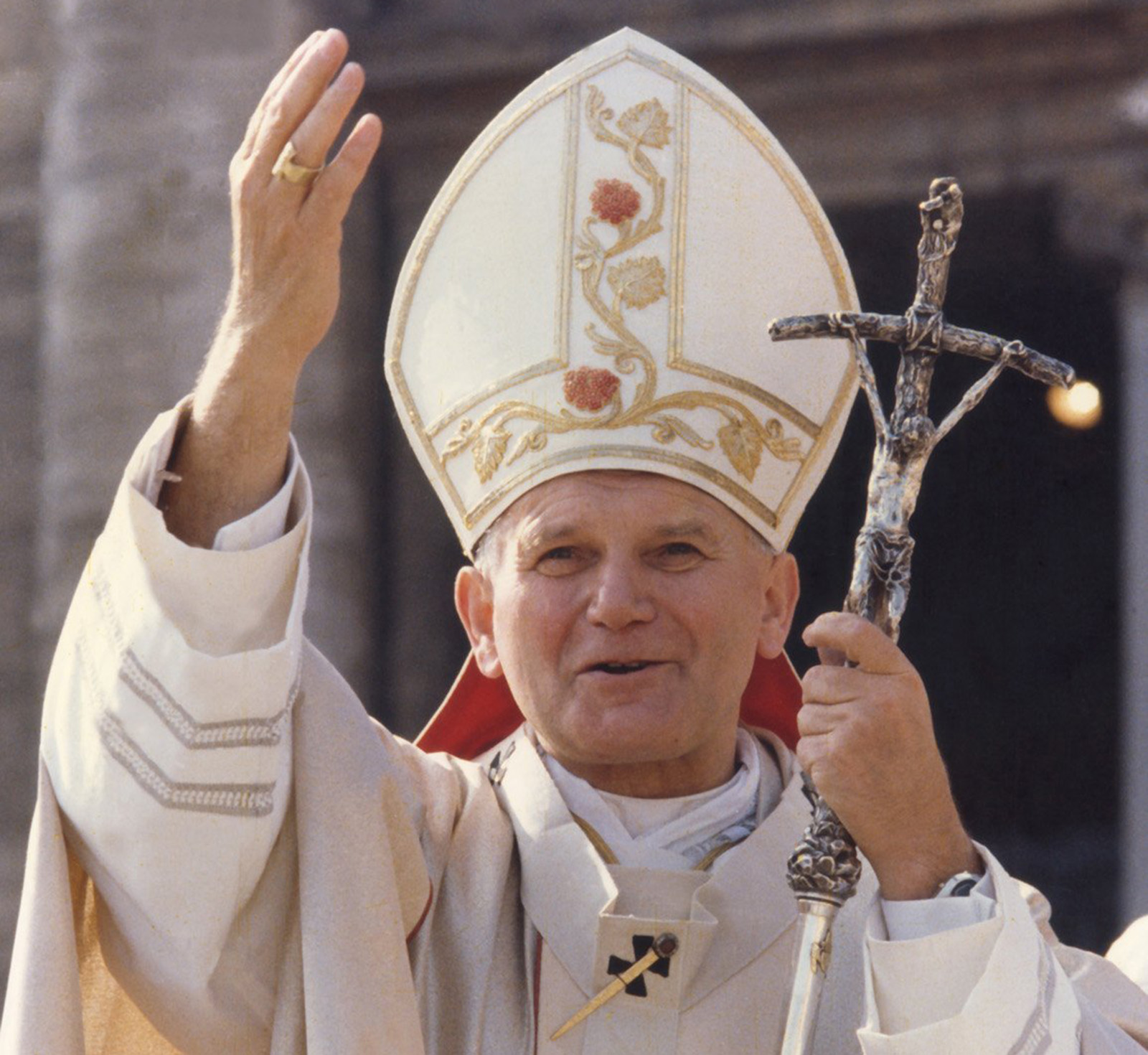
The problem with “foolish freedom” was diagnosed by St. John Paul II, one of the great philosophers of freedom. He said: “God gives everyone freedom … but when freedom is made absolute in an individualistic way, it is emptied of its original content, and its very meaning and dignity are contradicted” (Evangelium Vitae, 19).
When it comes to politics and law, I think we need to recover the question: Is this good for the person and good for society? But to do that in politics and law we need to deepen our understanding of freedom.
John Paul II thought that authentic freedom has two components: horizontal and vertical.
The horizontal component is concerned with who’s doing the choosing. On this level, a person doesn’t have freedom if they’re not doing the choosing. The mistake of contemporary culture isn’t that it includes the horizontal component of freedom; the mistake is that it stops there.
The vertical component of freedom is concerned with what’s being chosen. At this level, we become more or less free depending on our choices. On the positive side, the Catechism of the Catholic Church says: “The more one does what is good, the freer one becomes.” (CCC 1733) On the negative side, St. Paul notes that, by our own free choices, we can make ourselves slaves to sin (Romans 6:16). That sounds like a pretty good description of our culture: We have freely chosen bad habits, and now we’re slaves to those bad habits.
The notion of inertia applies to culture, not just physics. Physically, a body in motion tends to stay in motion, unless something acts on it. Similarly, a culture that exalts horizontal freedom at the expense of vertical freedom will tend to continue on that trajectory, unless something acts on it.
That’s where we come in. When an act is repeated by a person, it becomes a habit; when a habit is shared by many people, it creates a culture. Putting the brakes on cultural inertia starts with each of us choosing justice, generosity and kindness, even when it isn’t convenient. Every time we do so we elevate vertical freedom by our own free choice and become freer. The repetition of such acts creates a habit of choosing greater freedom in each of us. And the sharing of such habits in our parishes can create mini-cultures where a greater and deeper kind of freedom flourishes.
None of us needs to become a great philosopher of freedom. But we can all contribute to developing a more authentic culture of freedom. That would be a fitting Catholic contribution as we prepare to celebrate the 250th anniversary of the land of the free.