
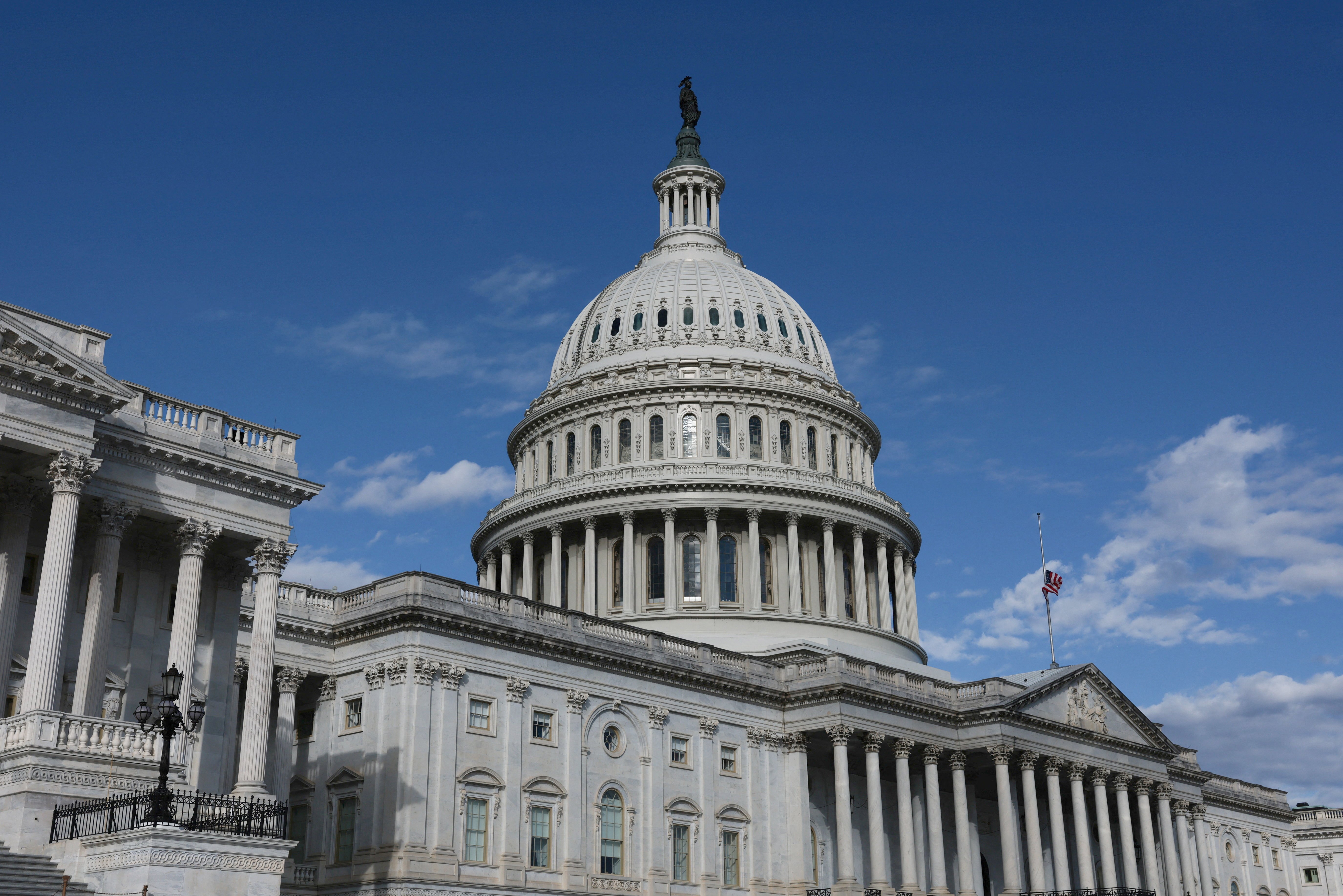
Government shutdown ended Nov. 12 after Senate and House approved funding package which was signed by Trump
WASHINGTON — After the U.S. House of Representatives voted late Nov. 12 to approve a Senate-passed funding deal to reopen the federal government, President Donald Trump signed the measure into law, ending the longest government shutdown in U.S. history.
A Catholic medical group was among those who expressed concern that the deal leaves the matter of health insurance subsidies to a future vote with an uncertain outcome, just as premiums are increasing.
The House voted 222-209 to approve the package and end the shutdown, which reached its 43rd day Nov. 12.
The deal includes three full-year appropriations bills to fund certain departments through the end of the fiscal year, including the U.S. Department of Agriculture.
USDA manages the Supplemental Nutrition Assistance Program, or SNAP, a major part of the nation’s social safety net that provides food support for 42 million Americans and has already been disrupted under the shutdown. A continuing resolution would then fund the rest of the government at status-quo spending levels through Jan. 30.
Republicans and Democrats previously reached a stalemate in October over the subsidies under the Affordable Care Act. The subsidies, or tax credits, are used by lower-to-middle-income households to reduce their out-of-pocket costs for enrolling in the program. It is set to expire soon, and Democrats are seeking an extension.
Health policy researcher KFF published an analysis Sept. 30 showing ACA marketplace premiums are expected to spike an average of 114% in 2026 for those relying on subsidies unless they are extended. A family of four with a household income of $40,000 is expected to pay $840 more annually, while a family of four with a household income of $110,000 is expected to pay more than $3,200.
KFF found approximately 24.3 million Americans access health care through the ACA marketplace, and almost 22.4 million Americans receive subsidies in the form of advanced premium tax credits.
Mercy Sister Mary Haddad, president and CEO of Catholic Health Association of the United States, said in a statement, “With the government finally reopened, Congress should move immediately to extend the health tax credits before they expire at the end of the year.”
“Open enrollment is underway, and many families are experiencing significant sticker shock as they search for coverage. For households already stretched thin by inflation and rising everyday expenses, the prospect of even higher health care costs is unsustainable,” Sister Haddad said.
“Health care is a basic human right — not something reserved for those who can afford it,” she added. “Congress must act swiftly to ensure that every person has access to affordable, reliable coverage. Extending these tax credits isn’t just a necessary step — it’s a vital safeguard for millions of families who depend on stable, affordable health care.”
A substantial number of Catholic households are affected by the government shutdown and rising health care costs pricing out families. Updated Pew Research data released in 2025 found 36% of Catholic households make under $50,000, including 18% making under $30,000.
The federal poverty line for a family of four in the U.S. is $32,150 in 2025.
A policy brief from the Center on Budget and Policy Priorities from Aug. 27 detailed the non-partisan Congressional Budget Office’s findings that as many as 15 million Americans will lose health coverage by 2034 due to $1.1 trillion in cuts to Medicaid and ACA marketplaces from the One Big Beautiful Bill Act enacted by Congress this year and the expected expiration of ACA premium subsidies.
Catholic leaders and ministries have expressed concern about other aspects of the government shutdown that affects the vulnerable, notably the lapse in SNAP federal food assistance, which 1 in 8 Americans rely on.
In anticipation of SNAP disruptions, Catholic Charities USA, the network organization dedicated to carrying out the domestic humanitarian work of the Catholic Church in the United States, recently announced a national fundraising effort to provide an emergency supply of food to Catholic Charities agencies around the country.