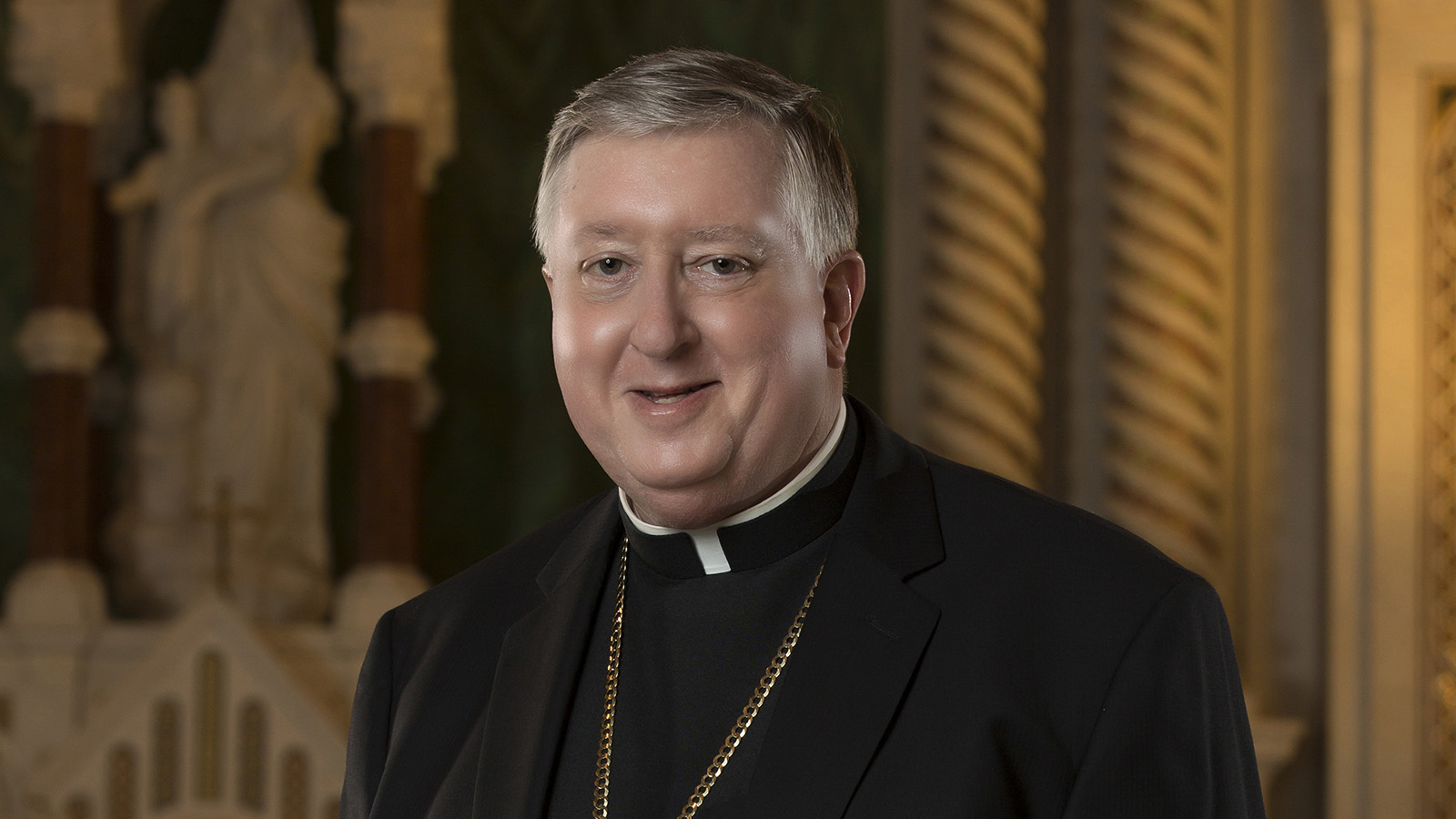
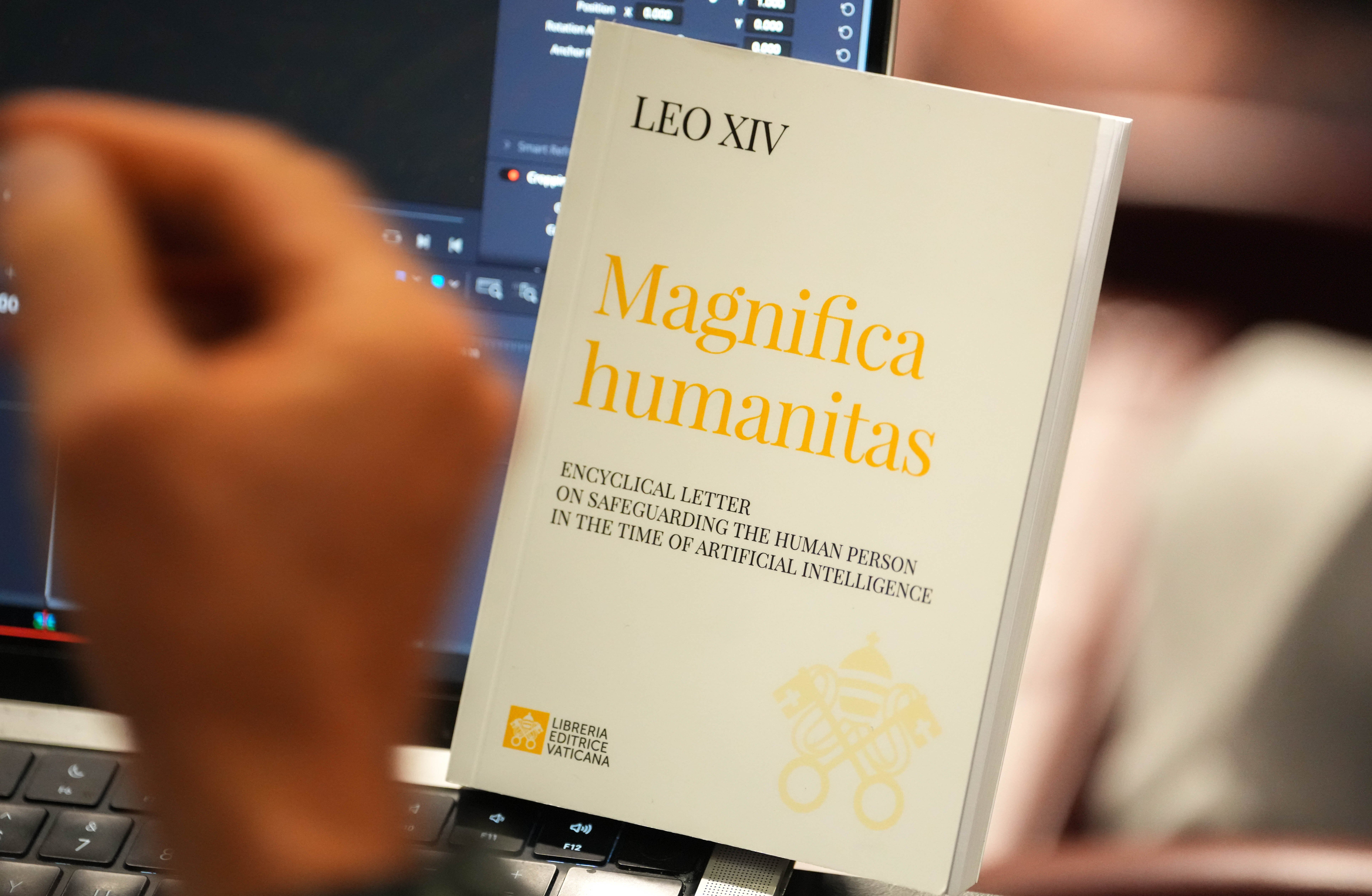
Archbishop Mitchell T. Rozanski remembers old episodes of “The Twilight Zone” that left viewers wondering whether technology might take over one day. Decades later as he reflects on Pope Leo XVI’s new encyclical, “Magnifica Humanitas,” the archbishop said the pope is asking us to consider the moral questions of what it means to be human in a digital age, just like the old TV series.
While artificial intelligence can mimic language and perform astonishing tasks, it is also “soulless” and can never replicate the interior life of the human person or the ability to apply faith and ethics to real decisions, Archbishop Rozanski said.
“One aspect of technology that affects our lives is how much time is spent looking at our technology, or spent online, or surfing the web,” he said. “What we have to question is: Is it replacing the necessary human interaction that we need that nourishes the soul, that nourishes our spirit, that lifts us up? Technology is soulless. We are the ones who have souls, and when we look at how we’re using technology, is it adding to our humanity or is it taking away from our humanity?”
The archbishop also acknowledged that technology has brought enormous advances and that AI isn’t going away. With proper use, it can assist humans in their work and learning. But echoing the “Twilight Zone” episodes he once watched, he said the pope’s words should give us pause to reflect, and that just because something is possible doesn’t mean it should be done without deep moral reflection.
The Church not only has a right but a mandate from Christ to speak on AI and technology to inform consciences and enlighten us to make well-informed decisions, Archbishop Rozanski said.
“When Jesus walked this earth, He gave us an example of what the fullness of our humanity could be, and He came to redeem the fullness of our humanity,” he said. “In teaching us the great dignity of our humanity, created in God’s image, the Gospel helps us to make moral and ethical decisions about so many things in our lives.
“What is fascinating to me is that we think of the Gospel message that was written 2,000 years ago, and we have an invention that no one in Jesus’ time would have ever thought of,” Archbishop Rozanski said. “And yet we can apply Gospel values to how this is used in our lives today. What it reminds me of is the unchanging, but eternal value of the Gospel.”
Learn more about the encyclical here.
Read the full English text of the encyclical here.
Not enough time to read the full encyclical yet? Get started with 13 things to know about it.