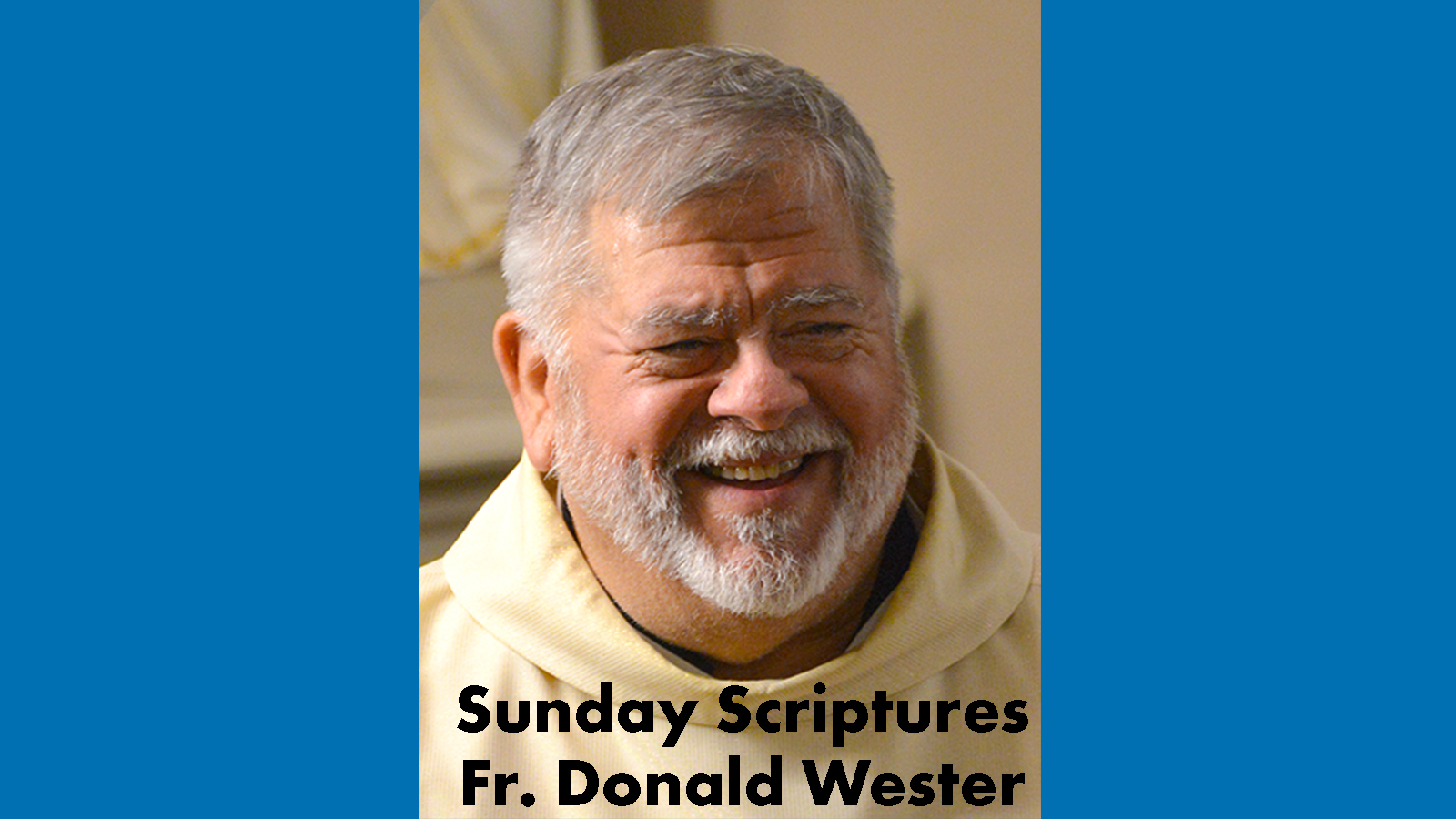
While we may be tempted to respond to the disorders of the world with rage or resignation, reparation is more effective

Dear brothers and sisters in Christ,
Have you ever hungered for something that wasn’t food?
When you’re trying to solve a crossword puzzle, you might be hungry for a word that fits the clue. Broadcasters might announce that the Cardinals are “hungry for a victory.” You might hunger for a family reconciliation. Some children are described as “starved” for attention or affection.
That helps us make sense of what Jesus means when He says: “Blessed are those who hunger and thirst for righteousness.” These are people who sharpen their sense of the disorders in the world and “hunger” to make things right.
There are different reactions to the things that are wrong in the world. One is resignation: People think that nothing will ever change, so there’s no sense wasting energy trying to do something. That’s tempting, because it’s partially true. Through the long annals of history, human nature hasn’t really changed. But it’s only a partial truth because, in those same annals, while human nature doesn’t change, individual humans do. Resignation isn’t a good option.
Another reaction is rage: People are angry at the injustices of the world, and anger gives them energy to battle those injustices. Rage is also tempting, because it’s rooted in a partial truth. Situations are wrong; anger does give energy. But you can see this, too, in the long sweep of history: Rage doesn’t actually build a better world. Rage simply leaves a path of destruction. Then someone actually has to rebuild. Rage isn’t a good option.
A third reaction — and one that’s not much pursued, but one I would like to propose for our consideration — is reparation. The deepest, most effective response to the disorders of the world is exemplified by Jesus. He didn’t resign Himself to the sinful state of the world, nor did He come in a destructive rage. He entered the situation. He prayed. He worked. He let the sins of the world crash upon Himself, bearing the weight in His own body. That’s how He brought about our redemption. And He asked us to pick up our cross and follow Him.
That might seem small, almost too small: to see the injustices of the world and not respond with massive structural changes, but simply to enter into that problem through my own prayer and to make reparation for that problem in my own life. But here’s the thing: God seems to prefer the small! “You, Bethlehem-Ephrathah, too small to be among the clans of Judah, from you shall come forth for me one who is to be ruler in Israel.” Bethlehem was small. Nazareth was small. Israel was small. Salvation went forth into the world from those small places. Might it go forth from our small lives, too?
I say all of this because this week we will observe the 25th anniversary of 9/11. Twenty-five years later, what do we hunger for? Jesus tells us that “the measure with which you measure will in return be measured out to you.” We’re tempted to measure out resignation — and not without reason. But do we really want God to measure out resignation to us? We’re tempted to measure out rage — and not without reason! But do we really want God to measure out rage to us?
What if, instead, we hunger for Jesus to live in us and to come forth from us? Then, like Him, we might make our lives — our prayer and work — a reparation. That would be a deeper response — the most effective response — to the disorders in the world.