Sister Thea Bowman’s canonization cause advances with conclusion of diocesan phase of investigation
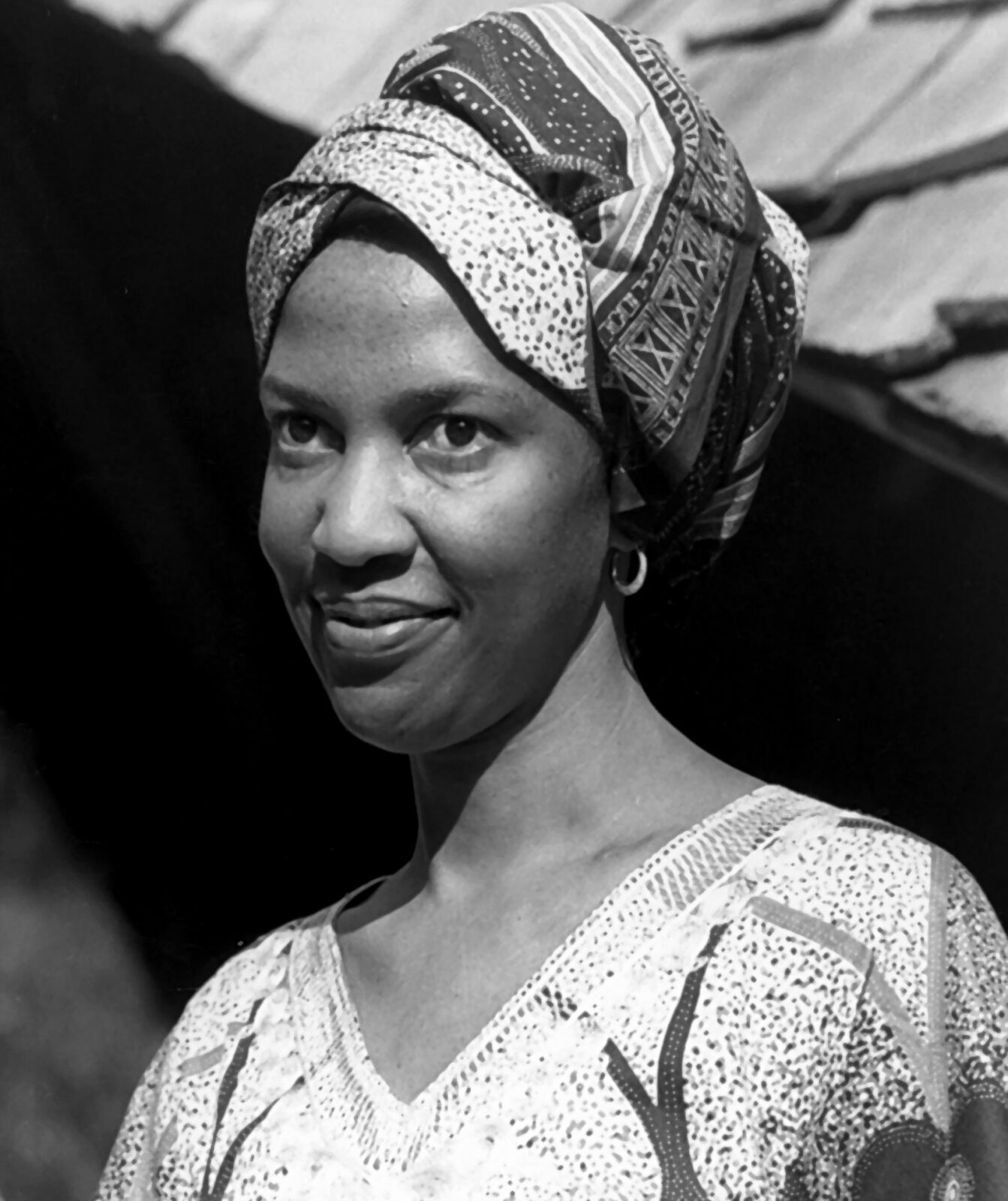
JACKSON, Mississippi — Servant of God Thea Bowman was a beacon for the Church to embrace more authentically the essence of what it means to be Catholic, Bishop Joseph R. Kopacz told Massgoers in Jackson.
“To love the Lord your God with your whole heart, mind, soul and strength, and your neighbor as yourself portrays her lifelong commitment,” he said in his homily at a Feb. 9 Mass of Thanksgiving at the Cathedral of St. Peter the Apostle, marking the conclusion of the diocesan phase of Sister Thea’s canonization cause. “Her loving heart, her prophetic spirit, her brilliant mind and boundless stamina, even in illness, inspired many.”
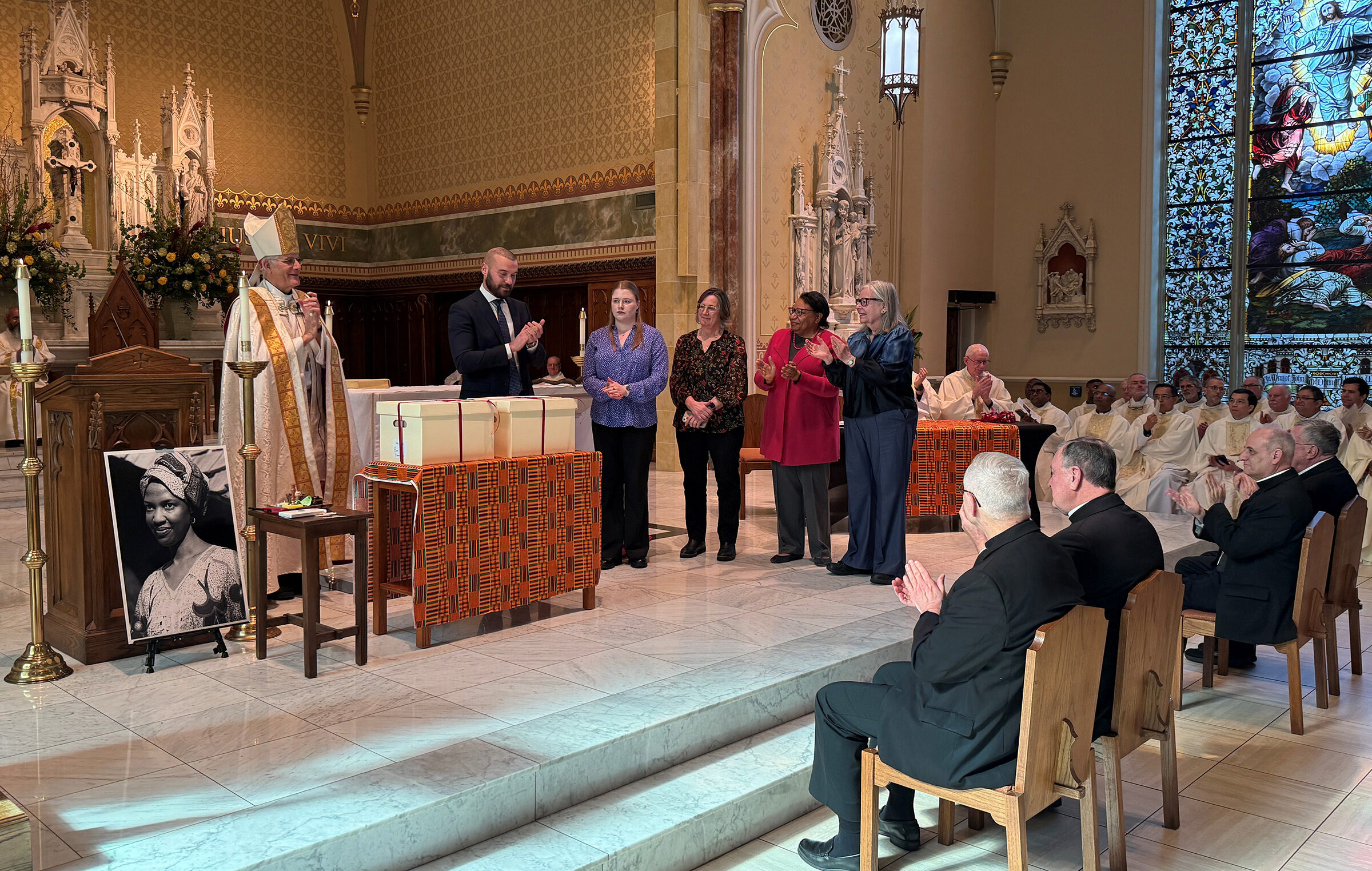
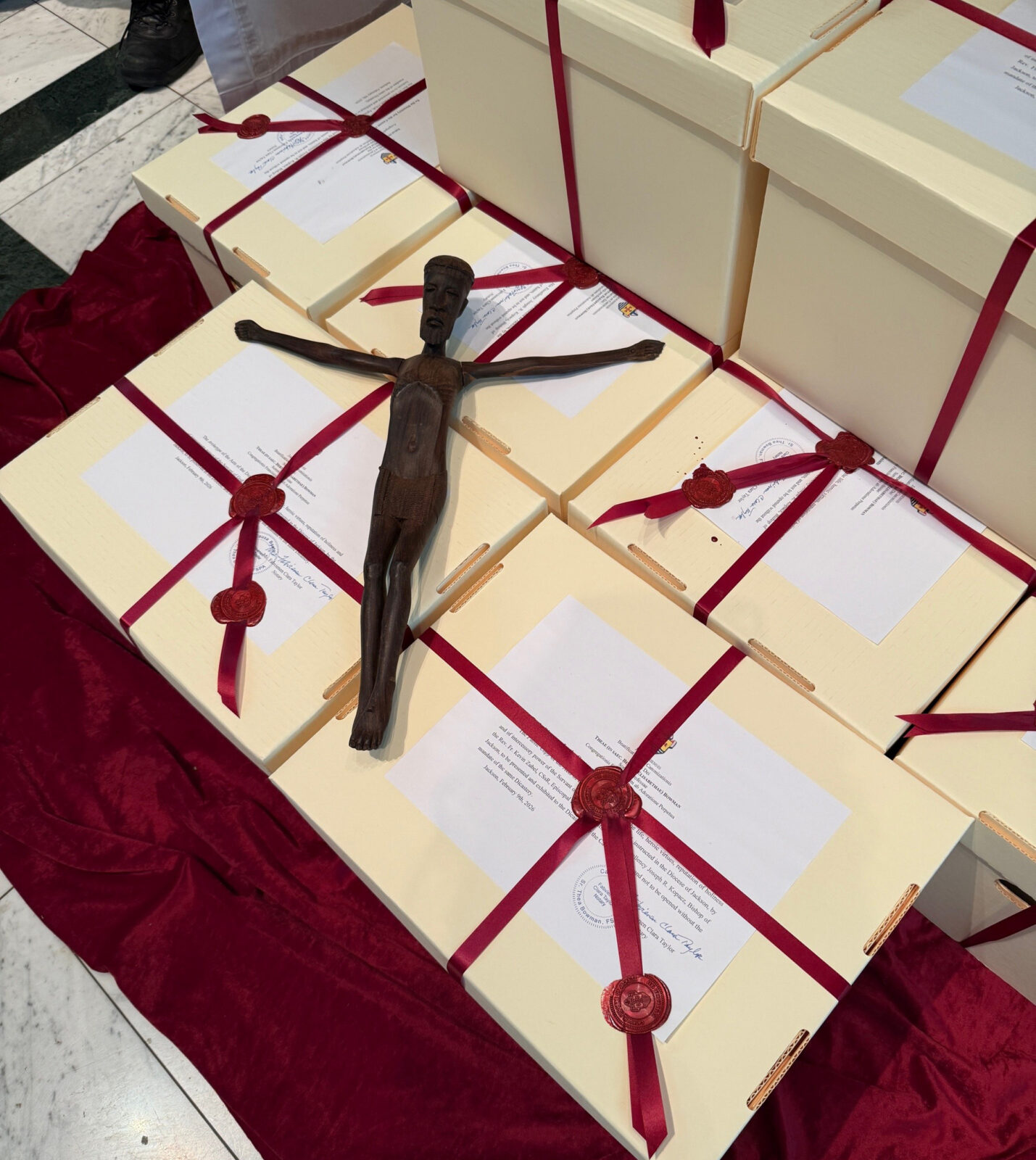
An official closing session of the diocesan phase of the canonization process followed the Mass. The cause’s leaders ceremoniously sealed several boxes containing the diocesan phase’s documents and findings. In all, 10 boxes containing two sets of documents, including more than 15,000 pages each, will be sent to the apostolic nunciature (the pope’s representative) in Washington and then transferred to the Vatican’s Dicastery for the Causes of Saints, which will further investigate the cause.
In 2018, Bishop Kopacz opened the cause for Sister Thea, a native of Mississippi born in Yazoo City and raised in Canton. She was the only African-American member of the Wisconsin-based Franciscan Sisters of Perpetual Adoration. She was a well-known speaker, evangelizer and singer. She died of cancer in 1990 at age 52.
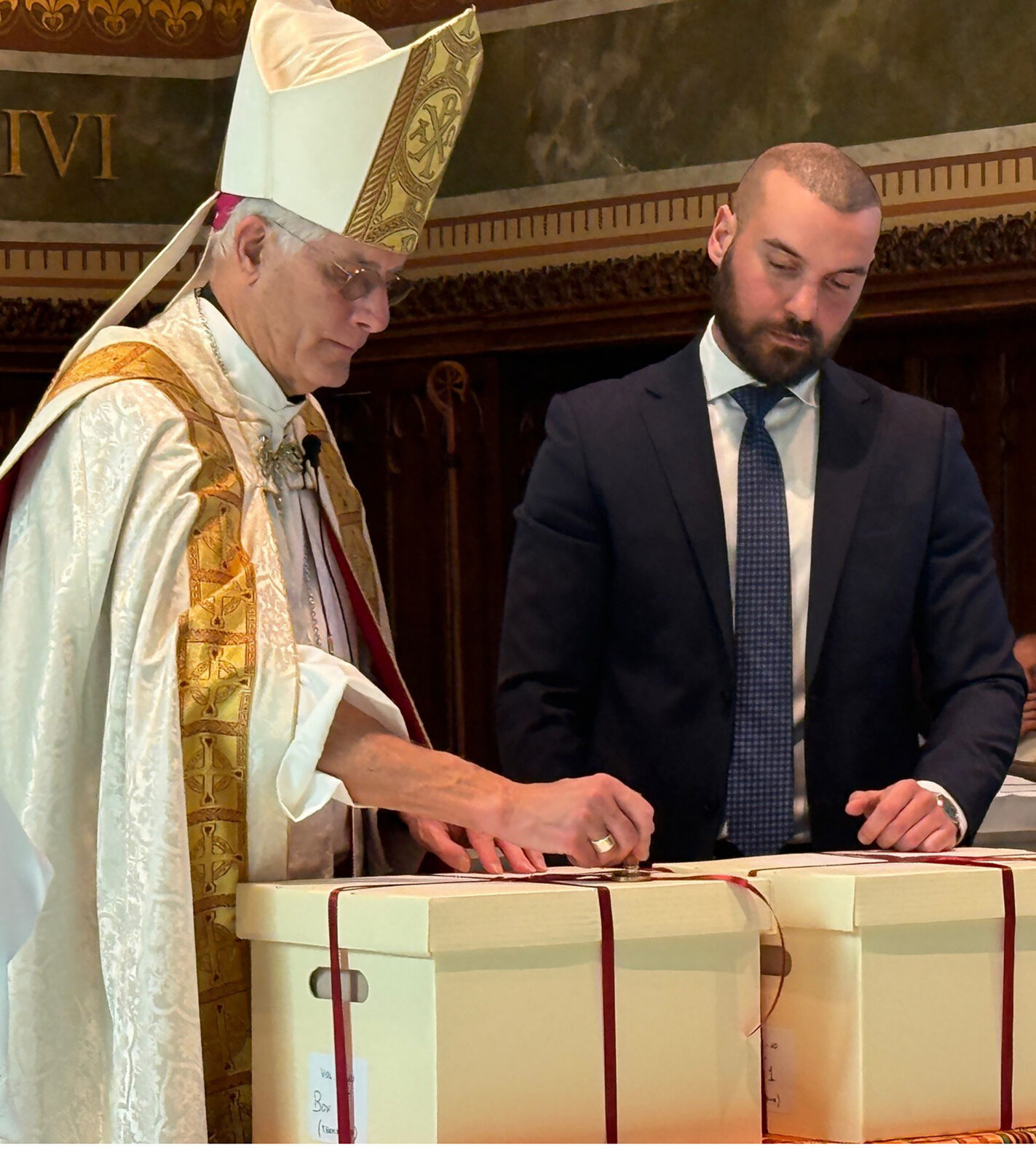
Nearly eight years after the cause was opened, Bishop Kopacz described the moment of closing the diocesan phase of the investigation as a blessing, especially for those who have been inspired by Sister Thea’s life.
“There’s considerable joy in the African-American community,” he said. “It radiates throughout the whole diocese. She had a great passion and love for God, and she saw the Church as the body of Christ as being for all. She taught people to be proud of their culture, and yet see the universality of the Church.”
Among the documents and findings related to Sister Thea are interviews with more than 40 witnesses, as well as her writings, articles and other items about her life, said Emanuele Spedicato, the postulator for the cause, who has been charged with sending the documents to Rome.
The primary components of a canonization investigation include a proven reputation for holiness, a rigorous examination of the candidate’s writings and life, the testimony of witnesses regarding heroic virtue and the investigation of at least one miracle attributed to their intercession.
Among those who attended the Mass was Myrtle Otto, one of Sister Thea’s pupils at Holy Child Jesus School in Canton. After joining the Franciscan Sisters of Perpetual Adoration, Sister Thea returned to the school, where she had been a student, to teach music and English literature. She often stressed the importance of receiving a good education, but also knew how to have fun, Otto said.
“We respected her in the utmost,” she said, adding that Sister Thea’s legacy should live on in how we treat others.
“Always learn to be kind,” Otto said. “Always learn to give people what’s due to them. She was a strong woman, and she taught us how to be strong. Regardless of what goes on, you pray and you go on and you’ll be successful. She’s now gone to glory with God.”
Several members of the Franciscan Sisters of Perpetual Adoration leadership attended, including Sister Georgia Christensen, who had known Sister Thea since they were junior professed sisters.
During one of her assignments at a predominantly Black school in California, Sister Thea had come to help for a brief period and was encouraging the students, Sister Christensen recalled.
“She always had a spirit of joy about her,” she said. “She was able to break into song at any time, just praising God and making others happy. It touches the soul, and what it says is her life was a life worth living.”
As part of their community’s perpetual adoration, the sisters include a prayer at the end of every hour with the line: “all praise and all thanksgiving, be every moment thine.”
“I couldn’t help but think of that here today,” Sister Christensen said. “This is a moment of glory to God and Thea was the cause of it.”
Sister Thea is one of the “Saintly Seven” — seven African Americans who are being considered for sainthood.
Connections to St. Louis
Sister Thea was no stranger to St. Louis, having visited on numerous occasions in the 1980s. In July 1987, she taught a two-week course on African-American spirituality at the former St. Engelbert Parish in north St. Louis. The course was sponsored by the archdiocese’s Paul VI Institute of Catechetical and Pastoral Studies.
Sister Thea said her goal was “to help us as Black people to become more aware of our strengths and gifts and to share those gifts with our brothers and sisters of whatever culture in order to make a better world for all of us.”
Gloria Green, who attended, recalled that Sister Thea emphasized the importance of using your voice.
“You would not have known how sick she was by the way she sang,” said Green, a former director of the St. Charles Lwanga Center. “Her voice was so strong. She said it was important to be OK with who you are and that we’re always learning.”
As a young associate pastor at Holy Rosary Parish in north St. Louis, Father Carl Scheble also attended the course, eager to absorb everything that he could as a new priest serving the Black Catholic community.
“She said that so often Catholics have to leave their Blackness at the door and then come into church,” he recalled. “After those two weeks, I learned how Black spirituality can and should be incorporated into the Black Catholic Church. They’re not separate things.”