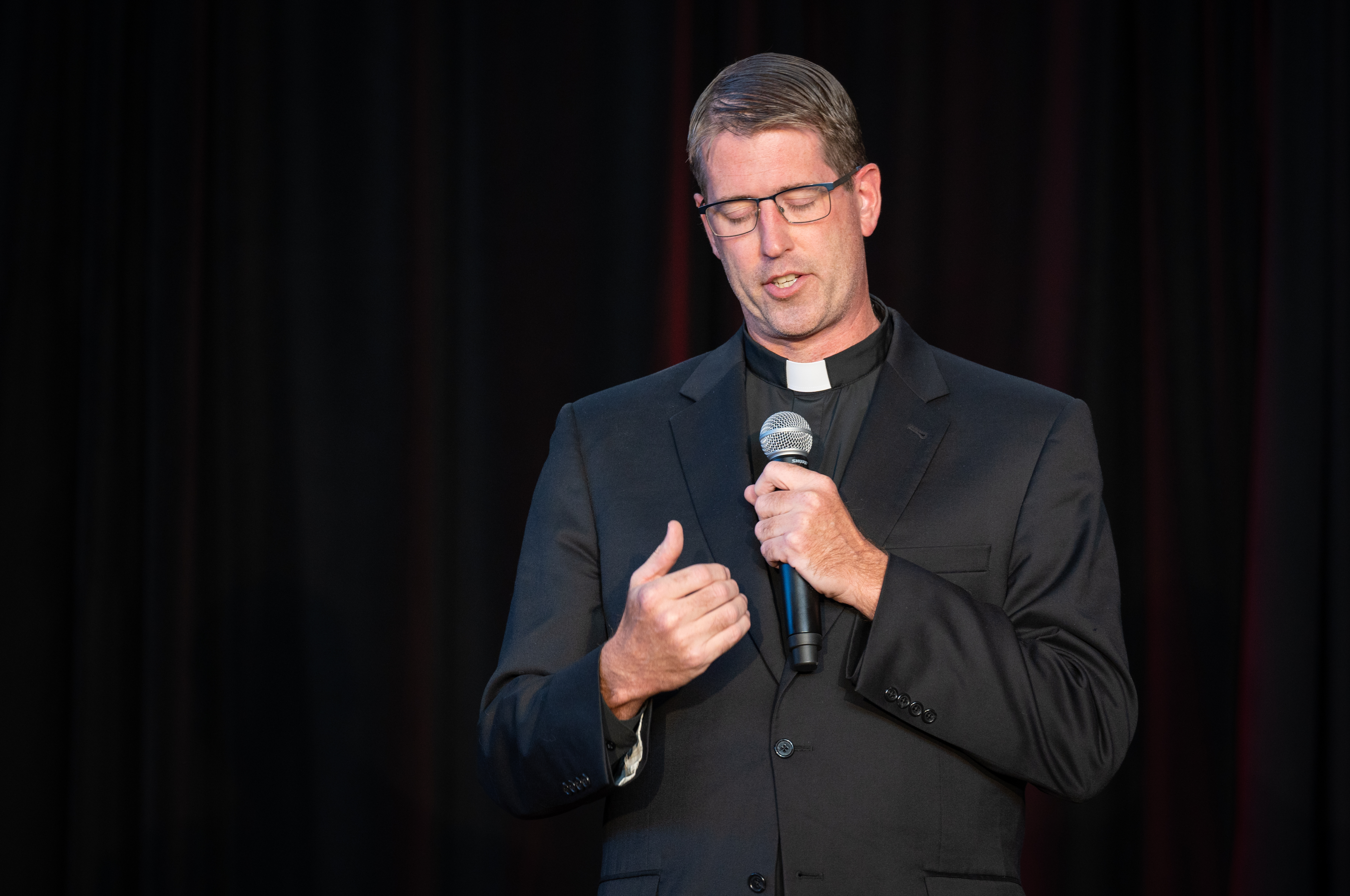

The work of Catholic Charities of the Archdiocese of St. Louis is more than the number of people served, president Jared Bryson said. Ultimately, it’s about balancing immediate and long-term needs to create a communion of care and bring the healing, help and hope of Jesus Christ to those in need.
In 2025, Catholic Charities provided services to 117,000 people, including disaster relief, housing, workforce development, senior care, children and family services, addiction recovery, mental health care and legal assistance. As Catholic Charities seeks to expand its services to 200,000 people by 2030, Bryson sees that the work can only be done through collaboration with parishes and other organizations to build upon its impact in the community.
What are the top priorities for Catholic Charities of the Archdiocese of St. Louis in the coming year?
The need for services continues to rise while funding continues to shrink. Our top five needs in the archdiocese are affordable housing, help with mental health and substance use, food security, workforce development and senior services.
We’re moving Catholic Charities away from a federated model to a one-ministry model that is parish-centric, so that we can look at the needs and see our ministries not as individual organizations, but as capabilities of Catholic Charities overall.
We have more than 74 programs to help support people in need throughout the Archdiocese of St. Louis. How can we scale those to help meet the needs in a community? The pastor’s role is to care for all the lives within a parish’s boundaries, not just Catholics. How do we help the pastor take care of a community?
Being parish-centric means understanding that stability is community-oriented. It’s not just about the client’s needs, it’s about making sure the client is anchored in a community that keeps them sustained. We’re trying to create a communion of care, one that brings people to some sort of security.
How does Catholic Charities balance immediate crisis responses (i.e. tornado relief, homelessness, other emergency needs) with long-term support?
Parishes of the archdiocese have been supportive with the request for donations to help with immediate needs, and we’re getting that into the hands of folks where it makes sense to rebuild. We’re doing food every day to keep people fed, but also trying to repair and rebuild homes or find new places to live.
At the same time, we need to build our reserves as an organization and a comprehensive campaign to take care of the needs for the long term, especially as we expand beyond St. Louis City and County and into all 11 counties of the archdiocese. We’re setting up new sites all over the archdiocese and trying to continue to meet those needs in partnership with parishes.
How is Catholic Charities collaborating with others, such as parishes, other organizations and businesses to build upon its impact in the community?
Our main collaborator has been the Society of St. Vincent de Paul, both the individual conferences and the St. Louis Archdiocesan Council. We usually find out from an individual conference about something that’s going on in their community, and they’re more systemic issues. We’ve helped bring in resources when we find out about those things.
Those collaborations continue to happen in other places, too. There’s Life’s River (a shelter in the city of Washington in Franklin County), Bridge of Hope (a shelter in Troy), Caring Hearts Pregnancy Resource Center (Washington County), Family Resource Center in Potosi and Angels’ Arms, which provides foster care services. Pastor Andre Alexander with the Tabernacle Community Development Corp. and The Hub in north St. Louis has been a great collaborator, too.
Our chief community officer, Brian Thouvenot, works with the vicariates of the archdiocese to mobilize our resources and meet the needs in the community. He helps with partnerships and makes sure that we’re resourcing those collaborations.
What organizational changes have you made or are considering to adapt to growth or shifting needs?
We’ve set up a new focus on housing, and we will have something on workforce development and food security coming. It’s moving away from thinking of our agencies as separate and on their own, to operating as an organization and to see the capabilities that we have to help organizations and parishes.
In what ways can people in the community become more involved in your work?
Our movement to become a service platform in the Archdiocese of St. Louis is where we’re focusing. If we think about becoming parish-centric and the needs of our communities and how to engage with that, then we are looking for ways in which we can offer evergreen service projects and service integration across the archdiocese.
We have service opportunities with any of Catholic Charities ministries. The second area is service in our communities, where people can help a parish or community with evergreen projects. The third is schools and service learning integration. We just brought on Beth Bartolotta, executive director of service learning integration for Catholic Charities, to rethink servicing the archdiocese within our schools. It’s not just how we think about service hours, but becoming people of service. And why do we serve? Because of Christ. It’s how we integrate our faith into service.
What keeps you up at night about your work at Catholic Charities?
It’s funding. We are a 41% government-funded organization, and 24% of our funding is fees for service, which is more government funds. And that shifting landscape continues to challenge us to move forward and take care of the growing needs. As the funding decreases, the needs actually increase.
Any time the government choses to shrink its size, the safety net of a community is always in the balance. What they’ve chosen to do is to use community organizations like Catholic Charities and other church ministries to supplement. Someone has to fill in the gap, and so many times, what happens is the funding comes from the government, and the services come from us. That gives us the opportunity to be a Church and evangelize. But I am always worried about that shifting sand.
On the donor side, there are generational shifts that are happening, and I’m concerned about what that means for the impact of our services. We serve everybody. But if we believe that you and I are made in the image and likeness of God and the people that we serve are the most vulnerable and don’t have a voice for themselves, how do we advocate for that?
What drives you to come into work every day?
Growing up in rural Illinois and being raised by a single mother, I got to know the community from the inside as someone in need. I remember sitting in a doctor’s office in town, and this man came by and just shook my hand, and inside his hand was a $100 bill. He said, “You guys could use this, and when you get a chance, just pay it forward.” My mom worked really hard to support us, but there was always someone from the community who helped out.
Then it was becoming Catholic and falling in love with the Church, and what the Church truly does for a community in terms of transformation — not just in societal terms, but really as an effort of evangelization. To do what Christ came to do: to serve, to transform, to bring people closer to God. That’s what drives me every day when I think about the potential we have here in the Archdiocese of St. Louis. The Church takes care of people, regardless of your faith or no faith, and that’s what we are called to do.