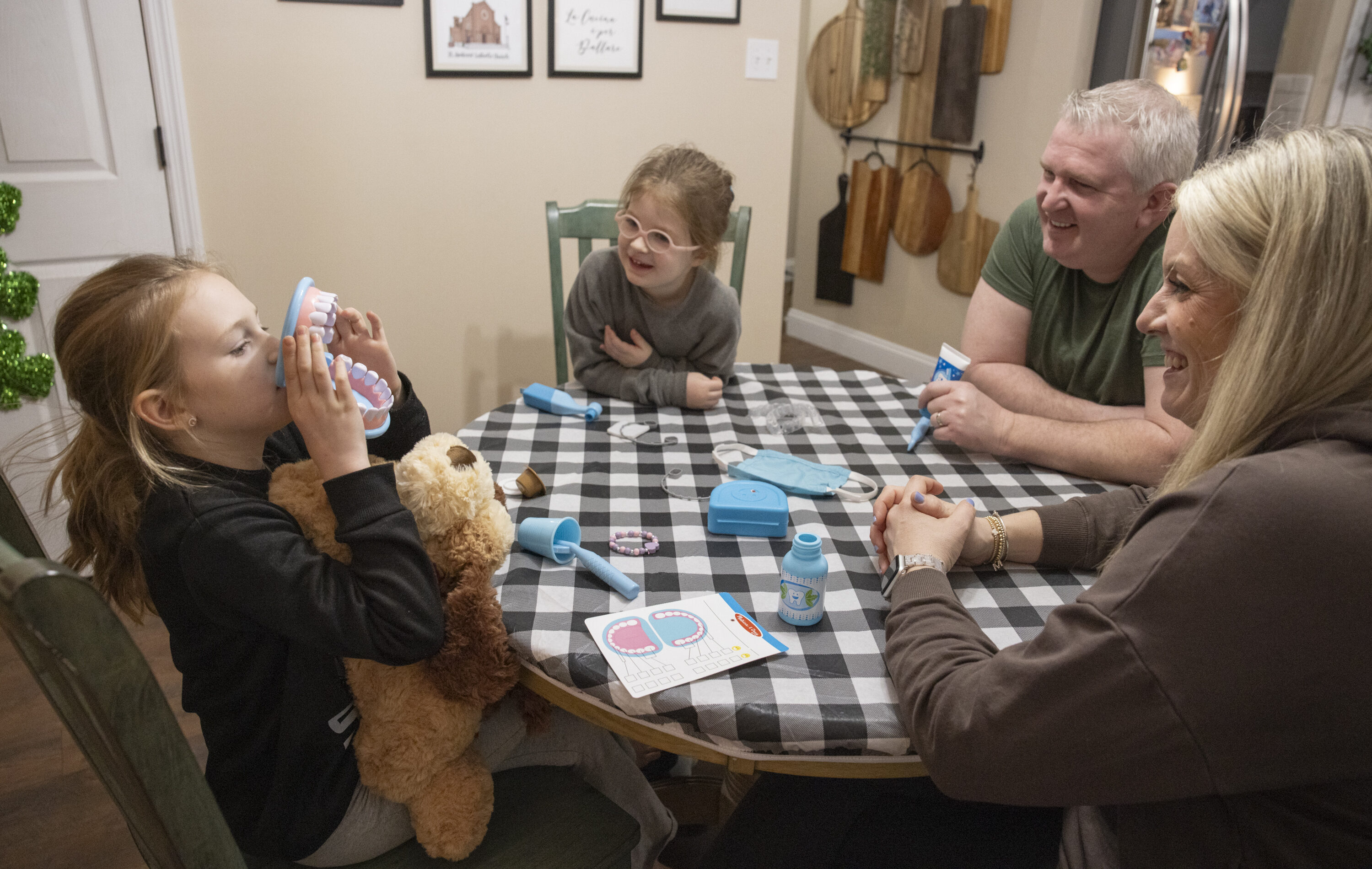
Couple with infertility bypasses IVF to find answers through natural fertility care
For nearly five years, Marie Guccione never saw a positive pregnancy test. Her doctor urged patience, eventually steering her toward artificial reproductive treatments, including in vitro fertilization.
“It made me upset, because I just felt like, we’re not even doing anything else to try to figure out what’s going on,” she said.
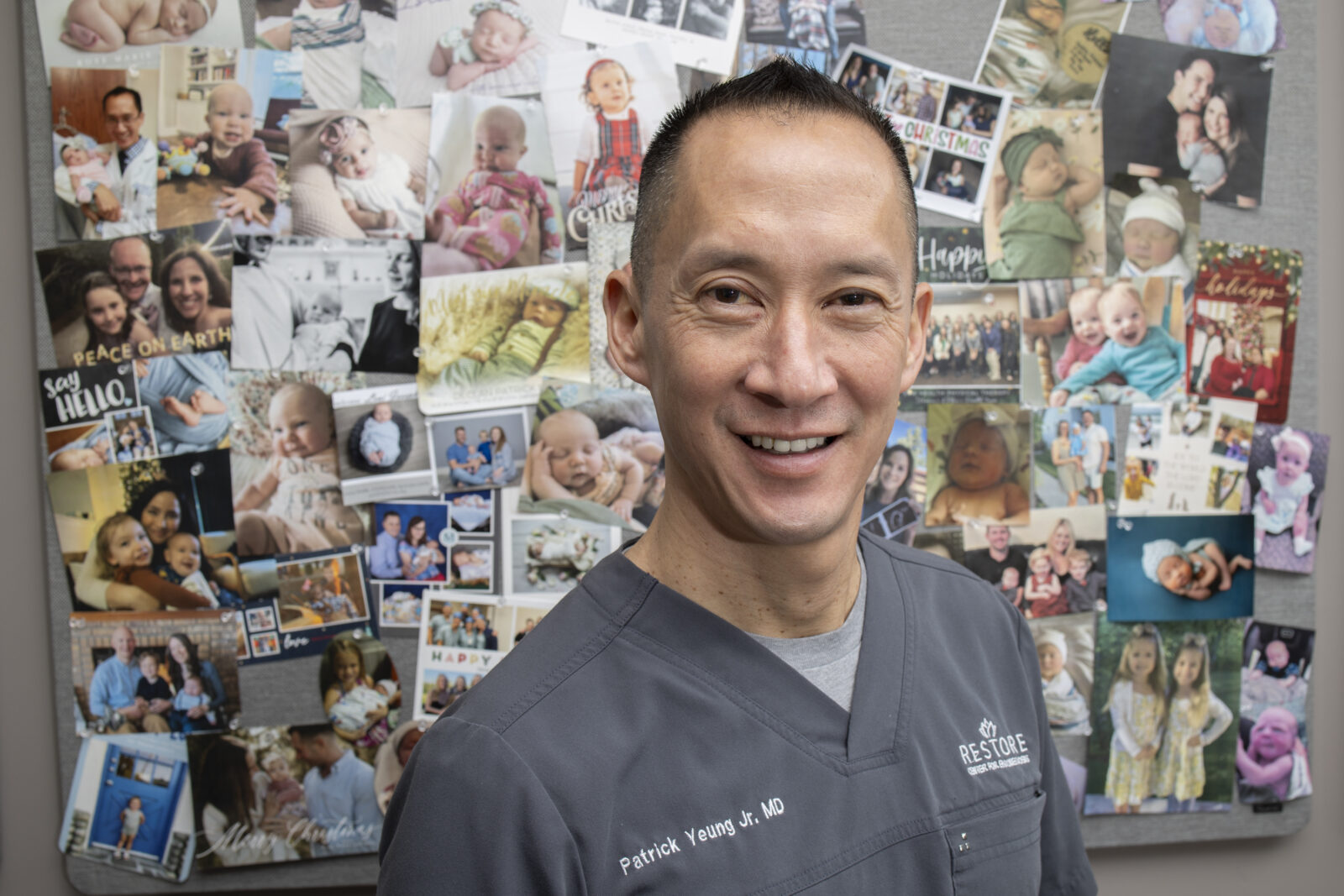
Convinced that something deeper was being overlooked, Guccione, a member of St. Charles Borromeo Parish in St. Charles, turned to natural family planning to look at possible reasons why she wasn’t getting pregnant. She was referred to Dr. Patrick Yeung, a Creighton Model/NaPro Technology-trained OB/GYN who specializes in treating endometriosis as a cause of infertility.
Under Yeung’s care, Guccione learned she had stage four endometriosis, a condition in which cells from the lining of the uterus grow in other areas of the body. Symptoms can include painful menstrual periods and infertility, among other issues. Guccione had what she described as a “silent” case, because she had none of the classic symptoms that might have alerted doctors earlier.
Just two months after surgery with Yeung, she and her husband, Joe, received their first positive pregnancy test.
Artificial reproductive technology
Guccione’s story is not unique. In vitro fertilization (IVF) has become the most common method of assistive reproductive technology (ART) for people who have been unable to conceive naturally. IVF accounts for over 99% of ART procedures, according to the Department of Health and Human Services (HHS). In 2022, 251,542 patients started a total of 413,776 IVF or other ART cycles. That’s a 33.4% increase in cycles from 2020 and a 128% increase from 2013.
In October, President Donald Trump announced a policy proposal to increase access to IVF, including issuing guidance urging employers to offer fertility benefits directly to their employees. The U.S bishops expressed concern, saying that while they support natural restorative approaches of addressing infertility, they “strongly reject” the effort to promote IVF.
The Church teaches that IVF is immoral because fertilization does not occur through the sexual union of a husband and wife and involves the creation, freezing and destruction of embryos, which the Church recognizes as human lives from the moment of conception.
“Every human life, born and preborn, is sacred and loved by God. Without diminishing the dignity of people born through IVF, we must recognize that children have a right to be born of a natural and exclusive act of married love, rather than a business’s technological intervention,” the bishops’ statement said. “And harmful government action to expand access to IVF must not also push people of faith to be complicit in its evils.”
The Church has been speaking more frequently about the moral questions behind IVF, as well as alternatives such as NaPro Technology that seek to treat the causes of infertility while remaining consistent with Catholic teaching.
Last year, Father Peter Fonseca, an archdiocesan priest and bioethicist, consulted with nearly a dozen couples who had used IVF and faced the issue of what to do with remaining frozen embryos. The Church has no settled moral teaching on the issue, he said, adding that couples are often presented with one of several options: destroy the embryos, donate them for research or to another infertile couple or keep them frozen.
“These were people who had reached out to their pastor and said, ‘Hey, I got that letter,’ or, ‘we just learned that IVF is bad,’ or ‘we finally decided we don’t want any more children,’” Father Fonseca said. “In that consult, the best I can do is lay out for you the three options, and the best I can do for you is lay out the best arguments for and against each option.”
Father Fonseca was among several panelists who spoke on IVF at the Respect Life Apostolate’s conference last October. The group distinguished between artificial reproductive technologies and alternative treatments that help couples conceive without bypassing the marital act.
“That’s a good exercise of medicine,” he said. “Any procedure that disassociates the procreative from the unitive dimension of married love, however, would be problematic.”
Natural family planning
Guccione was told that she likely would have had around a 20% success rate with IVF, given her age and other biological factors.
“I remember walking out of there thinking, I can’t believe people go through with this,” she said, adding that she remembered telling the nurse, “I am healthy. My husband is healthy. Something’s going on, and I just don’t feel like this is the end.”
Through her NFP charting, Guccione was introduced to NaPro Technology (Natural Procreative Technology), a women’s health science that works in tandem with the Creighton Model FertilityCare Services (one of several Church-approved methods of natural family planning), to diagnose and treat underlying causes of infertility.
Rather than bypassing the marital act, as with IVF, NaPro care seeks to restore normal reproductive function in a way that respects Church teaching on the dignity of human life and the integrity of marriage. NaPro Technology includes diagnostic methods as well as surgical and medicine-based treatments aimed at helping couples to conceive naturally.
“My MO is that good ethics is good medicine,” said Yeung, a certified NaPro medical consultant for the past 20 years and who founded the RESTORE Center for Endometriosis, specializing in laser excision of endometriosis. “If you’re trying to treat patients in accord with the way that we are designed by the Creator, it should not be suboptimal medicine. IVF is often seen as the best that medicine has to offer, but that makes no sense. As bypass therapy, that tells me you can’t find the problem. It’s a complete failure of medicine and surgery to do what we’re supposed to do, which is find the problem and fix it.”
Guccione said she is grateful that by approaching infertility through natural family planning, she came to understand her own body in a new way. “I think everyone’s body is different, and this is the best way to understand what’s happening,” she said. “He just gave us so much hope. (Yeung) didn’t dismiss it, and that alone was like, ‘OK, I’m getting this is where we’re supposed to be.’”
What does the Church say on in vitro fertilization?
The Catechism of the Catholic Church (2377) states that IVF is “morally unacceptable” because it separates the marriage act from procreation and establishes “the domination of technology” over human life.
“Donum Vitae,” published in 1987 by the Vatican’s Congregation for the Doctrine of the Faith, established the moral framework for Catholics regarding IVF. It says that IVF is a violation of human dignity and treats human embryos as disposable “biological material” rather than as human beings with a right to life from the moment of conception.
The Church recognizes that the desire for a child is natural and can be especially profound for couples facing infertility. But it teaches that marriage does not give spouses a right to a child, but rather the right to engage in natural marital acts that are ordered toward procreation.
“The child is not an object to which one has a right, nor can he be considered as an object of ownership: rather, a child is a gift, ‘the supreme gift’ and the most gratuitous gift of marriage, and is a living testimony of the mutual giving of his parents. For this reason, the child has the right … to be the fruit of the specific act of the conjugal love of his parents; and he also has the right to be respected as a person from the moment of his conception.”
For additional resources on reproductive technology and the Church’s teaching, visit www.usccb.org/prolife/reproductive-technology.
What is in vitro fertilization?
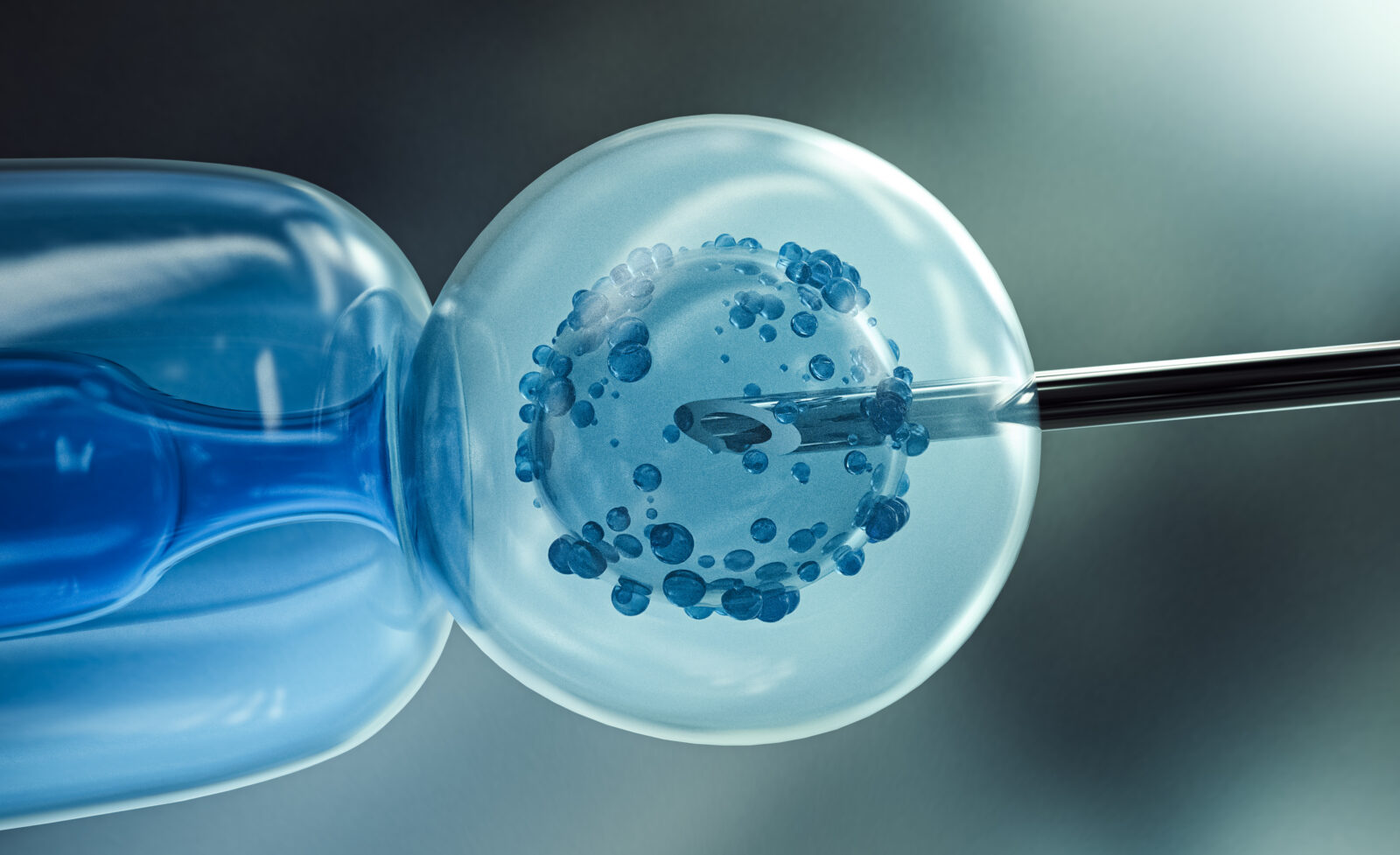
In vitro fertilization is a type of assisted reproductive technology and a medical procedure women undergo to become pregnant. In vitro means “in glass.” In the IVF process, a woman’s ovaries typically are hyperstimulated to yield multiple eggs, which are then harvested and fertilized with sperm in a laboratory to create a human embryo.
Some of these embryos are transferred into the womb with the intention that at least one will grow to full term. Many of the embryos that are transferred do not survive, and most of the remaining embryos are either destroyed, donated or are frozen in cryopreservation.
Natural family planning resources
The archdiocesan Office of Natural Family Planning offers information on NFP instructors and doctors, resources for those experiencing infertility and other resources. Visit stlouisnfp.org.