We can communicate this message by sharing the story of our own relationship with Christ
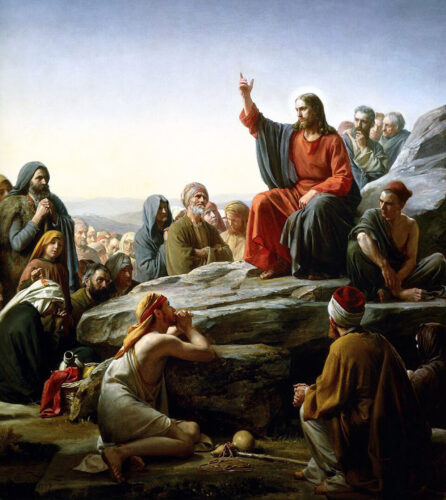
“The Sermon on the Mount” by Carl Bloch
As we covered in the first installment of this four-part series on evangelization, God calls each of us to be missionaries in our particular time and place. How we share His message may change — the tools, language and strategy adapting to whom the message is shared with — but the message itself will never change.
Because Gospel truth goes beyond time and culture.
Because the message is so central to what it means to be on mission, it’s vital that we understand it. While any Mass-going Catholic has certainly heard the phrase “Gospel message” countless times over the years, most would likely struggle if they were asked to summarize or preach the message on the spot. Yet, it’s central to salvation history.
In order to redeem us, God first formed a kingdom of His own. Israel was God’s people, receiving their own law, land and kings. They were the only kingdom in history founded by God and not by man. And yet this kingdom of God was eventually enslaved to kingdoms of man, idols of man and sins of man. They strayed from the dignity they were created for and now longed for the coming King to liberate them and restore the Kingdom.
John the Baptist came saying: “Repent and believe in the Gospel, for the kingdom of heaven is at hand.”
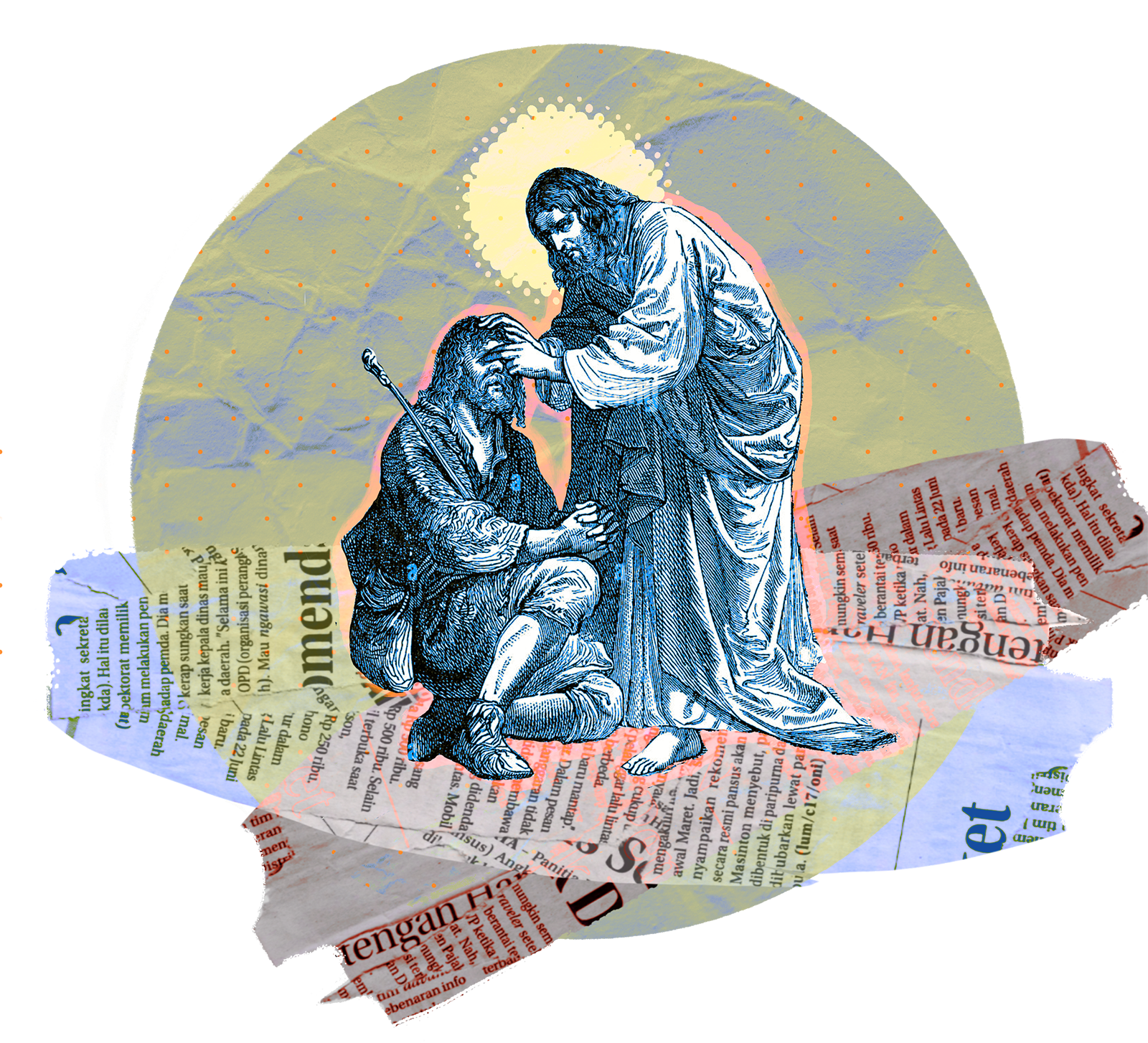
This same message would permeate Jesus’ own preaching. From His crib all the way to His cross, the Gospel of the Kingdom rang out over and over again. His Sermon on the Mount, His teaching on prayer, His parables and even His trial and crucifixion all featured this message. While the people were anxiously awaiting a kingdom of worldly riches through political and military success, Christ told them, “my kingdom is not of this world,” as He was crowned with thorns. The Gospel of the Kingdom was simple: The King has come to set you free from sin and restore the dignity you were created for, so you must repent and believe.
Accordingly, we classically summarize the Gospel in four parts: creation, fall, redemption, response. This sequence is often termed the “kerygma,” which simply means “message.”
Creation: We were created with intention and forethought by God and called to a relationship with Him — a dignity far beyond our understanding.
Fall: On this backdrop, we understand that sin is a rebellion against God and our creation, and it damages or destroys that relationship.
Redemption: However, God’s mercy and desire for a relationship far transcends our rebellion: From the crib to the cross, He fought to set us free and restore us to Himself.
Response: Therefore, we are invited to respond by accepting His mercy and giving Him our lives.
While this message might seem like mere basics, it has already changed the world and has the power to continue doing so. From the moment it was first shared by St. Peter at Pentecost, thousands began responding and the Church took shape. Recently, St. John Paul II and Pope Francis have reminded us that this message is the central theme of evangelization and catechesis, and it can never be replaced. It is only from hearing this message that others can have faith and begin a relationship with Christ.
Sharing the story of our own relationship with Christ is a helpful lens for communicating the Gospel message. A personal testimony is the story of three things: my life experience before a relationship with Christ, my encounter with Him and my conversion and relationship with Him since. By sharing our own story, we can present elements of the four parts of the kerygma and show others that Christ is alive and active today.
It was this message that Christ told His apostles to be “witnesses” to (Acts 1:8) some 2,000 years ago, and the same message changes hearts and grows the Church today.
So I invite you: consider who you want to know Christ.
Pray about this message:
Which parts might they need to hear?
How might you share it?
How might you share the story of your testimony so they know Christ is alive and active today?
Stephen Estes is the director of faith formation and discipleship for the Archdiocese of St. Louis.
This is the second in a four-part series examining the moment, message, model and methods of evangelization. The four topics are in conjunction with the Missionaries of Joy curriculum, a partnership of the Archdiocese of St. Louis and the Augustine Institute to form lay parishioners as missionary disciples.