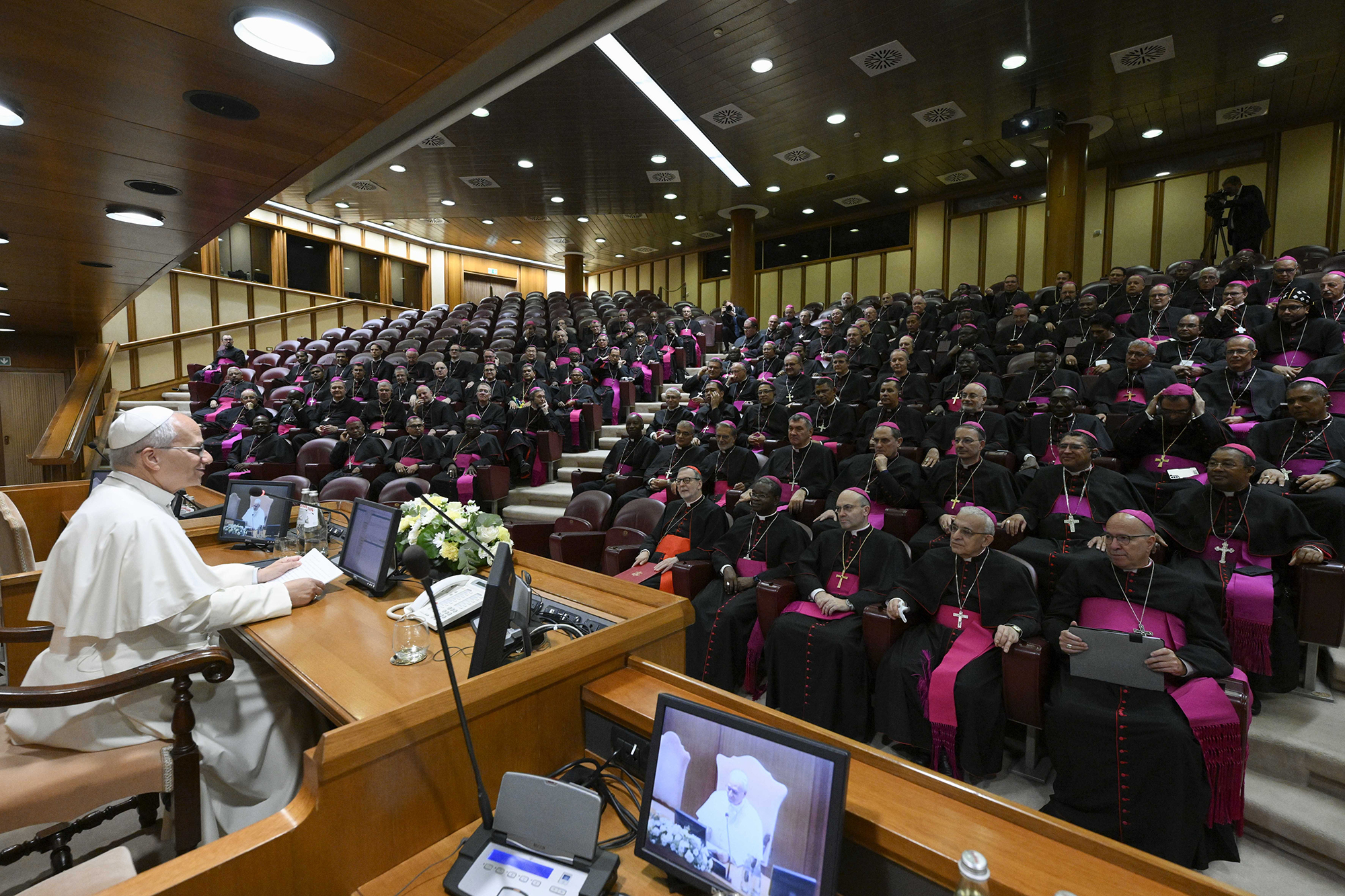
Pope Leo venerated the relics of St. Augustine on a one-day trip to Pavia, in northern Italy
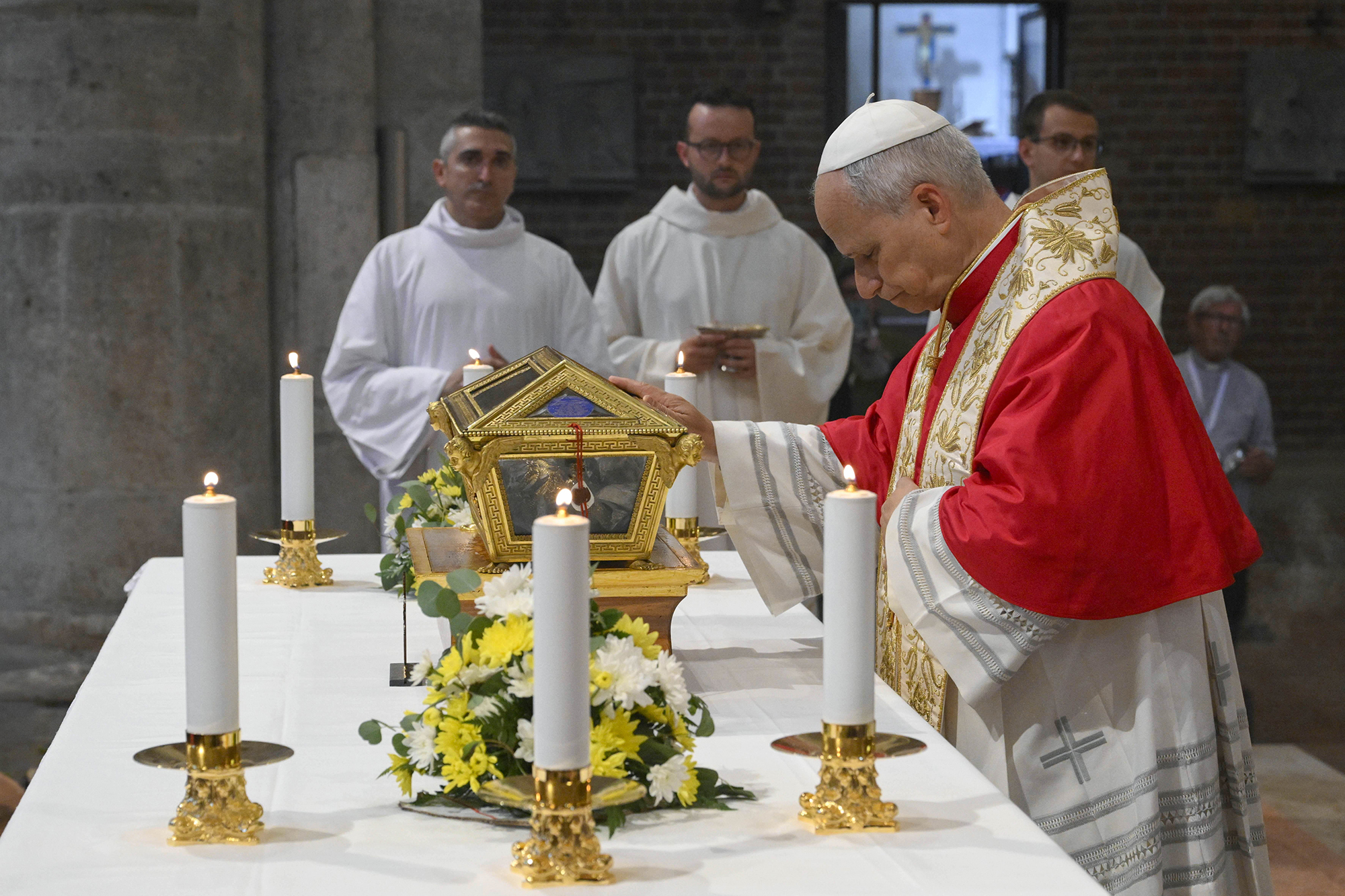
PAVIA, Italy — Pope Leo XIV knelt in prayer at the tomb of St. Augustine on June 20, returning to the basilica where he once guided the late Pope Benedict XVI as the leader of the Augustinian order, only this time as the first Augustinian pope in history.
The visit to the Basilica of San Pietro in Ciel d’Oro was a highlight of the pope’s daylong pastoral visit to the northern Italian city of Pavia, where St. Augustine’s remains have rested since the eighth century.
“St. Augustine teaches us to live out what Jesus Christ taught us: to love God and to love our brothers and sisters,” the pope said before entering the basilica.
“Charity toward everyone today is a message from St. Augustine and from Jesus Christ that is very important for the world,” he added. “May we all truly be this sign of love and charity in the world. May we know how to live out forgiveness, reconciliation and peace.”
After processing into the basilica with fellow members of the Augustinian Order, Pope Leo knelt in prayer in front of the final resting place of the fifth-century bishop and theologian.
“The figure of St. Augustine shines with a precious light,” the pope said, citing St. Augustine’s own words, “Do not go outside yourself; return to within yourself; truth dwells in the inner man.”
That inward turn, the pope said, speaks directly to a restlessness in the world today, particularly among the young.
The pope urged those present to accompany others toward faith by keeping Jesus at the center of their witness. “We must proclaim the heart of the Gospel — that is, Jesus — who, through His incarnation, death and resurrection, reveals to us the mystery of God and, at the same time, the mystery that is ourselves,” he said.
‘God will always be present’
Pope Leo traveled by helicopter from Vatican City to Pavia, arriving after 2:30 p.m. He began his visit with a stop at the National Center for Oncological Hadrontherapy, where he met children undergoing cancer treatment and prayed the Lord’s Prayer with them.
“God does not want anyone to suffer,” he told the families, adding that God “will always be present; even when we are too weak, He sends us angels.”
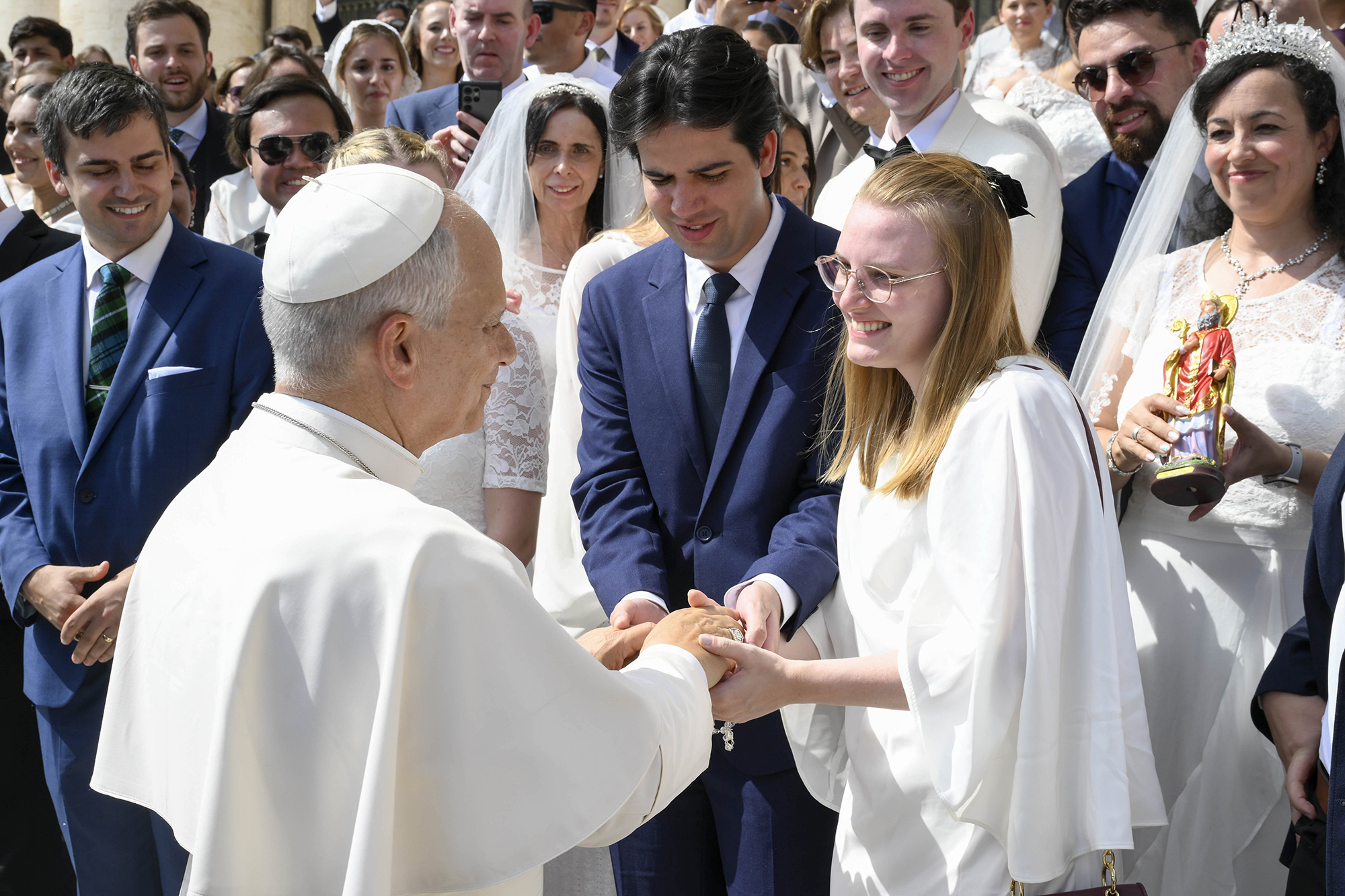
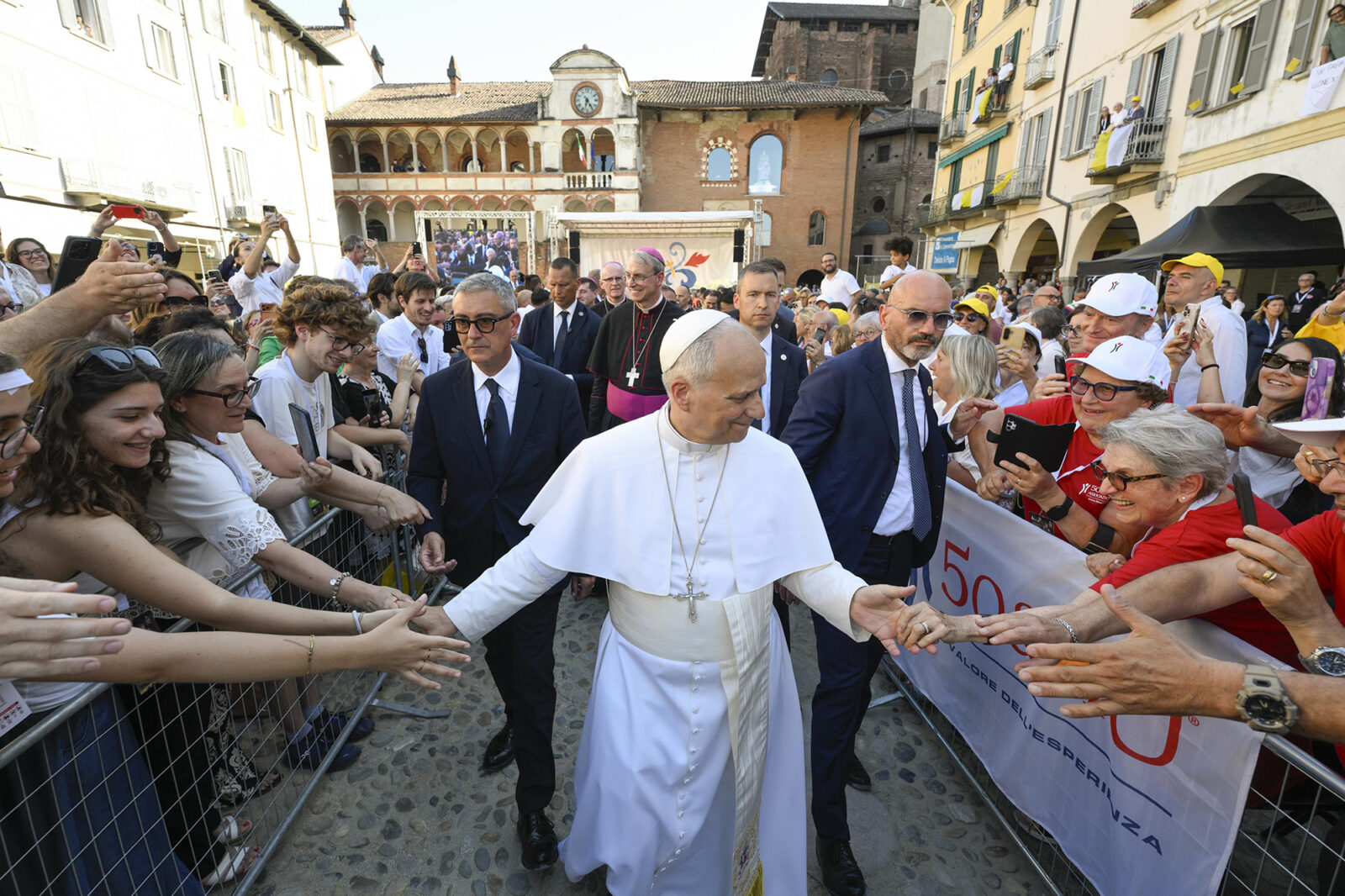
The pope also spent time greeting people with physical and intellectual disabilities, who waited for the pope outside of the basilica after his prayer at St. Augustine’s tomb.
Pope calls for more missionaries like Cabrini
Pope Leo venerated a relic of the heart of St. Frances Xavier Cabrini, the first U.S. citizen ever canonized a saint, during a visit June 20 to her hometown in northern Italy, saying that her missionary devotion to migrants speaks directly to the challenges of today’s world.
“I am here to pay tribute to Mother Cabrini, patroness of migrants and the first saint of the United States of America, who was born here in Sant’Angelo Lodigiano in 1850 and died in Chicago, my hometown, in 1917,” Pope Leo said inside the Parish of Sts. Anthony Abbot and Frances Cabrini. “When I learned that Sant’Angelo Lodigiano is just a few kilometers from Pavia, I immediately thought I should take this opportunity … and here I am.”
Inside the church, Pope Leo prayed before the relic of Mother Cabrini’s heart, brought from the saint’s motherhouse in nearby Codogno, and addressed those gathered there.
The pope recalled how Mother Cabrini, a missionary nun who dreamed of serving in China, was instead directed by Pope Leo XIII to take her religious institute’s mission to the U.S. “Not to the East, but to the West,” he said, quoting Pope Leo XII’s instruction to serve the thousands of Italian immigrants arriving in the U.S. at the time.
Pope Leo XIV urged young people to get to know Mother Cabrini through her own words. “Read her writings, filled with passion for Jesus and for the mission; her letters, her travel journals and the notes from her retreats,” he said.
“Anyone who gets to know Mother Cabrini is captivated by her,” Pope Leo added. “She was immersed in the love of the heart of Christ, and this gave her an extraordinary capacity for work and strength of spirit.”
The pope pointed to how Mother Cabrini’s missionary work was rooted in her devotion to the Sacred Heart and animated by the motto she chose for her institute, drawn from St. Paul: “I can do all things through Him who strengthens me” (Phil 4:13).
Pope Leo also asked people to consider how Mother Cabrini’s missionary spirit might speak to the present moment, when he said migration has “entered a different phase, certainly more complex, yet no less capable of challenging the Church.” He recalled the late Pope Francis, the son of Italian immigrants, had made care for migrants a defining priority of his pontificate.
Mother Cabrini, born Maria Francesca Cabrini in Sant’Angelo Lodigiano on July 15, 1850, was the youngest of 10 children and was drawn to religious life from an early age after hearing stories of missionaries. She arrived in New York City in 1889 with a small group of sisters, overcoming early setbacks to establish catechism programs, schools and orphanages for Italian immigrants. Her work eventually took her across Europe, Central and South America and the United States — crossing the Atlantic Ocean more than 20 times and founding 67 institutions, including schools, hospitals and orphanages, before her death in Chicago in 1917. She was canonized in 1946.
Mother Cabrini arrived in Chicago in 1899 and founded a hospital and a Catholic school serving the city’s largely immigrant poor.