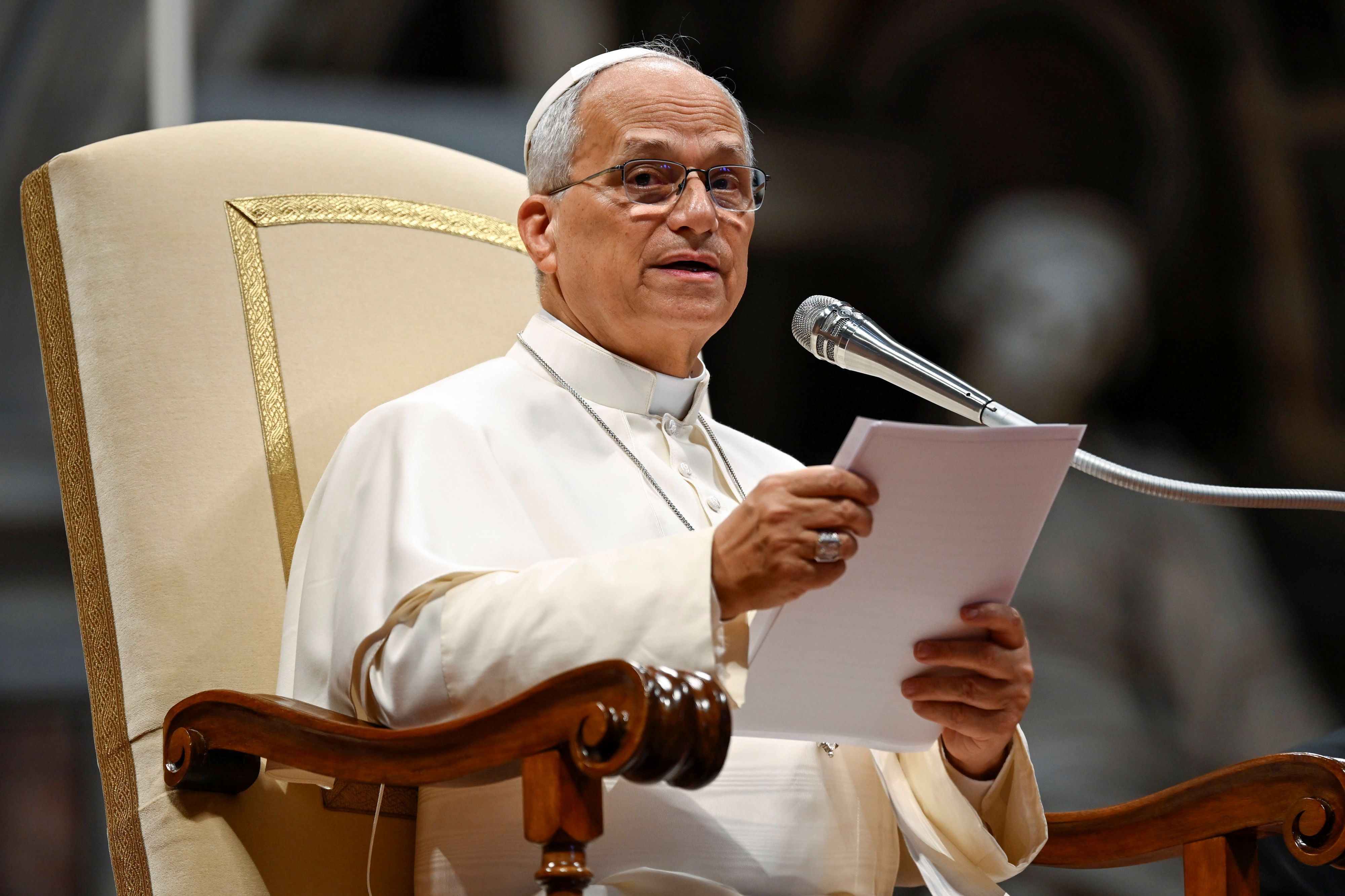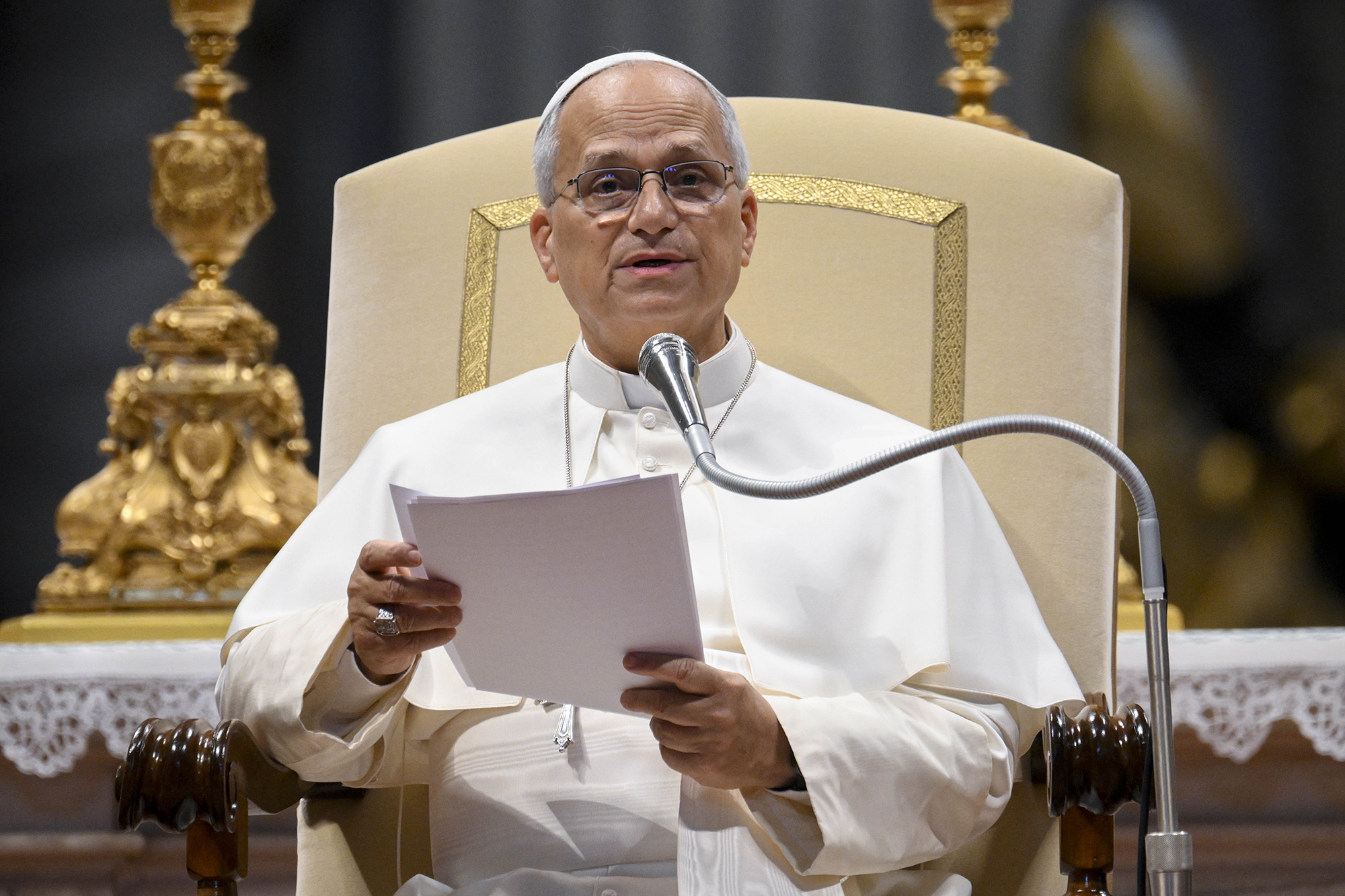
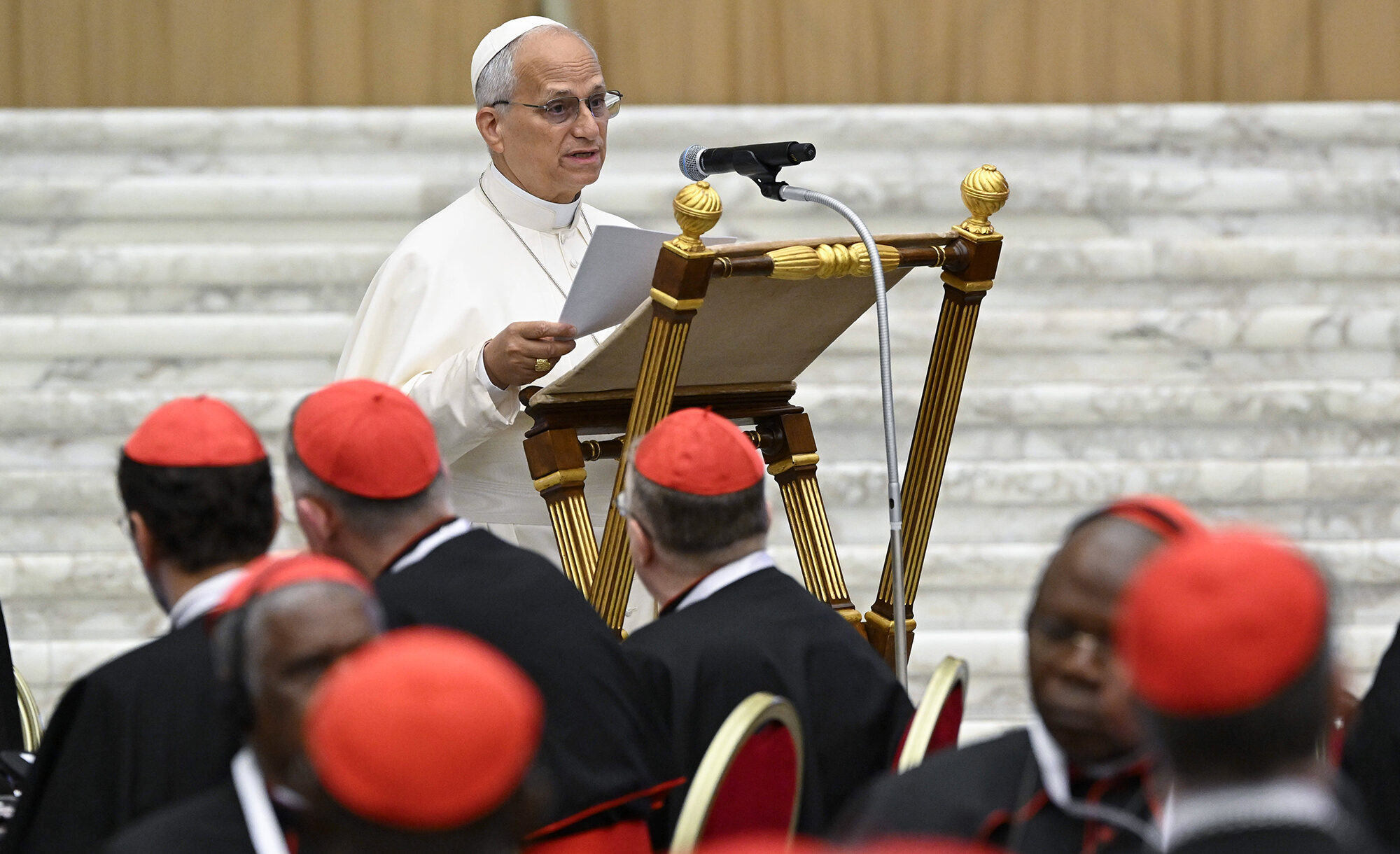
Pope Leo XIV called for an extraordinary consistory June 26-27 at the Vatican to respond to growing global polarization
VATICAN CITY — Cardinals from around the world underlined the need for the Catholic Church to respond to growing global polarization and social fragmentation and to strongly proclaim the Gospel.
They spoke during a June 26-27 extraordinary consistory at the Vatican during which Pope Leo XIV urged the cardinals to reject war as “never blessed by God” and to embrace a style of listening, collaboration and synodality in the Church’s mission.
According to the Vatican press office’s summary of the closed-door gathering, discussions centered on the “deep fractures” shaping today’s world and their disproportionate impact on the poor, marginalized people and young people.
The cardinals also reflected on the challenges posed by artificial intelligence, emphasizing the importance of recognizing human limits in order to safeguard the dignity of work.
Many participants said the pursuit of the common good is rooted in faith, which enables people to cross boundaries and foster solidarity with the poor. This charity, the Vatican summary said, can serve as an “antidote to individualism.”
Celebrating Mass in St. Peter’s Basilica before the working sessions began June 26, Pope Leo said the unity of the human family “takes precedence over individual peoples and states” and described peace as “a duty of justice”
“Therefore, war is never worthy of humanity, and it is never blessed by God, because, even if we are equipped with high-tech weapons, the Creator has endowed us with intelligence and free will to resolve conflicts as human beings and not as beasts,” he said in his homily.
Some of the items on the consistory agenda focused on the Synod on Synodality, Pope Leo’s first encyclical, “Magnifica Humanitas,” and the Church’s mission in a rapidly changing world.
The remarks further developed one of the central themes of the encyclical, released in May, in which the pope called the traditional just-war theory “now outdated” in an age shaped by advanced weapons systems and artificial intelligence.
Developed through the writings of St. Augustine and St. Thomas Aquinas, just-war theory has long held that military force can be morally justified only under strict conditions, including self-defense, legitimate authority, proportionality and the exhaustion of peaceful alternatives. The teaching has resurfaced in recent debates surrounding conflicts in Ukraine and the Middle East.
Quoting his encyclical, Pope Leo said the Church must continue working toward a “civilization of love,” offering an alternative to ideological division, violence and instability because “the Church is never partial, since she is for everyone.”
Following the closed-door morning session, the Vatican released a summary, saying that each of the 10 working groups of cardinals spoke of “suffering experienced by men and women living through this period of profound social transformation.”
A consistent theme throughout the first day was the growing polarization around the world and a deepening distrust of institutions and democracy, trends that have fueled political tension and violence and have been exacerbated by the spread of misinformation. The Vatican summary also said the cardinals spoke of religious violence in many parts of the world, citing the rise of antisemitism, as well as the rise of loneliness.
Editor’s note: Pope Leo will not hold weekly audiences in July.