In the two phone calls, Pope Leo XIV urged a ceasefire and humanitarian cooperation
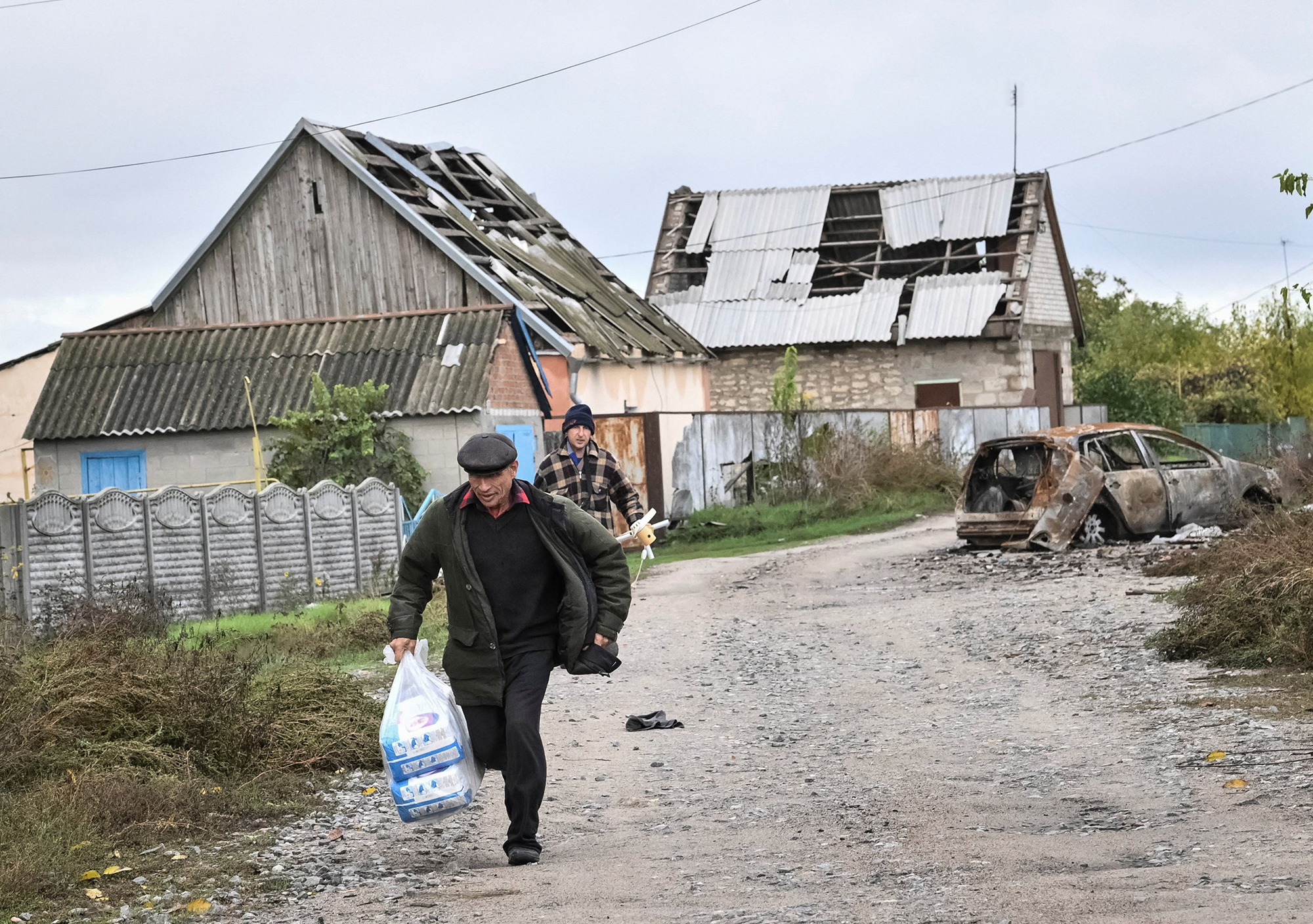
Pope Leo XIV spoke by telephone with Russian President Vladimir Putin on Oct. 16, calling for a ceasefire in that nation’s war on Ukraine and humanitarian aid to Ukrainian civilians starving amid a Russian blockade. On Oct. 19, the pope also spoke by phone with Ukrainian President Volodymyr Zelenskyy, expressing hope that Ukraine and Russia will cooperate on humanitarian aid and evacuations for civilians in the southern Ukrainian city of Oleshky, the Vatican said.
The Holy See Press Office announced that the pope on the phone with Putin “expressed his deep concern about the grave humanitarian situation in the city of Oleshky,” located in Ukraine’s partially occupied Kherson region.
The pope’s call also coincided with his message for World Food Day (Oct. 16), in which he described “regular access to safe, adequate and sufficient food” as “a basic human right” to be safeguarded by nations.”
Oleshky and its surrounding communities are estimated to have more than 6,000 civilians remaining there, including some 200 children, who are “effectively trapped in a ‘gray zone’ near the front line,” the Ukrainian Council of Churches and Religious Organizations (UCCRO) said.
Russian forces have imposed a “humanitarian blockade,” with food supplies last “delivered to the area at the end of May,” the council said.
In addition, Russian officials have repeatedly refused to permit both evacuations and humanitarian aid, Ukraine’s foreign minister Andrii Sybiha said in a Sept. 21 Facebook post.
Sybiha said in his post that “chilling accounts are emerging” from Oleshky of residents who “scavenge for food scraps and gather grass, as there is simply no other food available.”
According to Reuters, the Kremlin released an Oct. 16 statement regarding the call between Pope Leo and Putin, with the exchange described as taking place “in a constructive atmosphere of mutual respect.”
Putin, who wished the pope a speedy recovery, “thanked the pope for his willingness” to assist in “resolving the conflict” and “for his humanitarian efforts,” the Kremlin said.
Putin also provided “a detailed explanation” concerning what he called Kyiv’s “responsibility” for the humanitarian situation in Oleshky, while expressing “support” for the Vatican’s aim to facilitate civilian safety and the delivery of essential aid, the Kremlin said.
Over the past several months, the Washington-based Institute for the Study of War has issued multiple warnings of a “dire” and “Russian-manufactured humanitarian crisis” in Oleshky.
In its Oct. 2 assessment, ISW noted Oleshky has not received any food deliveries since May 26. Drone attacks, mines and Russian occupation forces have prevented the remaining residents from fleeing.
International humanitarian law, which governs armed conflict, mandates “rapid and unimpeded passage of humanitarian relief for civilians in need,” according to the International Committee of the Red Cross.
The Holy See Press Office said Pope Leo “called for a ceasefire to allow the delivery of food and medical assistance, and the voluntary and safe evacuation of the civilian population.”
In an Oct. 19 statement, the Vatican press office said the conversation with Ukrainian President Zelenskyy centered on “the grave situation” in Oleshky, which has been under Russian military occupation since 2022.
“His Holiness expressed the hope that cooperation between both parties will allow for the delivery of food and medical aid, and for the voluntary and safe evacuation of the civilian population,” the statement read.
The pope also reaffirmed the Holy See’s commitment “to promoting dialogue and peace.”
In a separate statement published Oct. 19 by the Ukrainian president’s office, Zelenskyy said he wished the pope a “full and speedy recovery following surgery.”
“We are grateful that even during this difficult time for him personally, His Holiness remembers Ukraine and prays for our people,” Zelenskyy said.
According to his office, Zelenskyy gave the pope a detailed briefing on Russian strikes against Ukrainian cities, and the two “discussed the humanitarian catastrophe” in Oleshky.
Zelenskyy, the statement read, “noted that Ukraine is working to help our people there and is preparing the necessary decisions. His Holiness informed him about contacts with the Russian side on this matter.”
In a message marking the war’s 244th week, Major Archbishop Sviatoslav Shevchuk of Kyiv-Halych, head of the Ukrainian Greek Catholic Church, condemned Russia’s attacks against Ukraine’s energy infrastructure.
According to the Reuters news agency, Trump announced an energy ceasefire Oct. 11; however, neither Russia nor Ukraine confirmed the agreement.
Despite the so-called truce, Russia has continued to conduct attacks on Ukraine’s energy grid, which left 600,000 people without electricity, Major Archbishop Shevchuk wrote.
The head of the Ukrainian Greek Catholic Church said negotiations shouldn’t ignore the human cost and that any agreements must be assessed by “the extent to which they alleviate the suffering” of the people and not by “the political or economic benefits they yield or the high-profile political statements they generate.”