Pope Leo visited Paris, Lourdes and Metz on a four-day apostolic visit to France
On the first official papal state visit to France in 18 years, Pope Leo XIV stepped into one of the country’s perpetual underlying tensions: the place of religion in a republic whose modern political identity was partly forged through separation from the Catholic Church.
Throughout the Paris leg of his Sept. 25-28 apostolic journey, Pope Leo argued that France’s deeply rooted tradition of secularism, or “laïcité,” need not exclude religion from public life. Instead, he said religious institutions and the state can work together in defense of human dignity and the common good.
“An authentic secularity, then, consists not in excluding religion from the public sphere or from education, but in striving to ensure that the state and religious institutions maintain dialogue and join forces in the service of the common good,” he told government officials, civil society leaders and the diplomatic corps at the Élysée Palace Sept. 25.
French President Emmanuel Macron offered a similar interpretation of the country’s secular tradition in welcoming the pope at the Élysée Palace. French “laïcité,” he said, is “in no way the negation of religion,” and guarantees the freedom to believe or not believe both privately and publicly.
He told Pope Leo that his message would appeal “to the conscience of all French people.”
The excitement for the pope’s arrival was apparent at the Stade de France, where an estimated 80,000 young people gathered for a prayer vigil with the pope, featuring music, performances on the lives of French saints and fireworks.
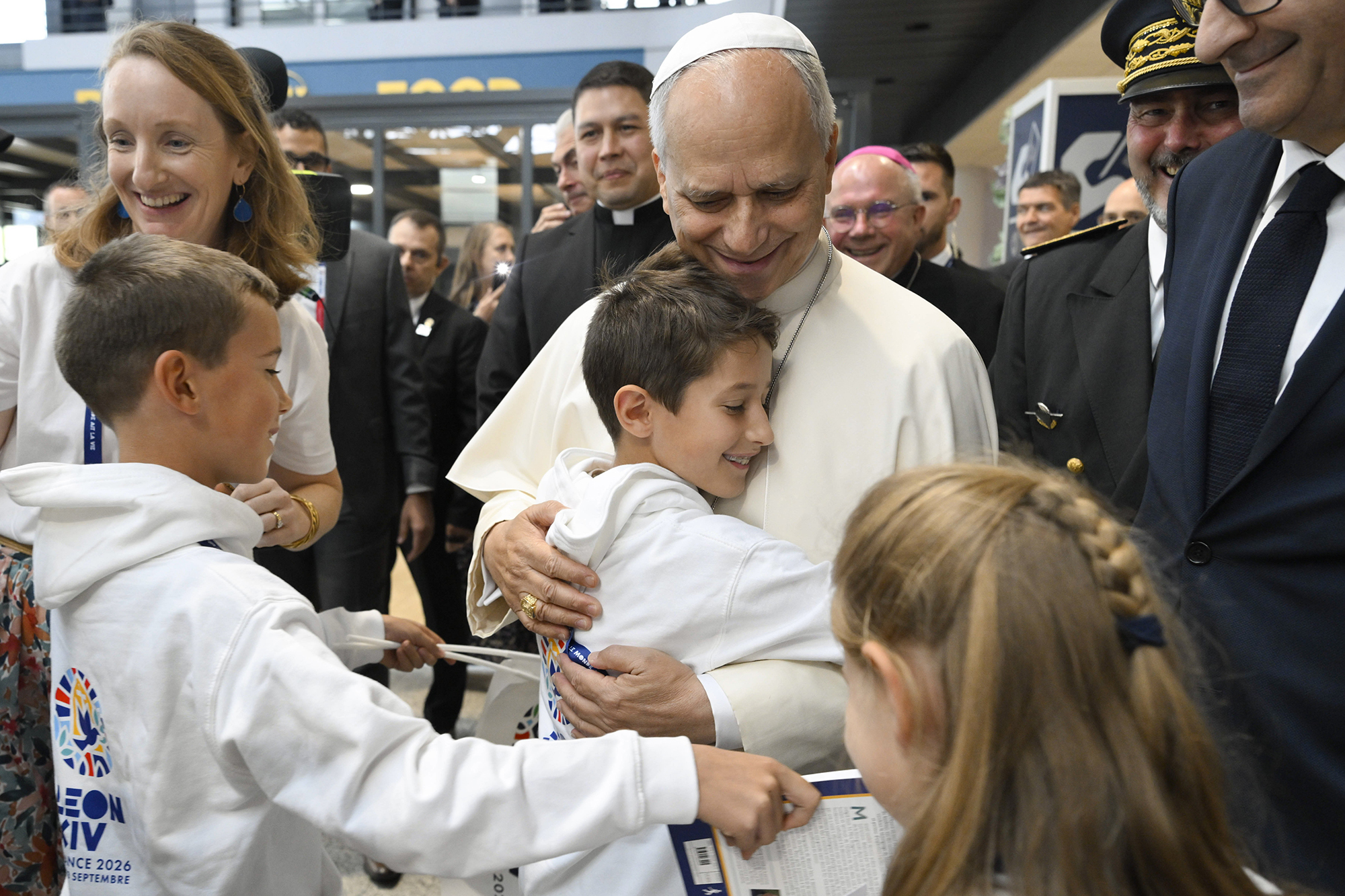
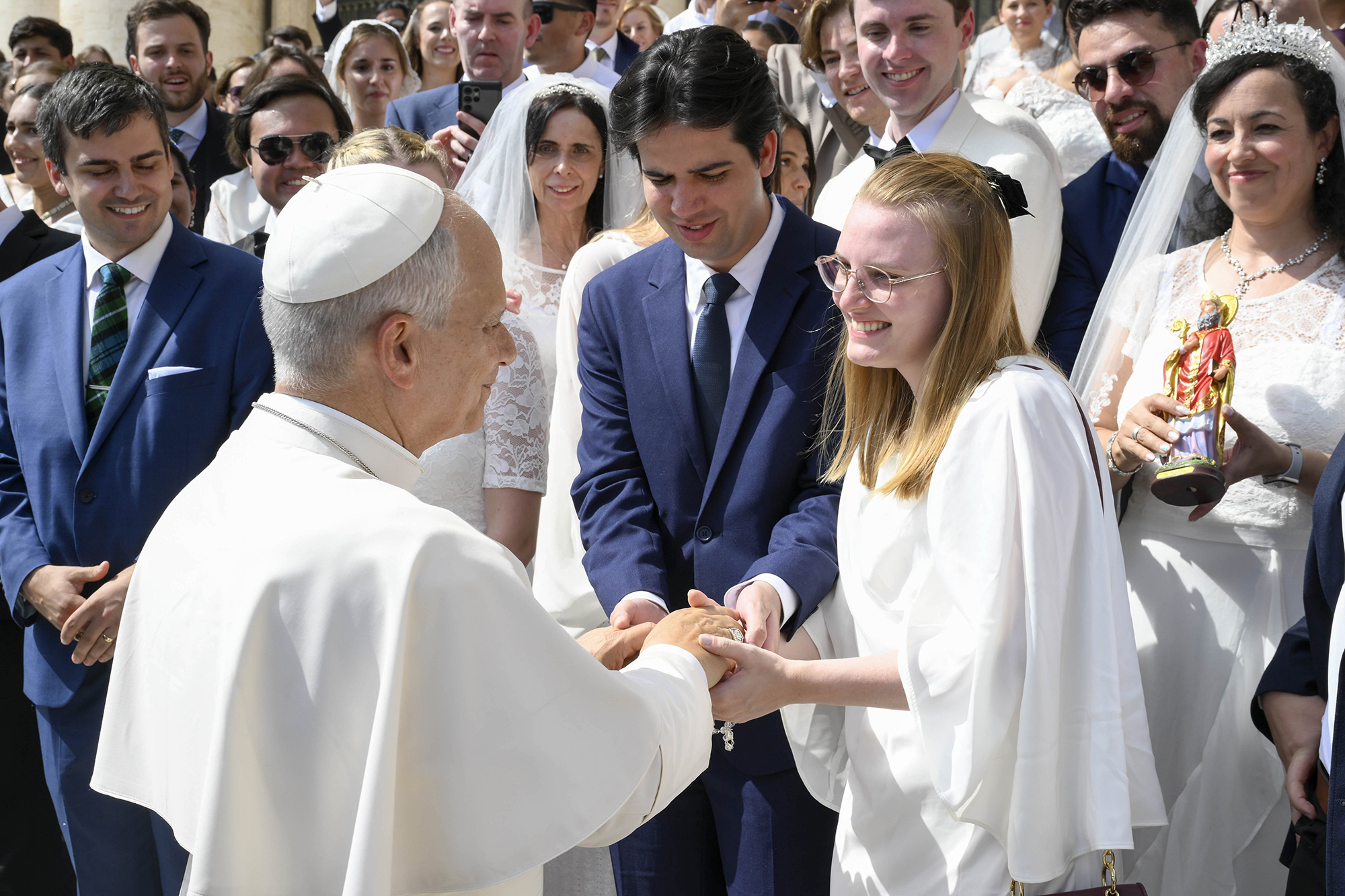
A child welcomed Pope Leo XIV to Metz-Nancy-Lorraine International Airport on Sept. 28 during his apostolic journey to France.
Addressing the young people, Pope Leo emphasized that a stronger public presence for faith should not mean confrontation.
“Our battle is not a battle against others. It does not employ the weapons of violence, contempt or oppression,” he said. “Our only weapon is that of self-giving love.”
Throughout his trip, the pope repeatedly pointed to new technology as one area in which religious and ethical voices should contribute to public debate.
The pope made it clear that even as technology progresses, there is still an important role for religion in society.
Pope Leo carried the same argument to the United Nations Educational, Scientific and Cultural Organization (UNESCO) later Sept. 25, saying technological and scientific development alone cannot answer humanity’s deepest questions.
“No education can be considered complete if it fails to address the question of life’s meaning,” he told representatives of UNESCO.
Religious traditions, he said, have a “culturally necessary and irreplaceable role” because they grapple with questions about the origin and purpose of human life.
On Sept. 26, enormous crowds estimated at more than 700,000 filled the Place de la Concorde and stretched along the 1.2-mile Avenue of Champs-Élysées for Pope Leo’s final Mass in Paris.
In his homily, the pope reassured the faithful that the search for God, truth and meaning still had a place in contemporary France.
“You long to rediscover a horizon filled with light and to build a renewed nation upon roots nourished by faith,” he said. “You are called to bring hope wherever discouragement and spiritual dryness prevail.”
Human frailty can never diminish human dignity
At a shrine where the sick and disabled are prioritized, Pope Leo XIV said human frailty can never diminish a person’s dignity, bringing one of the central messages of his visit to France, where the government recently legalized assisted dying.
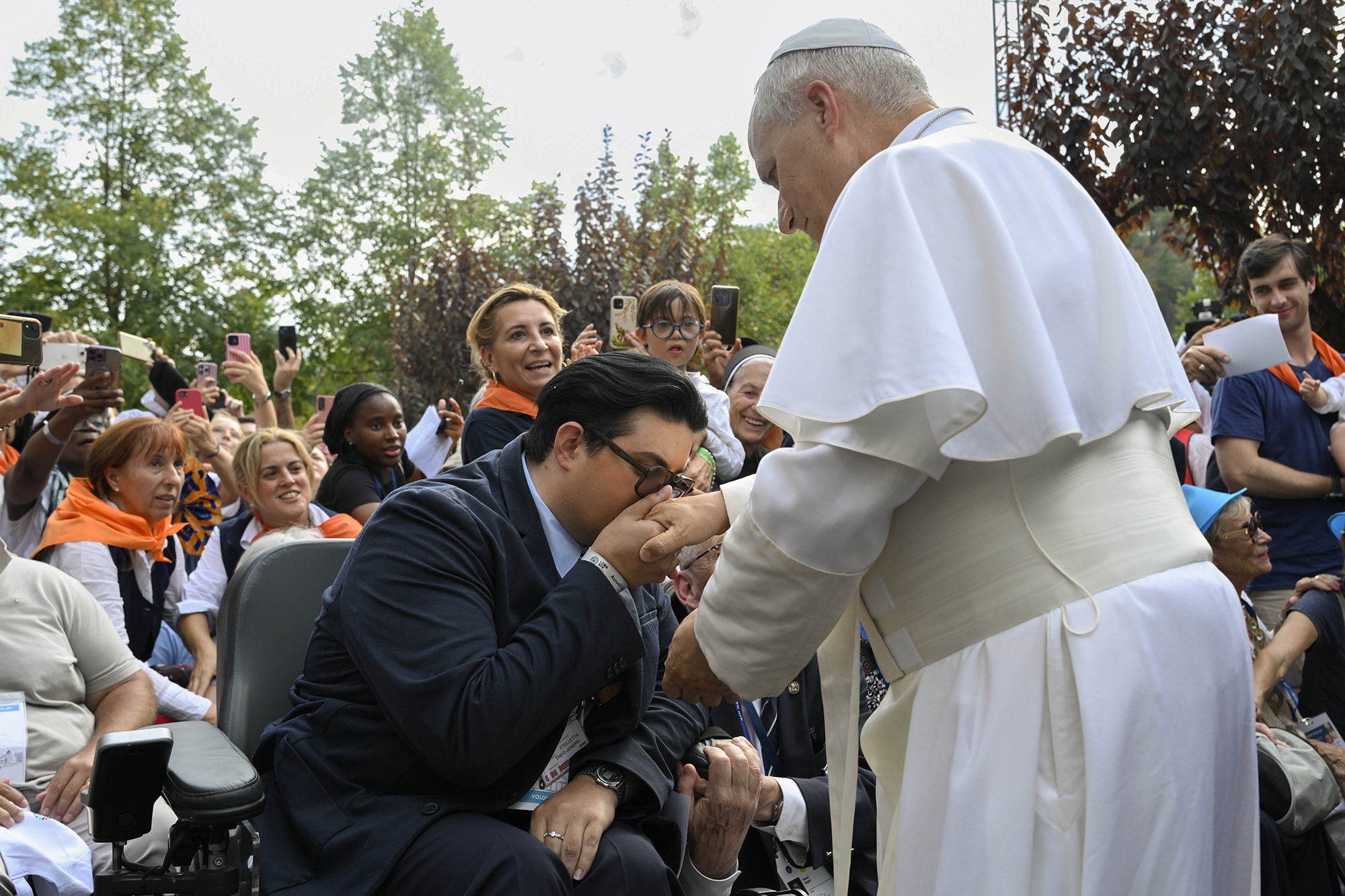
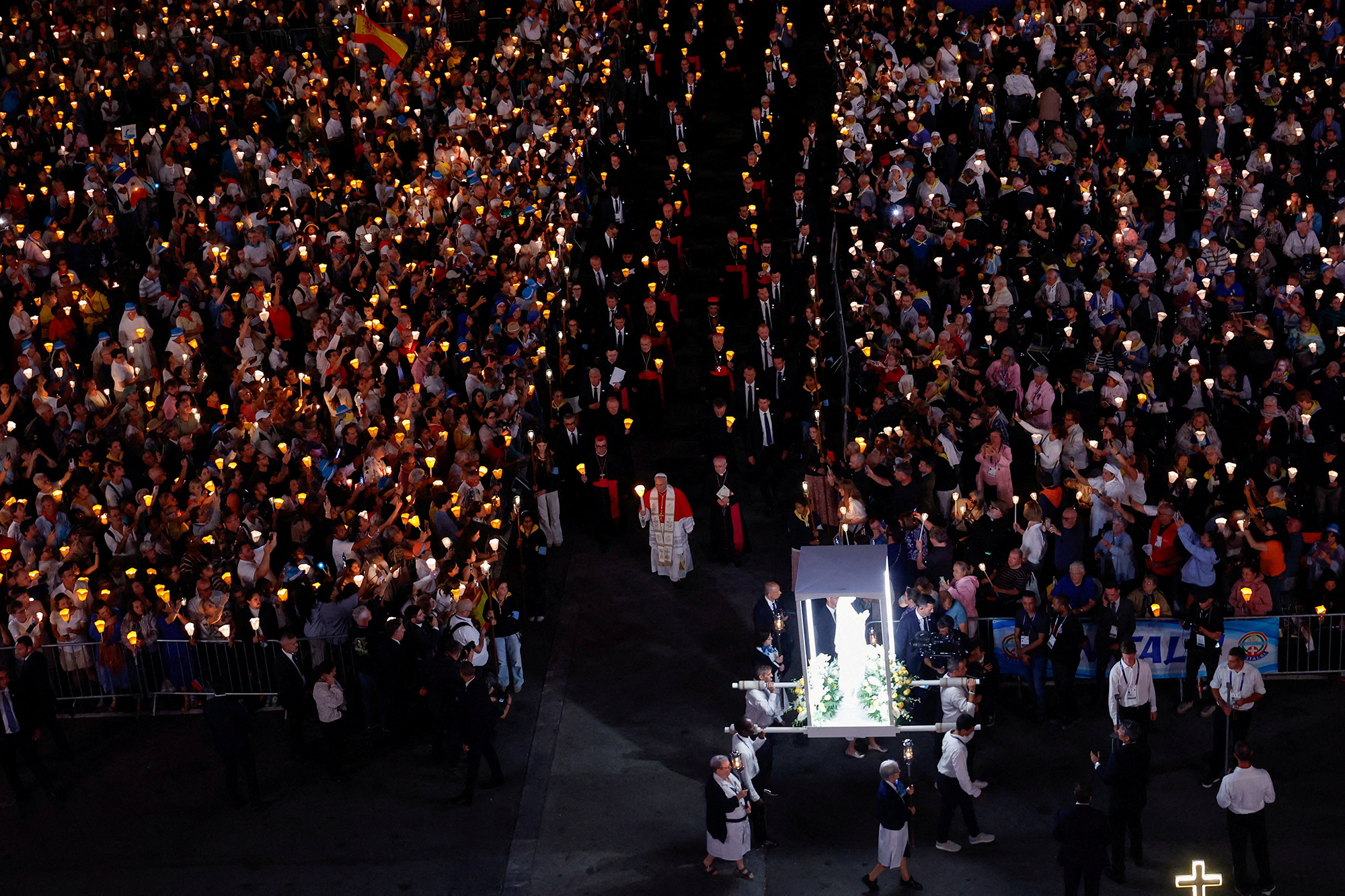
“Here, no one is turned away due to their frailty,” the pope told an estimated 150,000 pilgrims gathered for Mass at the Shrine of Our Lady of Lourdes Sept. 27.
“Your crutches, your wheelchairs and your hidden tears are not obstacles; instead, they are the very place where you are fully respected and welcomed, and where you can experience a transforming encounter with the infinite love of God.”
For nearly 170 years, Lourdes has been associated with healing following apparitions of Mary reported by St. Bernadette Soubirous in 1858. The sanctuary today draws up to 3 million pilgrims a year, including large numbers of people who are sick or disabled.
During a torchlight procession and prayer at the shrine, Pope Leo said the light of Christ never abandons the faithful, even when their lives are marked by trials.
“Those who are sick are privileged witnesses to this transfiguration of our lives through faith and love of God and neighbor,” he said.
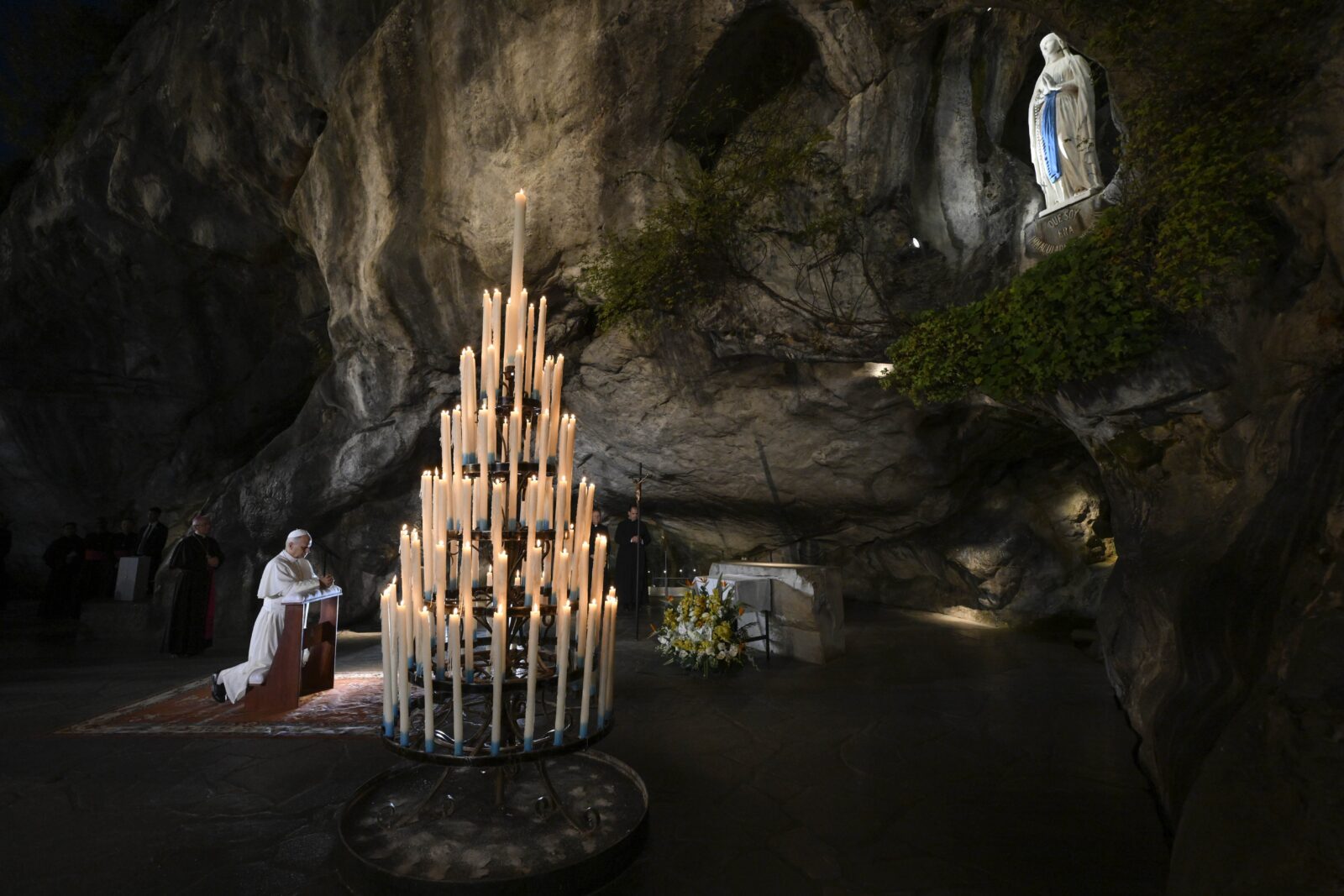
Pope Leo XIV knelt in the Grotto of Apparitions at the Sanctuary of Our Lady of Lourdes, France on Sept. 26.
His words carried particular weight in France, where assisted dying has been the subject of a yearslong political debate and where a law establishing a “right to aid in dying” was approved in August.
The reality of abuse also hung over Pope Leo’s visit to Lourdes.
On his final day in Lourdes, the pope met with seven victims of abuse by members of the French Church and clergy. In the two-hour meeting, he privately spoke with each victim and listened to each of their stories, a communique from the Vatican press office said.
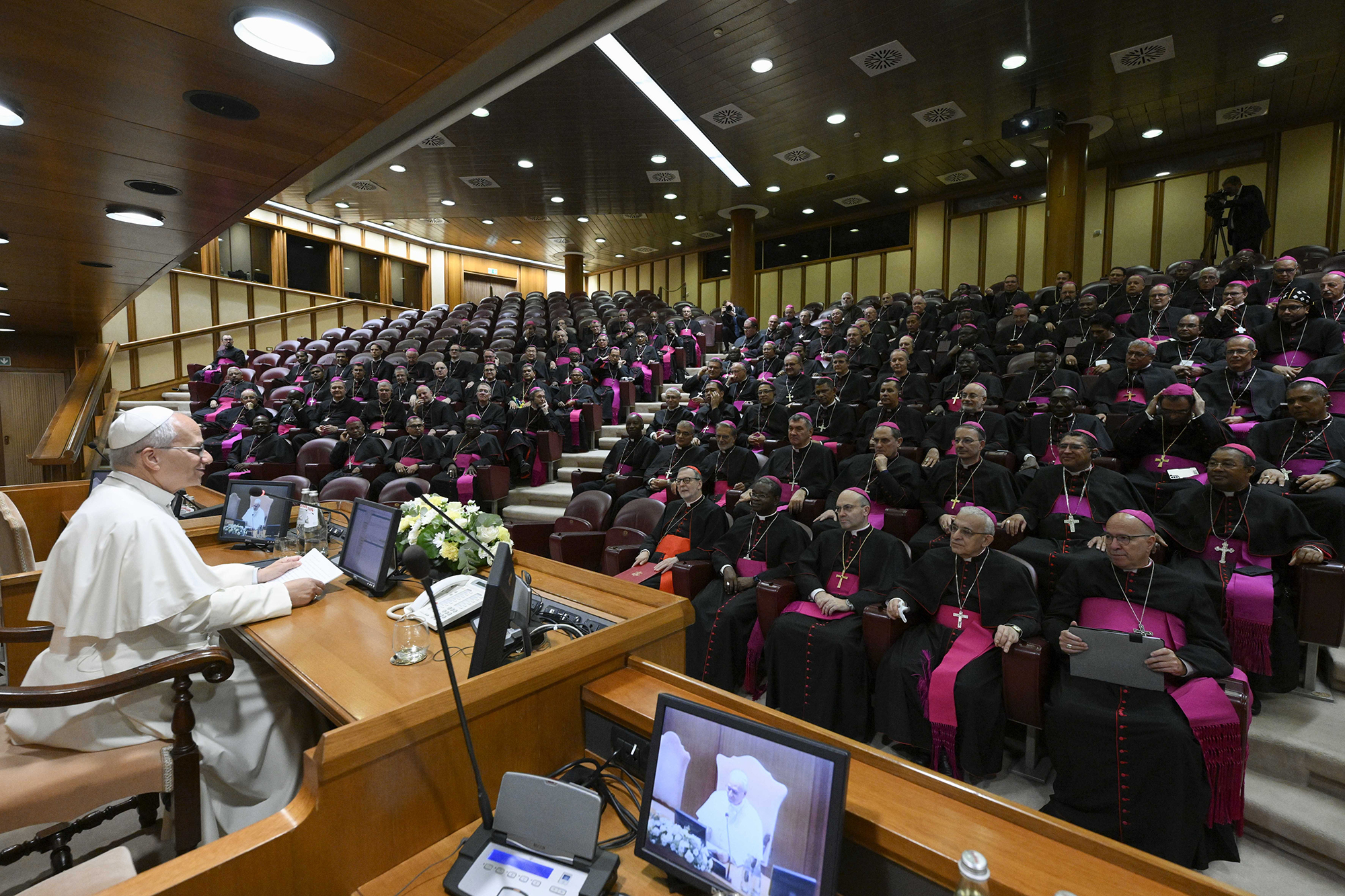
In a meeting with the country’s bishops, Pope Leo said they have “taken courageous measures to respond through listening, the search for truth, justice, forgiveness and making amends, and through a firm commitment to a culture of prevention and protection against these crimes.”
However, “you must continue along the path you have begun, maintaining the greatest vigilance,” he told the bishops Sept. 27 at the Shrine of Our Lady of Lourdes. And at the same time, he added, “your clergy need to be supported and encouraged.”
Working toward the ‘disarmament’ of hearts and words
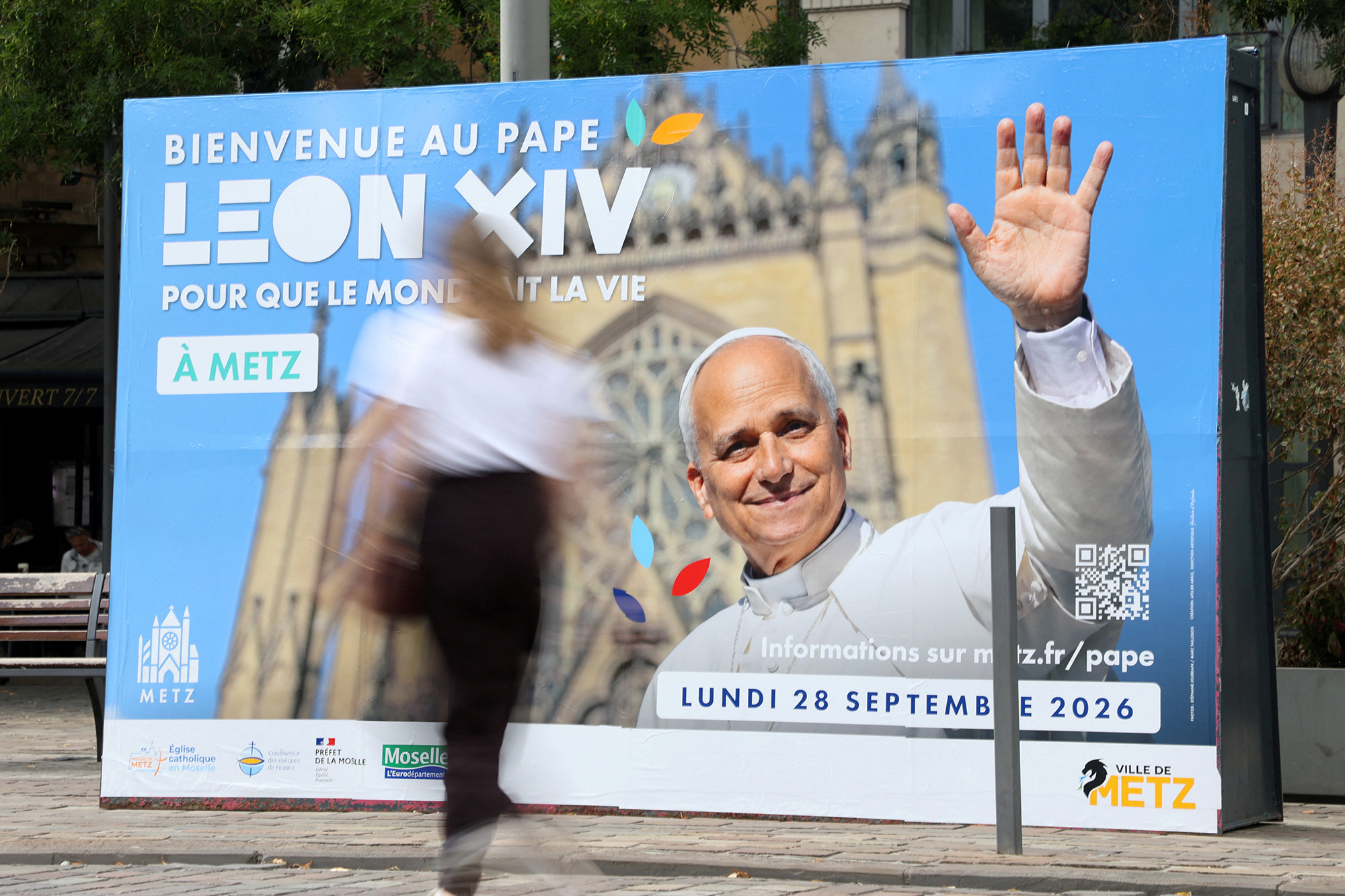
In a French city that changed hands between France and Germany through two world wars, Pope Leo XIV used the final day of his apostolic journey to France to call on Europe to resist a return to nationalism and conflict and recommit itself to cooperation, dialogue and peace.
Speaking Sept. 28 in Metz, a city whose streets and architecture still bear the marks of its fraught Franco-German history, the pope repeatedly invoked Robert Schuman, the French politician and devout Catholic whose efforts to reconcile France and Germany after World War II helped lay the foundations of the European Union.
Pope Leo called Schuman a clear-sighted leader who understood the need to overcome opposition between cultural identities and build multilateral institutions after a war “which showed the depths of the evil that human beings are capable of when they believe that nothing stands in the way of their exercise of power.”
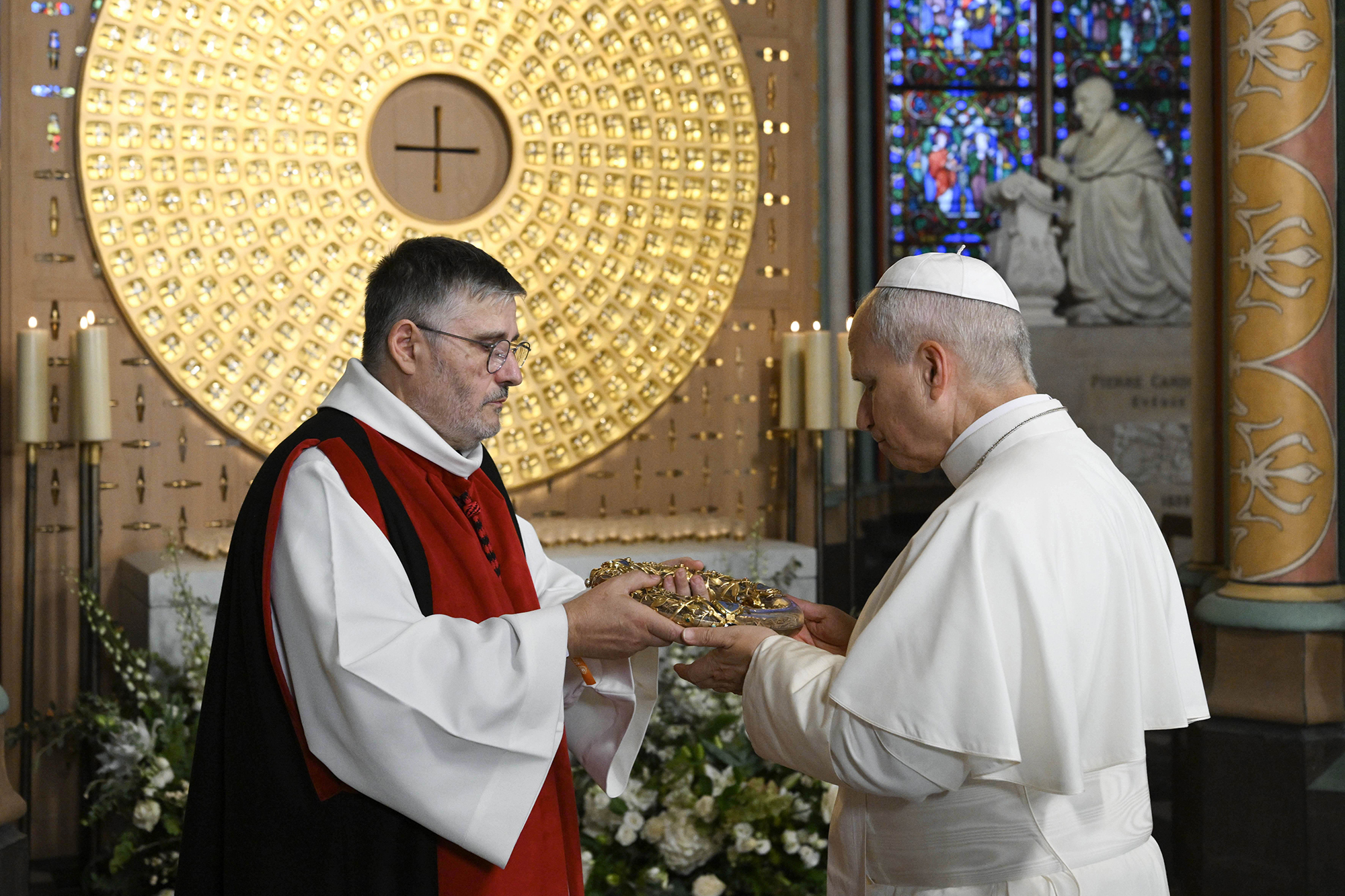
Pope Leo XIV held the relic of Christ’s crown of thorns in a chapel at Notre Dame Cathedral in Paris on Sept. 25. He’s the first pope to visit Notre Dame after it was reopened following a devastating fire in 2019.
“Today, sadly, war has returned, even to Europe: a new ‘senseless slaughter,’ claiming countless civilian lives every day,” the pope said in a speech to French President Emmanuel Macron and political and clerical leaders at the Robert Schuman Conference Center Sept. 28.
International law and multilateral cooperation offer another path, the pope said, speaking in French, especially at a time when relations between people and nations are becoming increasingly “barbares,” that is, “barbaric” or “uncivilized.”
But Pope Leo’s appeal for reconciliation in Metz extended beyond relations between governments.
During an interreligious meeting at the Robert Schuman Conference Center, he said religious discourse must itself work toward the “disarmament” of hearts and words.
“Indeed, to invoke God’s name in order to justify violence or oppression is to profane that name,” he said. “Nothing that disfigures human dignity can claim to be inspired by God.”
Unity, the pope stressed, does not require eliminating differences.
“Our shared responsibility as men and women of faith is to bear witness that, beyond all borders, it is always possible to meet one another, forge friendships and seek peace,” he said.