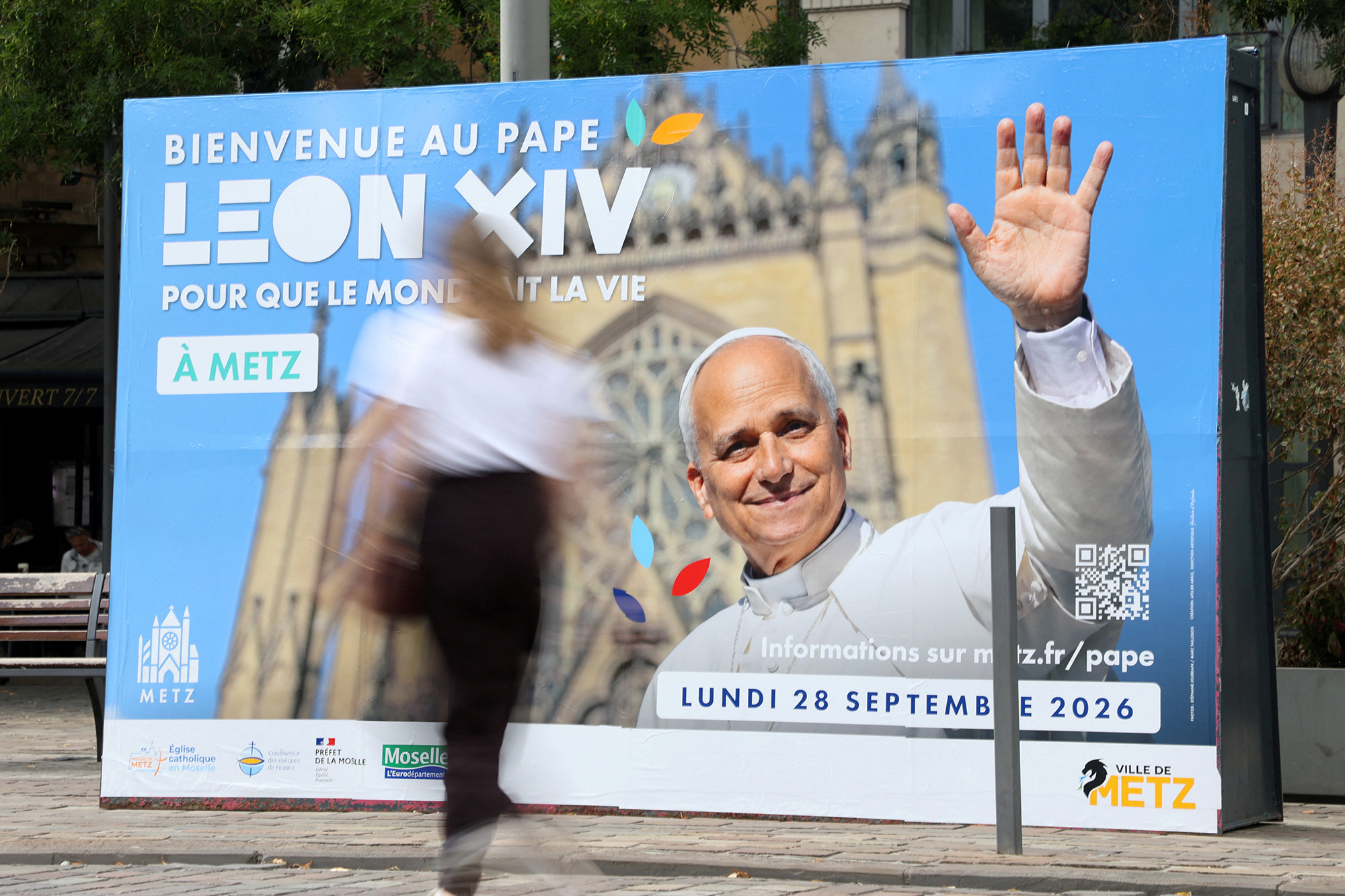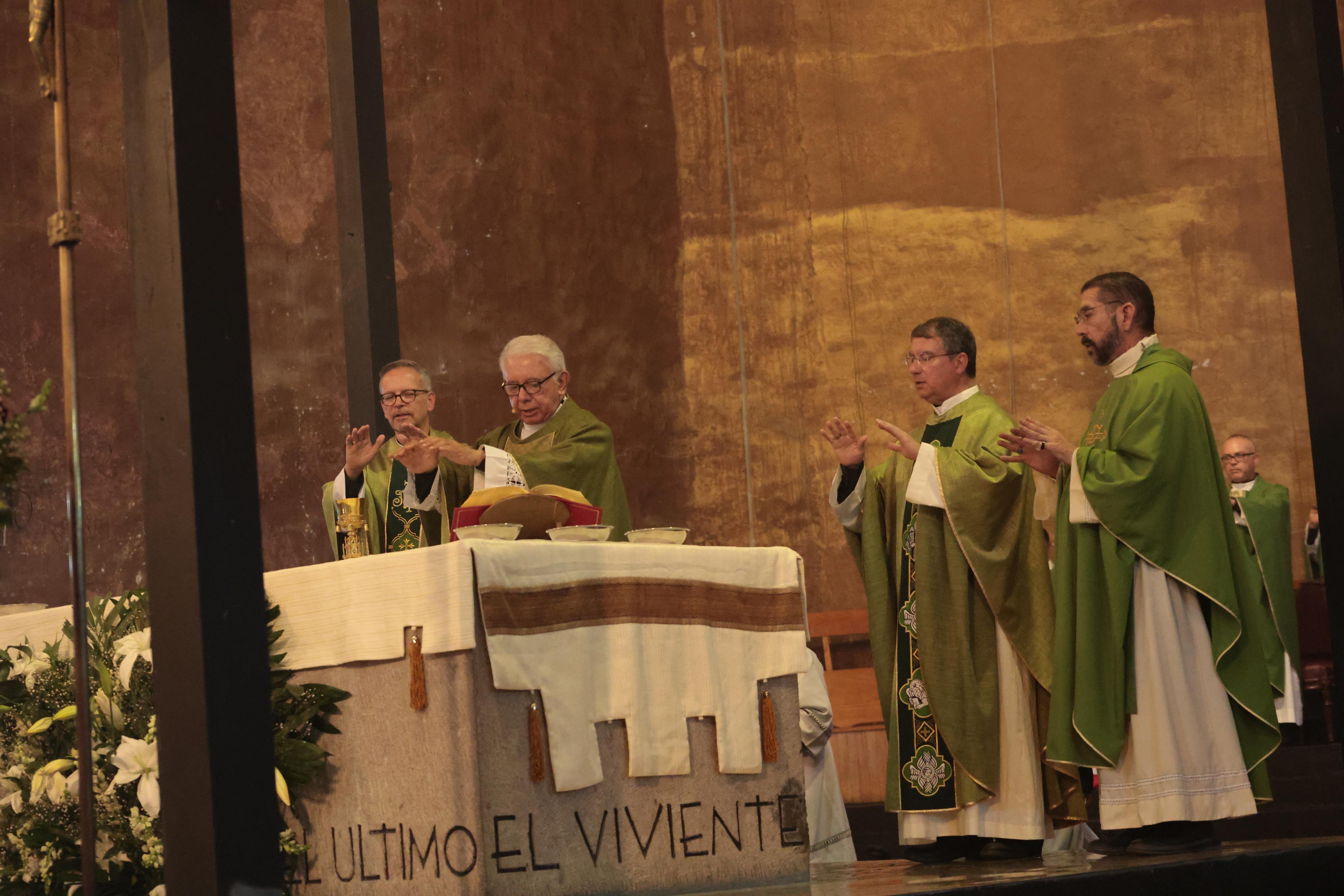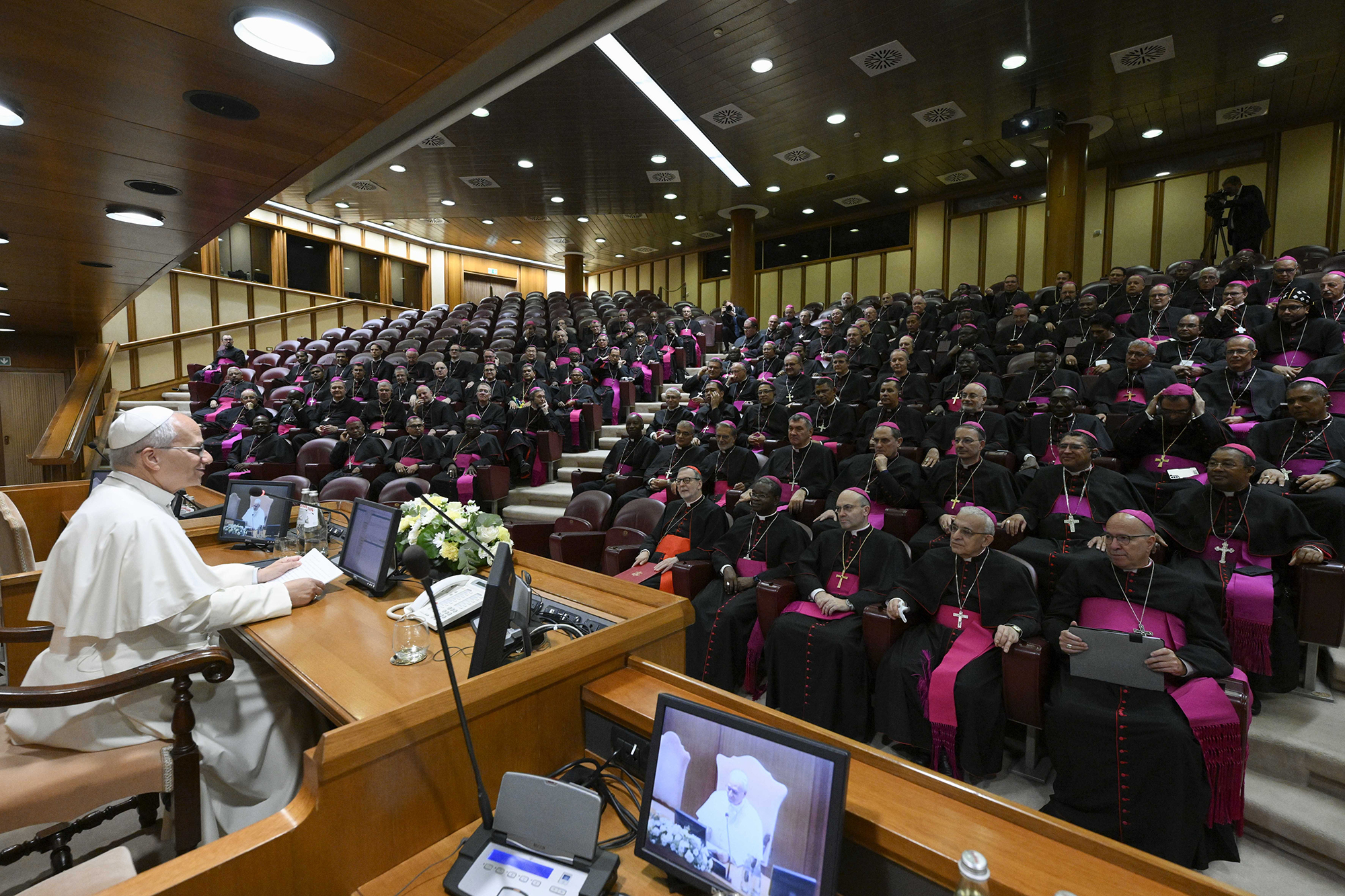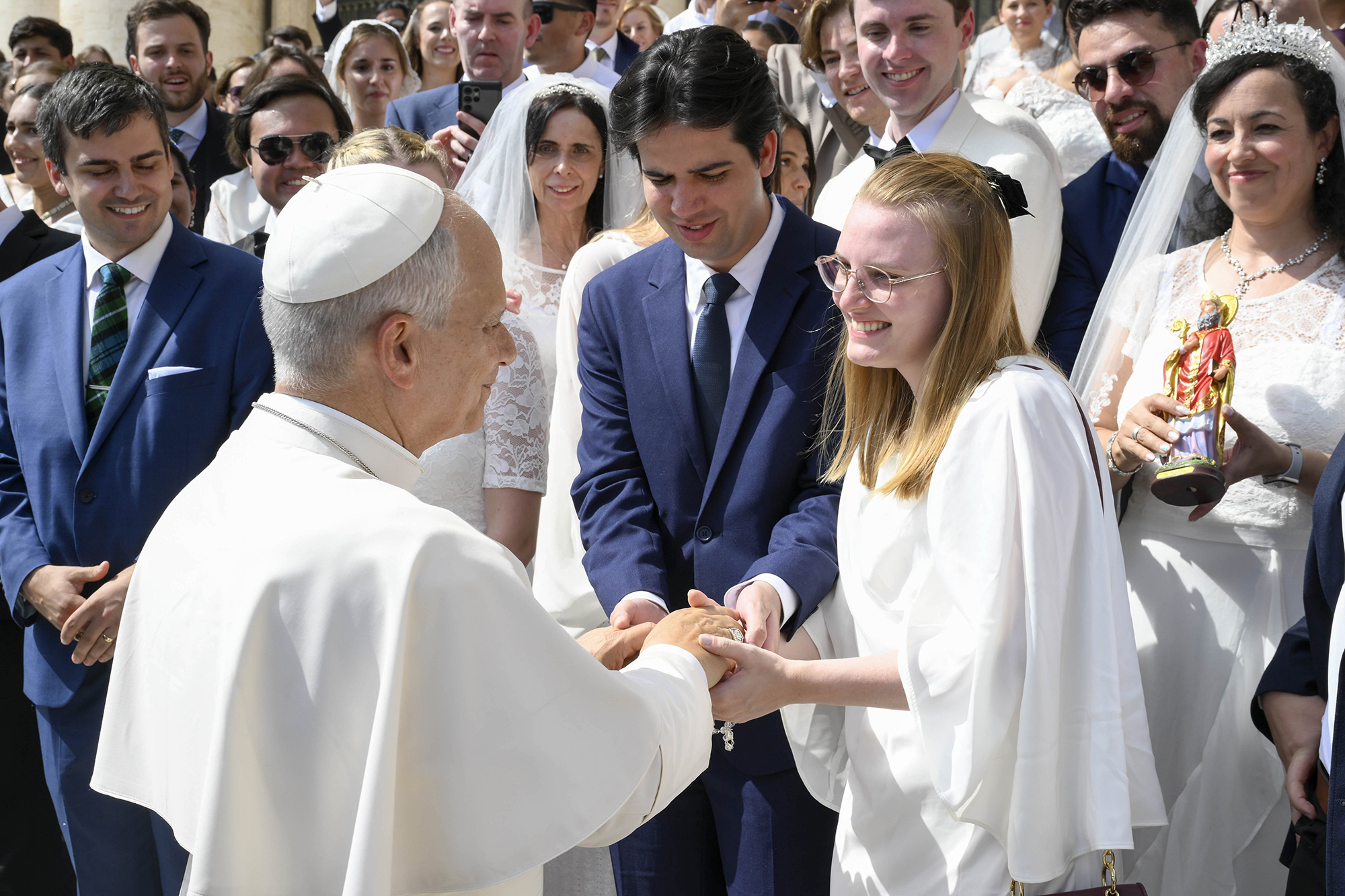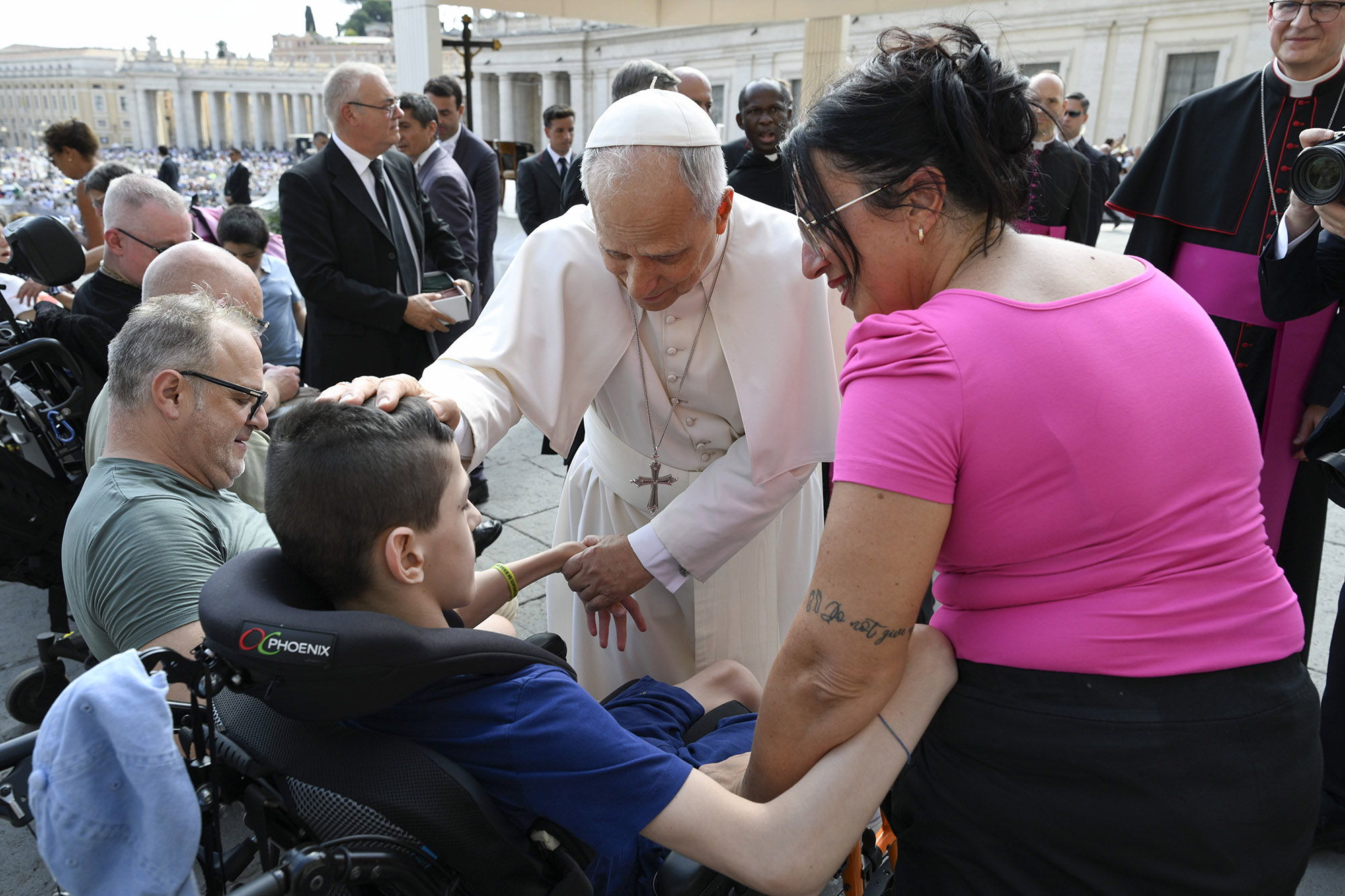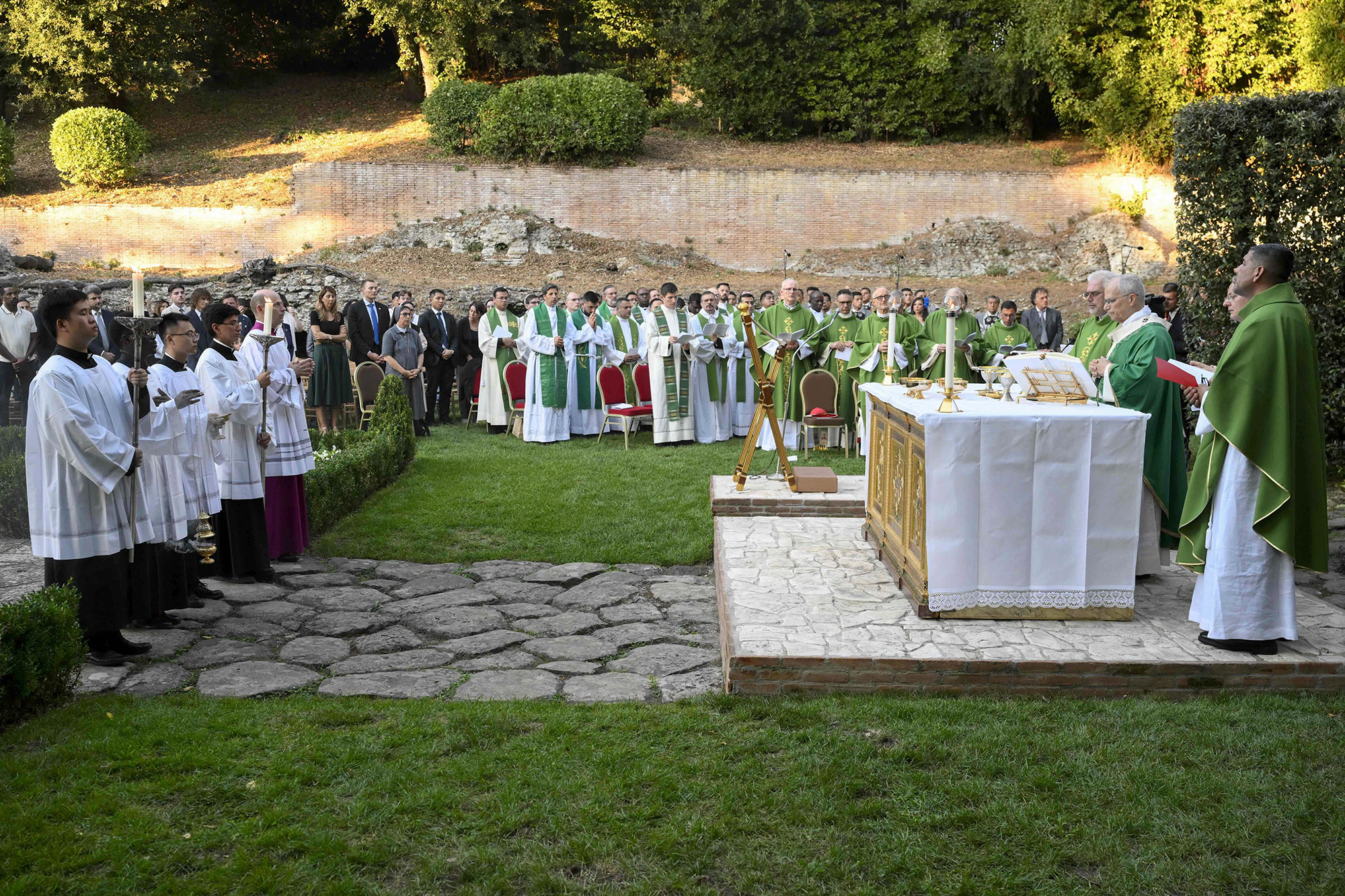
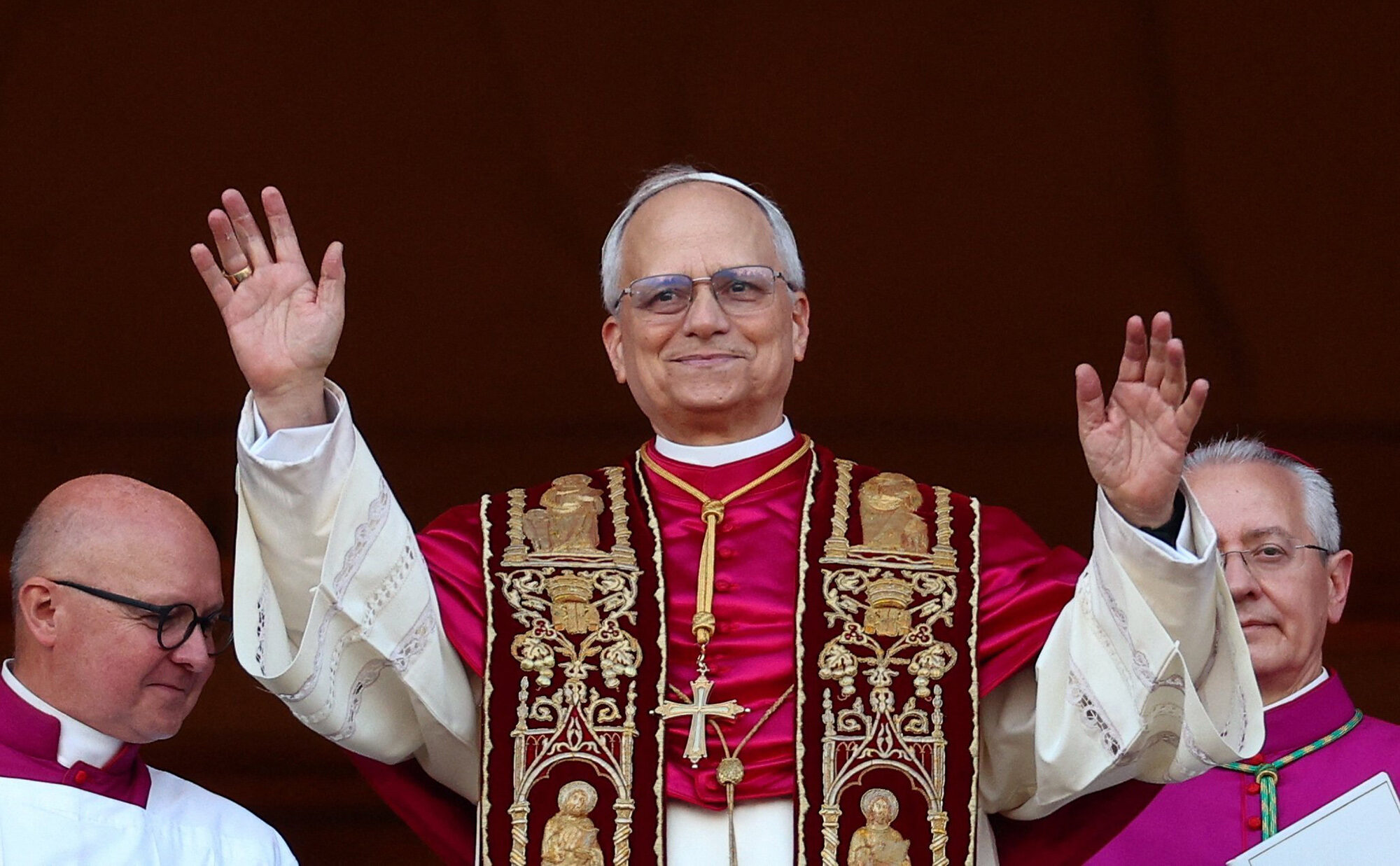
Pope Leo was elected pope on May 8, 2026, becoming the first pope born in the United States
One of the first things Pope Leo XIV said from the balcony of St. Peter’s Basilica upon his election on May 8, 2025, was “I am a son of St. Augustine, an Augustinian.”
The statement signaled to the world and its 1.4 billion Catholics that they were going to experience a papacy heavily influenced by a Church Father and doctor of the Church — one whose extensive writings have endured the past 16 centuries and continue to shape the Church today.
Pope Leo’s brothers in the Order of St. Augustine have said their patron’s way has marked, and so far defined, the pope’s leadership over his first year.
“While it is true that Augustine is an intellectual giant, particularly when we think of his theological and doctrinal contributions, I also see his pastoral contributions — which are grounded in the human experience and his understanding of the human experience,” said Augustinian Father Kevin DePrinzio, who serves in Rome an assistant general for English-speaking provinces of the Order of St. Augustine.
Father DePrinzio said St. Augustine’s well-known “Confessions” highlights the saint as “one of the first (theologians) to begin to articulate a Christian understanding of friendship” and “that somehow in and through relationship, God is found.”
“This, I believe, contributes to Leo’s pastoral approach. We hear Leo often speaking about being ‘together,’ and the importance of not going at it alone,” said the former vice president of mission and ministry at the Augustinian-founded Villanova University, Pope Leo’s own alma mater in suburban Philadelphia.
“That the human person is meant to be in relationship, to live in the potential of encountering the other as a friend, to search for home and belonging,” he continued. “This drives Leo’s call to engage in dialogue, to reach out, and to walk together.”
Grounded leadership to the global Church
When Pope Leo was elected to the papacy, few felt the change more personally than those who had known him long before he stepped onto the balcony of St. Peter’s Basilica.
“For me,” said Armando Lovera, a Peruvian writer who lived with then-Father Robert Prevost for years in an Augustinian seminary, “there was even a sense of loss. I lost a friend — in the sense that you can no longer just call him, drop by, speak without protocol.”
And yet, as the first anniversary of his election approaches, Lovera and others who knew the pope in Peru insist that, beneath the weight of the office, the man himself has not changed.
“He is still Roberto,” Lovera said. “The same friend, the same person — only now with a much bigger mission.”
That conviction is echoed across Chiclayo, the northern Peruvian diocese where the future pope served as bishop from 2015 until 2023, when he was called to Rome to lead the Vatican office responsible for appointing bishops.
In Chiclayo, among priests, lay leaders and friends, a consistent portrait emerges: a pastor marked by closeness, a missionary instinct and a quiet but steady leadership — traits now visible on the global stage.
Father Edwin Santa Cruz, a diocesan priest who worked closely with then-Bishop Prevost, remembers their first meeting lasting more than 40 minutes — not because the bishop spoke at length, but because he listened.
“He taught me to listen and to wait,” said Father Santa Cruz, who has lived with paraplegia for more than two decades.
Their paths crossed almost daily in Chiclayo’s cathedral, where both celebrated Mass within an hour of each other. The bishop, he said, was always available.
“I always felt his closeness,” Father Santa Cruz said. “Whenever I needed to see him, he was ready to receive me.”
That attentiveness extended beyond clergy. Whether in parish meetings or pastoral visits, those who worked with him recall a man who resisted haste, preferring to hear people out before making decisions.
Showing up was only the beginning; in moments of crisis, he turned presence into action.
Chiclayo is a diocese of nearly 50 parishes spread across urban centers and remote rural areas. Father Santa Cruz recalls how the bishop made a point of visiting them all — sometimes driving himself for hours, other times traveling on horseback to reach isolated communities.
“He would put on boots and go where help was needed,” he said.
One moment in particular remains vivid. After torrential rains flooded the diocesan seminary during an El Niño weather event, Father Santa Cruz encountered the bishop at the entrance.
“He arrived in sneakers,” the priest recalled. “I told him, ‘Monsignor, everything is flooded.’ He said, ‘What do we do?’ I said, ‘I’ll bring you boots.’ He said, ‘No — let’s go see.’ And we went in.”
The boots came later. The decision to enter could not wait. For Father Santa Cruz, the instinct to step into the flood captured something essential: “To feel our bishop so close, so willing — that marked us deeply.”
Americans continue to feel drawn to Pope Leo
A year into his papacy, Pope Leo is still enjoying popularity and rockstar-like fame, especially in Chicago, his hometown. At a parish run by the Augustinians near where Pope Leo grew up, some of the faithful said his message of peace, dedication to the faith and outreach to young people have stood out.
After Easter morning Mass, Victoria Mendez and her family stopped to talk by the heavy bronze doors of St. Rita of Casica Catholic Church on Chicago’s South Side.
“I think we’ve seen a lot of people fall in love with Catholicism, seeing that their pope is from Chicago,” said 24-year-old Mendez.
While anecdotal, said she has the sense Pope Leo is drawing interest in the faith. She has observed more youth in the church since his election. She also mentioned an uptick in conversions to the faith — not just in the U.S. but also Europe, particularly this Easter. Though none of the reports about the bump in new Catholics have tied the pope’s popularity to the numbers, several people said it may play a role.
“He’s just very good with people. He’s very into creating peace within different forms of Catholicism. And he’s just so open-minded. And he cares about everybody,” Mendez said. “You see that in all his actions and everything he says and does, and the way he reflects himself. You can tell he’s really trying to bring peace on earth.”
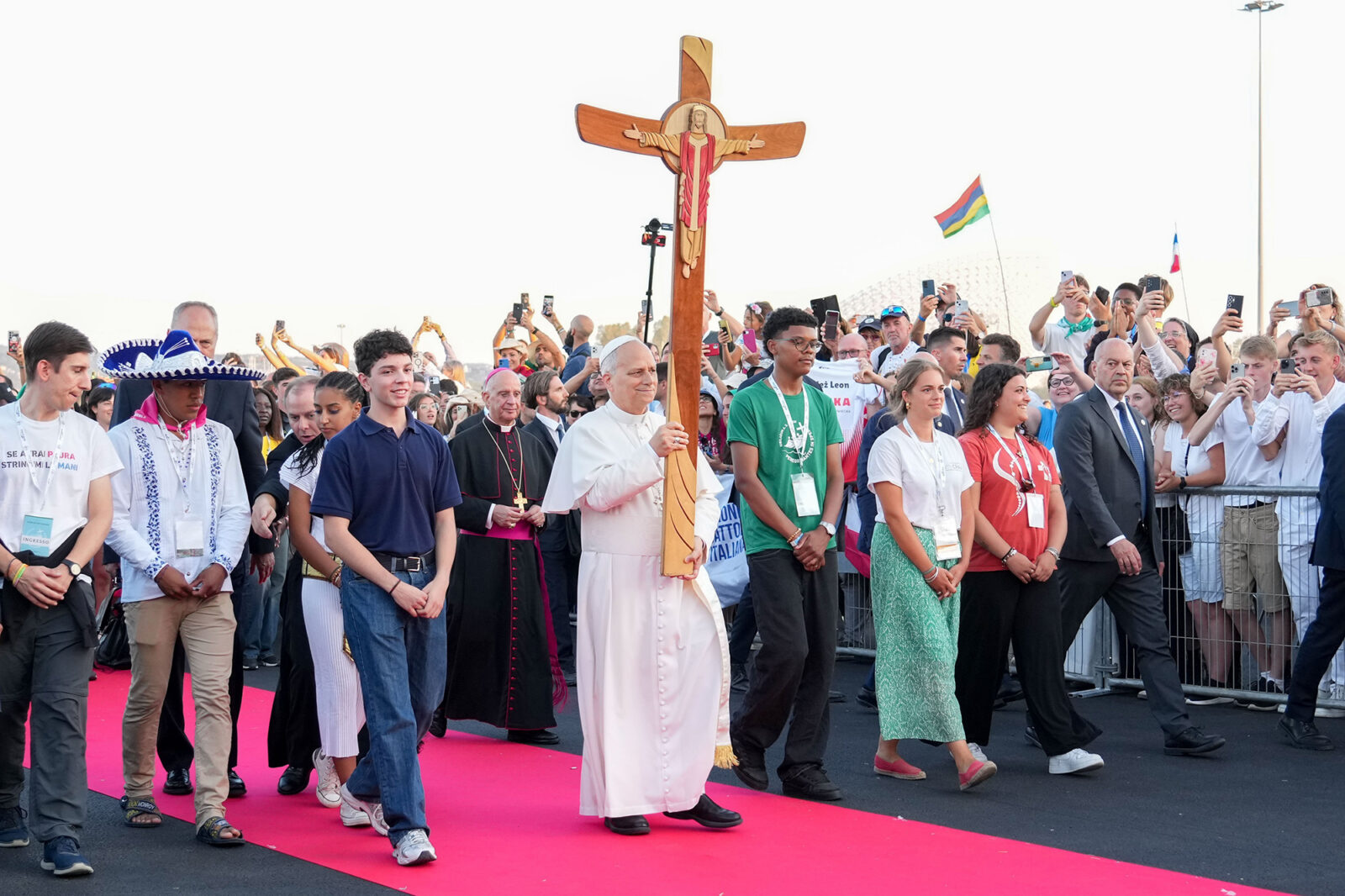
Pope Leo XIV carried the Jubilee Cross as he walked to the altar before the start of a prayer vigil with young people gathered in Tor Vergata in Rome on Aug. 2, 2025, during the Jubilee of Youth.
Highlights from Pope Leo XIV’s first year
- May 8, 2025: Cardinal Robert F. Prevost elected pope; takes the name Leo XIV.
- May 9: Celebrated first Mass as pope in the Sistine Chapel with cardinals.
- May 18: Inaugurated his Petrine ministry with Mass in St. Peter’s Square.
- May 19: Met with Ecumenical Patriarch Bartholomew of Constantinople and other faith leaders, as well as U.S. Vice President JD Vance and Secretary of State Marco Rubio.
- July 9: Met with Ukrainian President Volodymyr Zelenskyy as the Holy See offered to help negotiate peace with Russia.
- July 28-Aug. 3: Encountered young people at the Vatican during the Jubilee of Youth.
- Sept. 7: Presided over first canonizations: Sts. Pier Giorgio Frassati and Carlo Acutis.
- Oct. 9: Published apostolic exhortation “Dilexi te,” a text begun by Pope Francis on love for the poor.
- Oct. 23: Prayed with King Charles III in the Sistine Chapel, a first since the Church of England’s break with Rome in 1534.
- Nov. 1: Proclaimed St. John Henry Newman a doctor of the Church.
- Nov. 20: Took first trip beyond greater Rome to conclude the Italian Episcopal Conference’s meeting in Assisi.
- Nov. 27-Dec. 2: Made first apostolic visit to Turkey and Lebanon.
- Jan. 6, 2026: Closed the Holy Door at St. Peter’s Basilica, ending the Jubilee of Hope.
- Jan. 7-8: Convened an extraordinary consistory of cardinals.
- Feb. 15: Resumed tradition of visiting Roman parishes during Lent.
- March 28: Made apostolic visit to Monaco.
- April 2-5: Celebrated first Triduum as pope.
- April 13-23: Made apostolic visit to Algeria, Cameroon, Angola and Equatorial Guinea.
Quotes from Pope Leo’s first year as pope
“Brothers and sisters, I would like that our first great desire be for a united Church, a sign of unity and communion, which becomes a leaven for a reconciled world.”
— Pope Leo at the Mass for the inauguration of his petrine ministry May 18, 2025
“Friendship with Christ, which forms the basis of faith, is not just one aid among many others for building the future; it is our guiding star.”
— Pope Leo at a vigil for the Jubilee of Youth Aug. 2, 2025
“When we consider the great material, cultural, scientific and artistic treasures, faith shines not because these goods are to be undervalued, but because without faith they lose their meaning.”
— Pope Leo at the canonization of seven new saints Oct. 19, 2025
“On the wounded faces of the poor, we see the suffering of the innocent and, therefore, the suffering of Christ Himself.”
— Pope Leo in his first apostolic exhortation “Dilexi Te” (“I have loved you”), promulgated Oct. 9, 2025
“Life shines brightly not because we are rich, beautiful or powerful. Instead, it shines when we discover within ourselves the truth that we are called by God, have a vocation, have a mission, that our lives serve something greater than ourselves.”
— Pope Leo at the Mass for the Jubilee of Education, where he proclaimed St. John Henry Newman a doctor of the Church Nov. 1, 2025
“Peace, in fact, cannot be decreed: It must be embraced and lived. It is a gift from God, which unfolds through patient and collective effort. It is everyone’s responsibility, beginning with civil authorities.”
— Pope Leo in Yaoundé, Cameroon, April 15, 2026