In his first Lenten message, Pope Leo said Lent is a time to ‘place the mystery of God back in the center of our lives’
ROME — Beneath the Roman pines of the Aventine Hill, Pope Leo XIV led a solemn penitential procession Feb. 18 to Rome’s oldest extant basilica, marking the first Ash Wednesday of his pontificate with a call for “countercultural” repentance for sins from individuals, institutions and the Church itself.
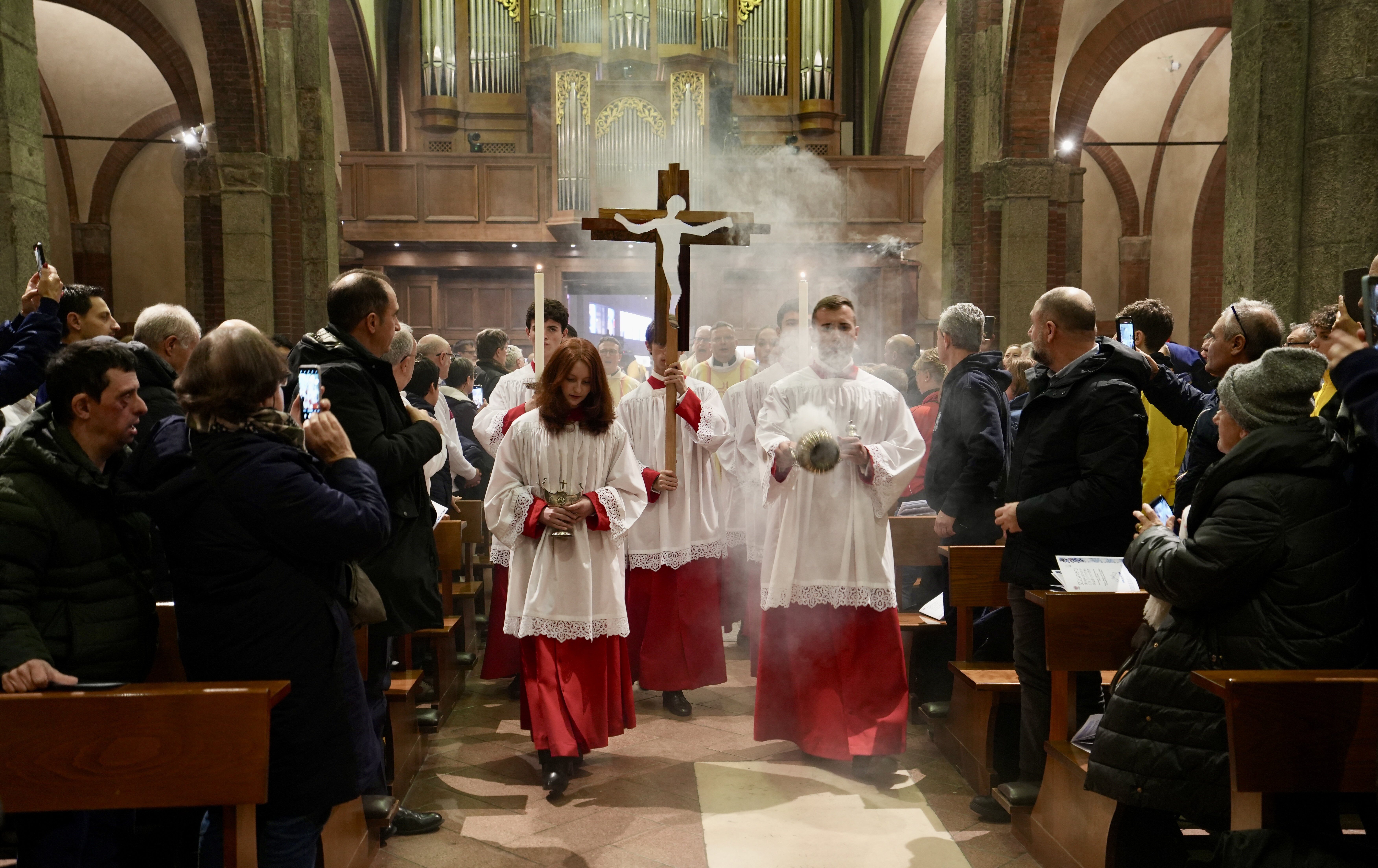
Priests, bishops and cardinals chanted the Litany of the Saints as the procession wound from the Benedictine Basilica of Sant’Anselmo to the ancient Dominican Basilica of Santa Sabina, where the pope offered Ash Wednesday Mass.
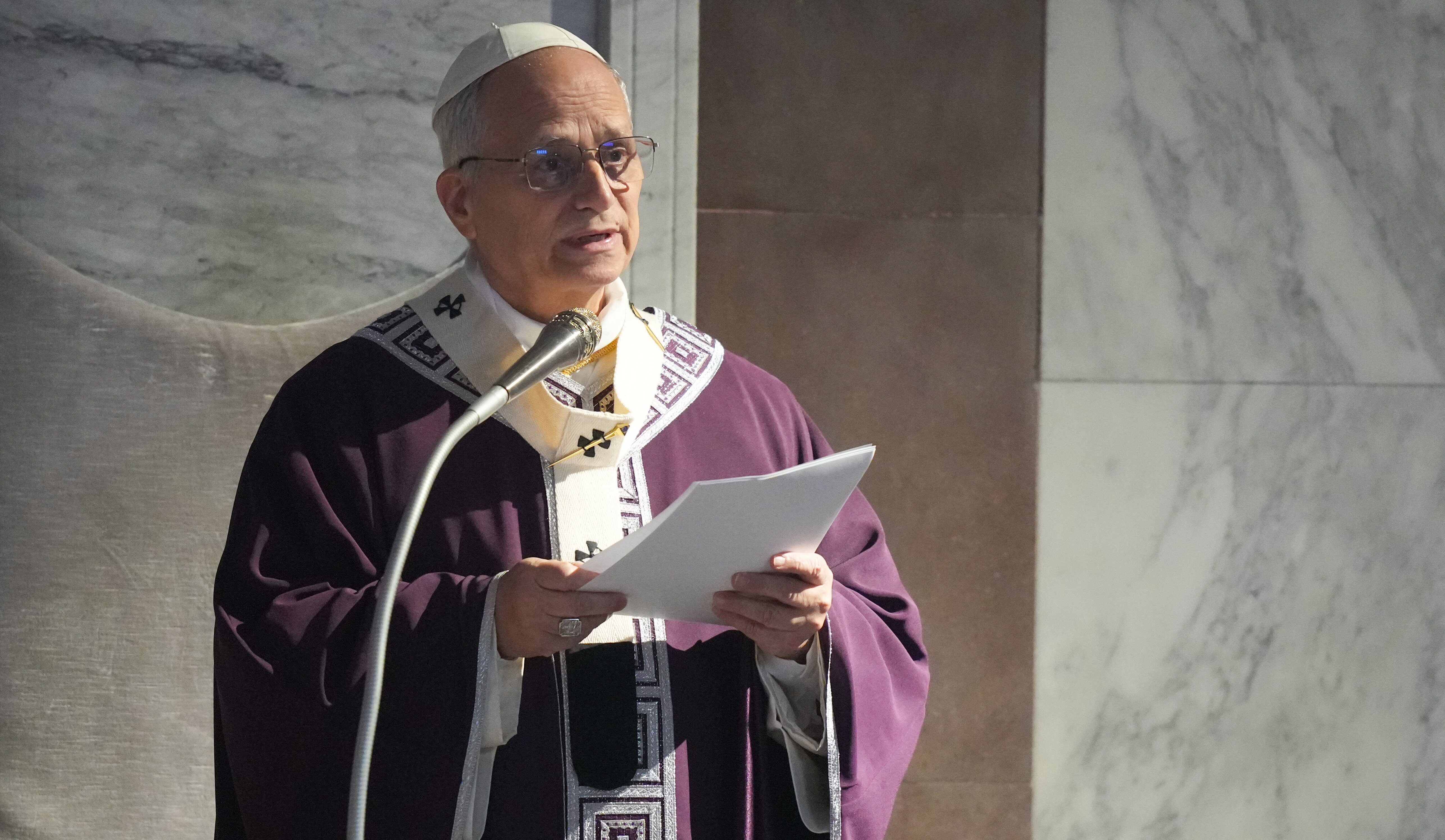
“How rare it is to find adults who repent — individuals, businesses and institutions that admit they have done wrong,” Pope Leo said in his homily in the Basilica of Santa Sabina.
“Indeed, during Lent, a people is formed that recognizes its sins. These sins are evils that have not come from supposed enemies, but afflicts our hearts, and exist within us. We need to respond by courageously accepting responsibility for them,” he added.
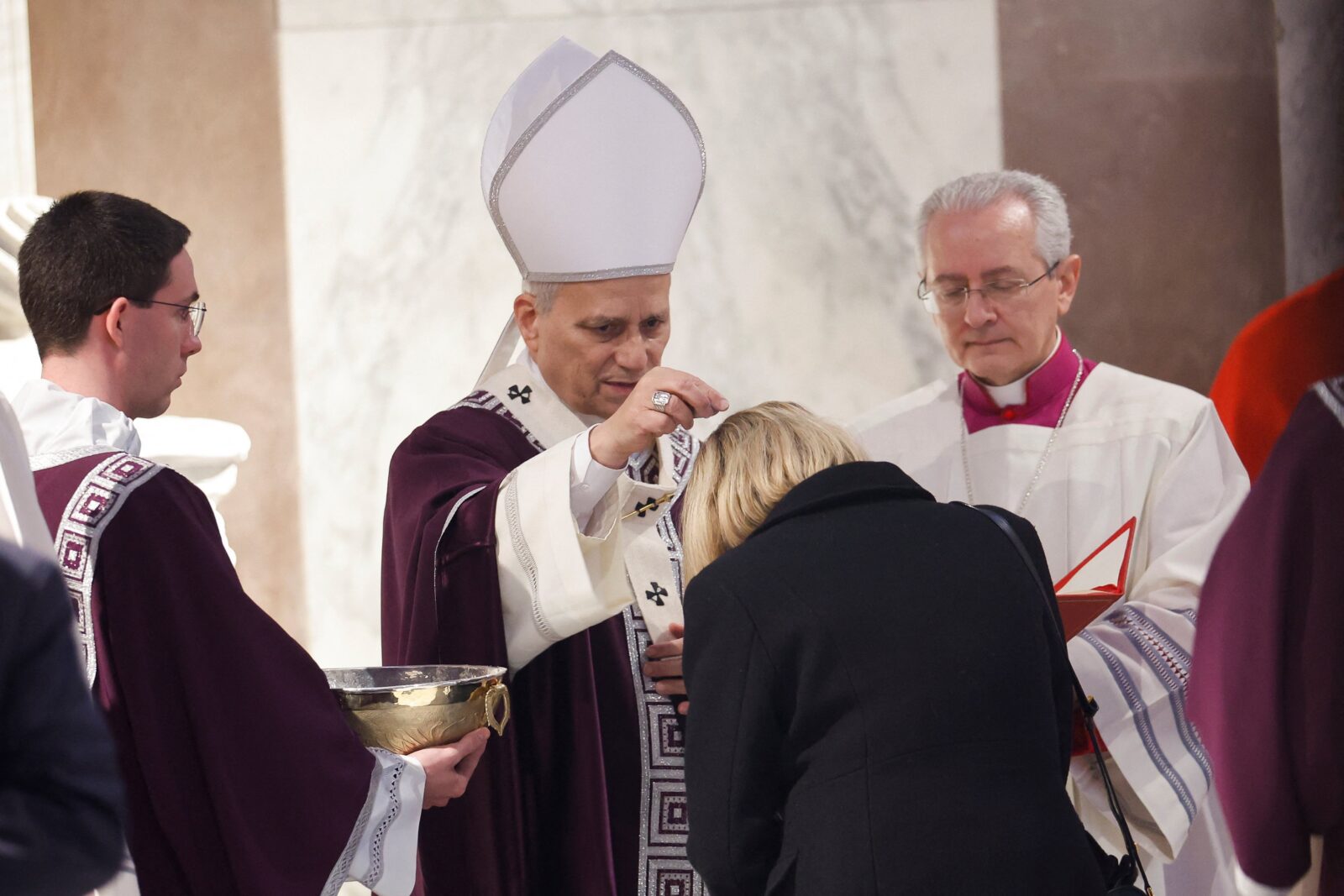
Pope Leo XIV sprinkles ashes on the head of a woman as he celebrates Ash Wednesday Mass at Santa Sabina Basilica in Rome Feb. 18, 2026.
Pope Leo acknowledged that “this attitude is countercultural,” but it “constitutes an authentic, honest and attractive option, especially in our times, when it is so easy to feel powerless in the face of a world that is in flames.”
In his homily, the pope pointed to young people as an unexpected sign of openness today.
“Even in secularized contexts, many young people, more than in the past, are open to the invitation of Ash Wednesday,” Pope Leo observed. “Young people especially understand clearly that it is possible to live a just lifestyle, and that there should be accountability for wrongdoings in the Church and in the world.”
He called on the faithful to “embrace the missionary significance of Lent,” not as a distraction from personal conversion, but “in a way that introduces this season to the many restless people of good will who are seeking authentic ways to renew their lives, within the context of the Kingdom of God and his justice.”
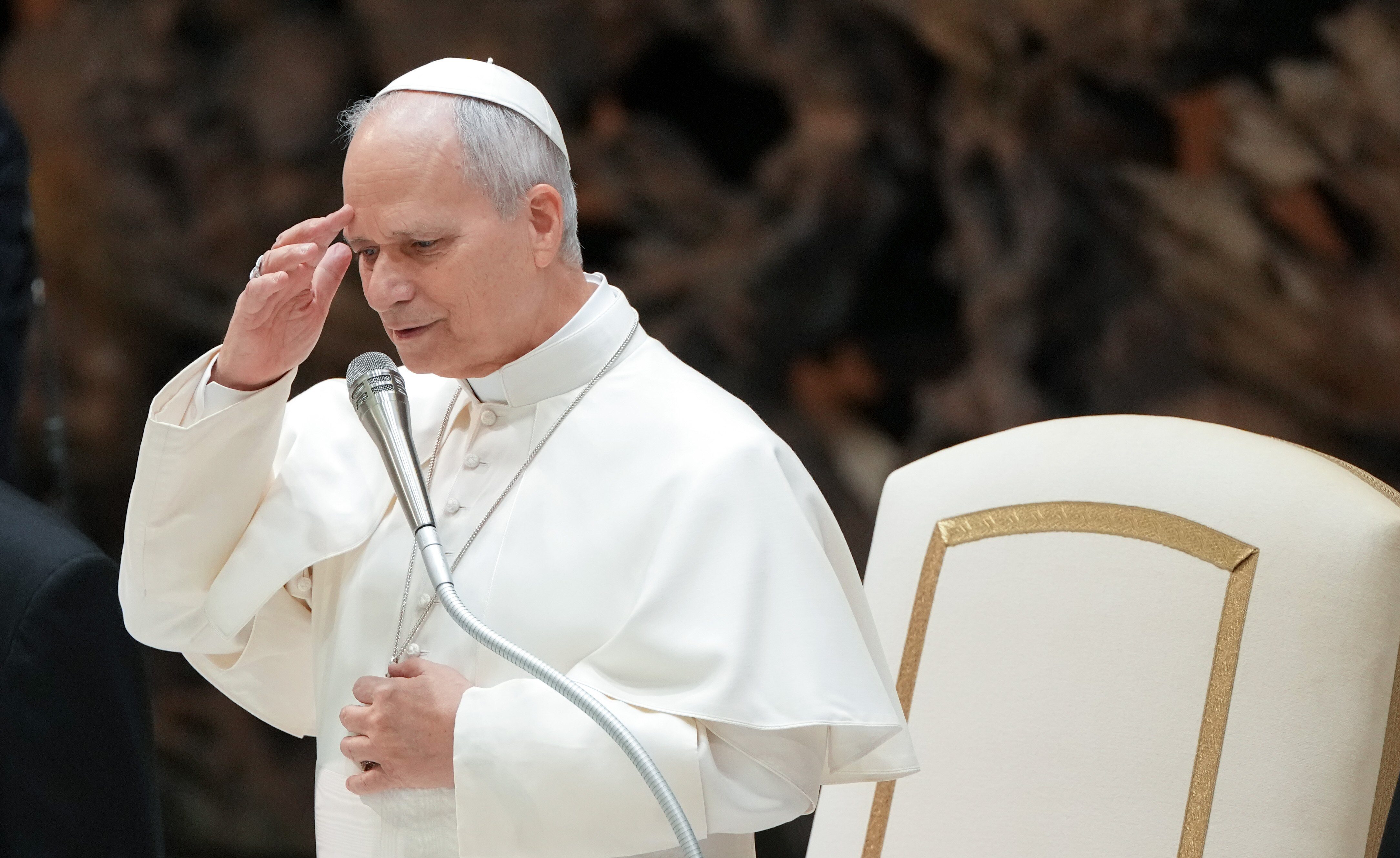
Pope Leo received ashes sprinkled atop his head in the Italian custom before imposing them on the cardinals and some of the faithful present.
“We perceive in the ashes imposed on us the weight of a world that is ablaze, of entire cities destroyed by war,” he said.
“This is also reflected in the ashes of international law and justice among peoples, the ashes of entire ecosystems and harmony among peoples, the ashes of critical thinking and ancient local wisdom, the ashes of that sense of the sacred that dwells in every creature,” Pope Leo added.
Lenten Message: Fasting from complacency can lead to hunger for God
The ancient practice of fasting from food during Lent can free us from complacency and lead us to “hunger” for God, Pope Leo XIV said in his 2026 Lenten message.
Ahead of Ash Wednesday, which marks the start of the 40-day liturgical season of Lent, this year on Feb. 18, the pope encouraged people to embrace the “ancient ascetic practice” of abstaining from food, as well as “refraining from words that offend and hurt our neighbor.”
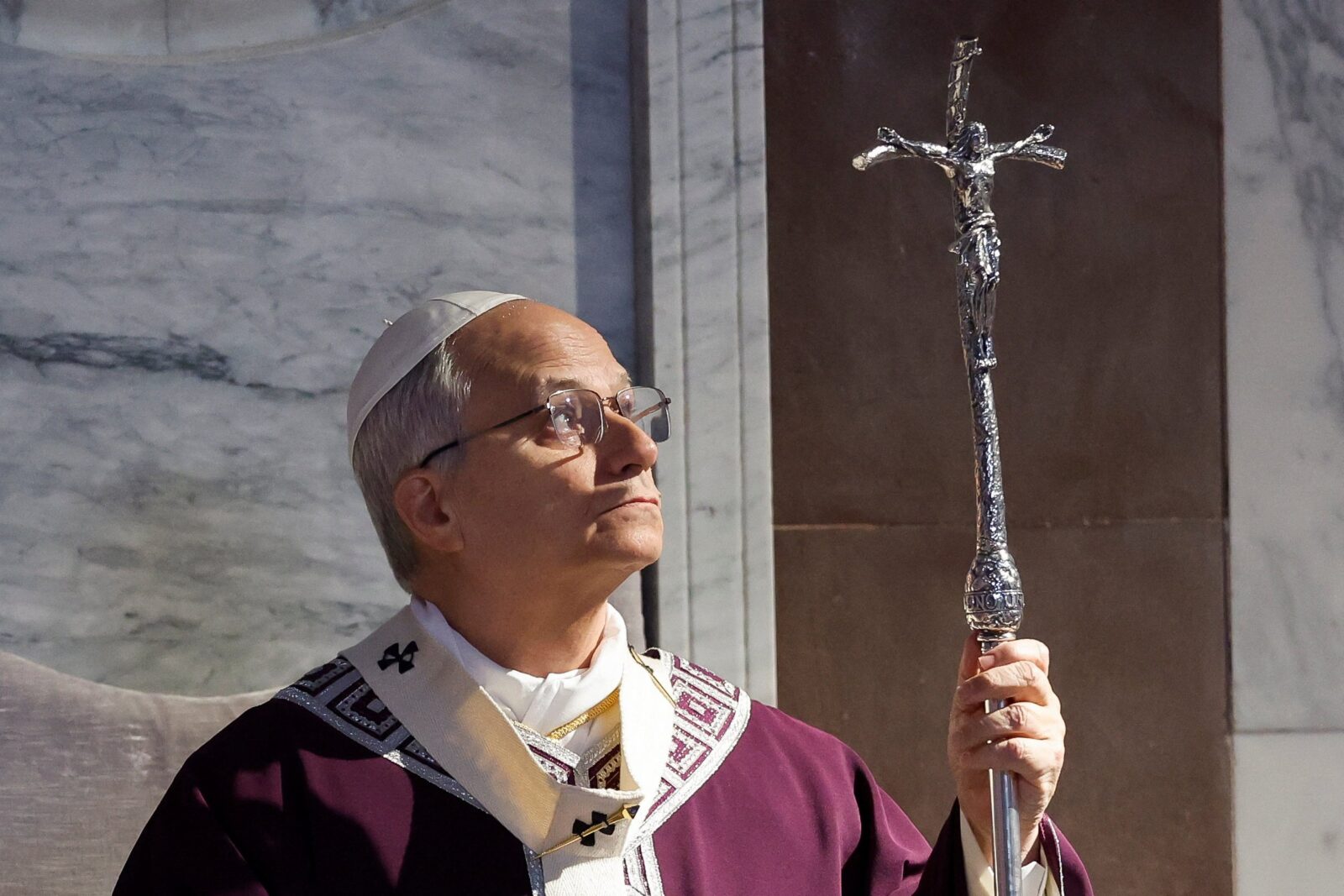
Pope Leo XIV holds his crosier as he celebrate Ash Wednesday Mass at Santa Sabina Basilica in Rome Feb. 18, 2026.
Lent is a time to “place the mystery of God back in the center of our lives, in order to find renewal in our faith and keep our hearts from being consumed by the anxieties and distractions of daily life,” the pope said.
“Abstaining from food is an ancient ascetic practice that is essential on the path of conversion,” he wrote. “Precisely because it involves the body, fasting makes it easier to recognize what we ‘hunger’ for and what we deem necessary for our sustenance.”
Fasting, he added, helps to identify and properly order our “appetites,” “keeping our hunger and thirst for justice alive and freeing us from complacency.”
In the message, titled “Listening and Fasting: Lent as a Time of Conversion,” released by the Vatican on Feb. 13, the pope drew on the fifth-century theologian St. Augustine to reflect on “custody of the heart” regarding “the tension between the present moment and future fulfillment.”
Quoting Augustine’s work “The Usefulness of Fasting,” Pope Leo cited the saint’s observation, “‘In the course of earthly life, it is incumbent upon men and women to hunger and thirst for justice, but to be satisfied belongs to the next life.’”
Pope Leo said that “understood in this way, fasting not only permits us to govern our desire, purifying it and making it freer, but also to expand it, so that it is directed towards God and doing good.”
He cautioned that fasting must be “lived in faith and humility” rather than pride and should be grounded in communion with the Lord.
“As a visible sign of our inner commitment to turn away from sin and evil with the help of grace, fasting must also include other forms of self-denial aimed at helping us to acquire a more sober lifestyle, since ‘austerity alone makes the Christian life strong and authentic,’” Leo said.
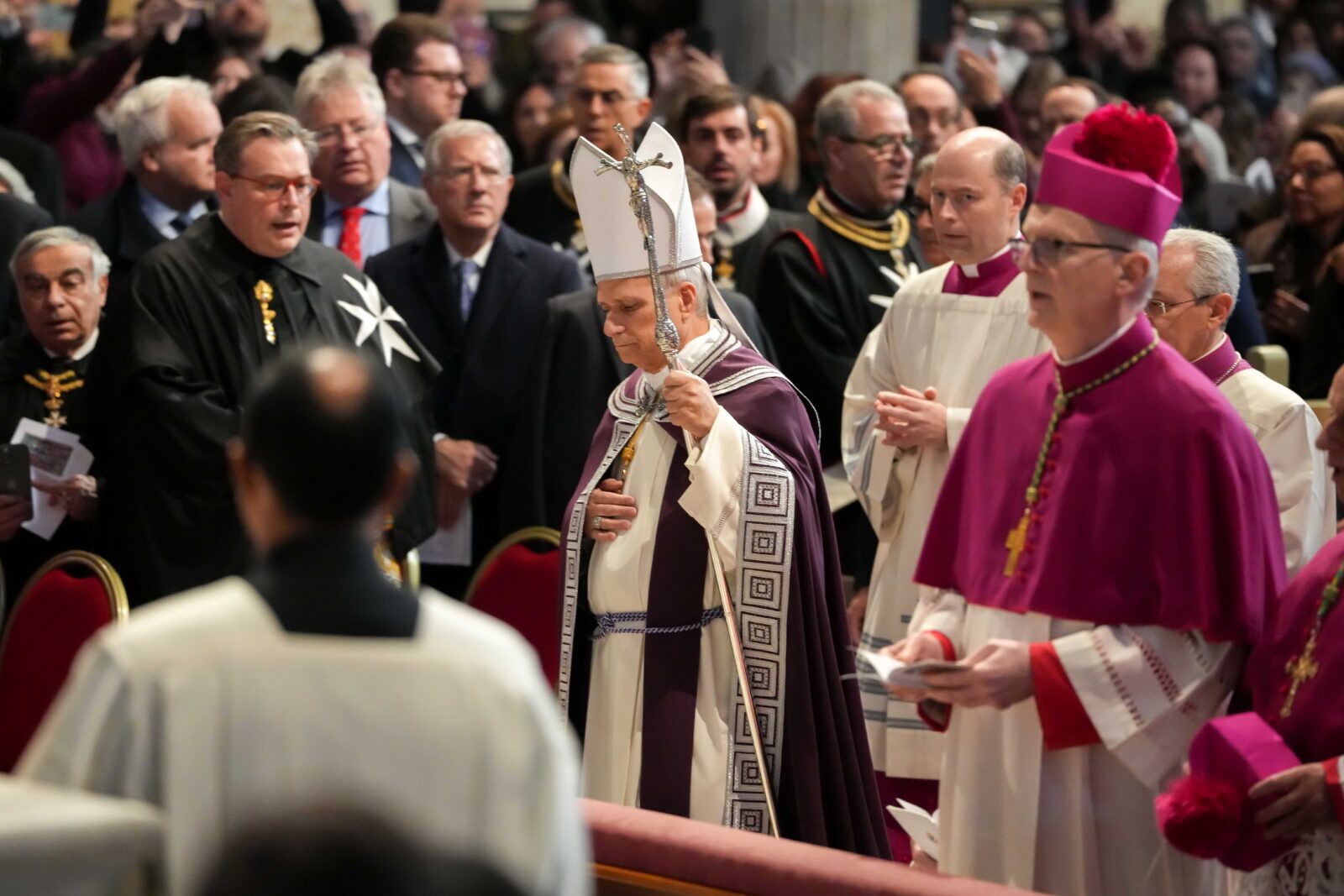
Pope Leo XIV processes into Santa Sabina Basilica in Rome Feb. 18, 2026, to celebrate Ash Wednesday Mass.
The pope also highlighted what he called “an unappreciated form of abstinence: that of refraining from words that offend and hurt our neighbor.”
“Let us begin by disarming our language, avoiding harsh words and rash judgement, refraining from slander and speaking ill of those who are not present and cannot defend themselves,” he said, urging Catholics to cultivate kindness “in our families, among our friends, at work, on social media, in political debates, in the media and in Christian communities.”
Leo encouraged Catholics to make room in their lives to listen to the word of God at Mass and by reading Sacred Scripture, noting that fasting is a concrete way to prepare to hear the word of God.
“The Lenten journey is a welcome opportunity to heed the voice of the Lord and renew our commitment to following Christ,” he said.
The pope also encouraged parishes, families and religious communities to “undertake a shared journey during Lent,” emphasizing “the communal aspect of listening to the word and fasting.”