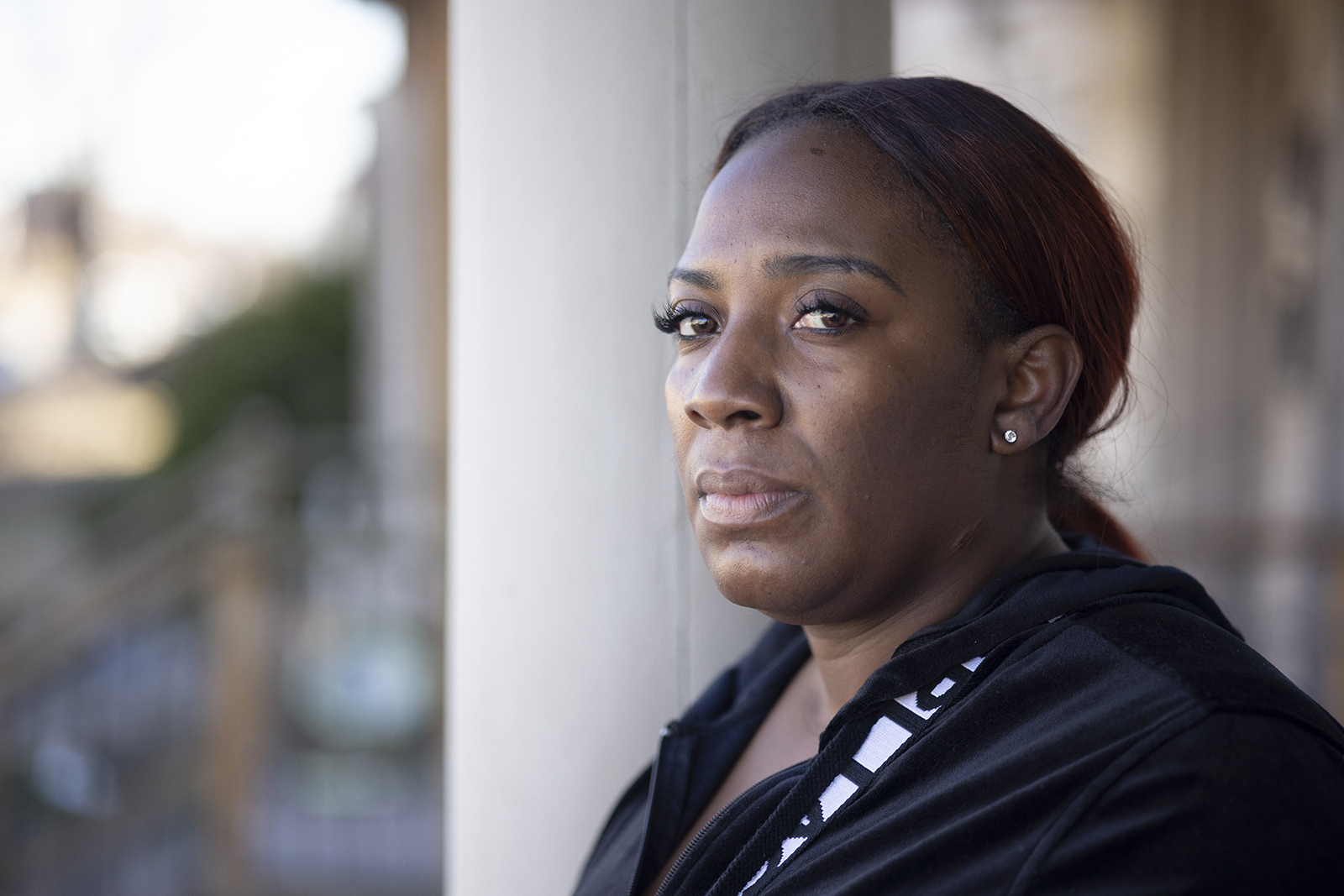
Kim Brooks believes that even when life seems to be moving in slow motion, it’s still motion.
Kim’s home in the Academy neighborhood of north St. Louis was among the thousands of structures damaged by a tornado in May of 2025. A large tree sliced through the back of her two-story brick home, destroying an exterior wall and causing roof and interior damage, mostly along the back side.
The EF-3 tornado killed five people and damaged about 5,000 structures across a nearly 20-mile path and caused an estimated $1.6 billion in property damage.
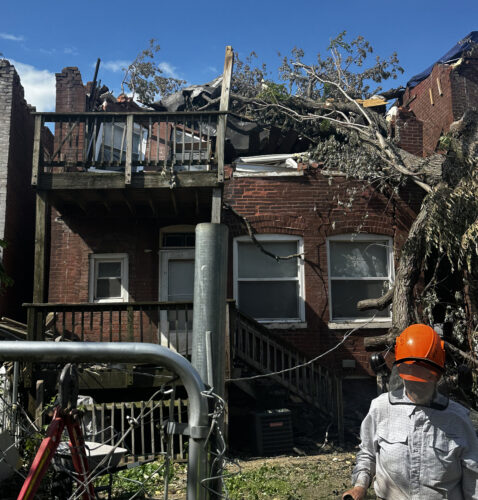
A tornado on May 16, 2025, caused extensive damage at the back of Kim Brooks’ home in the Academy neighborhood of St. Louis.
For the first few months after the tornado, rebuilding efforts at Kim’s house were slow. A roofer that she contracted with didn’t complete the job as expected, and she essentially had to start over.
Meanwhile, Catholic Charities of the Archdiocese of St. Louis, already helping with some immediate tornado recovery efforts, was building a team to delve deeper into long-term disaster case management services. Starting with the Academy neighborhood, a Catholic Charities case manager was connected with Kim to restart the rebuilding process.
“At first it was like five steps back,” Kim said. “And then with them coming in and helping me, I got three of them steps. Every time they’ve come in and done something, it definitely puts me a little bit closer to — we’re almost there, almost there, almost there, baby steps. Seeing the house being repaired is my mental therapy.”
One of her biggest victories was the rebuilding of the exterior brick wall on the back of her house late last year, just before winter. In addition to receiving financial assistance from Catholic Charities, Kim’s case manager helped her navigate the application process for funding from the Missouri Housing Development Commission’s disaster relief program and other sources.
“It’s how can we allocate our resources best to get her back in her home as quickly as possible?” disaster case manager Mercy Dement said. “The initial (work) was stabilization, just so we can make it through the rest of the winter months when weather gets rainy and difficult. And then in the future, it’s focused on, how can we make our house into a home again?”
Long-term tornado recovery care and collaboration
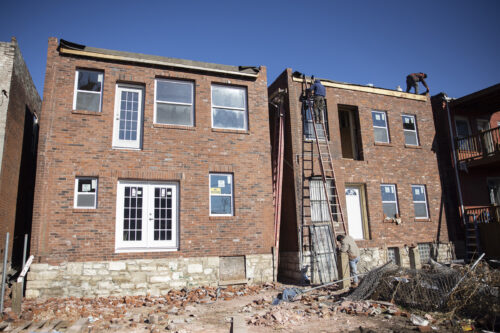
The back of Kim Brooks’ home, left, was repaired after it was damaged in a tornado in May last year.
Nearly a year after the tornado, Catholic Charities of the Archdiocese of St. Louis has settled into long-term recovery efforts, continuing to provide case management services to residents with significant needs.
Donations to Catholic Charities’ disaster relief fund are helping with needs such as rent assistance and related expenses. A program called House to Home pairs participants with residents to refurnish their homes with needed items, including pots and pans, dishes and furniture.
Catholic Charities’ approach has been house by house, block by block and neighborhood by neighborhood, chief community officer Brian Thouvenot said, adding that part of its mission is to be a visible catalyst for social outreach and connecting those in need to a meaningful communion of care.
“This is one of the most visible things that we can do to help show that we care for all souls in the Archdiocese of St. Louis,” Brian said. “In times of disaster, despair and loss of hope, the Church is the consistent in that chaos.”
Brian also pointed to the collaborative efforts post-tornado, including generous donations from parishes, individuals, businesses and organizations, including Medica, a nonprofit health insurance company. Others, such as Roanoke Construction, have been among the boots on the ground assisting with rebuilding in Academy.
In the tornado’s immediate aftermath, counselors from Catholic Charities’ Saint Louis Counseling also were part of a team deployed by the Missouri Department of Mental Health that canvassed neighborhoods to connect residents with mental health resources.
Since then, Catholic Charities’ Queen of Peace Center, which offers family-centered behavioral health care for women with substance use disorders, their children and families, has received funding through FEMA and the Missouri Department of Mental Health for the Show Me Hope Crisis Counseling Program to connect survivors with local mental health resources.
“Seeing where they’ve come from, what they’ve been able to accomplish, people are so grateful and just humbled in the process,” Brian said. “We have an opportunity to walk alongside people, and to be able to use resources from generous donors and others that we work with, we can make a positive impact person by person.”