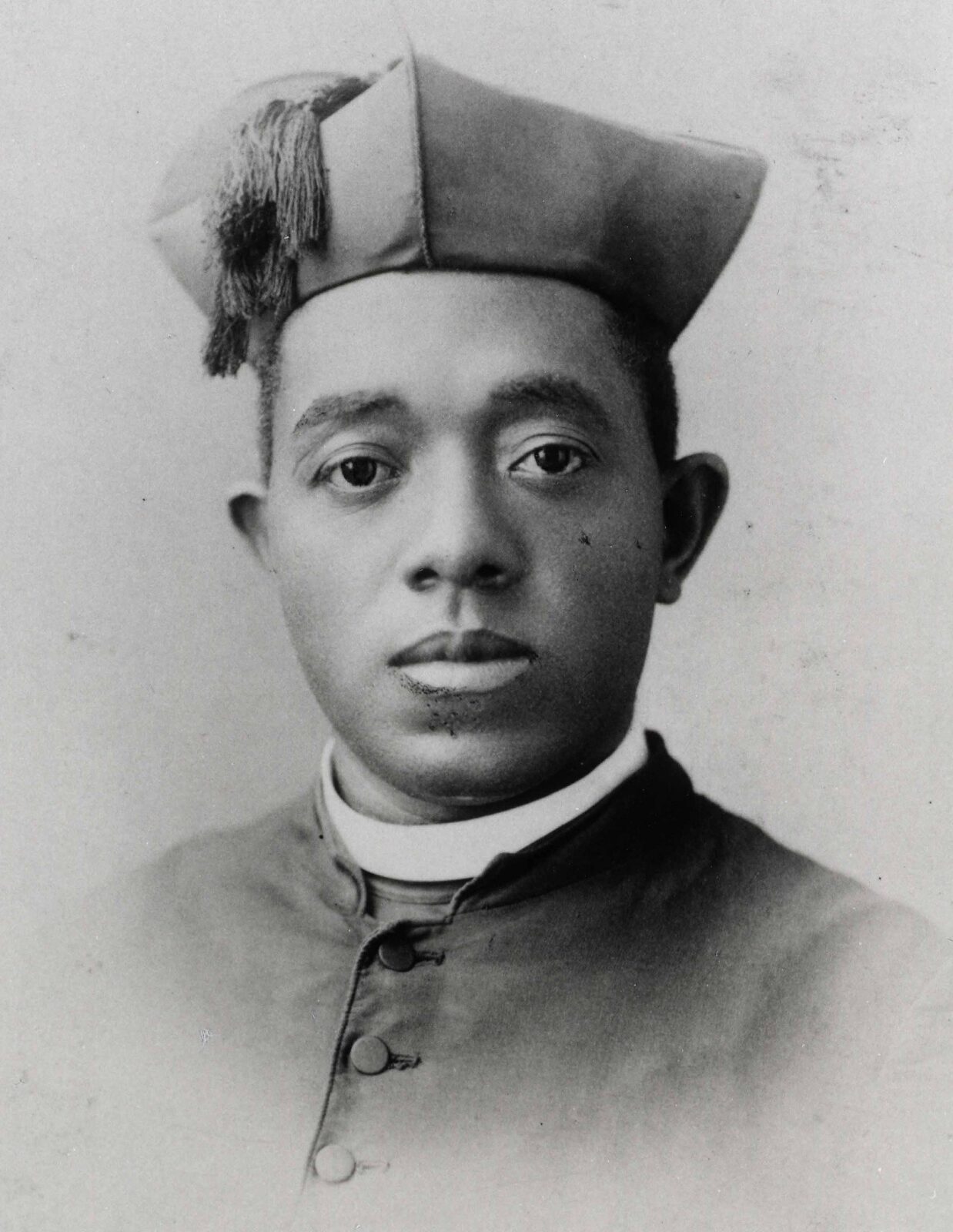
The first publicly recognized Black Catholic priest in the United States is now getting his own national shrine in western Illinois where he grew up and once served.
On April 29, the Diocese of Springfield, Illinois, announced plans for a national shrine for Venerable Augustus (Augustine) Tolton (1854-1897), one of the “saintly seven,” referring to the group of African Americans recognized as “servant of God” or “venerable” who have active sainthood causes.
The diocese launched a fundraising campaign for the renovation of a long-dormant church on the site where Father Tolton, who was regarded in his day as the first African American priest of the country, celebrated his first Mass in the U.S. after his ordination in Rome in 1886.
Church leaders said plans would be underway for St. Boniface Church in Quincy, Illinois, to get a $5 million-plus makeover.
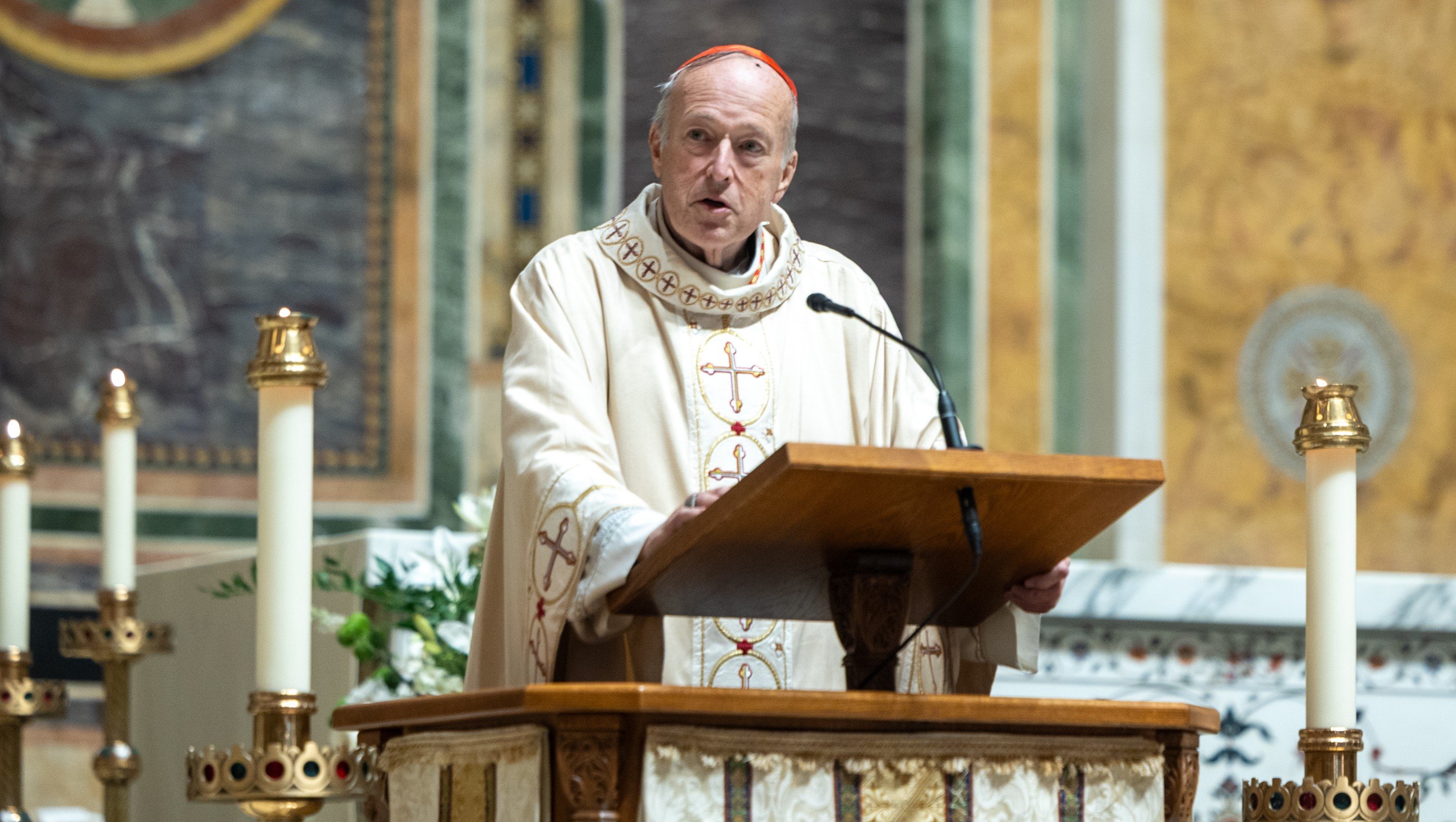
Bishop Thomas J. Paprocki of Springfield blessed a plaque from the city of Quincy — the place where Father Tolton grew up, ministered and is buried — designating the church a landmark property.
The bishop said a lot of work was needed on the future shrine — a church left unused since 2020 — that he envisions will be a place for prayer and pilgrimages.
He said another $5 million to $7 million would be needed to include landmarks from Father Tolton’s life and Catholic formation in Quincy as part of the planned pilgrimage experience in the area.
Father Tolton was born in Brush Creek, Missouri, in 1854 to devout Catholic parents who suffered the injustice of slavery. When he was 9, his mother, Martha Jane Tolton, escaped with her three children across the Mississippi River, reaching the safety of Union Army lines, to save them from slave-traders. The family then settled in Quincy.
After one month at St. Boniface School where white parents threatened to remove their children, young Augustine (as he sometimes signed his letters) transferred to St. Peter’s Parish where priests (including German Franciscans) and religious sisters happily mentored him and nurtured what they saw was a vocation to the priesthood.
However, no U.S. seminary would accept a Black vocation to the priesthood — so his mentors sent him to study in Rome. Father Tolton was ordained at St. John Lateran Basilica, the pope’s cathedral in Rome, in 1886. He expected to serve as a missionary in Africa, but instead was sent to Quincy, where he became pastor at St. Joseph Church, a mission of St. Boniface Parish.
At St. Joseph, Father Tolton ministered to both African Americans and white Americans, many of whom were drawn to him and preferred his preaching to that of St. Boniface’s pastor, one block away. Father Tolton endured bitter opposition from that priest, whom Father Tolton said in a letter “abuses me in many ways.”
He successfully sought a transfer to Chicago in 1889, where he served Black Catholics, mostly at St. Monica’s Parish in Chicago’s South Side. Father Tolton died there eight years later, aged 43, of heatstroke.
Retired Chicago Auxiliary Bishop Joseph N. Perry, vice postulator of Father Tolton’s canonization cause, remarked on St. Boniface as the designated shrine site.
“It’s something of a roundabout to see the shrine, established as the place that kind of rejected him as a school child,” Bishop Perry said.
He said a shrine signals “the degree of intensity of interest that is out there for him.” He remarked how “absolutely remarkable” it is for a person still steps away from sainthood to have a designated shrine.
To date, Bishop Perry said, 40 investigations of potential miracles attributed to Father Tolton’s intercession have taken place.
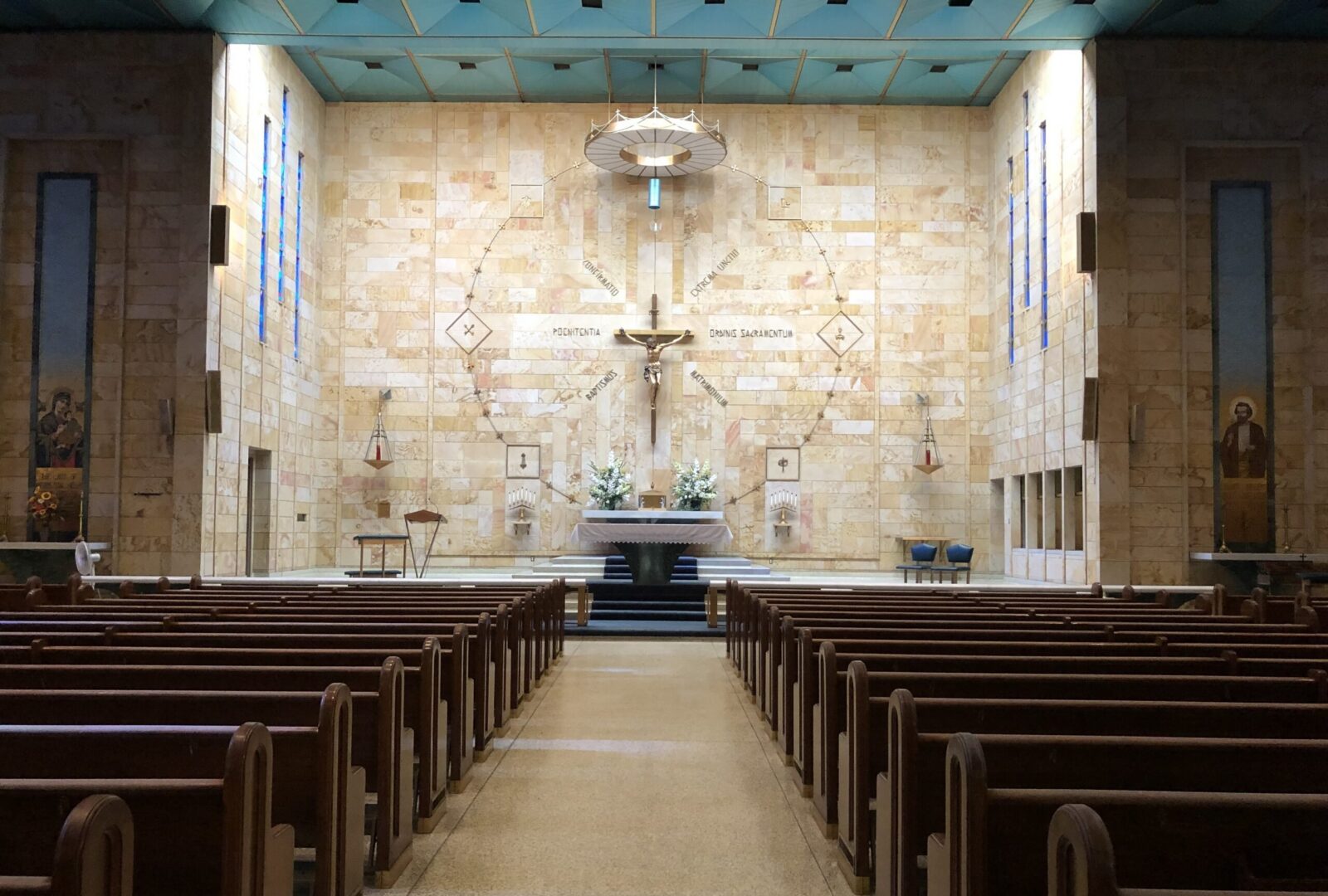
The interior of St. Boniface Church in Quincy, Ill., pictured in a file photo, is the future site of the Shrine for Father Augustus (Augustine) Tolton, which has sat empty since 2020. The Diocese of Springfield, Ill., is holding a fundraising campaign to raise at least $5 million for a renovation and another $5 million to $7 million for a complete pilgrimage experience around the location where the first African American priest in the U.S. and sainthood candidate celebrated his first U.S. Mass after being ordained in Rome.