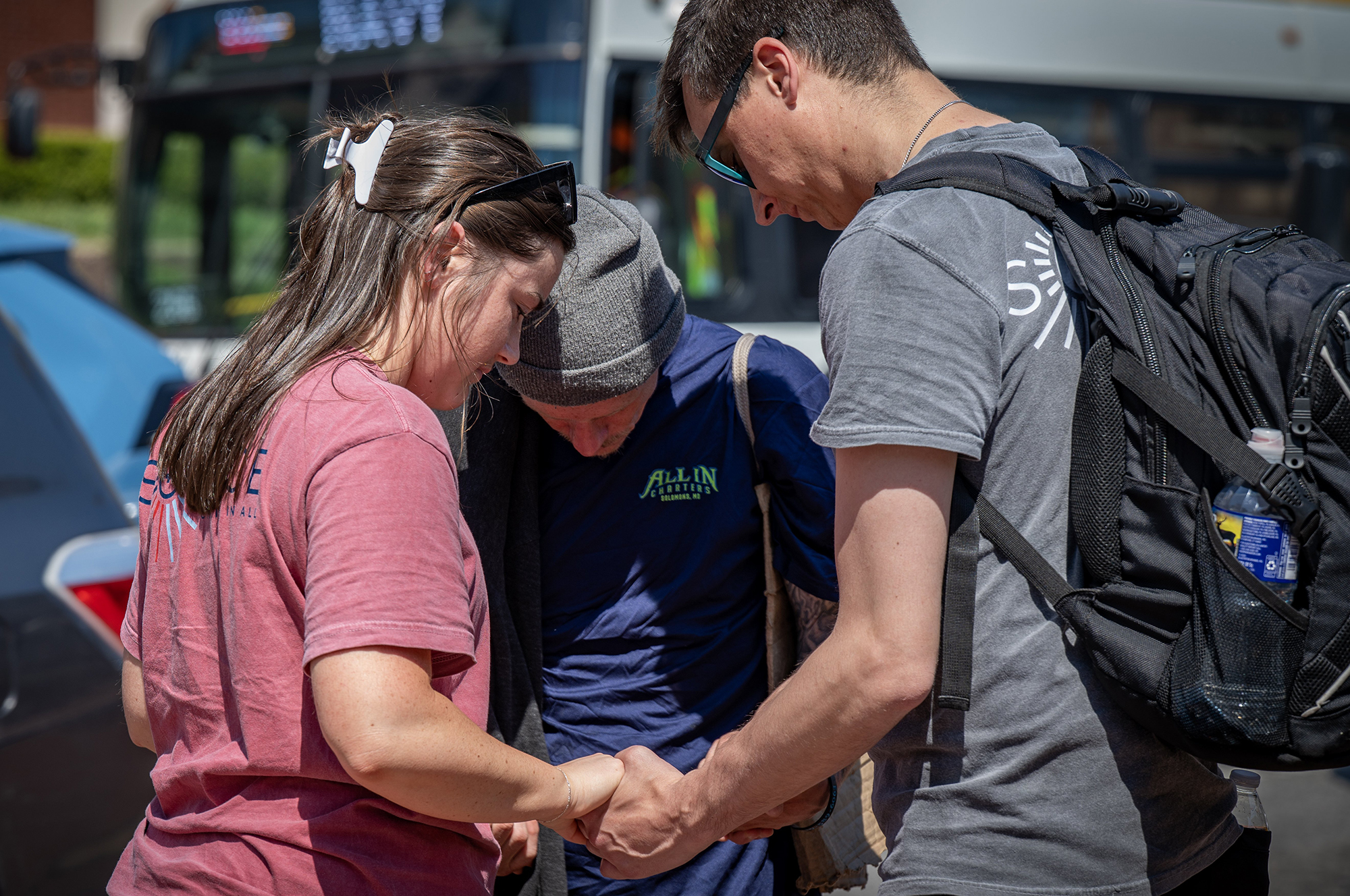
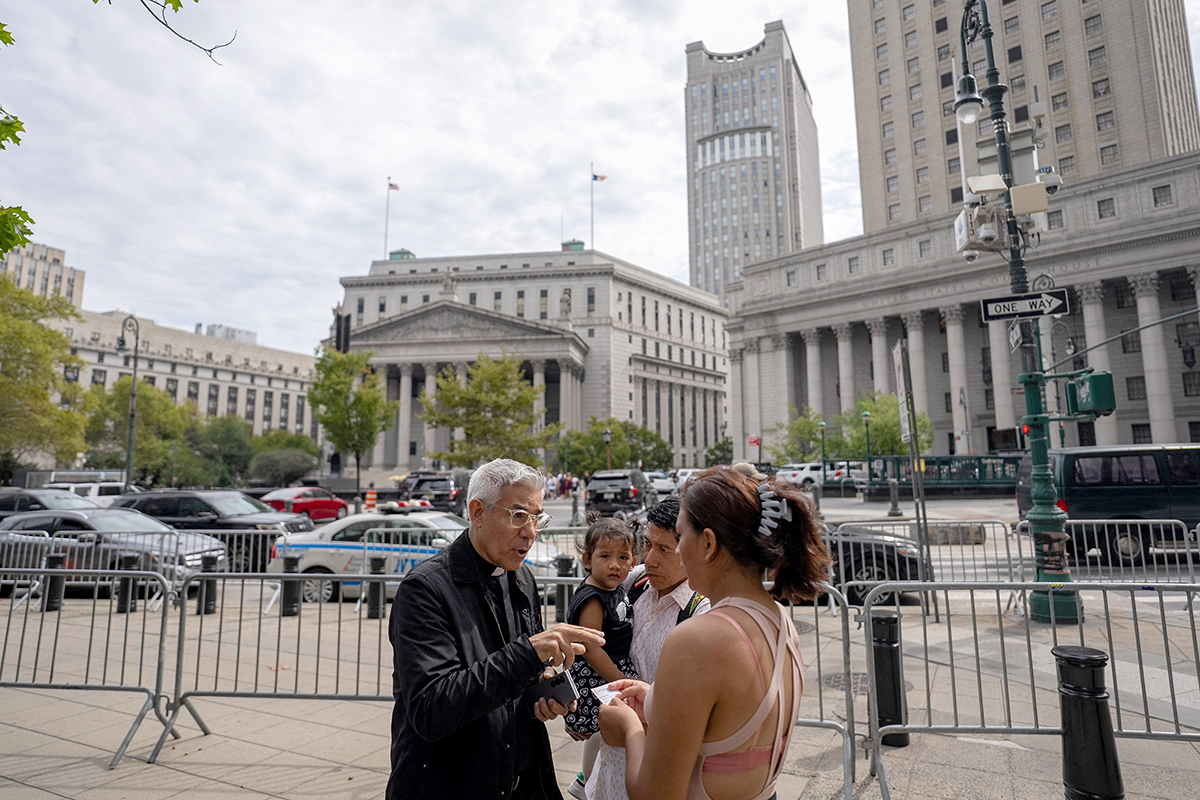
Catholics are invited to affirm ‘the inherent dignity of every person, regardless of immigration status or country of origin’
At the start of National Migration Week, taking place this year Sept. 22-28, the chairman of the U.S. Conference of Catholic Bishops’ Committee on Migration invited the faithful to join “The Cabrini Pledge” and be guardians of hope for migrants and refugees.
Named after St. Frances Xavier Cabrini, patron saint of immigrants and the first U.S. citizen to be canonized, the pledge was launched “as a reminder of our Church and nation’s immigrant heritage and a call to deeper engagement with our faith in response to current events,” according to a webpage explaining this initiative.
In a video message, Bishop Mark J. Seitz of El Paso, Texas, recalled that “during her life of service, Mother Cabrini often faced great trials as an immigrant, a woman and an advocate for the poor, but she never relented in her determination to build an empire of hope, sustained by her relationship with Christ in the Eucharist and in the face of those she served.”
An Italian immigrant who adopted this country as her own, Mother Cabrini also faced “discrimination and seemingly impossible odds, (yet) she never succumbed to hopelessness. With relentless faith, she accompanied her fellow immigrants and others living on the margins of society with a great missionary zeal,” the pledge’s webpage reads.
“Mother Cabrini’s challenges, and the challenges of those she served, are not unique among the generations of Catholics and immigrants in general who have come to this land,” said the initiative, and her witness can help in the “present reality in the life of our Church and nation.”
Launched in English and Spanish, the pledge-signing initiative’s call to be guardians of hope also resonates with Pope Leo XIV’s message for World Migrant and Refugee Day, in which he said that “migrants and refugees remind the Church of her pilgrim dimension, perpetually journeying towards her final homeland, sustained by a hope that is a theological virtue.”
In addition to offering resources — including USCCB documents on Catholic social teaching, prayers, and information about migration policies — the actions the pledge invites people to take include “to affirm, in word and deed, the inherent dignity of every person, regardless of immigration status or country of origin, seeing each as a child of God before all else.”
The pledge also invites people to make a commitment to fraternal encounter, civic dialogue and prayer for all those who are searching for a new home, as well as to listen to the realities of migrants and refugees and the circumstances they face and to consider how they are called to “reflect the love and hope of Christ to others.”
In his video about The Cabrini Pledge, Bishop Seitz invited people to “make an intentional commitment to living out the Gospel not in abstraction but through acts of solidarity that affirm the human dignity of every person.”
“Through prayer, encounter, and civic engagement, we can transform fear into compassion and create a world where no one feels less than human because of their immigration status,” Bishop Seitz said.
For National Migration Week, bishops call for solidarity with immigrants amid ‘fear, anxiety’
By OSV News
WASHINGTON — Ahead of the U.S. Catholic Church’s observance of its annual National Migration Week, taking place this year Sept. 22-28, the U.S. bishops reiterated their longstanding efforts to show solidarity with immigrants amid “fear and anxiety” prompted by current immigration enforcement efforts.
Catholic social teaching on immigration seeks to balance three interrelated principles — the right of persons to migrate in order to sustain their lives and those of their families; the right of a country to regulate its borders and control immigration; but also a nation’s duty to regulate its borders with justice and mercy.
“The U.S. bishops have consistently expressed solidarity with immigrants amid the fear and anxiety prompted by current immigration enforcement efforts,” said a statement issued Sept. 18 by the U.S. Conference of Catholic Bishops.
“The bishops have called for, and continue to press for, ‘a more humane system of immigration, one that protects our communities while safeguarding the dignity of all.’ This includes encouraging bipartisan collaboration among policymakers,” it said.
For 45 years, “the U.S. Catholic Church has celebrated National Migration Week by reflecting on its history as an immigrant Church and the ways in which the country has been enriched by generations of immigrants, including the many Catholics who have adopted this land as their own. It is also an opportunity to grow in appreciation of the challenges faced by migrants and refugees, both in the United States and beyond, and to express solidarity through prayer, accompaniment and advocacy.”
Typically, National Migration Week culminates in the World Day of Migrants and Refugees on the last Sunday in September, but this year the universal Church will mark the World Day of Migrants and Refugees Oct. 4–5, to coincide with the Jubilee of Migrants.
In March, the late Pope Francis chose “Migrants, missionaries of hope” as the theme for the world day observance, linking it to the Jubilee message of hope, “underscoring a key hallmark of his pontificate and in recognition of the courage and resilience of migrants and refugees who bear daily witness to hope despite hardship,” the USCCB statement said.
In his comments for World Day of Migrants and Refugees, Pope Leo XIV has continued to emphasize the dignity of migrants: “In a world darkened by war and injustice, even when all seems lost, migrants and refugees stand as messengers of hope. Their courage and tenacity bear heroic testimony to a faith that sees beyond what our eyes can see and gives them the strength to defy death on the various contemporary migration routes.”