Constitutional amendment on abortion expected on November ballot
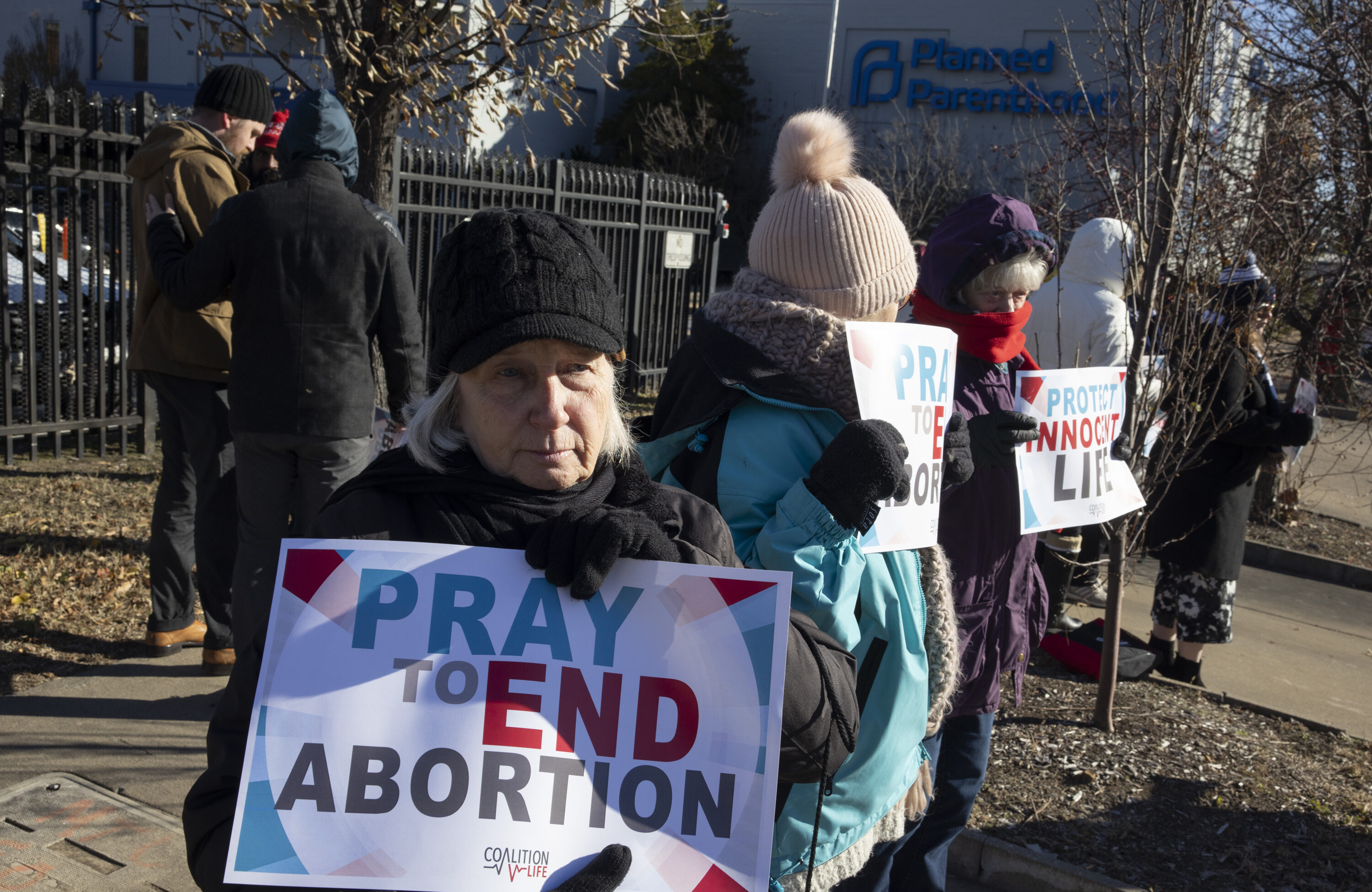
Missouri’s bishops are calling on the faithful to pray, fast and vote in support of Amendment 3 this November, saying the measure offers an opportunity to reinstate protections for unborn children and safeguards for women’s health.
The newly proposed Amendment 3 would limit most abortions except for cases of rape and incest (up to 12 weeks of gestation), emergencies and fetal anomalies. It would also repeal a 2024 voter-approved amendment, which allows for abortions through fetal viability, but also offers a broad exception for the “life and physical or mental health of the pregnant person.”
“This year, Missourians will have the opportunity to restore those safeguards by voting for Amendment 3,” the bishops said in a statement March 25. “The proposed constitutional amendment will protect women’s health and safety and restore protections for the unborn. We ask the faithful and all people of good will to join us in prayer and fasting for the success of Amendment 3 and to support each human person from conception to natural death.”
The bishops noted that the amendment passed in 2024 “enshrined a sweeping right to abortion in the state constitution.” It also eliminated the legislature’s ability to set safeguards for the abortion industry, including a requirement that only doctors perform abortions, parental consent for minors receiving abortions and licensing and inspection requirements, the bishops said.
If approved by voters, the new ballot question would reinstate health and safety inspections at abortion facilities, require parental consent for minors receiving medical procedures, require physicians performing abortions to have nearby hospital admitting privileges, ensure access to care for medical emergencies, ectopic pregnancies and miscarriages and provide medical malpractice protections. It would amend the constitution to ban gender transition surgeries and prescribing medications for gender transition, including puberty blockers, for children younger than 18.
While Amendment 3 would not return Missouri to the near-total abortion ban that followed the 2022 Dobbs decision, it would reduce the number of abortions in the state and restore the legislature’s ability to set regulations around women’s and children’s health, Missouri Catholic Conference executive director Jamie Morris said.
Morris said there is a need to educate voters who are unaware of the upcoming amendment or who don’t understand what it would do. Getting the bishops’ statement out early was an effort to show that the Church supports a “yes” vote on Amendment 3, and they ask Catholics to inform other voters on the issue and to pray and fast for a successful campaign, he said.
“It’s going to be so beneficial having those initial conversations with family and friends,” Morris said. “By talking to (others), this will be helpful for when we need to engage and get the vote out. It’s about laying the proper foundation now.”
A SLU/YouGov Poll conducted earlier this year indicated that 47% of Missouri voters support Amendment 3, 40% would oppose it and 12% are not sure. Voters who support the amendment also are not opposed to all abortion access: 74% of amendment supporters agree abortion should be legal in cases of rape, and 81% agree when a woman’s life is endangered.
Voters’ views on abortion have remained stable since SLU/YouGov Poll surveyed Missouri voters about them in August 2022. A majority continue to support abortion in cases of rape (78%), incest (78%) and when a woman’s life is endangered (85%). Fifty-nine percent agree abortion should be legal in the first eight weeks of pregnancy, nearly identical to 2022, while support drops to 47% at 12 weeks and 35% at 15 weeks. Just 36% believe abortion should be legal for any reason.
A Jackson County trial concluded in late January after Planned Parenthood and the ACLU of Missouri challenged the constitutionality of several dozen state abortion regulations, arguing they violate the constitutional amendment voters passed in 2024. Judge Jerri Zhang gave both sides until April 10 to file post-trial briefs, and a ruling is expected before Missourians vote on Amendment 3 later this year.
One of the laws challenged during the trial is a requirement that patients receive a copy of Missouri’s informed consent booklet before an abortion. Other laws challenged were a 72-hour waiting period before receiving an abortion, a requirement that only physicians provide abortions, a ban on prescribing medication abortion via telehealth, facility licensing requirements, admitting privileges and a written transfer agreement at a nearby hospital and a state-approved complication plan for medication abortions.
Pro-life lobbyist Deacon Sam Lee said the ruling could have “huge implications” on abortion laws in Missouri. Planned Parenthood clinics in Kansas City, Columbia and St. Louis have resumed limited surgical abortions, but medication abortions are not available.
Meanwhile, Deacon Lee said that legislative efforts to help pregnant women and children in need, including appropriations for the state’s Alternatives to Abortion program and expansion of tax credits for maternity homes and pregnancy resource centers, remain a priority.
“We still need to support PRCs and maternity homes and Catholic Charities’ agencies involved in direct care of pregnant and postpartum women and their children,” he said.
Timeline of key abortion decisions:
2017
Legislation is passed requiring facilities providing abortions to be licensed as ambulatory surgical centers and to have hospital admitting privileges.
2019
Missouri House Bill 126 — the “Missouri Stands for the Unborn Act” — was signed into law by Gov. Mike Parson and banned most abortions after eight weeks of pregnancy, except cases where the mother is at risk of death or serious physical harm and no exception for exception for cases of rape or incest. The measure also included a “trigger” ban on all abortions in Missouri if Roe vs. Wade is overturned and numerous other abortion regulations.
2022
The U.S. Supreme Court ruled in Dobbs v. Jackson Women’s Health Organization in June, overturning Roe v. Wade and returning abortion regulation to the states. Missouri Attorney General Eric Schmitt activated the state’s trigger law moments after the decision was released, making Missouri the first state to ban all abortions after Dobbs.
2024
Missouri voters approved Amendment 3 in November by a 51.6% to 48.4% margin, which amended the constitution to allow abortions until fetal viability, with a broad exception for the “life and physical or mental health” of the pregnant person.
2024
Jackson County Judge Jerri Zhang ruled in December that Missouri’s near-total abortion ban is unenforceable, saying that it “is directly at odds” under a new constitutional amendment. Numerous other abortion regulations were struck down as unconstitutional.
2026
A trial began in Jackson County over which abortion regulations should remain in place under Amendment 3. Planned Parenthood and the ACLU of Missouri challenged dozens of remaining abortion regulations, including the 72-hour waiting period, facility licensing requirements, gestational bans and restrictions on medication abortion via telemedicine.
2026
A newly proposed constitutional amendment expected on the ballot later in 2026 would limit most abortions except for cases of rape and incest (up to 12 weeks of gestation), emergencies and fetal anomalies. If approved by voters, it would also repeal the 2024 voter-approved amendment, reinstate health and safety inspections at abortion facilities, require parental consent for minors receiving medical procedures, require physicians performing abortions to have nearby hospital admitting privileges, ensure access to care for medical emergencies, ectopic pregnancies and miscarriages and provide medical malpractice protections.
Amendment 3: Learn and pray
To learn more about Amendment 3, visit the Missouri Catholic Conference: mocatholic.org/amendment-3
The MCC has speakers available to present to groups on Amendment 3. To request a speaker, visit mocatholic.org/ speaker-request/. For speaker suggestions from the archdiocesan Respect Life Apostolate or to request copies of the Amendment 3 prayer card, email prolife@archstl.org or call (314) 792-7555.