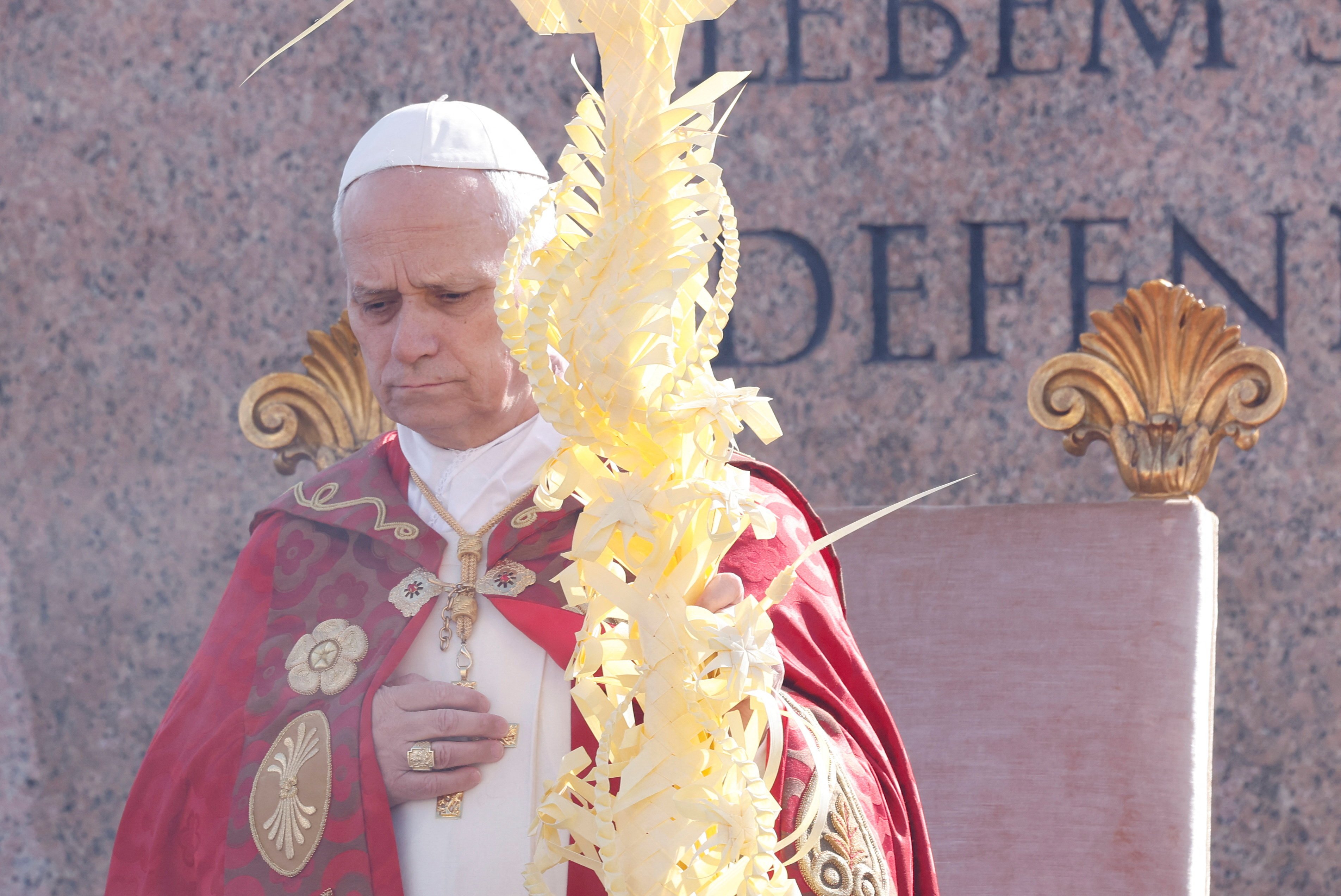
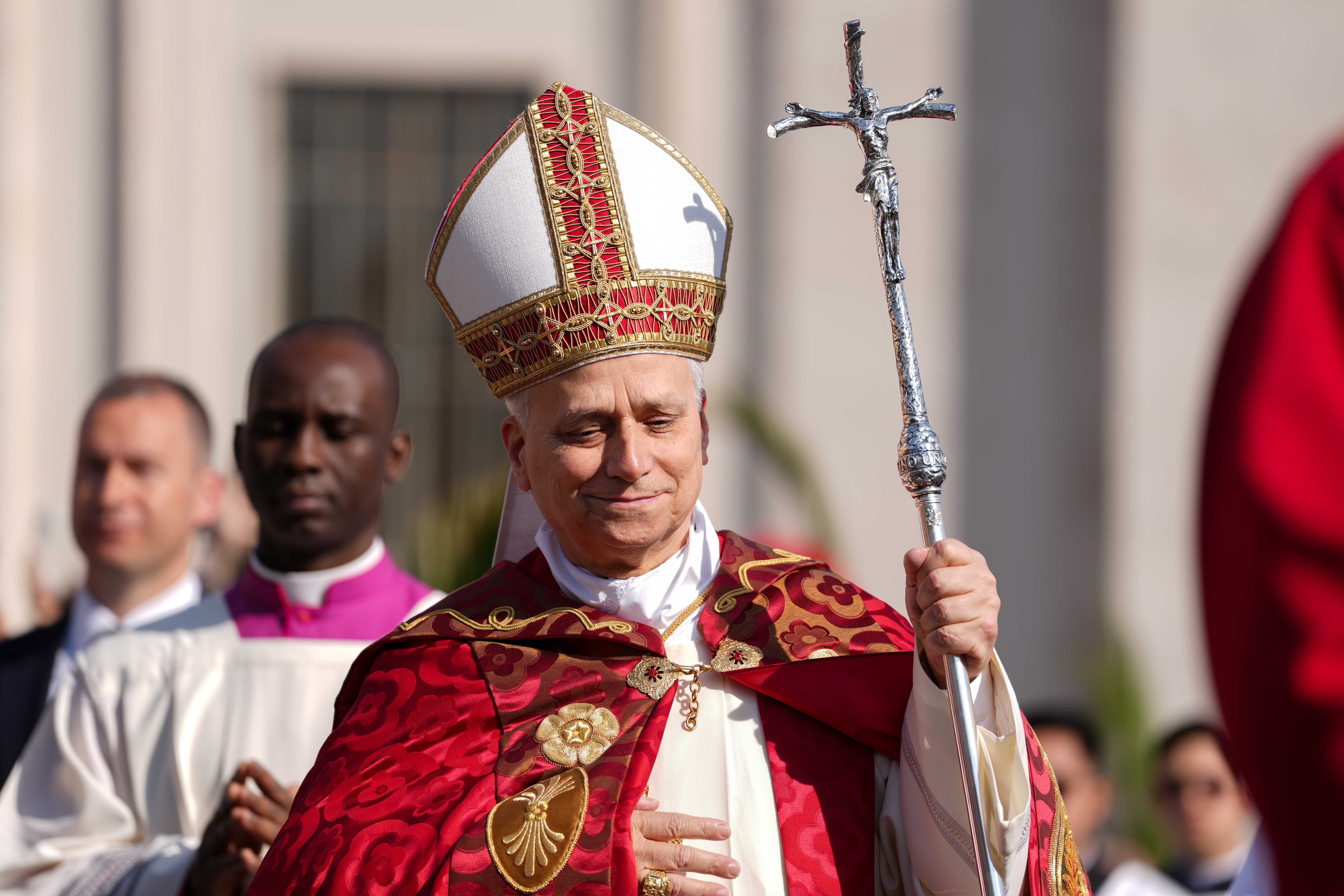
VATICAN CITY — Marking the start of Holy Week, Pope Leo XIV used his first Palm Sunday Mass to issue a forceful plea for peace, urging an end to war as he reflected on Christ’s passion.
During his homily opening Holy Week at St. Peter’s Square, the pope said the faithful must follow Jesus, as He embraced humanity “even as others raise swords and clubs.”
“We turn our gaze to Jesus, who reveals Himself as King of Peace, even as war looms around Him,” he said March 29. “He remains steadfast in meekness, while others are stirring up violence.”
Pope Leo continued, recounting Jesus’ final words to God, saying that in that moment we can see a “crucified humanity.”
“Above all, we hear the painful groans of all those who are oppressed by violence and are victims of war,” he said. “Christ, King of Peace, cries out again from His cross: God is love! Have mercy! Lay down your weapons! Remember that you are brothers and sisters!”
In his appeal at the close of the Mass, he went on further to press for peace, especially in the Middle East. He called on prayers for Christians in the Middle East, whose “ordeal challenges all our consciences,” as the conflict between the United States, Israel and Iran enters its fifth week.
“Just as the Church contemplates the mystery of the Lord’s passion, we cannot forget those who today are truly sharing in His suffering,” he said. “Let us raise our prayer to the Prince of Peace that He may sustain the peoples wounded by war and open concrete paths to reconciliation and peace.”
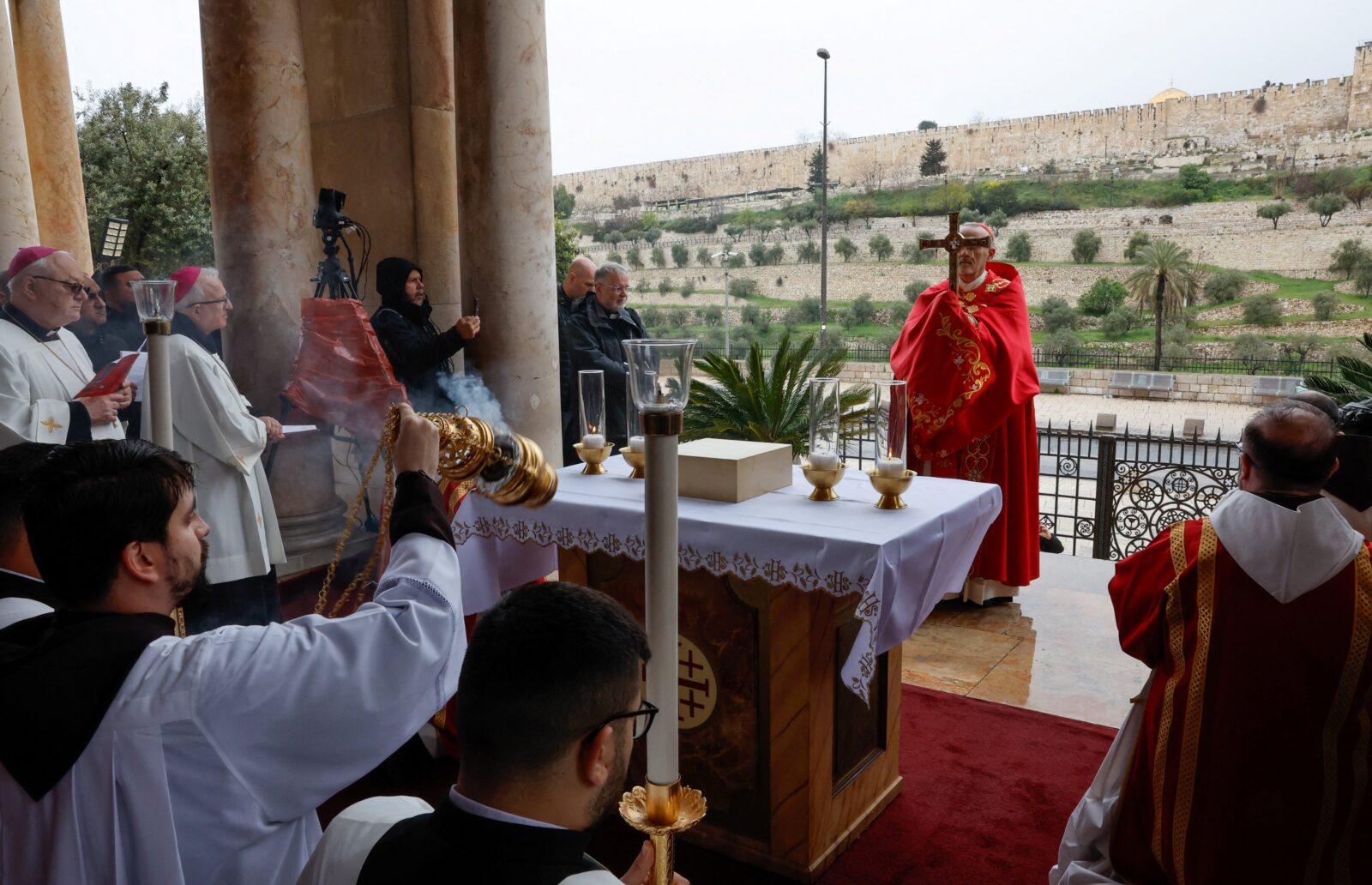
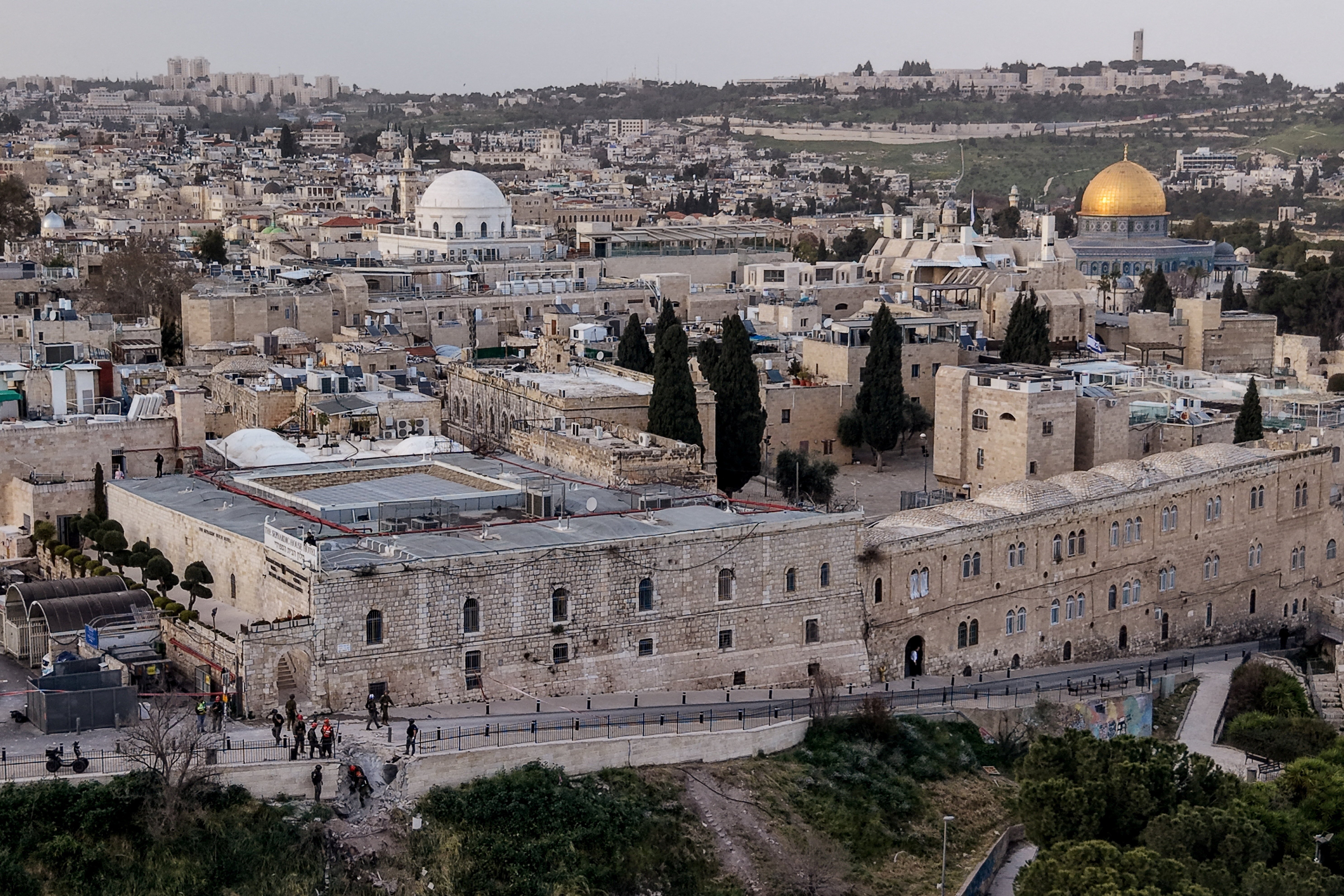
Cardinal Pierbattista Pizzaballa, the Latin patriarch of Jerusalem, held a prayer service to mark Palm Sunday, following the cancellation of the traditional Palm Sunday procession from the Mount of Olives, amid restrictions on gathering in large groups and the U.S.-Israeli war with Iran, in Jerusalem, March 29.
Jerusalem Church leaders urge peace efforts amid ‘deep darkness’
The Patriarchs and Heads of the Churches in Jerusalem issued an annual Easter message, calling the war an “expanding wreckage” and its timing a “deep darkness.”
While “hope itself appears to have abandoned us,” they reminded the faithful in the Middle East and beyond that Scripture “teaches and our faith reveals, the desolation of the tomb was not the end of the story.”
“In the weeks leading up to this year’s commemoration of Christ’s death and resurrection, a new and devastating regional war has once again plunged the Holy Land and the wider Middle East into turmoil,” the patriarchs and heads of churches said.
“Each passing day has brought increasingly fierce escalations — a relentless cycle of death, destruction, and frightful suffering that now ripples across the globe in rising economic hardship,” the patriarchs and heads of churches continued in their March 27 statement.
“From the blackened smoke of this expanding wreckage, a deep darkness has engulfed our region, as stifling as the air inside the sealed tomb of the crucified Christ” the leaders said.
However, the “desolation of the tomb” of Jesus Christ, they said, “was not the end of the story.”
“Death did not have the final word. By the power of God, Christ rose victorious from the grave, bursting the bonds of sin and death,” Church leaders in the Holy Land said.
The Church leaders of the Holy Land appealed to the faithful and people everywhere of good will to “advocate and intercede for an immediate end to the bloodshed and for justice and peace to finally prevail throughout our war-torn region, beginning in Jerusalem and extending to Gaza, Lebanon, and all the Holy Land; to the Gulf States and Tehran; and to the ends of the earth.”
Paulina Guzik, OSV News, contributed to this story