Laudato Si Commission micro grants support parishes in making sustainable changes at fish fries
For years, the fish fry at Our Lady of Providence Parish in Crestwood has drawn crowds with a diverse menu featuring its famous frog legs. But “going green” has taken on a whole new meaning to what the parish is serving up on Fridays in Lent.
Parishioner Patti Loehnig and a small group of volunteers have spent the past several years advocating for incremental changes in the sustainability practices at the parish’s weekly fish fry. Just as Kermit the Frog famously proclaims — it’s not easy being green — Loehnig said that the extra work is worth the steps they’ve taken so far.

Our Lady of Providence is among 14 parishes that received a combined $5,000 in micro grants from the archdiocesan Laudato Si Commission last fall to implement sustainability practices at their Lenten fish fries in 2026. Most are using the funds toward the purchase of compostable or reusable serve ware — plates, cups and utensils — with some using their grants toward hiring a composting service.
Their efforts echo Pope Francis’ message in his encyclical, “Laudato Si’,” in which he encouraged the rejection of a “throwaway culture” and urged moving from systems of waste toward practices of sobriety, stewardship and care for creation. The late pontiff also said that “all of us can cooperate as instruments of God for the care of creation, each according to his or her own culture, experience, involvements and talents.”
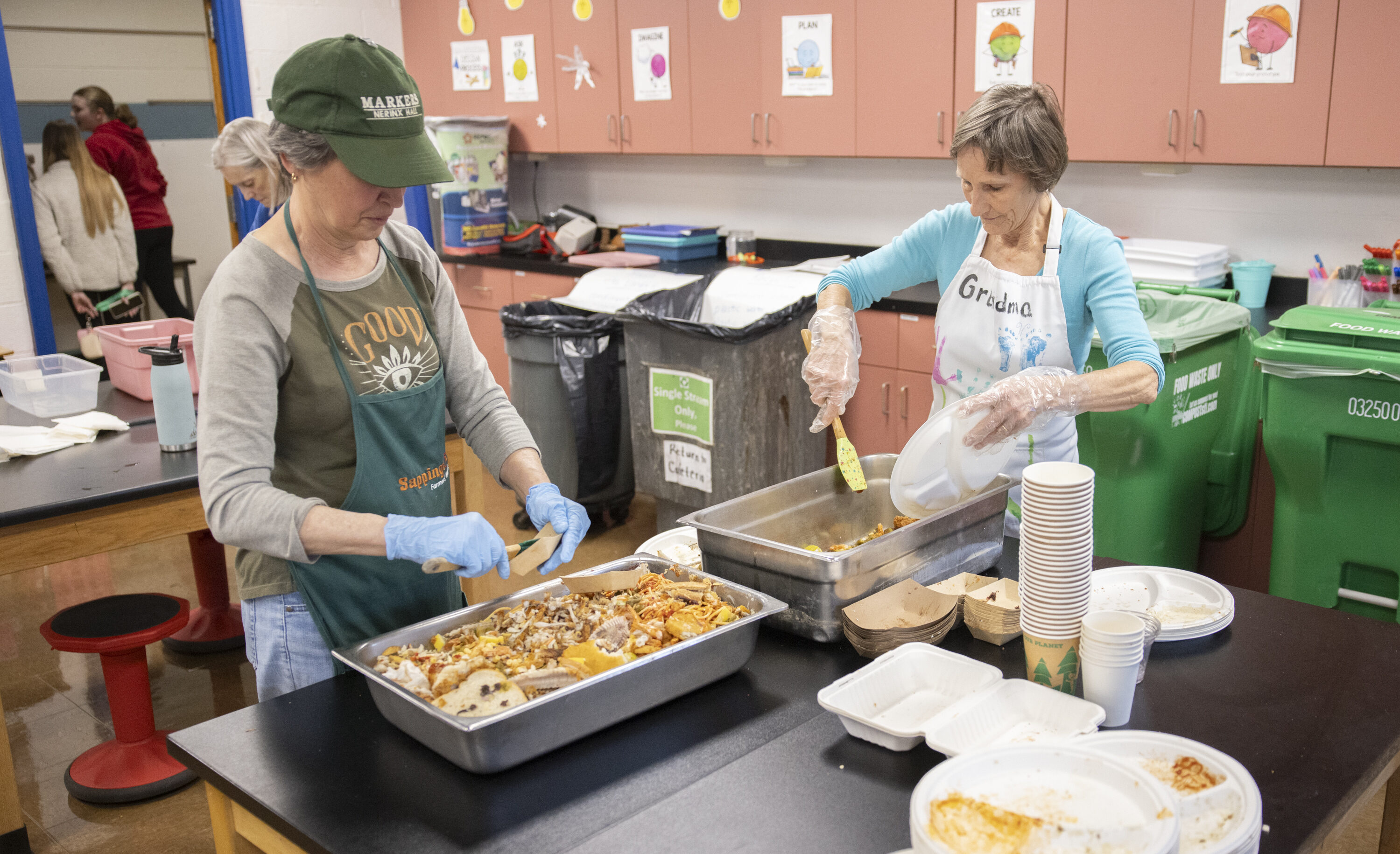
About five years ago, Loehnig and others began working with fish fry organizers to move from plastic to paper cups and eliminated Styrofoam containers for desserts and replaced them with single-serve food trays made from paper. Last season, the parish moved to compostable plates for dine-in customers. This year, Loehnig and the team asked parishioners to scour drawers, thrift stores and estate sales for reusable metal utensils. Our Lady of Providence’s micro grant went toward hiring New Earth Farms, a St. Louis-based composting service, and to defray the cost of compostable serve ware.
“If you saw how full and overloaded the dumpsters were in past years, and then last week, there was still room in the dumpster — I slept with a smile on my face,” Loehnig said.
Organizers had to research to find the best deal on compostable serve ware, a cost that adds up quickly, she noted. Styrofoam clamshells might cost just a few cents each, but the compostable version runs closer to 50 cents apiece. When you’re buying thousands of containers for a six weeks worth of fish fries, “you add that up, and that takes so much away from your profit,” Loehnig said, which go toward needs of the parish and school, Holy Cross Academy.
Care for God’s creation
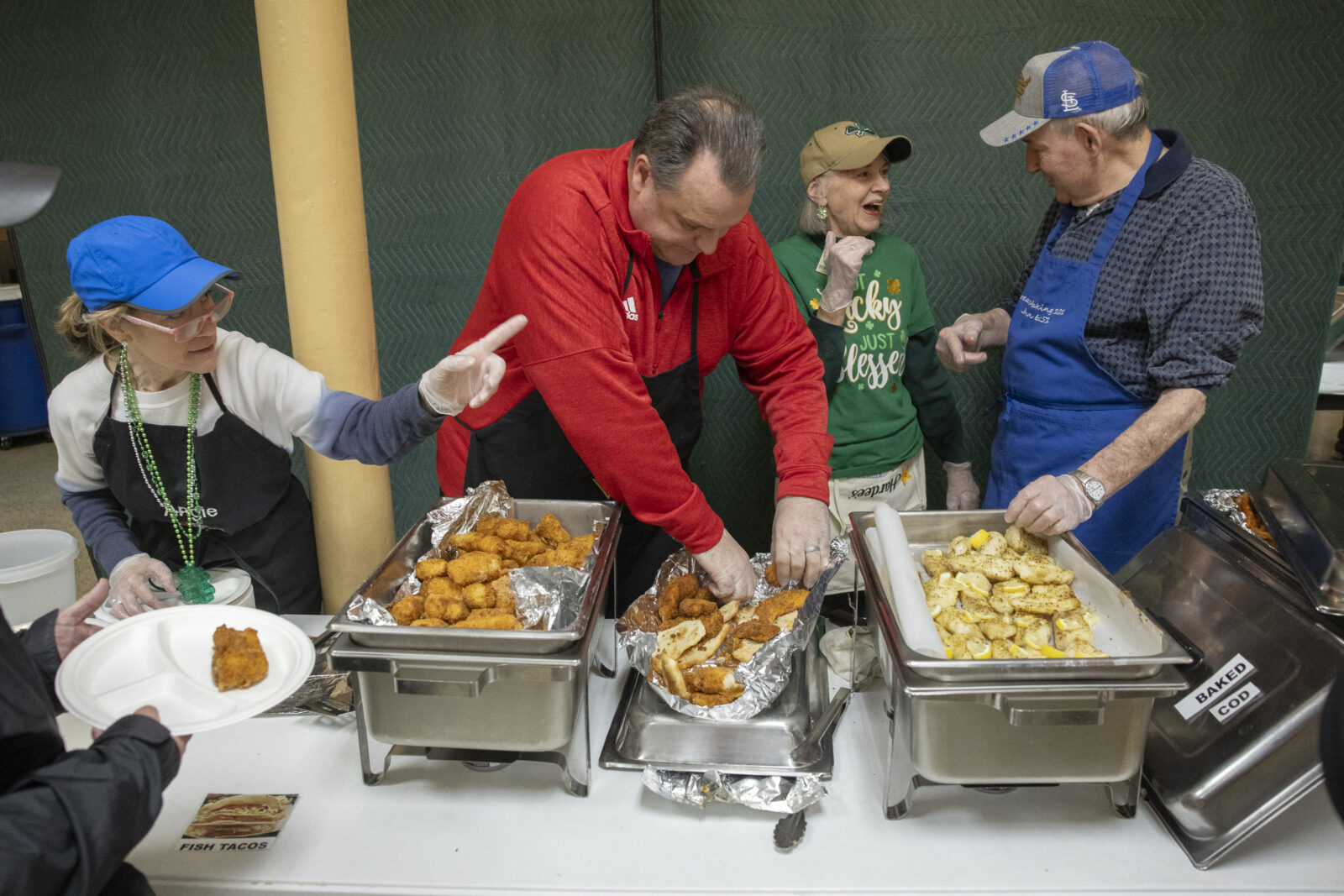
During its first round of micro grants in early 2025, the archdiocesan Laudato Si Commission received several requests from parishes seeking funds to make their fish fries more sustainable. Commission members realized that fish fries — large-scale community events that are a cultural staple in the Archdiocese of St. Louis — were an ideal place to “move the needle” on the issue in reducing waste and educating Catholics about caring for creation, commission co-chair Jamie Hasemeier said.
For its second round of micro grants, the commission focused specifically on fish fries. After its annual Laudato Si summit last fall, the commission hosted a workshop in October for parishes with practical tools and best practices. Participants also looked at the theological implications and how environmental stewardship ties into the importance of caring for God’s creation, Hasemeier said.
“We look at Earth as a gift and all of creation as representing God,” Hasemeier said. “If it’s a gift from God, then it’s our responsibility to care for that gift. Showing our love and respect (for Earth) is like showing love and respect for one another. It’s such a profound movement of the faith journey, when you see yourself as part of creation instead of separate from creation.”
Hasemeier emphasized that successful sustainable fish fries depend on strong relationships and collaboration, tailored to each parish’s unique culture. Parishes need committed volunteers and an approach that feels welcoming. While the work is a heavy lift in both money and volunteer time, she said the payoff is the satisfaction of caring for creation and one another, not only now but for future generations.
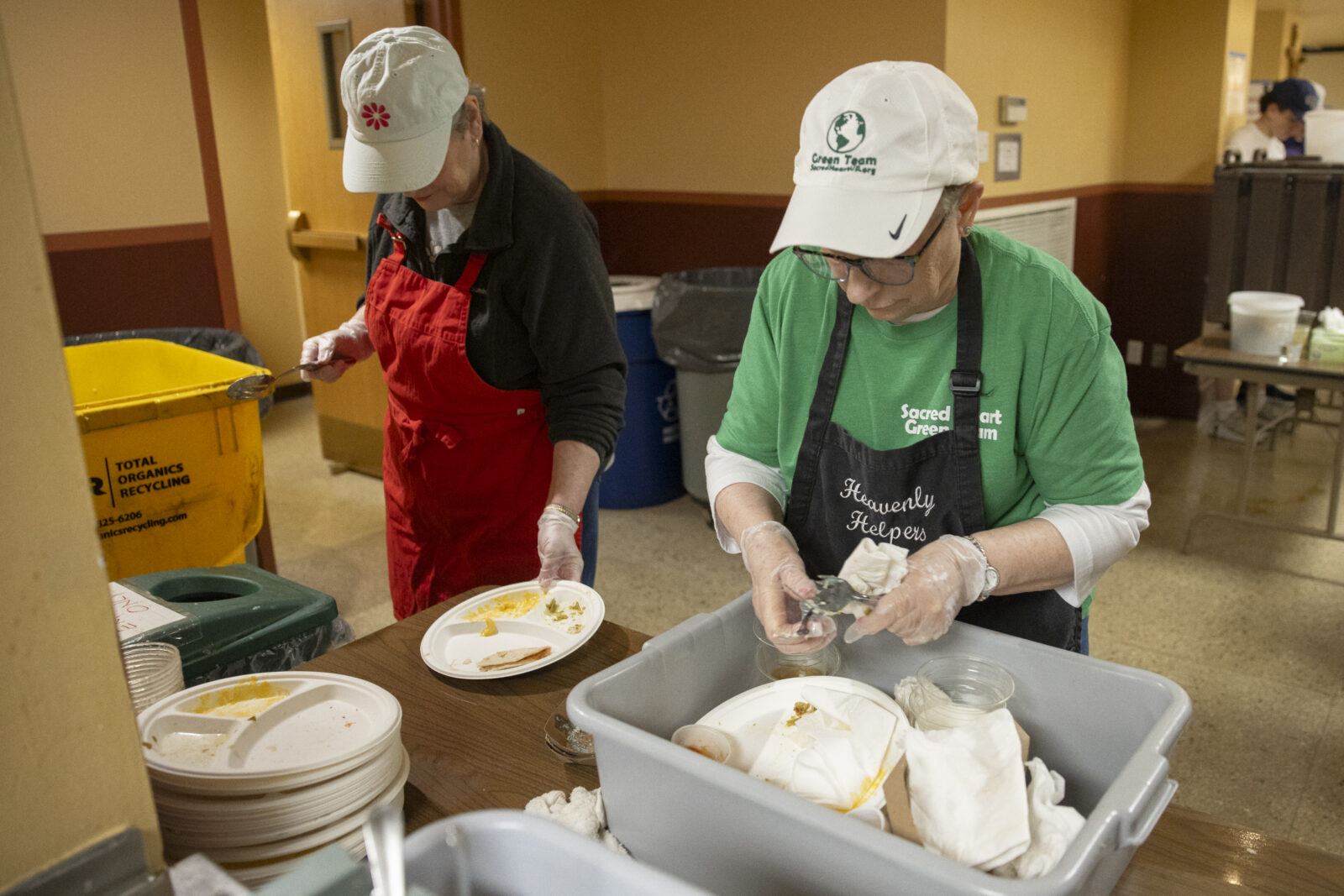
Sacred Heart Parish in Valley Park has implemented practices over the last several years to reduce waste at its weekly Lenten fish fries. Karen DuBrucq, a member of the archdiocesan commission, said that the parish’s Green Team closely collaborated with the Knights of Columbus at Sacred Heart to implement changes over the years.
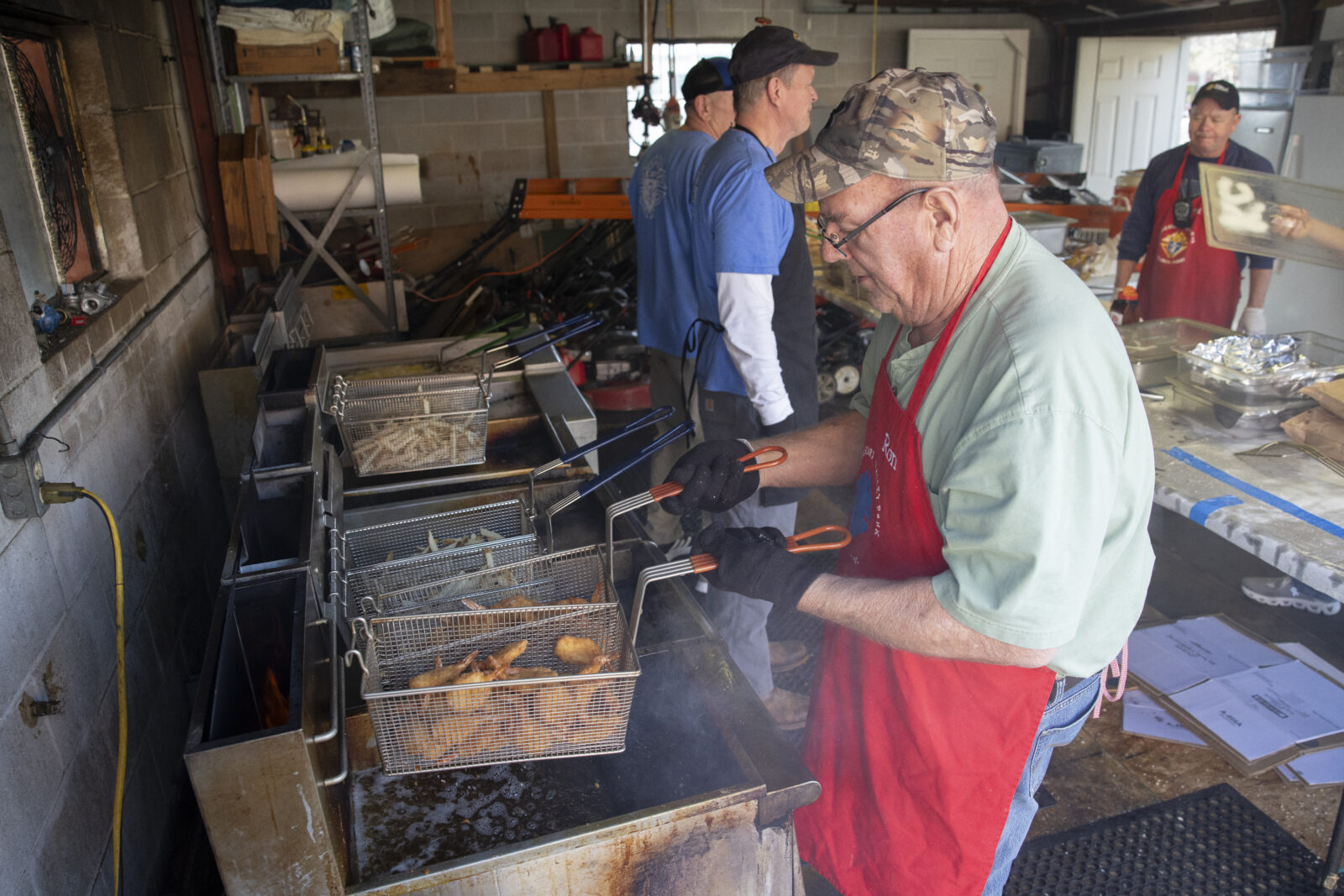
DuBrucq and Bob Hock from the Knights of Columbus shared best practices at the October workshop, including incremental changes that have been implemented over the last several years, such as using compostable plates and drink cups made from corn, recyclable take-home containers, reusable silverware sourced from thrift stores and parishioner donations and hiring a composting service. Fry oil also is donated to Rockwood School District and processed into bio-diesel fuel for the district’s vehicles.
The Knights, who organize the fish fry as its main fundraiser, were concerned that compostable plates, cups and containers would eat into profits that support social outreach efforts at the parish and community. The Green Team took the concern seriously and moved into problem‑solving mode, including sourcing and donating real silverware, recruiting volunteers to bus tables and wash dishes, paying for recyclable to‑go containers and helping cover the cost of composting and compostable products.
“It’s really been a team effort, and that’s what I stress to other groups, that hopefully they can learn from us,” Hock said. “Our mission is to conduct a community event for the parish, where we raise a lot of money for charitable events, while also fulfilling a Christian obligation to take care of our home and our resources.”
“I want my kids and my grandkids to experience that same thing — the beauty of the Earth,” DuBrucq said. “It’s not going to happen if we don’t take steps ourselves, and within the fish fry context, there are things that we can do.”
For future generations
St. Margaret of Scotland Parish in St. Louis has turned its PTA-run fish fry, held once during Lent, into an exercise in parish sustainability. The parish’s Caring for Creation Committee, which received a micro grant toward the cost of serve ware and a composting service, sees the efforts as caring for creation and modeling good stewardship for future generations, said Joanna Wingbermuehle, who leads the fish fry committee.
The parish offers fully compostable plates, utensils, napkins and to-go containers and is working toward compostable (or at least recyclable) beverage cups. Beyond serve ware and composting, St. Margaret also recycles its fry oil through a local company, Brooks Grease Service, which collects the used cooking oil at no charge and converts it into fuel.
“We have one planet, and I think we need to do our best to maintain a more sustainable world, especially for future generations,” she said. “And I think that’s a lesson I’m trying to pass on to my kids. We want to set a good example for them, so they can carry it through. This is worth doing, and we need to teach them what’s right and teach them how to take care of this world that God has given to us.”
Laudato Si micro grants
Fourteen parishes received micro grants from the archdiocesan Laudato Si Commission in 2026 to support sustainable practices at their fish fries. Awards were between $200-$500. Parishes include:
- St. Pius V
- Mary Mother of the Church
- Our Lady of Providence
- Sacred Heart in Valley Park
- St. Justin Martyr
- Holy Rosary
- Assumption of the Blessed Virgin Mary in O’Fallon
- St. Cecilia
- Sts. Joachim and Ann
- Holy Redeemer
- St. Joseph in Manchester
- St. Margaret of Scotland
- St Anthony of Padua
- St. Lucy (Our Lady of Sorrows campus)
In March, the commission was awarded a $21,000 grant from the St. Louis-Jefferson Solid Waste Management District, which will be used toward future micro grants to encourage sustainability efforts at parish fish fries in the archdiocese. To learn more about the Laudato Si Commission and the micro grant program, visit stlreview.com/40u10Bk.
“There is a nobility in the duty to care for creation through little daily actions, and it is wonderful how education can bring about real changes in lifestyle. Education in environmental responsibility can encourage ways of acting which directly and significantly affect the world around us, such as avoiding the use of plastic and paper, reducing water consumption, separating refuse, cooking only what can reasonably be consumed, showing care for other living beings, using public transport or car-pooling, planting trees, turning off unnecessary lights, or any number of other practices. All of these reflect a generous and worthy creativity which brings out the best in human beings. Reusing something instead of immediately discarding it, when done for the right reasons, can be an act of love which expresses our own dignity.”
Pope Francis, “Laudato Si’” (211)