Is there a legitimate way that Catholics can follow the advice to just “be yourself?” Don’t we have a responsibility to others that asks more of us than just personal authenticity?
I still remember the first time I heard a young person cheer on a friend’s choice by saying “You do you!” On the one hand, I was tickled that this youth, completely unknown to himself, shared a basic outlook with Aristotle — that our essence expresses itself in our actions.
But on the other hand, I was immediately terrified by the saying’s implication that the only constraint on a person’s actions is that it be faithful to “me,” my desires and impulses. Surely even the most self-centered modern individual could recognize that such an ethos would lead to chaos when made universal!
So, what is a well formed Catholic to do? Should we wholeheartedly accept the moral of simplistic children’s TV specials: There is nothing more important than following your heart/desires/impulses? Or are we condemned to tut-tut the popular quest for personal authenticity as too selfish and not duty-bound enough?
Perhaps not surprisingly, the answer lies at neither of these extremes. Properly understood, there is indeed no higher calling than becoming the person we are meant to be. After all, God created us in a certain way and there can be no true happiness except in fulfilling that design as completely as we can. However, fulfilling our design is not merely a matter of following our impulses but in understanding how our design calls us to live in particular ways.
When considering the ethics of our choices, it is necessary to examine the type of being that we are and to bring our actions into line with that “essence” or “nature.” As human beings, we should take the kinds of actions that are proper to the design of human nature. We ought not act in ways that contradict the natural human dignity of ourselves or of others. Our essence does in fact require us to consider others and the moral good in our actions, not just our individual desires.
But since humans have a rational nature, we are also what is known as a personal beings. Each rational being has a unique personal identity core to themselves. While parts of this personal identity might be shared with others (such as a deep passion for Star Wars movies, a sense of joy at physical exercise, or a history as a graduate of a particular school, boot camp or troubled past), the person is more than just a collection of characteristics. Rather each of these characteristics is in relationship to a unique and irrepeatable self.
Acting in accord with this unique identity does not have the same ethical weight as acting in accord with our common nature (since ethics is the science of what is right for all people), but it is still important for our human fulfillment. Just as God created us with an essential nature, God also created us as a unique individual who is loved — and can love — precisely in that uniqueness.
Modern popular culture and children’s movies often far overemphasize this personal identity to the neglect of the universal ethical responsibilities that are also necessary to our happiness. We can never uncritically cheer on “being myself” without also requiring “being responsible.” But Christians can’t deny that our individual personhood is the loving gift of God, and that developing it faithfully is a response to God’s call. Both of these parts of our makeup are essential, and a balanced authenticity to both is what will lead to our ultimate fulfillment!
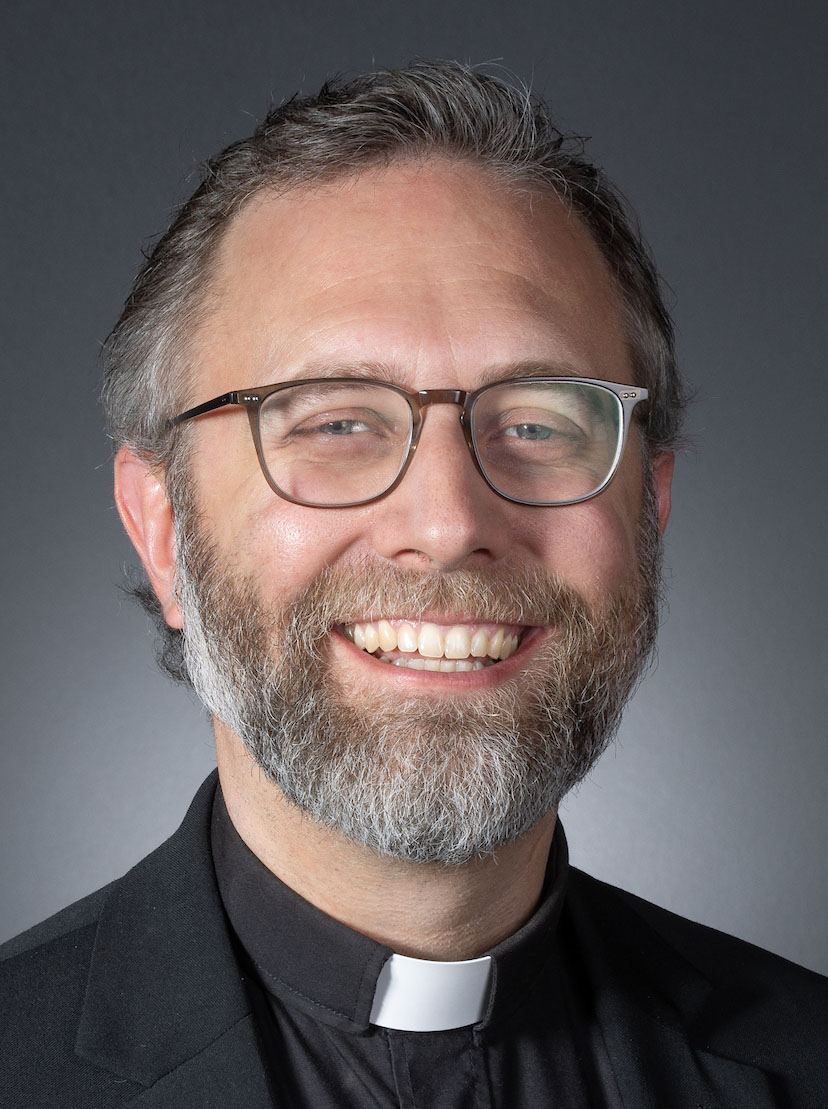
Father Chris Schroeder is pastor of Christ the King Parish in University City and St. Joseph Parish in Clayton.