The Latin patriarch also urged continued prayer for a lasting peace in the Holy Land
JERUSALEM — As indirect ceasefire talks began in Egypt between Israel and Hamas Oct. 6 in Sharm el-Sheikh, Egypt — aimed at finalizing a ceasefire deal based on a proposal from U.S. President Donald Trump — the Latin patriarch of Jerusalem lauded it as an “important and long-awaited first step.”
Nevertheless, he cautioned that nothing is “entirely clear or definite yet.”
“Many questions remain unanswered, and much still needs to be defined. We must not delude ourselves, but we are pleased that something new and positive is on the horizon,” Cardinal Pierbattista Pizzaballa said in an Oct. 5 statement.
He echoed Pope Leo XIV’s call for a day of fasting and prayer for peace on Oct. 11 and added that the patriarchate of Jerusalem renews its intercessory prayer for peace to its patroness, the Queen of Palestine and of all the Holy Land, as her feast day approaches.
“The end of war does not necessarily mark the beginning of peace, but it is the first essential step toward building it. We have a long road ahead to rebuild trust among ourselves, to make hope tangible and to free ourselves from the hatred of these years. But we will strive for this, together with the many men and women here who still believe it is possible to imagine a different future,” he said.
On Oct. 3, Hamas expressed willingness to negotiate through mediators in response to Trump’s proposal. Trump that day called for Israel to stop bombing Gaza in anticipation of the negotiations.
Delegations from the U.S., Israel and Hamas traveled to Egypt in hopes of securing an agreement to end nearly two years of conflict in Gaza, which broke out after the Oct. 7, 2023, Hamas attack on southern Israeli communities. The attack left 1,200 people dead and 250 were taken hostage into Gaza, with 48 still remaining in captivity and around 20 believed to still be alive.
According to Gaza’s Health Ministry, which does not distinguish between civilians and combatants, more than 67,000 people have been killed in the ensuing war.
“We don’t know if this war will truly end, but we do know the conflict will continue because its root causes have yet to be addressed,” Cardinal Pizzaballa added, noting that the path ahead is fraught with challenges, including the deteriorating situation in the West Bank where especially small Palestinian villages lack sufficient protection by security forces from increasing daily settler attacks.
In the face of uncertainty about the future and feelings of disorientation and distrust, the Church is called on to “speak a word of hope,” he said, and to “have the courage to offer a narrative that opens horizons and builds rather than destroys” both in word and deed.
The Church seeks “a spiritual vision that will help us remain steadfast in the Gospel,” Cardinal Pizzaballa said.
Violence has devastated not only land but also “the human soul of many,” the cardinal said, both in the Holy Land and around the world. “Anger, resentment, distrust, hatred, and contempt” dominate the discourse “and pollute our hearts,” he said, adding that the risk of becoming accustomed to suffering is high.
“Every life lost, every wound inflicted, every hunger endured remains a scandal in God’s eyes,” he said.
He criticized the way power, force and violence have increasingly shaped today’s political, cultural, economic and even religious systems, with growing belief that force alone can bring peace, while ignoring the destructive cost such thinking taught by history.
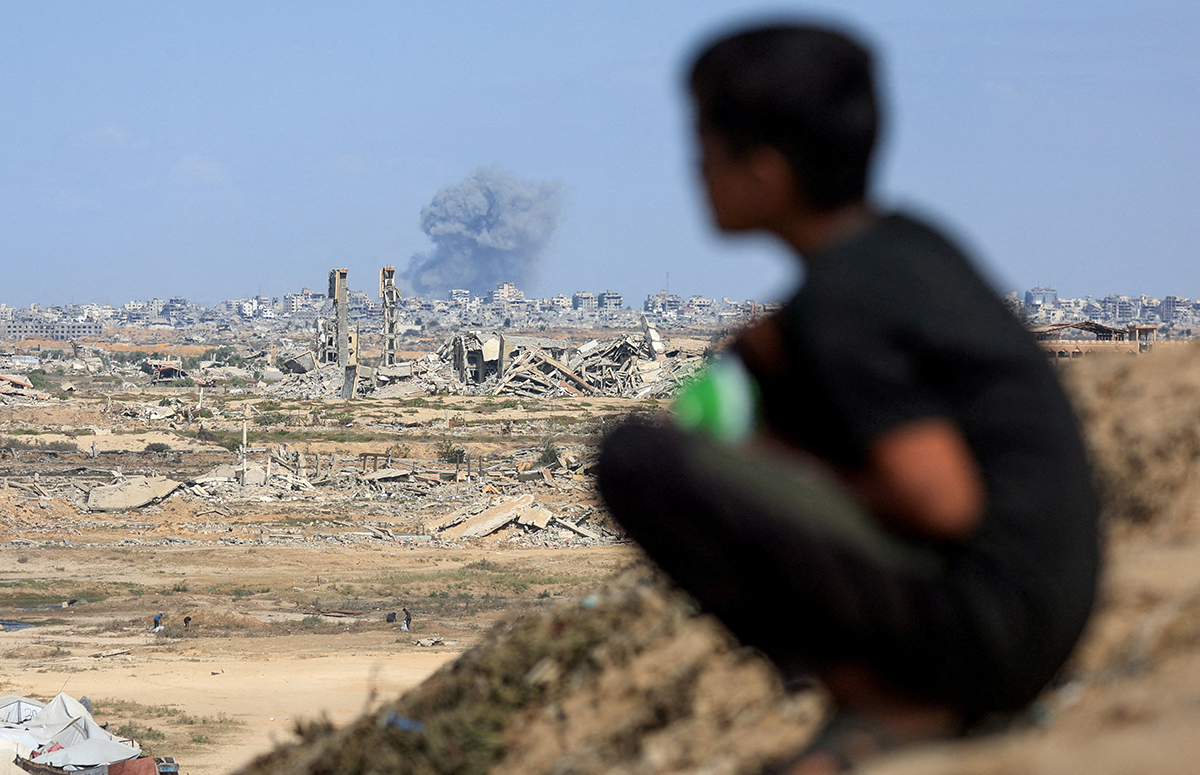
“The images from Gaza have deeply wounded the common consciousness of rights and dignity that lives in our hearts,” he said.
In the face of such tragedy, even believers have struggled to reconcile their faith with the harshness of reality, he said, with the hatred and pain challenging their belief in a world reflecting God’s presence. Alone they cannot fully grasp or withstand the mystery of evil, and he urged the faithful to keep their eyes “fixed on Jesus.”
“Only in this way will we be able to bring order within ourselves and look at the reality with new eyes,” he said, pointing to forgiveness as Christ’s “life’s choice.”
“Our decision to remain, when everything urges us to leave, is not a challenge but an act of love,” he said. “Our denouncing is not an offense to any party but a call to dare a different path from the reckoning. Our dying took place under the cross, not on a battlefield.”