U.S. bishops call for increased aid following the flooding that killed more than 1,100 people in Nepal and Tibet
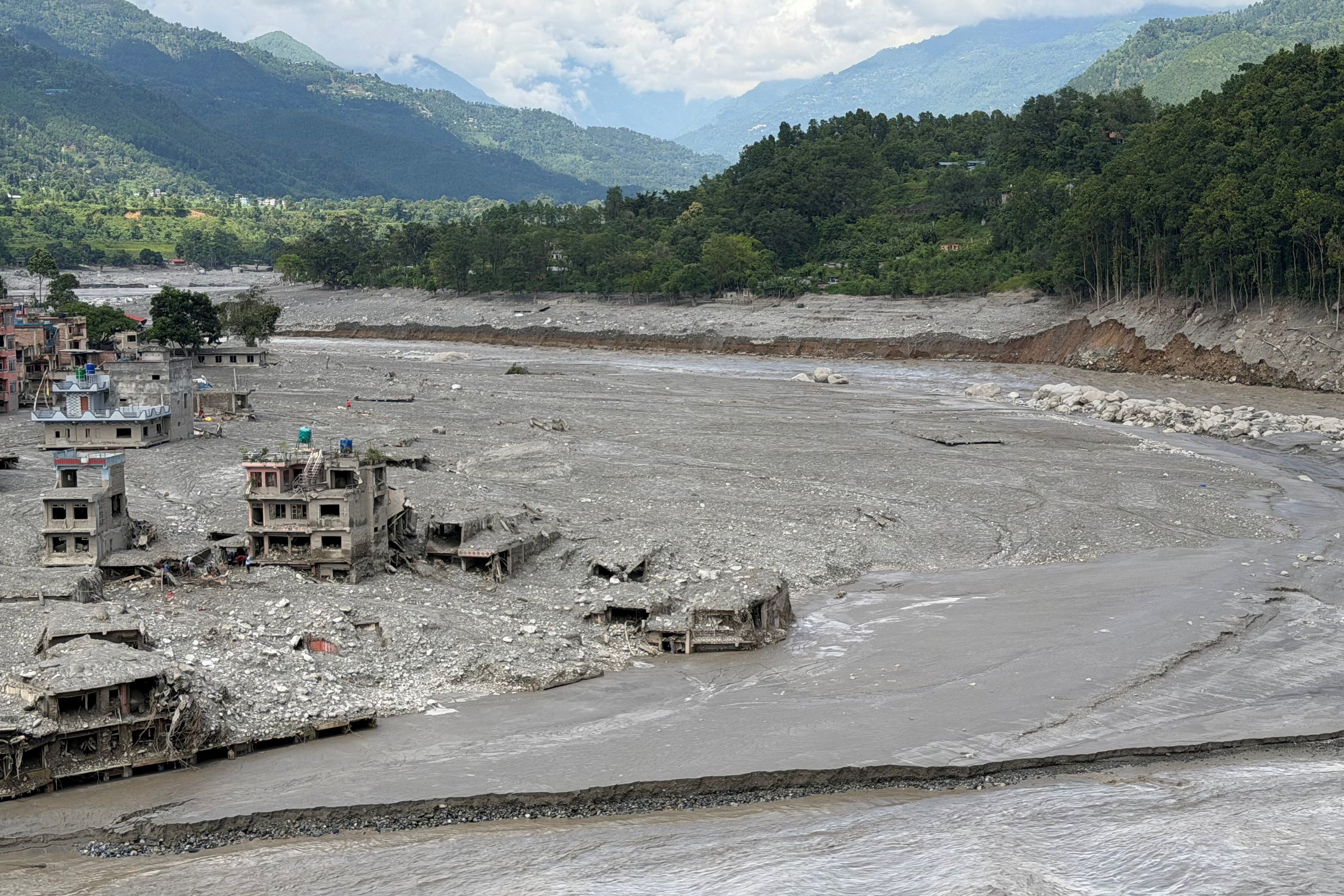
A U.S. Catholic bishop is calling on the international community to step up aid after devastating torrents of water and mud raged along the Nepal-China border, killing more than 1,100 with over 3,900 still missing as of Sept. 2.
“As we learn more about the devastating flash floods in Nepal, I offer the prayers and solidarity of the Catholic community in the United States for our brothers and sisters impacted by this disaster,” Bishop A. Elias Zaidan of the St. Louis-based Maronite Eparchy of Our Lady of Lebanon of Los Angeles said in an Aug. 27 statement.
The disaster was triggered by a glacial collapse in Nepal’s Langtang National Park shortly after 8:30 a.m. Aug. 26, according to the U.S. Geological Survey. Debris from the 5.2 magnitude event flowed more than 60 miles, resulting in “catastrophic impacts downstream” in communities along the Trishuli and Bhote Koshi Rivers, the agency said.
Among the missing are close to 670 individuals from some 32 nations, 65 of whom are from the U.S. Many are part of tour groups and Hindu pilgrimages.
Amid rescue efforts, the region is bracing for a possible secondary flooding due to ongoing rainfall, according to the United Nations’ World Meteorological Organization.
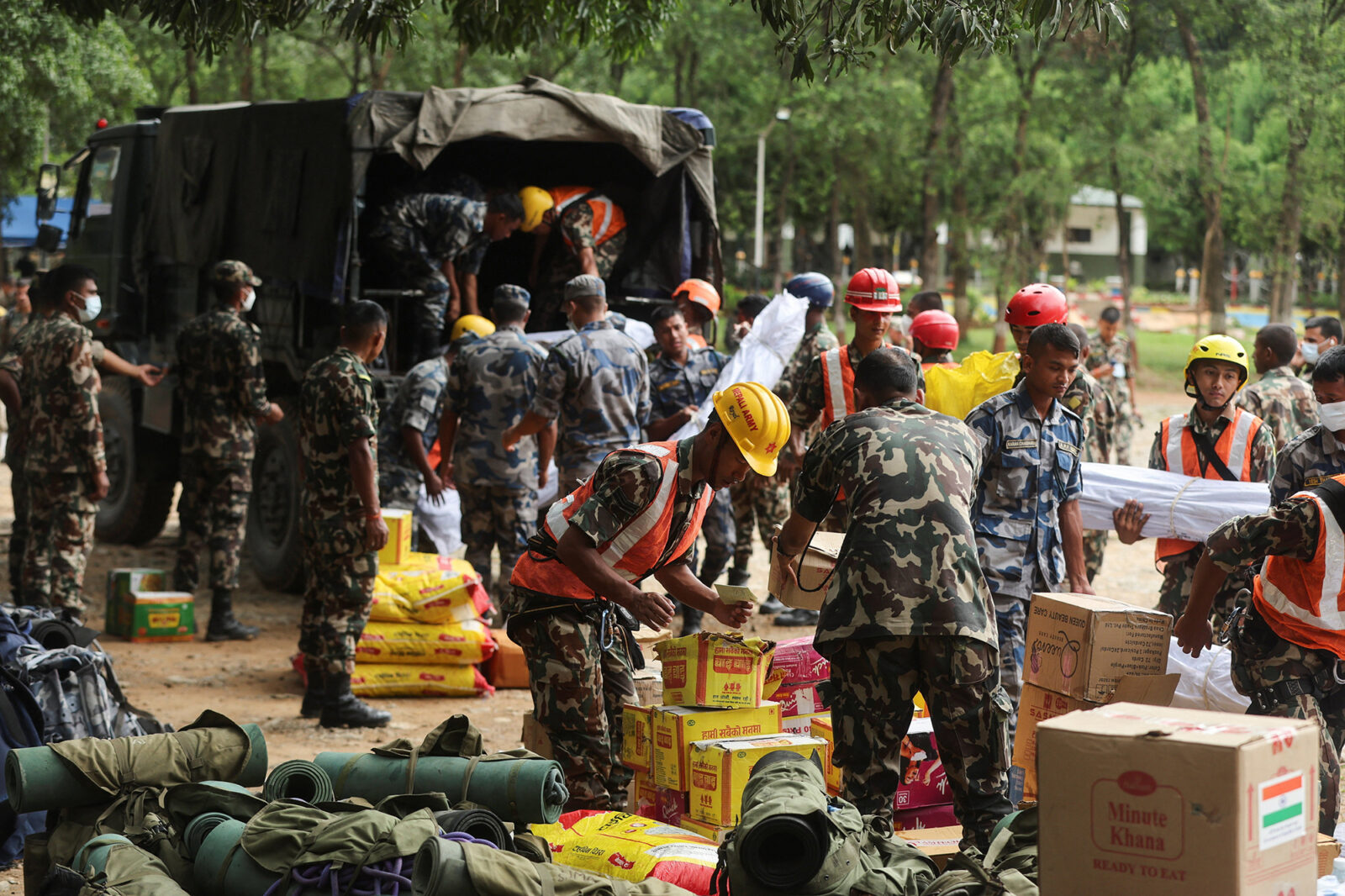
Armed Police Force and army personnel unloaded relief material from a vehicle at the Maithili Barrack Army training center at Trishuli in Nepal’s Nuwakot district on Aug. 31, following flash floods and a mudslide.
In his Aug. 30 Angelus address, Pope Leo XIV offered continued “prayers for those affected by the terrible flood that struck Nepal and Tibet.”
“Let us pray for those who have lost their lives, for the injured, those missing, for the families and rescue workers,” Pope Leo said. “May the concern of everyone help to alleviate the suffering and provide the necessary aid to the people affected.”
Speaking in his role as chair of the U.S. Conference of Catholic Bishops’ Committee on International Justice and Peace, Bishop Zaidan said, “I exhort the international community to mobilize greater humanitarian assistance support for vulnerable families and communities in Nepal.”
The bishop also encouraged “long-term efforts to help affected communities rebuild their homes, livelihoods and critical infrastructure.”
He said that Catholic Relief Services, the USCCB’s international humanitarian and development agency, is “closely monitoring the emergency.”
CRS — part of Caritas Internationalis, the Catholic Church’s global humanitarian network — is also “coordinating with Caritas Nepal and local partners to assess urgent needs and determine how best to support affected communities,” Bishop Zaidan said.
Caritas emergency aid coordinator Raju Pradhan told German Catholic news outlet KNA that “the extent of the destruction” from the flooding “is almost beyond comprehension.”
Disaster alerts the Nepalese government said it had issued “came too late” for those “near the source of the flood,” Pradhan said. “But further downstream, without these warnings, many more people would likely have lost their lives.”
Still, KNA reported, many did not fully grasp the urgency of those warnings.
Like CRS, Germany’s Freiburg-based Caritas is working with Caritas Nepal to provide assistance, including food, water, blankets and sleeping bags, as well as emergency shelters for kids and teens.
“In just one small town where we’ve been active for some time, 400 homes were destroyed,” said Pradhan, who also expressed concerns over the risk of secondary flooding.
Pradhan stressed to KNA the need for long-term relief efforts in addressing the scope of the disaster — which “will require a lot of money, which we don’t have at the moment.”
CRS has set up an emergency relief fund in response to the flooding, with donations accepted by a number of online giving platforms, as well as phone and mail.
In his statement, Bishop Zaidan expressed his gratitude for “the partnership of the U.S. government in supporting CRS’ essential work in these communities.”
He added, “We are also grateful to hear that the U.S. Department of State is closely monitoring the situation and deploying key personnel to support response efforts.”
Bishop Zaidan invoked Mary’s Immaculate Heart to “provide consolation and shelter to all those affected by this disaster.”
And, he said, “May she inspire the international community to work together, as one family, to address the urgent needs of the Nepalese people.”
Senthil Kumar Gurunathan of CRS said that “villages and towns have been washed away,” and that “the flood situation and the damage is still evolving.”
“We are very focused on the pressing needs, the essential needs,” which are “food, water, sanitation and shelter,” Gurunathan said.
Getting such aid to those impacted by the disaster is a challenge, he admitted.
“Many of the main roads have been washed away, either fully or partly,” Gurunathan said. “So what we are trying to do is to find alternative routes, working with local people to see what are the existing motorable roads. These may not be the main roads, but these are lifesaving roads, still intact.”