Archdiocese hosts food security summit to address current issues
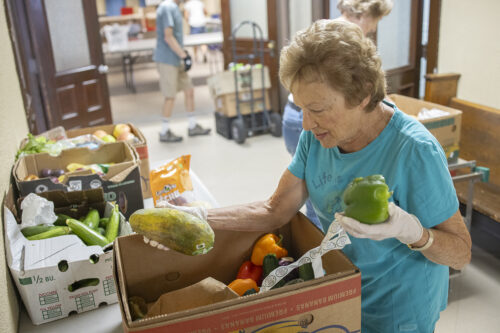
When Ruth Ehresman began helping at the St. Vincent de Paul food pantry at St. Pius V several years ago, she wanted to ensure that clients had a say in the food that they received.
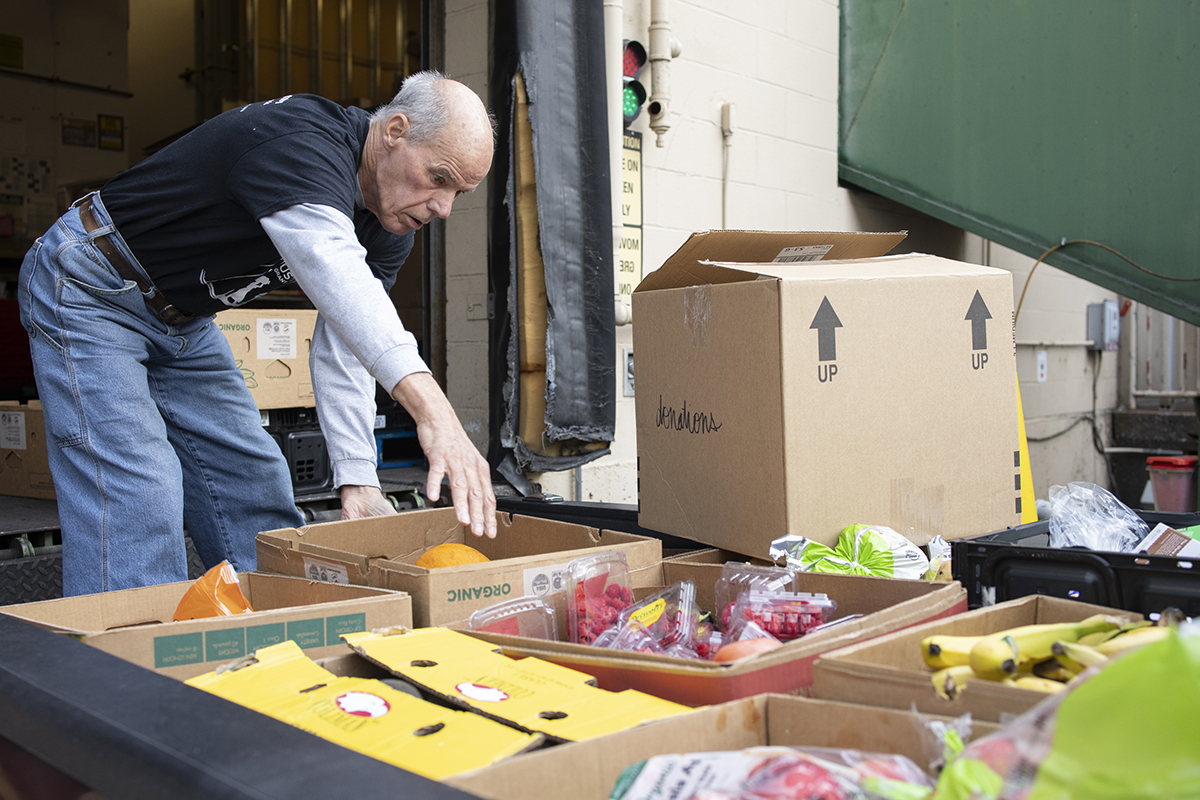
It took several years to accomplish that goal through some creative measures. An Annual Catholic Appeal grant was used to purchase several rolling tables for displaying food in a more accessible manner and a software program to transition from paper to electronic records. As the number of households served each week grew from about 50 during the pandemic to 200, most of whom come from three zip codes in south St. Louis, pantry volunteers developed new relationships with food sources to increase the quantity and diversity of foods offered.
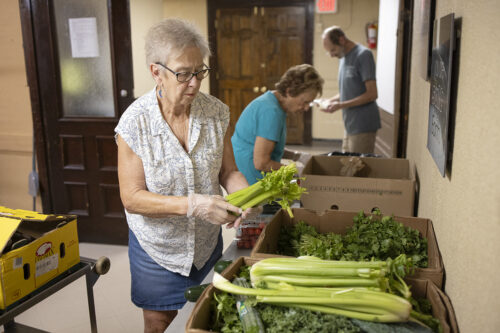
Speaking before nearly 100 people attending a food security summit hosted by the Archdiocese of St. Louis on Oct. 9 at the Cardinal Rigali Center in Shrewsbury, Ehresman posed the question: Why do we do this work?
“Our tagline has always been, you pray for the hungry and then you feed them,” said Ehresman, president of the St. Vincent de Paul conference at St. Pius V. “When we pray for our neighbors who are food insecure, we’re praying for their comfort, but we’re also praying that we will have the dedication and the energy and the creativity to provide them with what they need.”
Above all, “we pray always that we will see Christ in the neighbors that come to us for assistance and that they see Christ in us — that is most important,” Ehresman said.
Ehresman joined representatives from several area food pantries and other nonprofit organizations to discuss ways in which they’re helping to meet the needs of people they serve. Speakers urged participants to adopt food justice initiatives and collaborate with government officials to address food insecurity. They also underscored the importance of hope, justice and love in addressing food insecurity in the region.
Keynote speaker Tina Anderson of the St. Louis Area Foodbank noted that one in seven people in the bi-state region are food insecure.
“We could fill Busch Stadium 10 times with the number of people who are food insecure in this region,” said Anderson, vice president of community impact and innovation at the Foodbank.
Poor nutrition is often connected to broader issues, including problems with physical and mental health, poverty and housing issues and underemployment/unemployment. One in six children in the bi-state region regularly experience hunger, Anderson added, many of whom experience poor performance in school, mental health issues, obesity and other issues.
Operation Food Search’s Chief Operating Officer Carlton Adams said that distributing food isn’t enough to address the problem. Nutrition education programs, improving nutrition standards and public policy advocacy are important to address the issue at a deeper level. Community partnerships, increasing volunteer efforts and adapting to changing needs, such as the impact of recent cuts to government programs, are other ways of addressing food insecurity.
“As we look at the problem of food insecurity, as much as we can address through food banking and food pantries, it’s really not enough,” he said. “We know that the problem has been accelerated and exacerbated in our current environment.”
Kat Walcott of the Incarnate Word Foundation shared some statistics from recent cuts to the Supplemental Nutrition Assistance Program (SNAP) program, which she said has been shown to reduce food insecurity by up to 30%. In July, the One Big Beautiful Bill Act cut $186 billion from SNAP over the next decade, reflecting about a 20% funding decrease and the largest cut ever made to the program.
“We know that SNAP is effective,” she said. “It reduces food insecurity, and it can help lift people out of poverty. … As so many of our wonderful speakers today have talked about, relying on each other and just using each other as resources will be really important, especially as different programs are also getting cut.”
Archbishop Mitchell T. Rozanski noted Pope Leo XIV’s apostolic exhortation, “Dilexi Te,” which was released the day of the summit and serves as a reminder of the Church’s mission to respond to Jesus’ mandate to care for others in need.
“We know that food insecurity is not just a global issue, but one that is present here in the city of St. Louis and in the 10 counties that comprise our archdiocese,” he said. “The Archdiocese of St. Louis, our parishes, food banks and outreach ministries are not merely charitable efforts. They are our Church and community living out its mission.
“This is not just about food,” he said. “It’s really about hope, justice and love incarnate that’s lived through the witness of our Gospel.”