At assembly, the USCCB approved updated versions to match the forthcoming Catholic American Bible
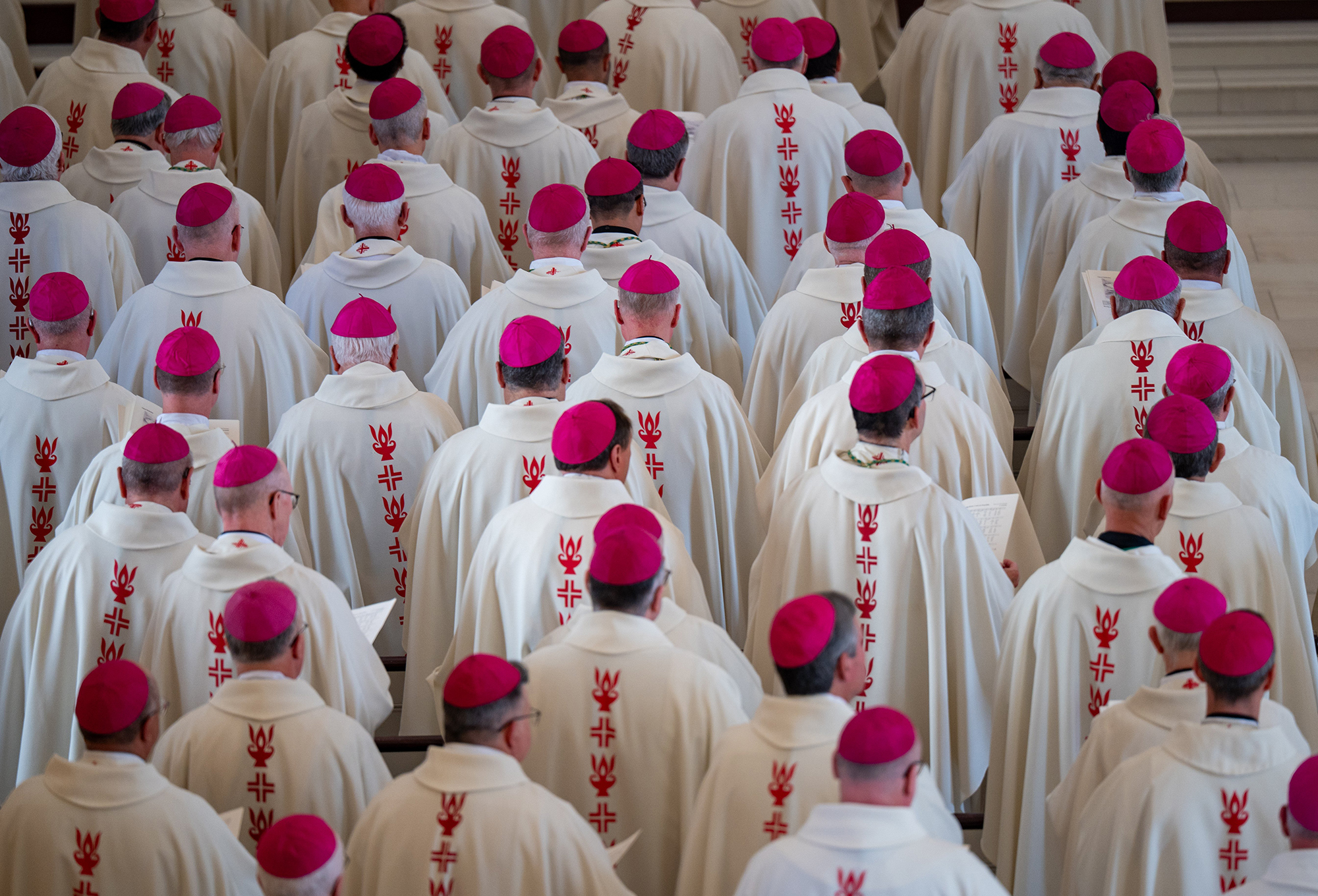
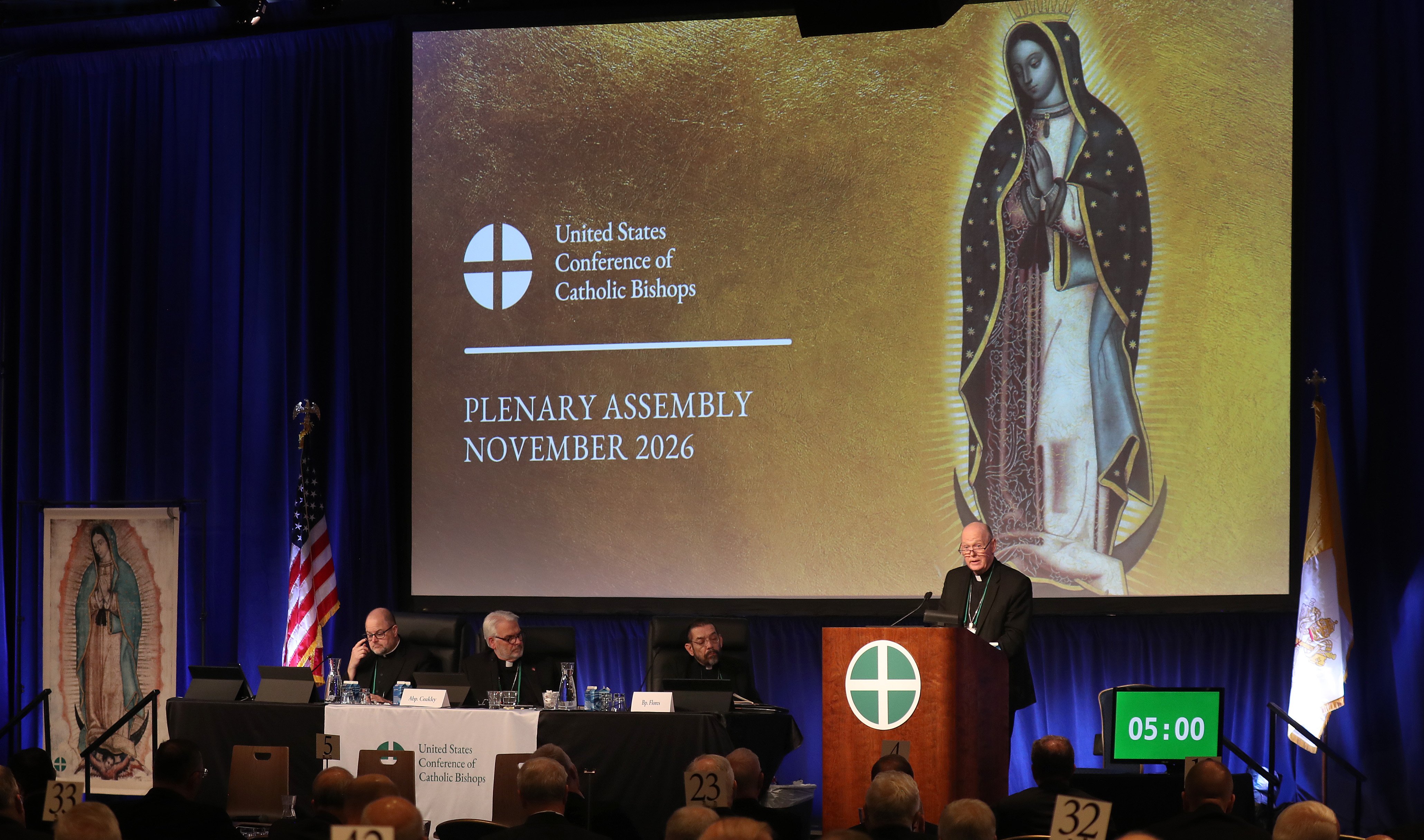
BALTIMORE — The nation’s Roman Catholic bishops have approved updated versions of the Roman rite Mass lectionary and Book of the Gospels, with translations now matching those in the forthcoming Catholic American Bible.
The Nov. 18 vote — with 196 in favor, five against and three abstaining — took place amid the U.S. Conference of Catholic Bishops’ annual fall plenary assembly, held Nov. 16-19 in Baltimore.
The Catholic American Bible will replace the New American Bible Revised Edition, or NABRE, which was released in March 2011 and has been the English translation of Scripture used in the readings at Masses. The new biblical translation will be available in 2027 through approved publishers.
The bishops’ decision on the lectionary and Book of the Gospels will now be submitted to the Vatican Dicastery for Divine Worship and the Discipline of the Sacraments for official confirmation and recognition.
“It is about consistency,” Auxiliary Bishop Michael G. Woost of Cleveland, chair of the U.S. Conference of Catholic Bishops’ Committee on Divine Worship, said.
With the upcoming 2027 release of the newly translated Catholic American Bible, Bishop Woost said, “we needed to bring those translations into the lectionary,” which contains the passages of Scripture to be read at the day’s liturgy.
The Book of the Gospels, a dedicated liturgical book containing the Gospel texts, is used in both the Roman and Eastern Catholic churches and is reverenced during the liturgy as a sign of Christ’s presence.
Bishop Woost said that the newly approved Book of the Gospels has been expanded “so that it can be used more often,” including during “many of the major feasts and solemnities.”
Artificial intelligence, responsible investment
Artificial intelligence was a major topic of concern among the bishops. Bishop Cantú, whose San Jose Diocese is home to Silicon Valley, gave the bishops an update on their new Task Force on Preserving Human Dignity in the Age of Artificial Intelligence, and said they have an opportunity to “remind the world who the human person is” and “insist that progress remain ordered to the human person.”
“Time is of the essence with regard to this technology,” Bishop Cantú said, adding it was critical for the Church “to educate ourselves quickly, calmly and raise our voice in the public square in this debate.”
The bishops also voted overwhelmingly to approve an updated “Socially Responsible Investment Guidelines for the U.S. Conference of Catholic Bishops,” which contained guidance related to AI, private prisons, cryptocurrency and more, as well as on investment strategies that can promote human life, dignity and the common good.
Day of Prayer for Racial Justice
The bishops voted to approve a proposal by Bishop Daniel E. Garcia of Austin, Texas, chairman of the Subcommittee for the Promotion of Racial Justice and Reconciliation, to designate the last Sunday in October as a day of prayer for racial justice.
Bishop Garcia referred the bishops to the findings of an Oct. 26 Center for Applied Research in the Apostolate report that indicated 60% of adult Catholics in the U.S. believe racism exists within their local community, with 39% saying they have experienced racial discrimination generally, and 1 in 10 Catholics reporting they have experienced it in their parish and in Catholic education.
The bishops’ public sessions were also bookended by their clear determination for the Church to show strong support for the right to life and dignity of immigrants, regardless of legal status, and recounted the religious liberty challenges at the federal and state level they have faced in ministering to migrants. They also signaled their readiness to work with the new Congress and the Trump administration to achieve the much-needed immigration reform for which the bishops have called for years.
Overcoming ‘culture of indifference,’ disinformation
Bishop Brendan J. Cahill of Joliet, Illinois, chairman of the Committee on Migration, ended the plenary assembly’s public discussions with a presentation Nov. 18 that identified that immigrants overall face both a “culture of indifference” combined with “manipulations of the truth, which dismiss God-given human dignity.” He meanwhile expressed the committee’s readiness and resources to help diocesan efforts.
The bishops also received encouragement from Archbishop Caccia to draw hope from the nation’s saints and faithful.
The nuncio told the bishops to take inspiration from the newly beatified Blessed Fulton J. Sheen and the Georgia Martyrs, and to recognize they had with them in their faithful “people who love the Church and are committed to her mission” and “priests, religious and lay faithful who work with you in a spirit of co-responsibility.”
The bishops concluded their assembly with a closed-door session Nov. 19.