Pope Leo ended his 7-day visit to Spain with stops in Barcelona and the Canary Islands
PORTA OF SANTA CRUZ OF TENERIFE, Spain — After hearing the stories of men and women who survived harrowing journeys in unsafe boats and then faced exploitation by their captors, Pope Leo XIV harshly condemned such criminals, and he admonished those who turn a blind eye.
“For every life lost, every family deceived, every body subjugated, every woman threatened, every worker exploited, you will have to appear before divine justice,” he proclaimed, sending a “clear message to those who take advantage of people’s desperation,” during a meeting June 12 with migrants and those assisting them.
“To those who organize death routes, traffic in human beings, withhold documents, exploit workers, threaten women, deceive families and turn the suffering of others into a business,” he said, “Stop” and “Repent while there is still time.”
“The money wrested from the vulnerability of the poor will bring neither peace, nor honor, nor a future,” he said, on the final leg of his June 6-12 apostolic journey to Spain, ending on the autonomous archipelago of the Canary Islands, which has become a major entrypoint for migrants into Europe.
Pope Leo XIV celebrated Mass at the Gran Canaria Stadium in Las Palmas de Gran Canaria, Spain, on June 11, during his apostolic journey to Spain.
More than 3,000 people died or disappeared in 2025 while trying to reach the Canary Islands, according to the NGO Caminando Fronteras. More than 10,000 people were recorded to have drowned along this dangerous migration route in 2024, it added.
“A human conscience, and even more so a Christian conscience, cannot remain indifferent in the face of these graveyards of the sea, to the victims of shipwrecks and the lack of aid,” he said, meeting those working to help integrate newcomers in Tenerife.
He became the first pope in history to visit the islands, after visiting Madrid June 6-9 and Barcelona June 9-11.
The islands have been an important stop for transatlantic voyages since the 15th century.
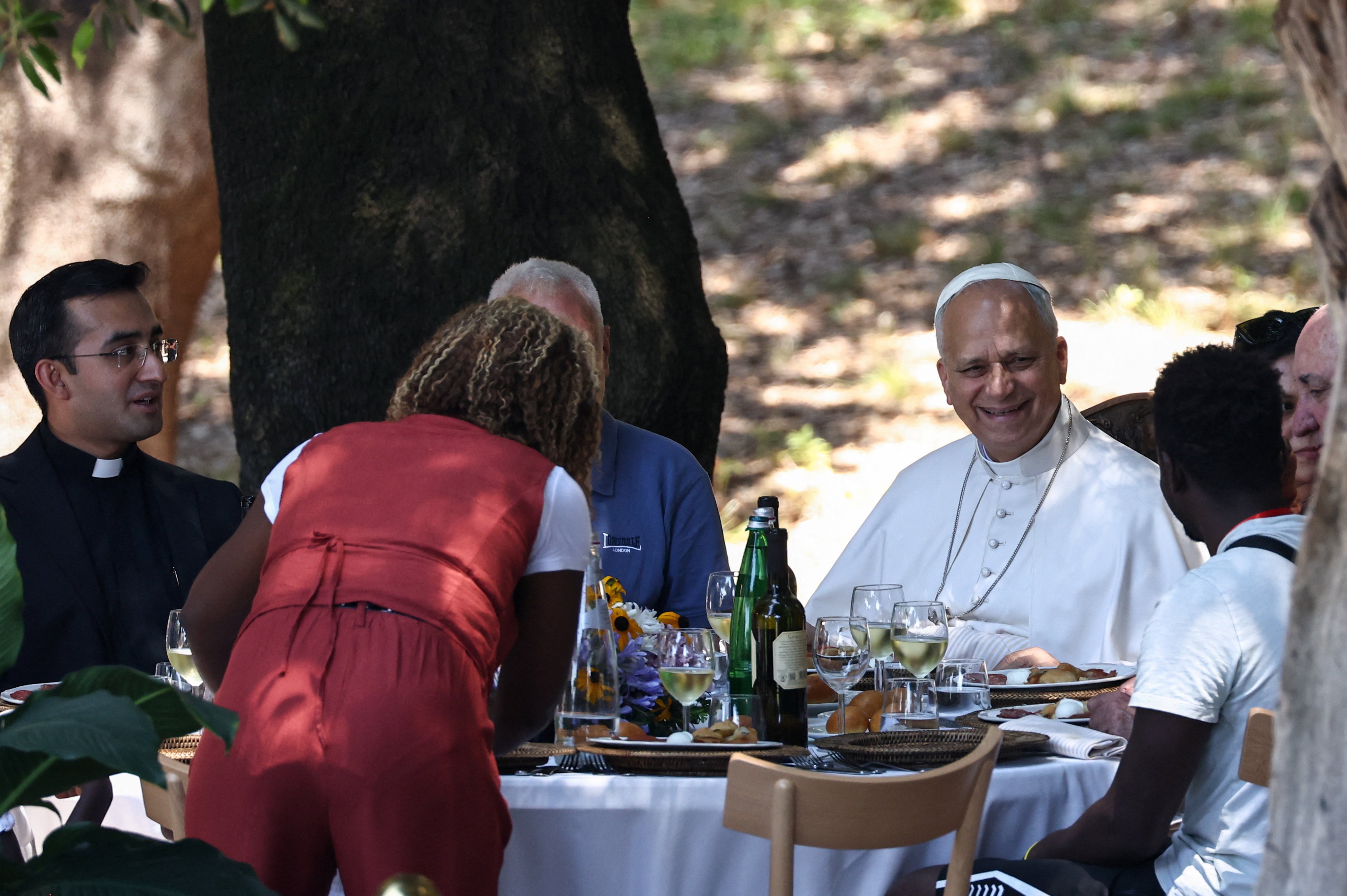
On the islands, Pope Leo visited a temporary shelter for those who are rescued at sea and met the men, women and children who survived their ordeals and are building a new life with the help of the islands’ residents.
“Holy Father,” Mbacke from Senegal said, “I ask you keep reminding the world that behind every young migrant there is a dream, a mother who is praying and a life that is worthy of a chance.”
“The successor of Peter cannot ignore these docks,” Pope Leo said. “The Church cannot ignore these waters or any place where hunger, thirst, violence, fear or exile continue to wound human dignity. Jesus’ disciples cannot dismiss the cries of those who call out in the night.”
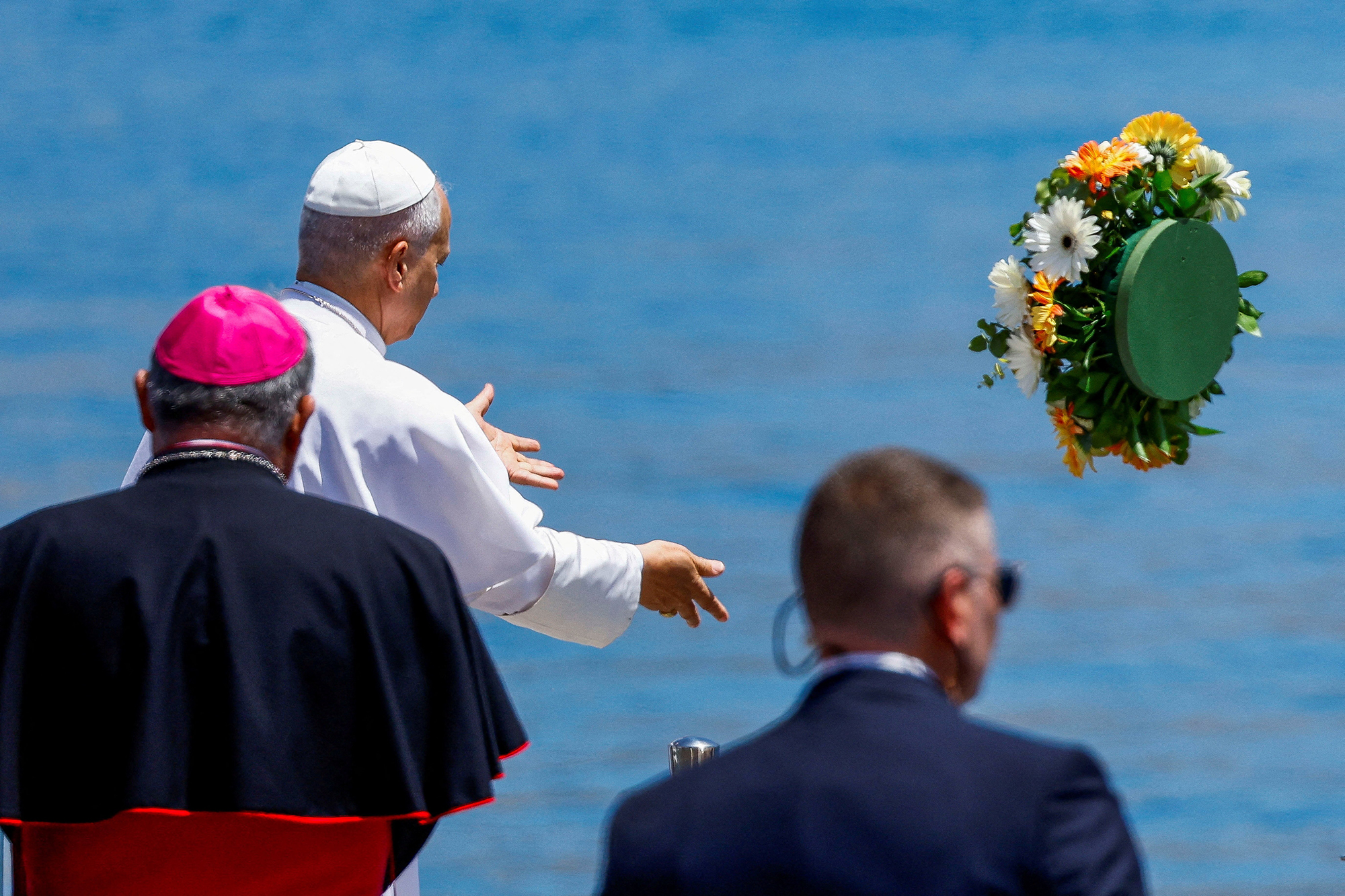
With two young men from Africa by his side, the pope tossed a floral bouquet in the blue water to honor and pray for the dead, and he blessed a wooden cross fashioned from the wreckage of boats capsized and destroyed on their voyage.
Following his visit to the port, the pope met with the diocese’s Catholic community for a meeting at its cathedral and a Mass in the island’s stadium.
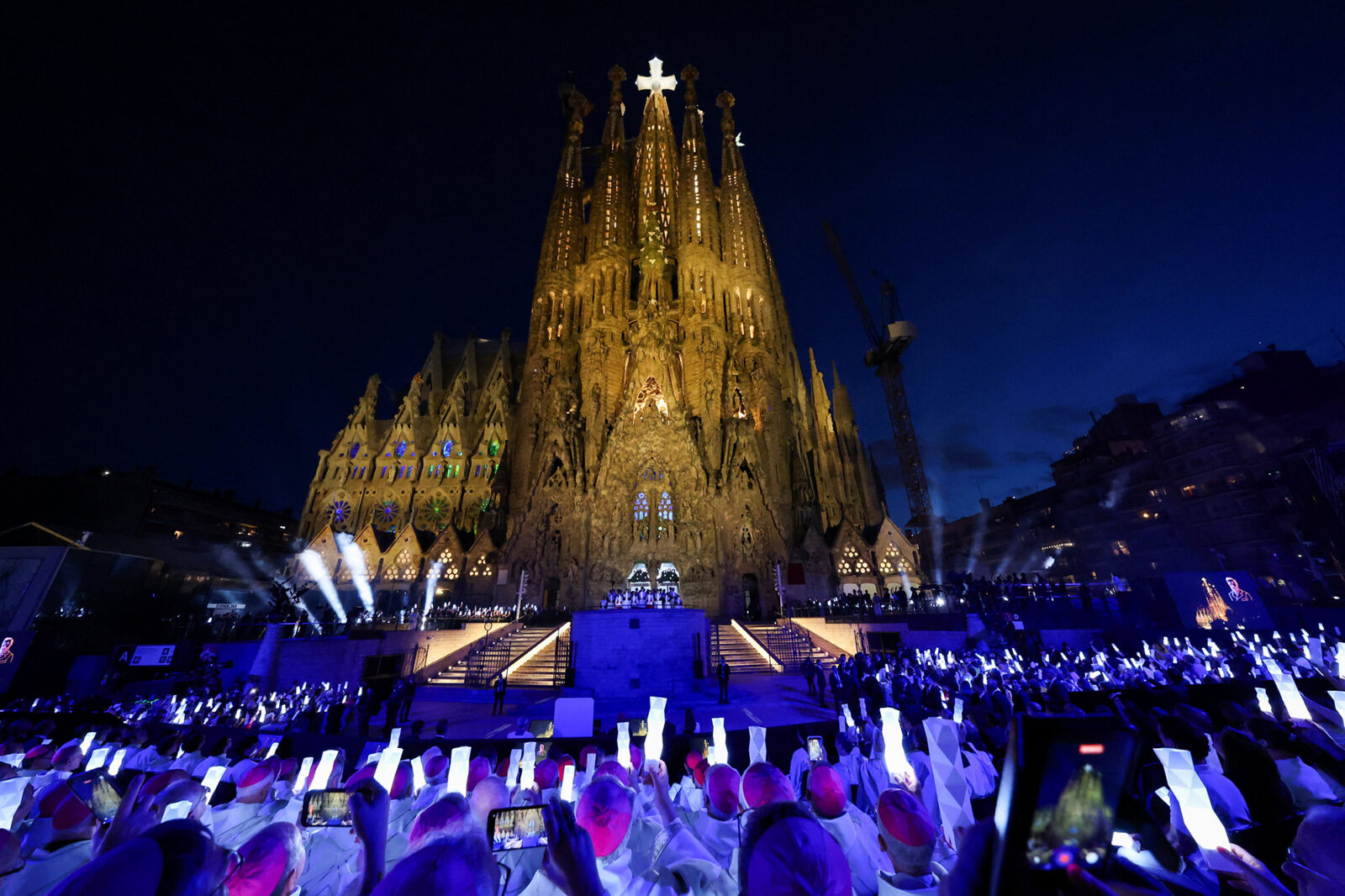
Bishops held lamps during the inauguration of the Tower of Jesus Christ and its blessing by Pope Leo XIV at the Basilica of the Sagrada Familia in Barcelona, Spain, on June 10.
Christianity is not about perfection
On June 9, Pope Leo traveled to Barcelona, the country’s second-largest city and the capital of Catalonia.
“We must question the dynamics of our society, the culture of individualism and the temptation of violence — but not God,” he said June 9 at the Lluís Companys Olympic Stadium.
He urged the 40,000 faithful in the stadium for a prayer vigil June 9 to reflect “on our personal journey, as well as on the ‘nights’ of our journey as a Church and those of Spain — its cities, its old and new forms of poverty, its society and culture.”
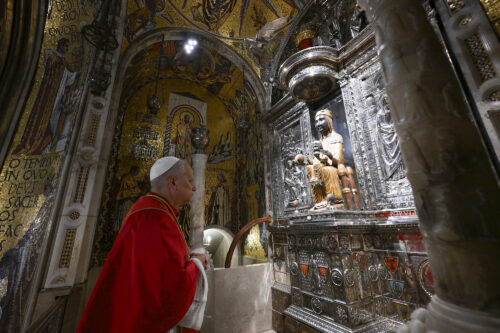
Pope Leo XIV prayed before the Virgin of Montserrat image at the Our Lady of Montserrat Abbey, during his apostolic journey, in Montserrat, Spain, on June 10.
The darkness is a sign to keep searching, asking God questions and being open to the work of the Holy Spirit, he said. “We must welcome the night no longer as a sign of failure, but as the beginning of a new life.”
That new life requires putting down one’s protective and sometimes violent “armor,” much like St. Ignatius of Loyola did after he prayed at the statue of Our Lady of Montserrat, housed in a sanctuary of the same name, and gave up his life as a soldier.
At the same sanctuary and Benedictine monastery, built into the jagged mountain range northwest of the city, Pope Leo said, Jesus “exposes the violence that can lurk in our words and attitudes: criticism that humiliates, condemnation that destroys and aggression that divides.”
“That hidden violence can often disguise itself as a kind of armor, which we use to protect our wounds, our fears and the suffering caused by injustice,” he said.
The trip’s motto of “Lift up your gaze” became literal at the pope’s final event in Barcelona with the blessing of the Basilica of the Sagrada Familia’s central tower, which makes it the tallest church in the world.
Standing at 566 feet high and topped by a glass and white enameled cross to reflect sunlight by day and glow at night, it was lit up during a stunning light and fireworks show to celebrate the pope’s blessing and the 100th anniversary of the death of its architect, the venerable Antoni Gaudí. Construction on the building began in 1882.
The basilica is “a sign of unity and harmony for all of Spain” and to “lift their gaze to encounter the face of God the Father, shining forth in His Son made man,” the pope said in his homily during Mass inside the basilica.