More than 2,000 people have been killed in Lebanon resulting from Israeli bombardments
Lebanese Christians are reeling from the death and destruction wrought on their community, caught in the crossfire between Israel and Lebanon’s Iran-backed Hezbollah militia, a deadly side conflict in the U.S. and Israel-Iran war.
So far, more than 2,000 people have been killed in Lebanon resulting from Israeli bombardments since the beginning of March, in a war that displaced more than 1 million people from their homes and caused widespread devastation and suffering.
Officials from Lebanon and Israel met in Washington April 14 to discuss a ceasefire and peace, but Israel has ruled out a ceasefire with Hezbollah.
Israel also insists on excluding Lebanon from the U.S.-Iran two-week ceasefire, already imperiled by the failure to strike a peace deal.
Pope Leo XIV said that he’s “closer than ever” to the “beloved Lebanese people in these days of pain, fear and invincible hope in God,” repeating his call for peace during his Regina Caeli address on April 12.
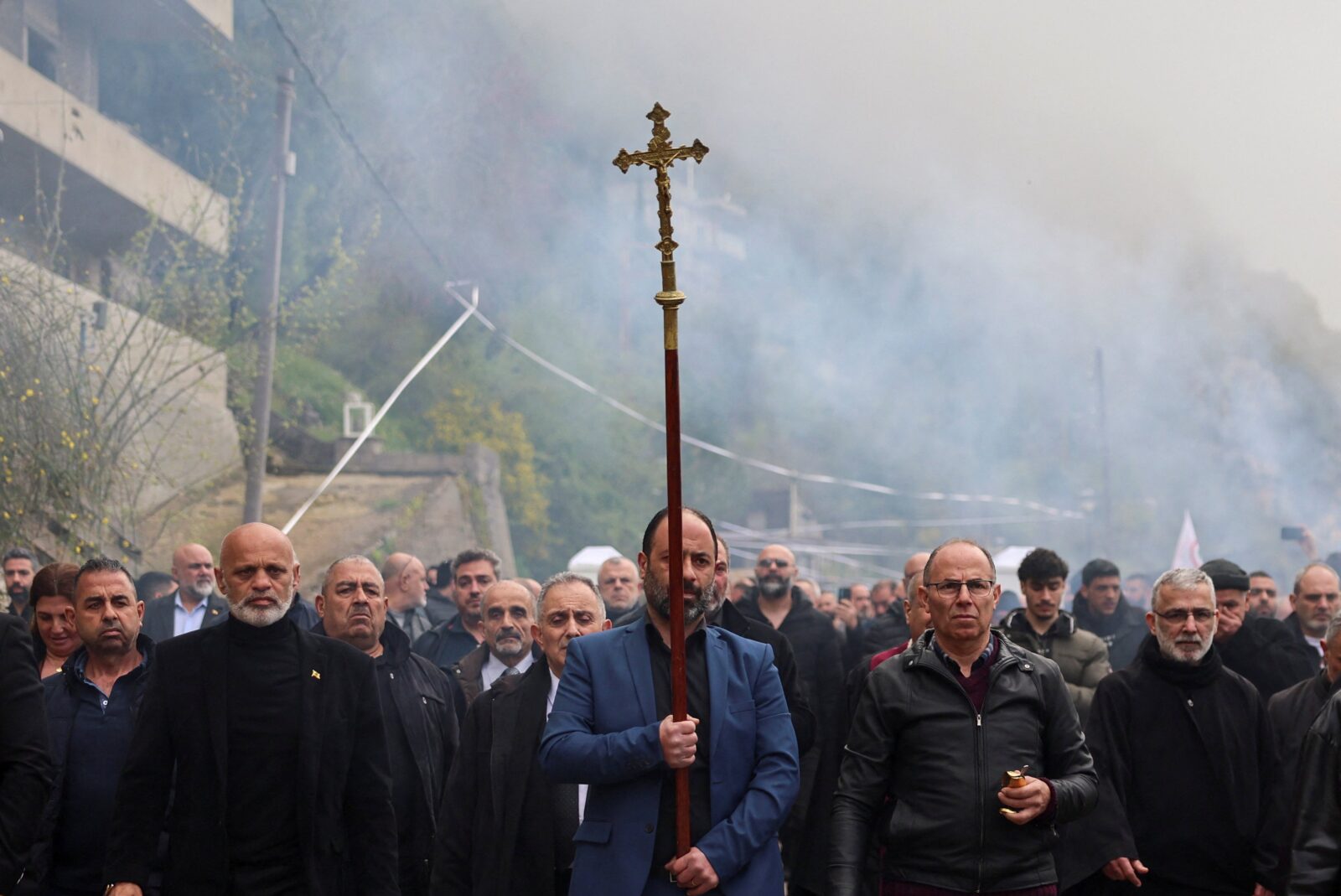
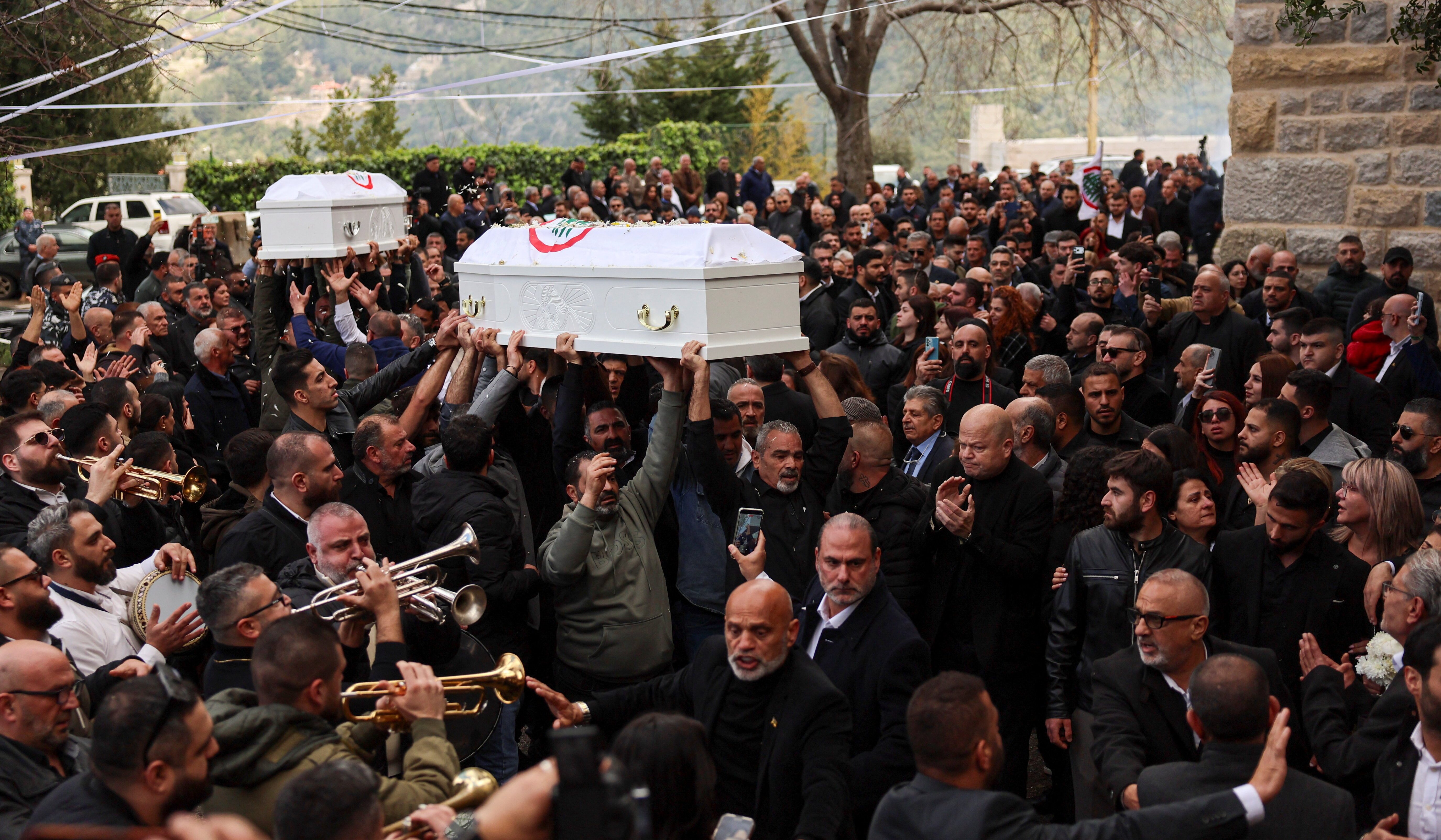
A man carries a cross ahead of the caskets of Pierre Moawad, an official of the Christian Lebanese Forces Party, and his wife, Flavia, as mourners arrive in a funeral procession at St. Simon Church in Yahchouch, Lebanon, April 7, 2026.
Lebanese Cardinal Bechara Rai, patriarch of the Maronite Catholic Church, has rebuked both Hezbollah and Israel for the suffering inflicted on Lebanon. “The country is going through a critical situation due to Iranian interference through Hezbollah and Israeli aggression,” he said in his Easter homily. “Our hearts bleed for the victims of the conflict imposed on Lebanon.”
“Together, we raise this prayer, asking the Lord to protect Lebanon,” Cardinal Rai urged Catholics prior to April 11’s peace vigil at the Vatican, with Catholics joining Pope Leo in prayer throughout the world.
Christians make up about a third of Lebanon’s population of roughly 5.5 million people. With 12 Christian sects, the country is home to the largest proportion of Christians of any nation in the Arab world.
Lebanon experienced one of its bloodiest days on April 8, shortly after Easter. Israel dropped 160 bombs on 100 targets within 10 minutes, without warning. Beirut was rocked with simultaneous explosions, with at least 350 people reportedly killed and many more wounded in the Lebanese capital alone.
“It was scary, it caused anger, it caused sadness. You feel you are being dehumanized. We are not fine,” said Marielle Boutros, a Beirut-based project coordinator for the papal charity Aid to the Church in Need. “We are surviving, but in the heart of each one of us, we want this nightmare to end in some way.”
The deadly strikes are creating a climate of fear and instability for Christians and Lebanon’s other religious communities as Israel and Hezbollah embroil the country — already steeped in a disastrous financial crisis since 2019 — in the war. Lebanese worry the tensions could spill into widespread sectarian strife and reignite a possible civil war.
“Towns and villages in which Christians live in south Lebanon have also been violently attacked without any warning. Israel has bombed areas that have nothing to do with Hezbollah,” Michel Constantin, regional director for the Catholic Near East Welfare Association-Pontifical Mission in Lebanon and Syria, said of the region requiring desperate aid.
Inhabitants in several Christian villages in the south have refused Israeli evacuation orders to leave their homes, fearing a Hezbollah takeover or Israeli destruction.
However, Israel has bombed most of the bridges linking the south to the rest of Lebanon, isolating communities now badly in need of basic foodstuffs, medicines and other humanitarian aid, according to CNEWA and Human Rights Watch.
“The papal nuncio Archbishop Paolo Borgia has visited many of the villages,” Constantin said. “And Catholic priests are managing to go to the villages to minister to the people, celebrating Mass,” despite the danger, he said.
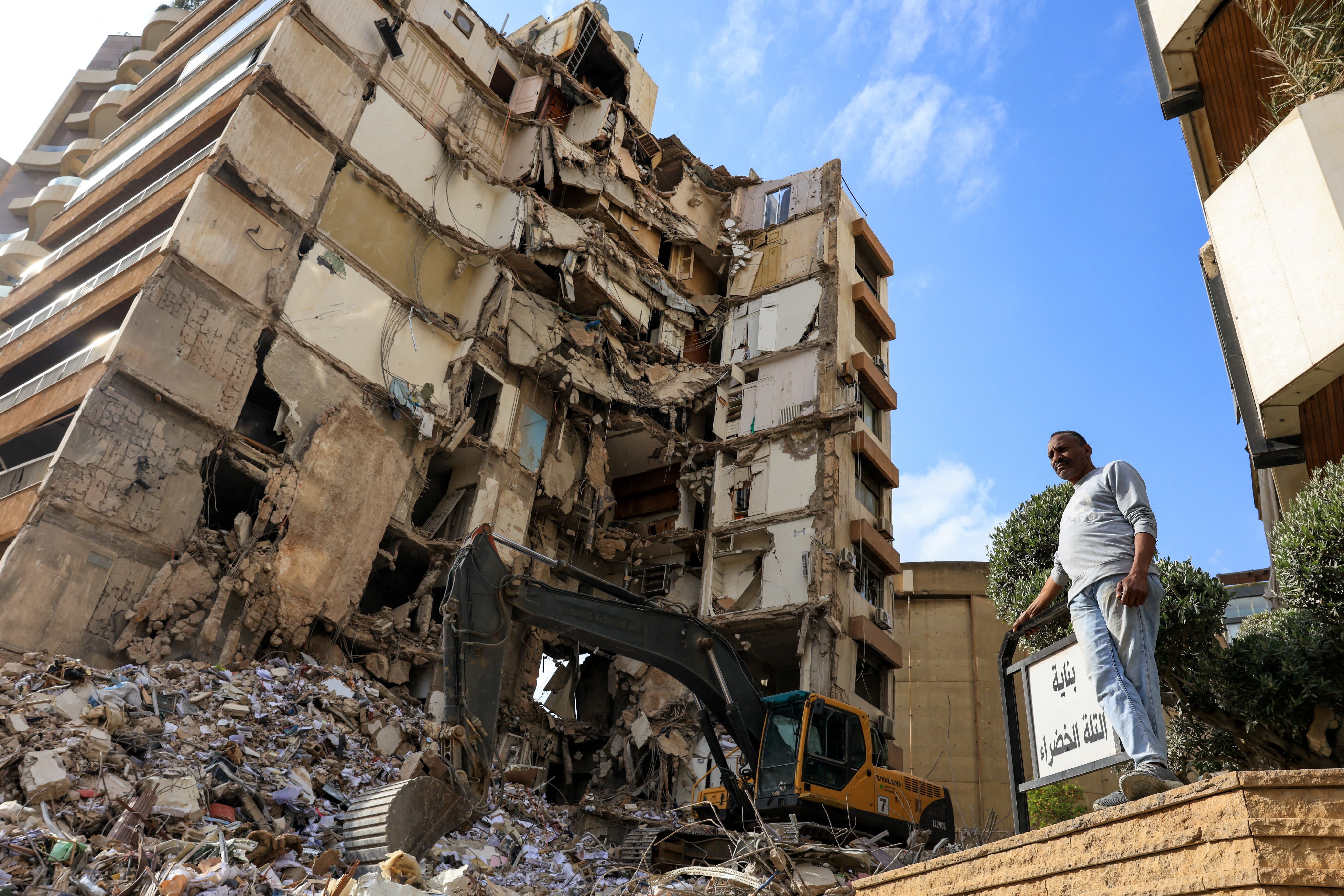
A man stands near a damaged building in Beirut, Lebanon, April 9, 2026, following an Israeli strike carried out the previous day. Bishop A. Elias Zaidan, chair of the U.S. Conference of Catholic Bishops’ Committee on International Justice and Peace, is calling on the Trump administration to boost humanitarian support for Lebanon and strengthen efforts to achieve peace there.